
How a Pool Sand Filter Works: Filter, Backwash and Rinse


Key Takeaways
- In Filter mode, water usually travels down through the sand bed and returns through the laterals and center pipe.
- Backwash reverses flow through the bed and sends dirty water to Waste. Rinse follows the normal direction but still sends water to Waste.
- The clean starting pressure is a baseline for that system, pump speed, and valve setup. The installed manual sets the service threshold.
- Always stop the pump before moving a multiport valve, and fully relieve filter pressure before service.
A sand filter uses a deep bed of graded filter sand to capture suspended material. The multiport valve changes where water enters, which way it crosses the bed, and whether it returns to the pool or leaves through the waste line.
Filter Mode: Down Through the Bed
On a common top-mount filter, water enters above the sand. A diffuser spreads it across the bed. Water moves down through the spaces between the grains, while dirt stays in the bed. The laterals at the bottom collect the filtered water and carry it into the center standpipe.
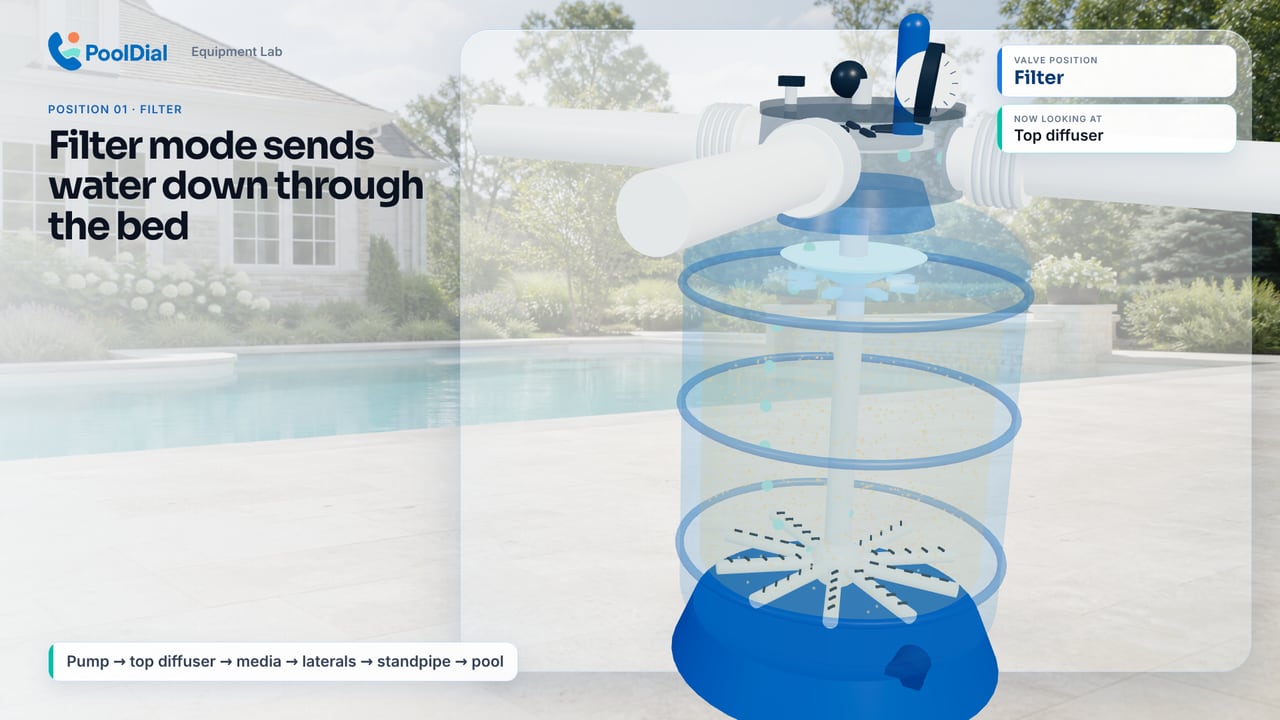
Actual tanks, diffusers, underdrains, and port locations vary. The useful mental model is a media bed between the inlet and the return collection path.
Backwash Mode: Reverse and Send to Waste
As dirt builds in the bed, resistance rises. Backwash routes water down the center pipe, out through the laterals, and upward through the sand. The lifting and separating action releases captured material, which leaves through the Waste port.
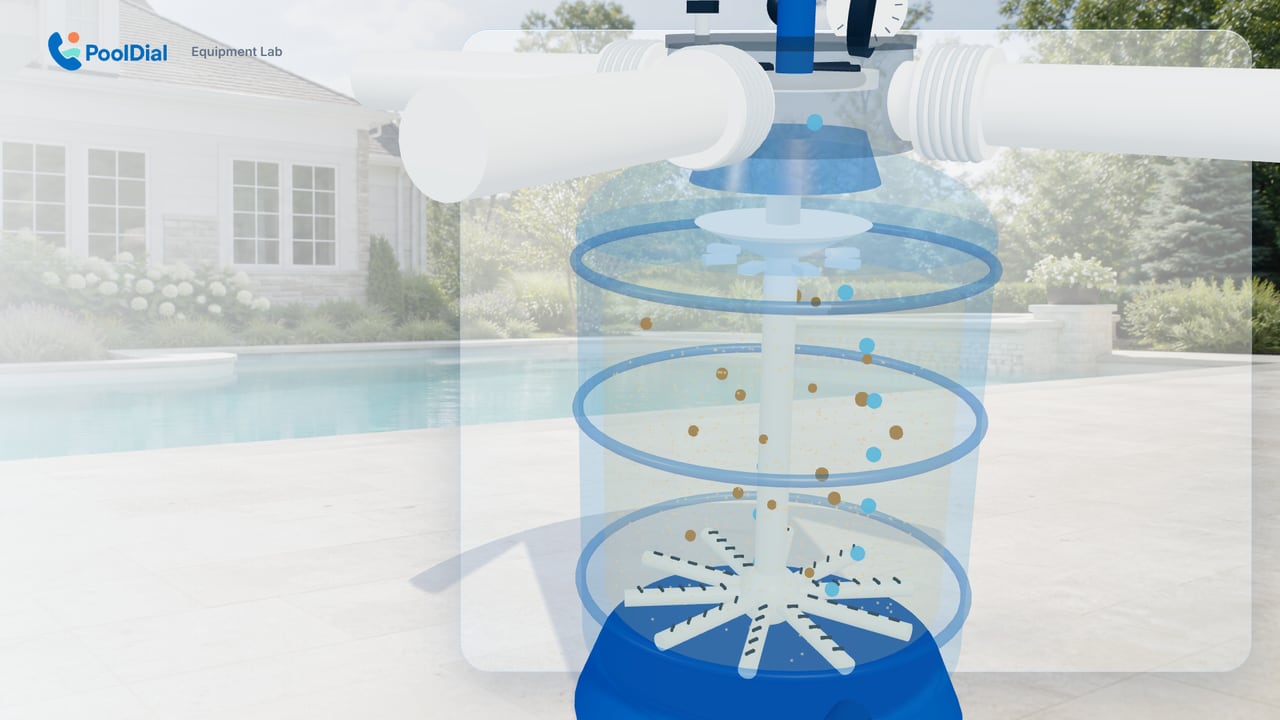
Use the installed filter manual to decide when to backwash and how to judge completion. Reduced return flow and a pressure rise above the recorded clean baseline are common clues, but one calendar and one pressure number do not fit every system.
Why Rinse Comes After Backwash
Rinse sends water through the bed in the normal filtration direction while discharge still goes to Waste. This helps settle the sand and flush remaining dirty water from the valve and plumbing before returning to Filter. Use the manual's exact sequence and time.
What the Multiport Valve Is Doing
The handle turns an internal diverter over several ports and sealing surfaces. Filter, Backwash, Rinse, Waste, Recirculate, and Closed are different plumbing routes, not strength settings.
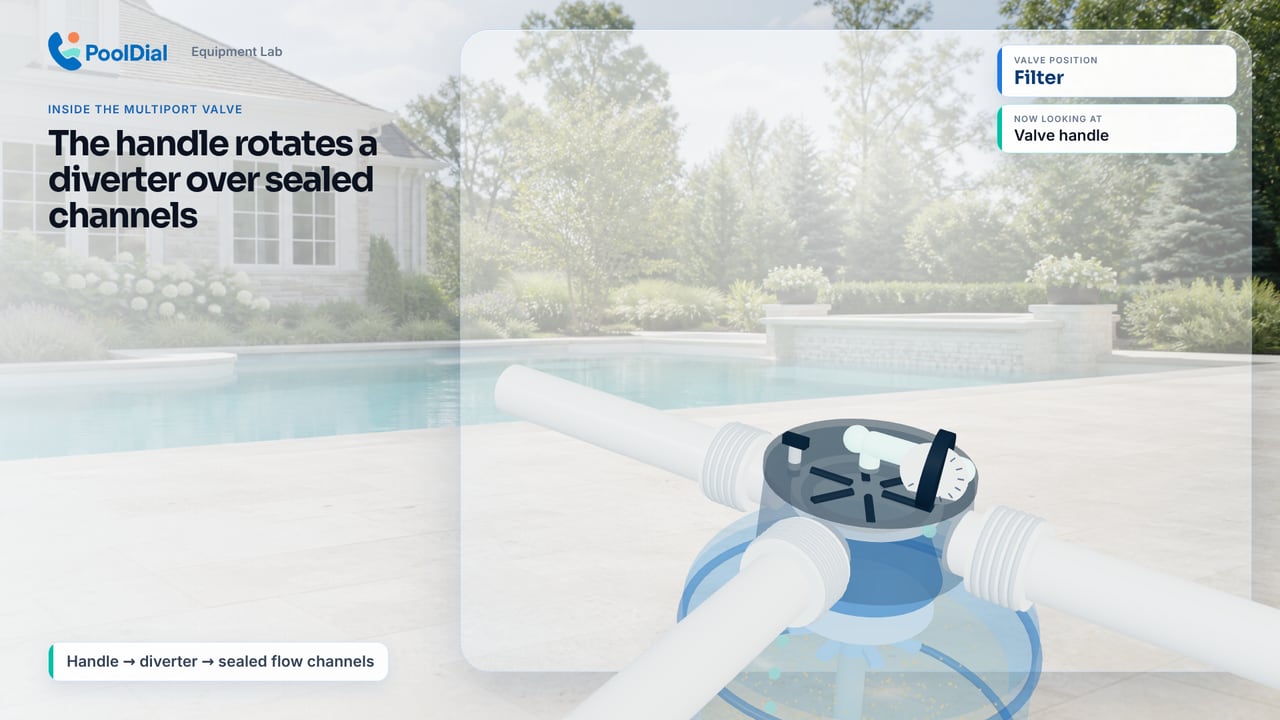
Waste bypasses the filter and sends water to drain. Recirculate bypasses the filter and returns water to the pool. Closed blocks flow. Never run the pump with the valve in Closed, and never move the handle while the pump runs.
Pressure and Symptom Patterns
| Pattern | Useful interpretation | What to compare |
|---|---|---|
| Low flow, pressure above clean baseline | Resistance may be in the filter or return side | Filter condition, valve route, return valves, and downstream equipment |
| Low flow, pressure below clean baseline | The pump may not be receiving or moving enough water | Water level, baskets, suction valves, prime, pump speed, and impeller clues |
| Sand returning to the pool | A lateral, standpipe, media choice, or backwash-flow issue may exist | When it started, media age, recent service, and exact filter model |
| Water leaks to Waste in Filter | The valve seal or diverter may not be sealing the Waste route | Handle seating, debris, valve condition, and manual inspection steps |
Pressure is a system reading. Record the clean value after service at the same pump speed and normal valve positions. Compare like with like instead of treating one PSI number as universal.
Size and Track the Filter
The pool filter sizing calculator can help compare filter area and flow assumptions. Pair it with a written clean-pressure baseline and service notes in the PoolDial equipment history so technicians can see what changed.
Frequently Asked Questions
What does backwashing a sand filter do?
It reverses flow through the sand bed so captured debris can leave through the waste line. It does not replace every inspection or media-service task in the filter manual.
Why do you rinse after backwashing?
Rinse returns flow through the bed in the normal direction while still sending discharge to Waste. This resettles the bed and clears remaining dirty water before Filter mode.
Should I backwash at a fixed PSI?
Use the installed manual and the filter’s clean starting pressure at a known pump speed. A pressure rise is useful only when compared with the same operating setup.
This guide is an original, generic teaching explanation based on manufacturer documentation. Visuals are simplified and not to scale. The installed equipment manual controls service and safety procedures.
- Pentair Sand Dollar and Cristal-Flo II Sand Filter Guide, valve functions and cleaning sections.
- Pentair Hi-Flow Six-Way Valve Guide, operating positions and safety guidance.
- Jandy Multiport Valve Manual, positions and valve inspection sections.