


Key Takeaways
- Sort the noise by what it sounds like. A gravel sound usually means the pump is starving for water, a rattle means something is loose, and a steady, high whine usually means a worn motor bearing.
- List every cause that could make a pump loud, then start with the cheapest checks: the basket, the suction valves, the base bolts and the speed.
- A long screwdriver held to your ear shows where the noise is loudest. Keep your hands away from the fan and anything else that turns.
- Look at the pipe going into the pump before you blame only the bearing. Fix the cause, then prove it with two quiet starts.
A customer calls. The pool pump has gotten loud over the last few weeks, and now the neighbor can hear it from next door. The pump went in about a year and a half ago. The customer wants to know if they need a new one.
A new pump is an easy answer, and on this call it is the wrong one. This guide walks one service call from start to finish so you can see how to find where the noise comes from before anyone buys a pump.
The pictures come from PoolDial Repair School, our free 3D repair simulator. Its lessons are built around problems techs actually run into. This is one worked example on one equipment pad. The pad you are standing on will look different, and the cause may be different. The order of the steps is what carries over.
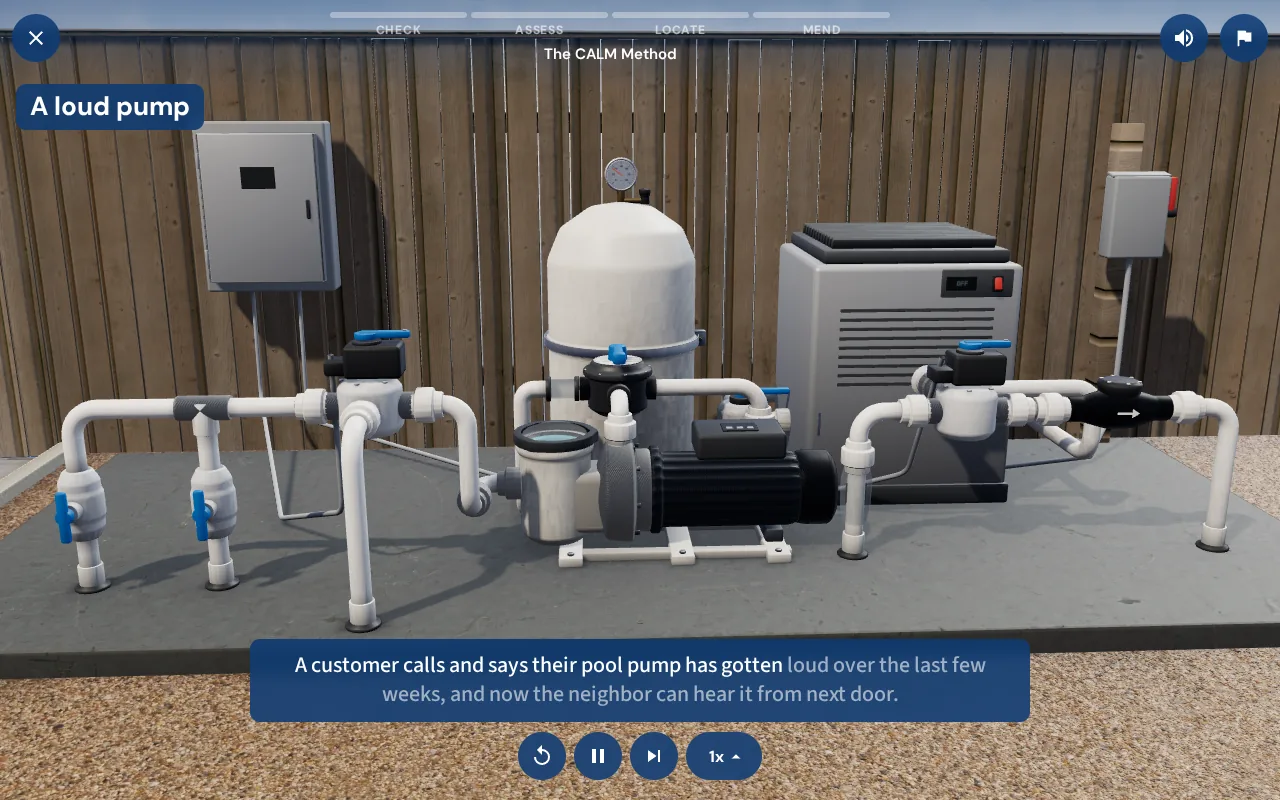
We work every call the same way. We call it the CALM Method: Check, Assess, Locate, Mend. It keeps you from skipping to a fix before you know the cause.
Step 1. Check: Make the Pad Safe
Check means making the pad safe before you touch anything. A noise call is a little different from other calls, because you will spend time listening right next to a running pump. Plan where your hands will go before you start.
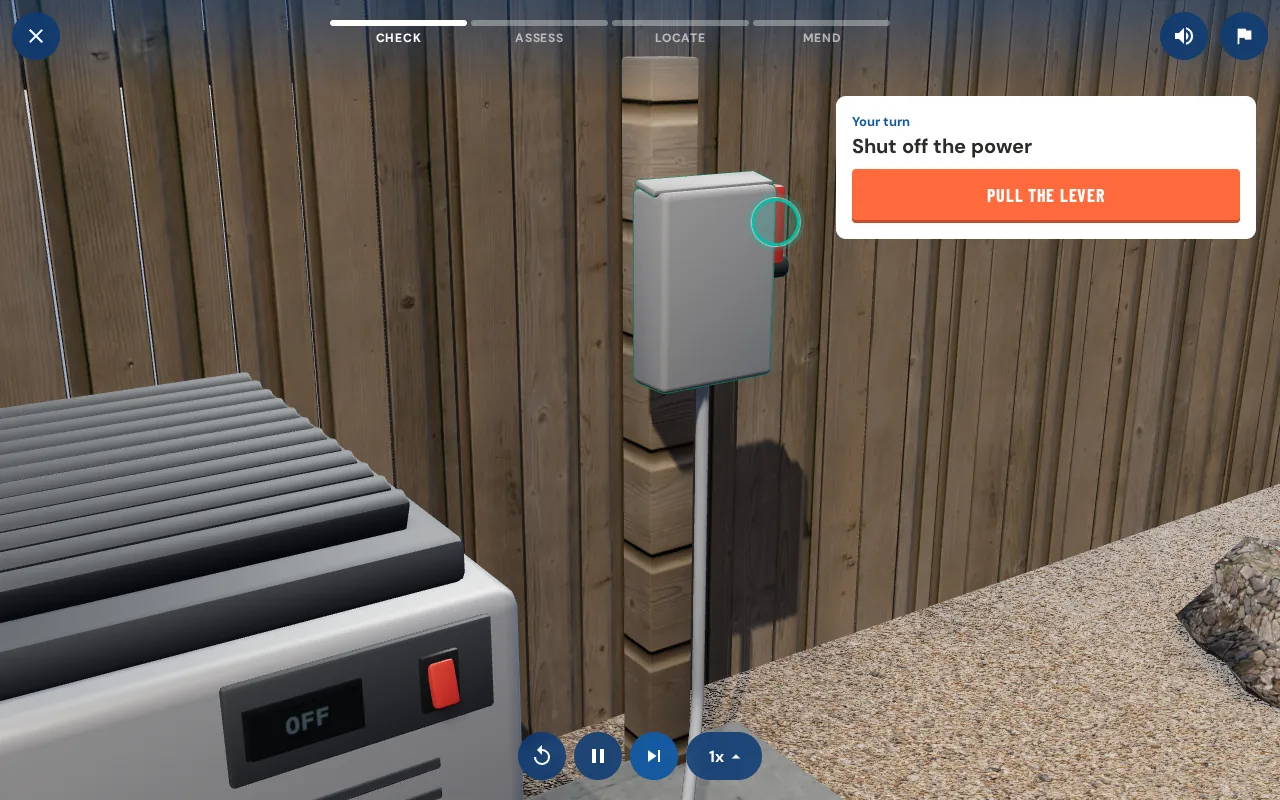
Shut off the power at the switch by the pump before you look the pump over. With the power off, nothing can start up while your hands are on it.
Step 2. Assess: What Should Happen, and What Does?
Start by saying what a healthy pump sounds like. It makes a steady, low hum and a soft rush of water. You should be able to talk next to it without raising your voice.
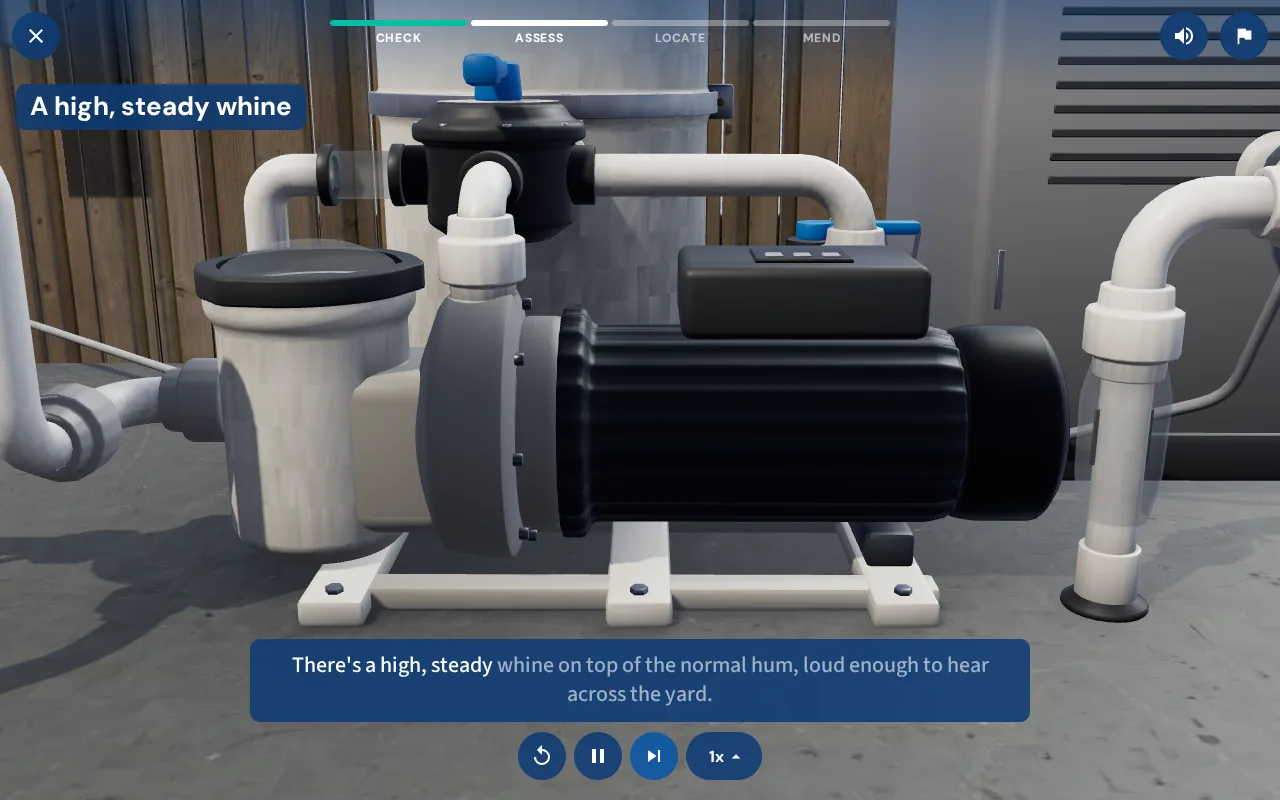
Now turn the power back on and listen. On this call there is a high, steady whine on top of the normal hum, and it is loud enough to hear across the yard. The basket is full and the returns push normally, so the pump is still moving water.
What Kind of Noise Is It?
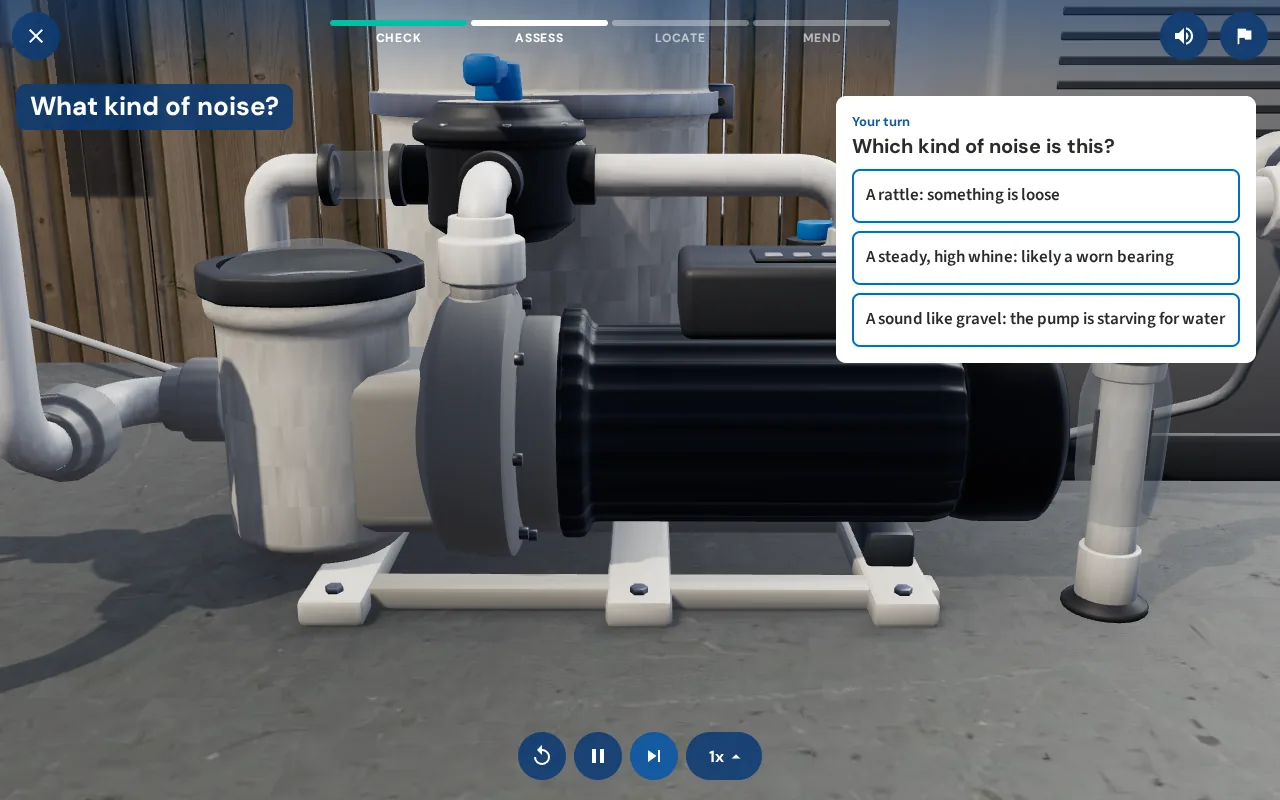
Pros sort pump noise by what it sounds like. Each kind of sound points to a different kind of problem.
| What you hear | What it usually points to |
|---|---|
| A sound like gravel or marbles inside the pump. | The pump is starving for water. |
| A rattle or a knock. | Something is loose. |
| A steady, high whine that does not let up. | A worn bearing in the motor. |
A bearing is the ring of steel balls that lets the motor's shaft spin smoothly. This pump has no gravel sound, and its basket is full of water. The noise is a steady whine, not a rattle or a knock. So a worn bearing is the first idea to test.
Ask What Changed
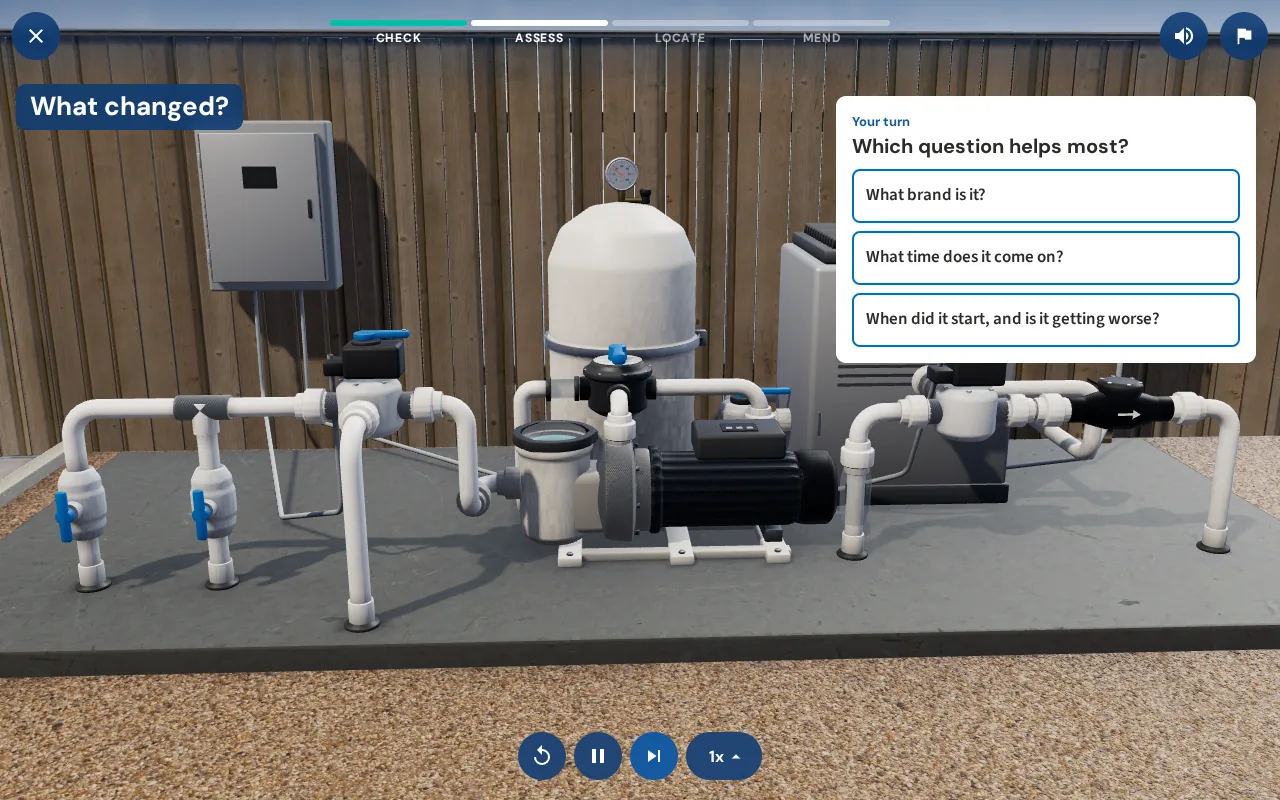
Next, ask the customer when the noise started and whether it is getting worse. The brand does not help here, because any brand can wear out a bearing. The time the pump comes on tells you when the neighbor hears it, not why it is loud.
The customer says the noise started a few weeks ago and keeps getting louder. Nobody has worked on the pad, and the pump has not been moved.
Step 3. Locate: Find Where the Noise Comes From
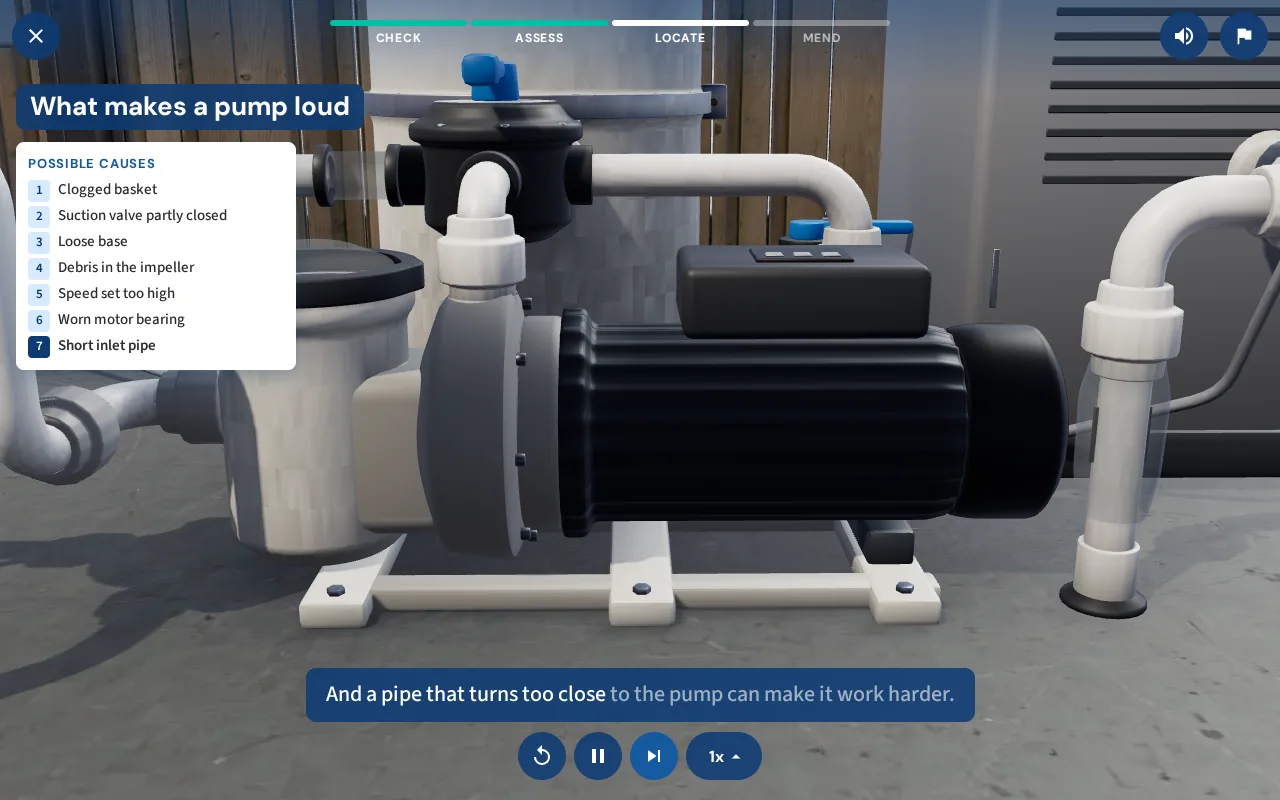
Before you test anything, list every cause that could make a pump this loud. These are the ones on the list for this call:
- A clogged basket. The pump can starve for water if the basket is clogged.
- A suction valve that is partly closed. This starves the pump for water too.
- A loose base. The pump can rattle if it is not bolted down tight.
- Debris in the impeller. The impeller is the spinning part that pushes the water.
- Speed set too high. The pump can be set to run faster than it needs to.
- A worn motor bearing.
- A short inlet pipe. A pipe that turns too close to the pump can make it work harder.
Start With the Cheapest Checks
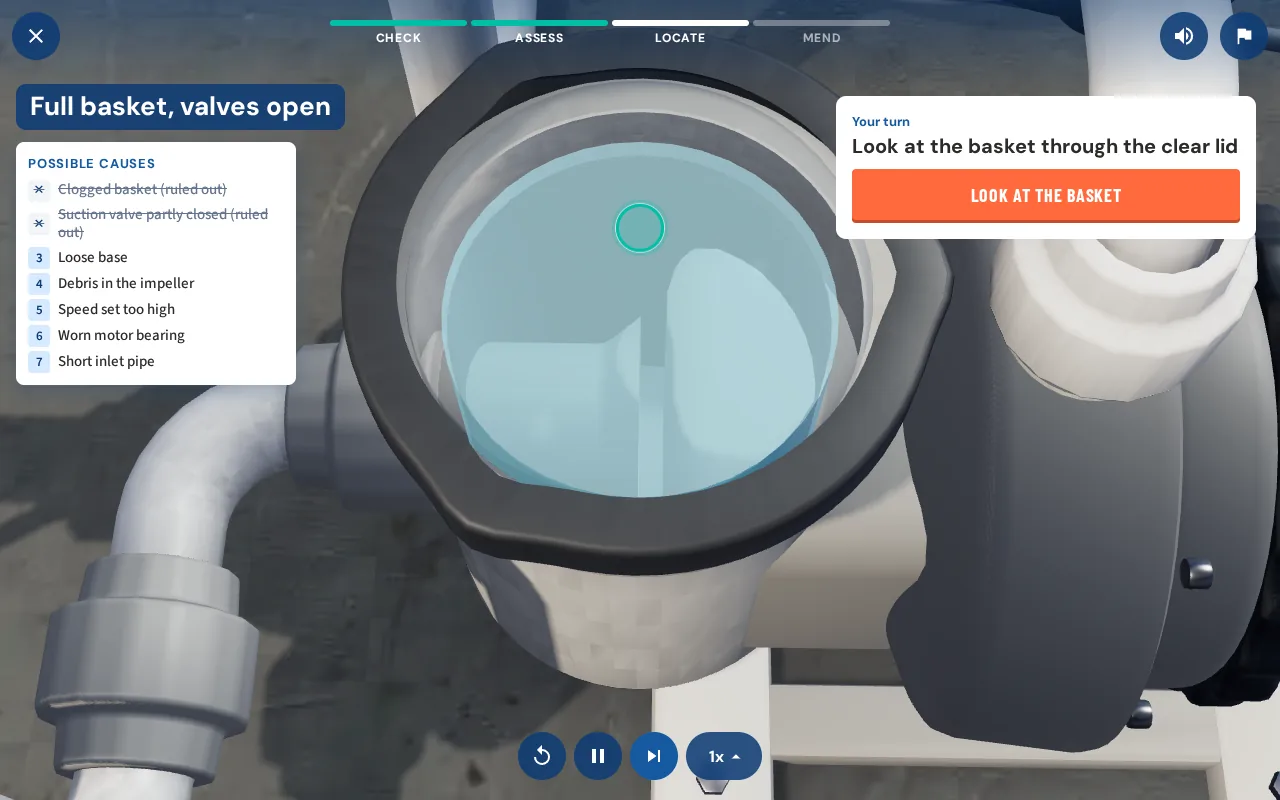
Look at the basket through the clear lid, and look at the suction valves. Here the basket is full of water with only a few leaves, and both suction valves are wide open. The pump is not starving for water, so the basket and the valves come off the list.
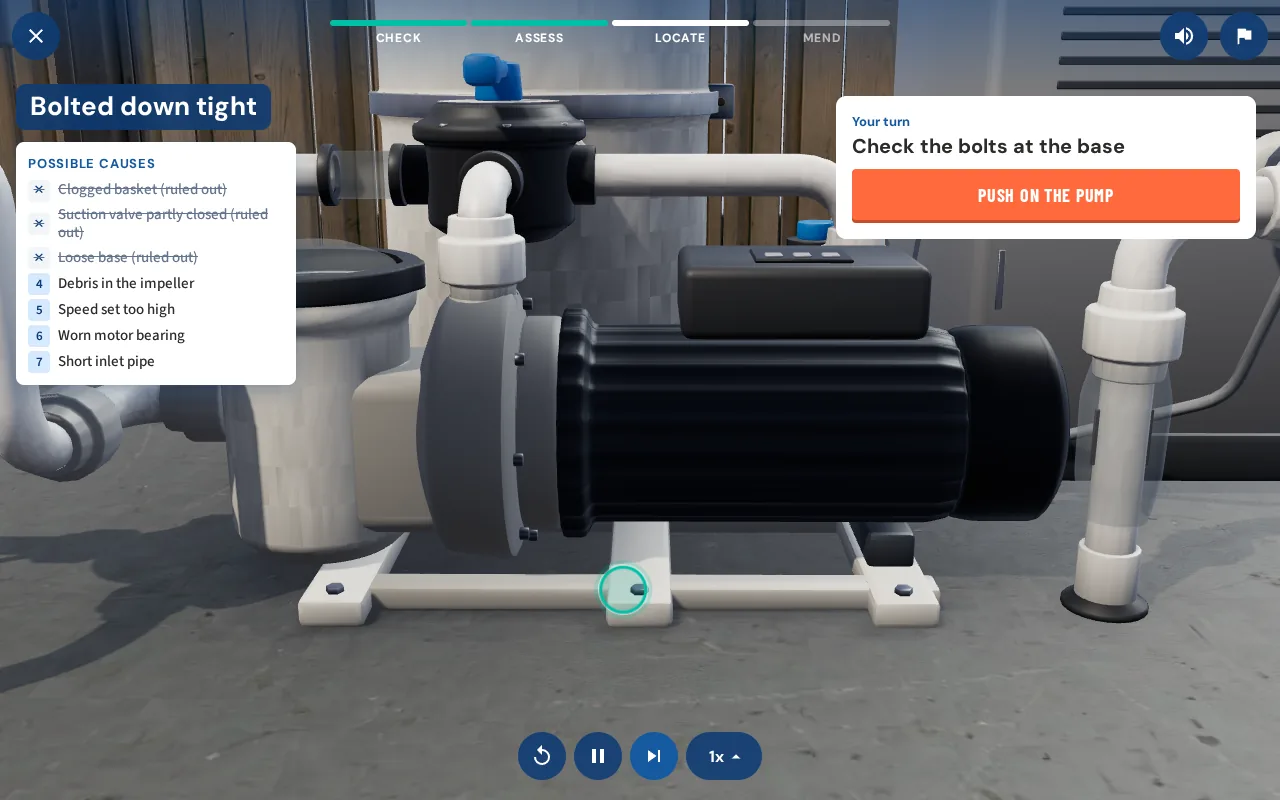
Next, check that the pump is bolted down tight. Here the bolts are snug, and the pump does not rock when you push on it. Nothing is loose enough to rattle, so the base comes off the list.
Turn the Speed Down and Listen
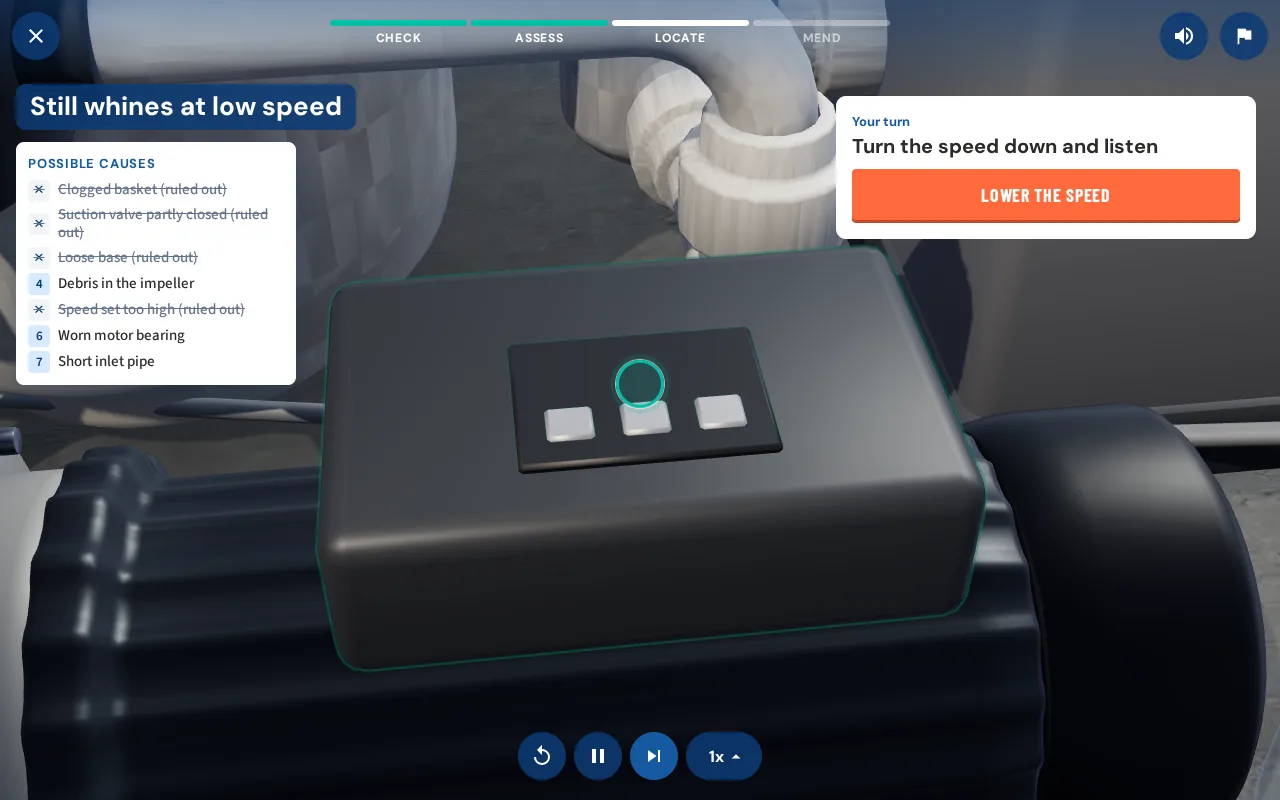
Now turn the speed down on the pump's keypad and listen. A pump that is starving for water, or one that is just running too fast, gets much quieter at low speed.
This whine does not go away. It only drops a little in pitch. So the speed is not the problem, and it comes off the list too.
Listen With a Screwdriver
Three causes are left: debris in the impeller, a worn bearing and the inlet pipe. Now find where the noise is loudest.
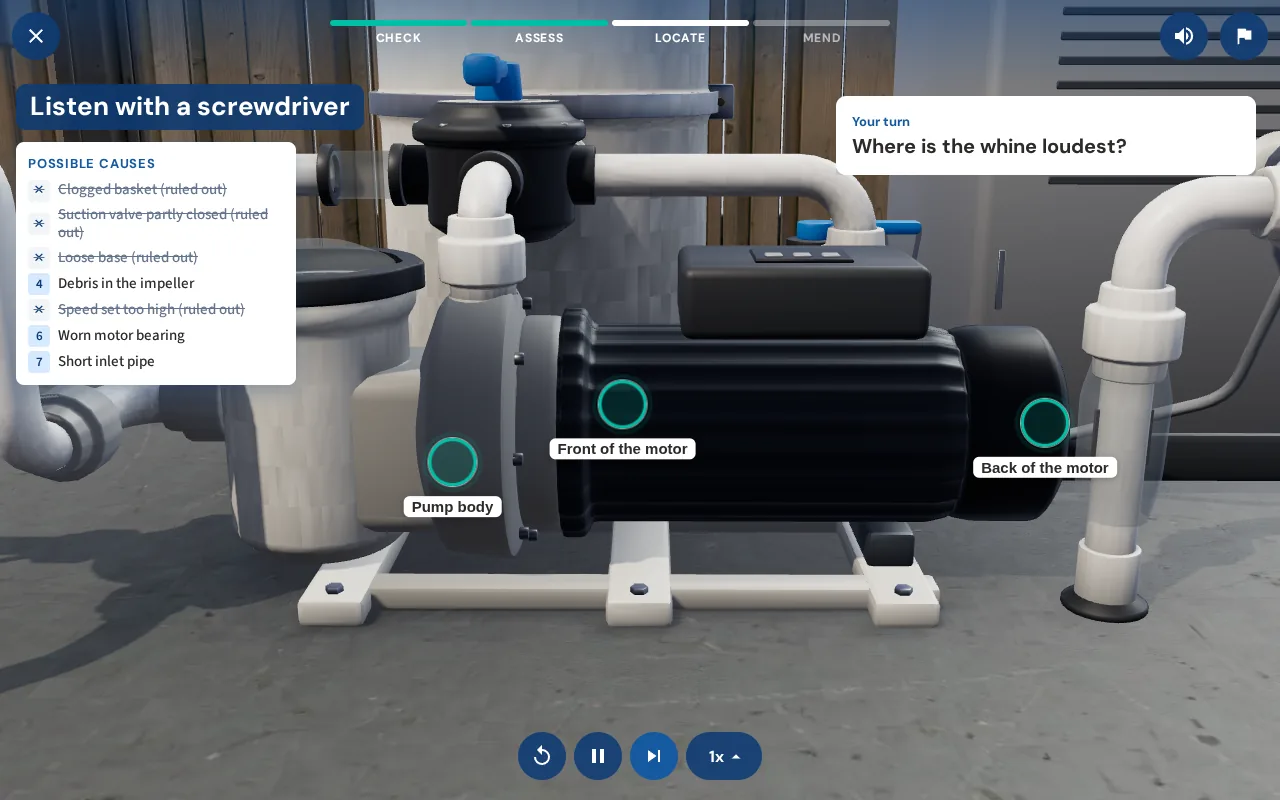
Hold the handle of a long screwdriver to your ear. Touch the tip to the pump in three places: the front of the motor, the back of the motor, and the pump body. The screwdriver carries the sound to your ear, the way a doctor's stethoscope does. The pump is running for this test, so keep clear of the fan at the back of the motor.
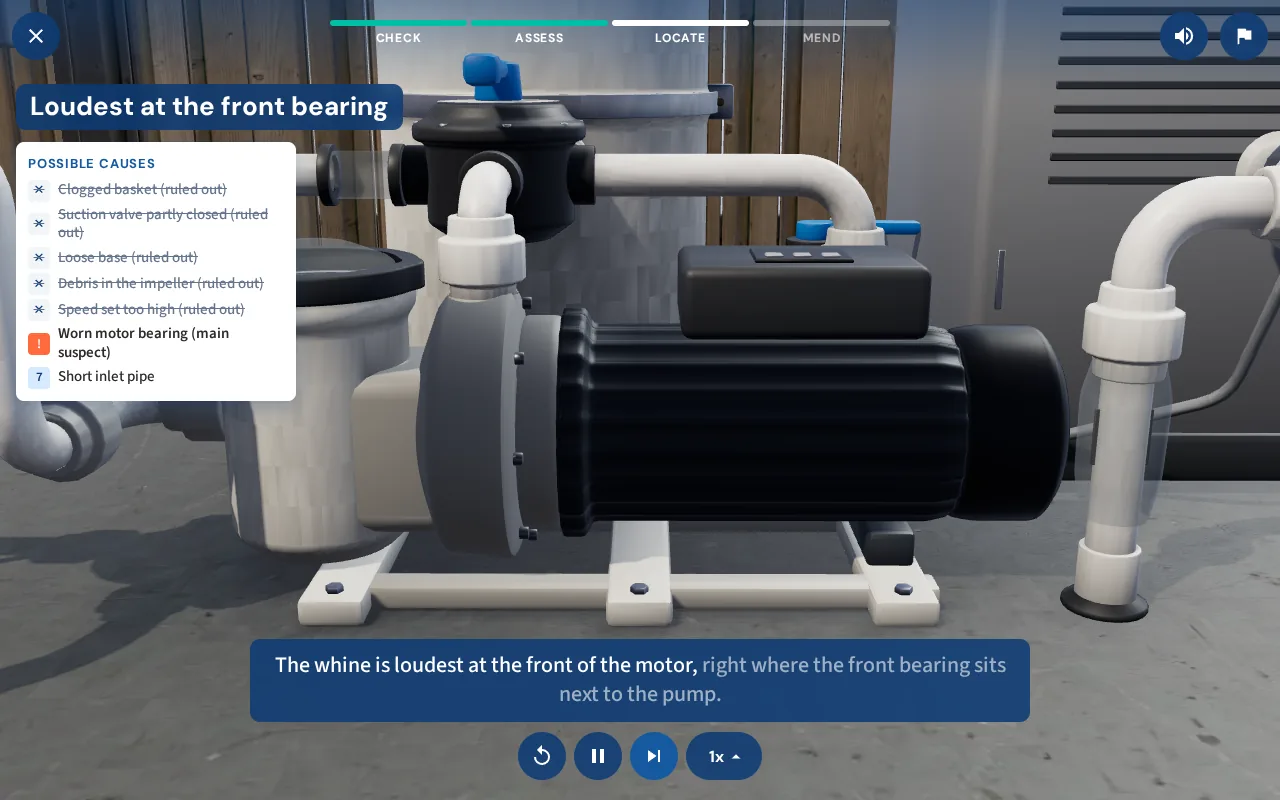
On this call the whine is loudest at the front of the motor, right where the front bearing sits next to the pump. It is quieter at the back of the motor, at the fan end. It is quieter on the pump body too, so debris in the impeller is unlikely. The worn front bearing is now the main suspect.
Look under that end of the motor while you are there. A drip or a rust trail means the shaft seal is leaking. Pros often blame seal water for a dead front bearing.
Look at the Pipe Going Into the Pump
Do not stop at the bearing. Look at the pipe going into the pump. On this pad it turns through an elbow only about five inches before the pump.
Pros like a straight run of about five pipe widths before the inlet. That is about ten inches on a two-inch pipe. When the pipe turns that close to the pump, the water hits the impeller unevenly, and the pump works harder.
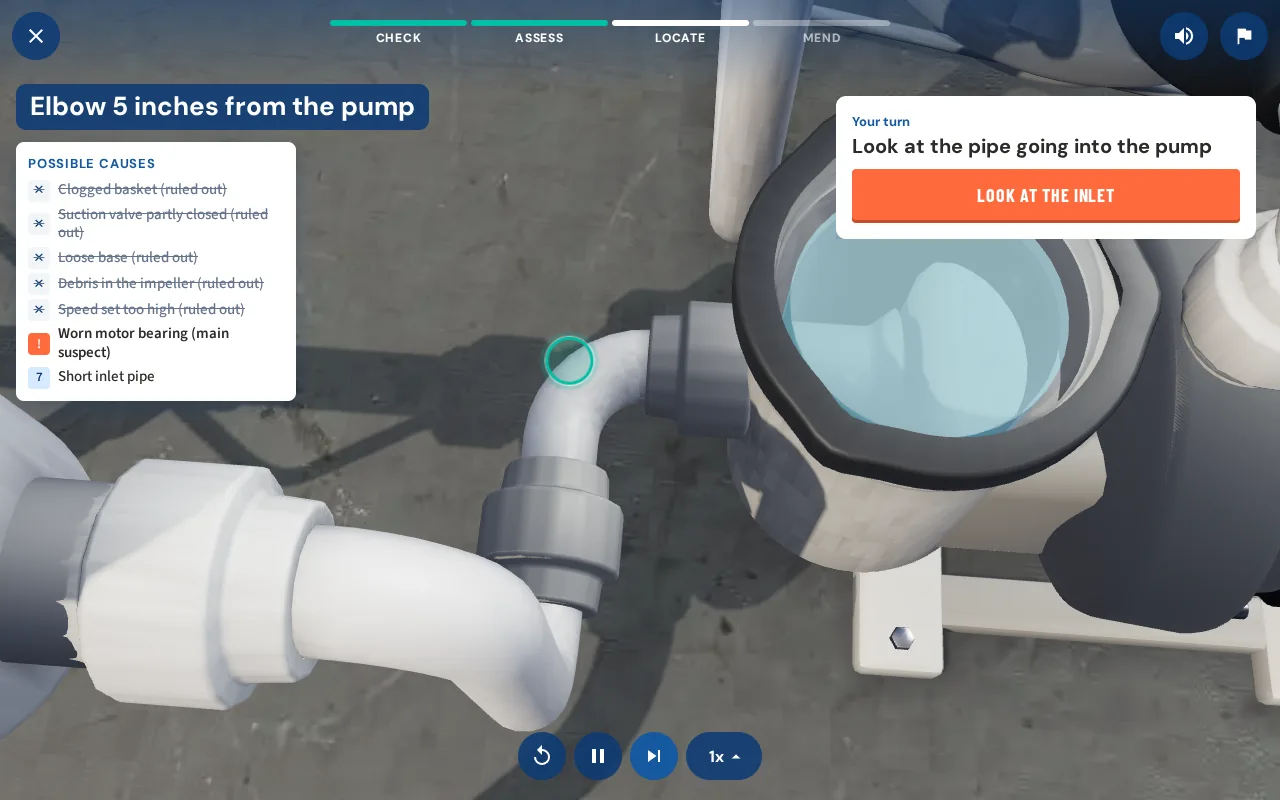
Now you can say the whole chain out loud. The pump has enough water and nothing is loose. The motor's front bearing is wearing out, and that is the whine. The elbow right at the inlet makes the pump work harder, which can wear a bearing out faster. If you fix only the bearing, the same strain is still there.
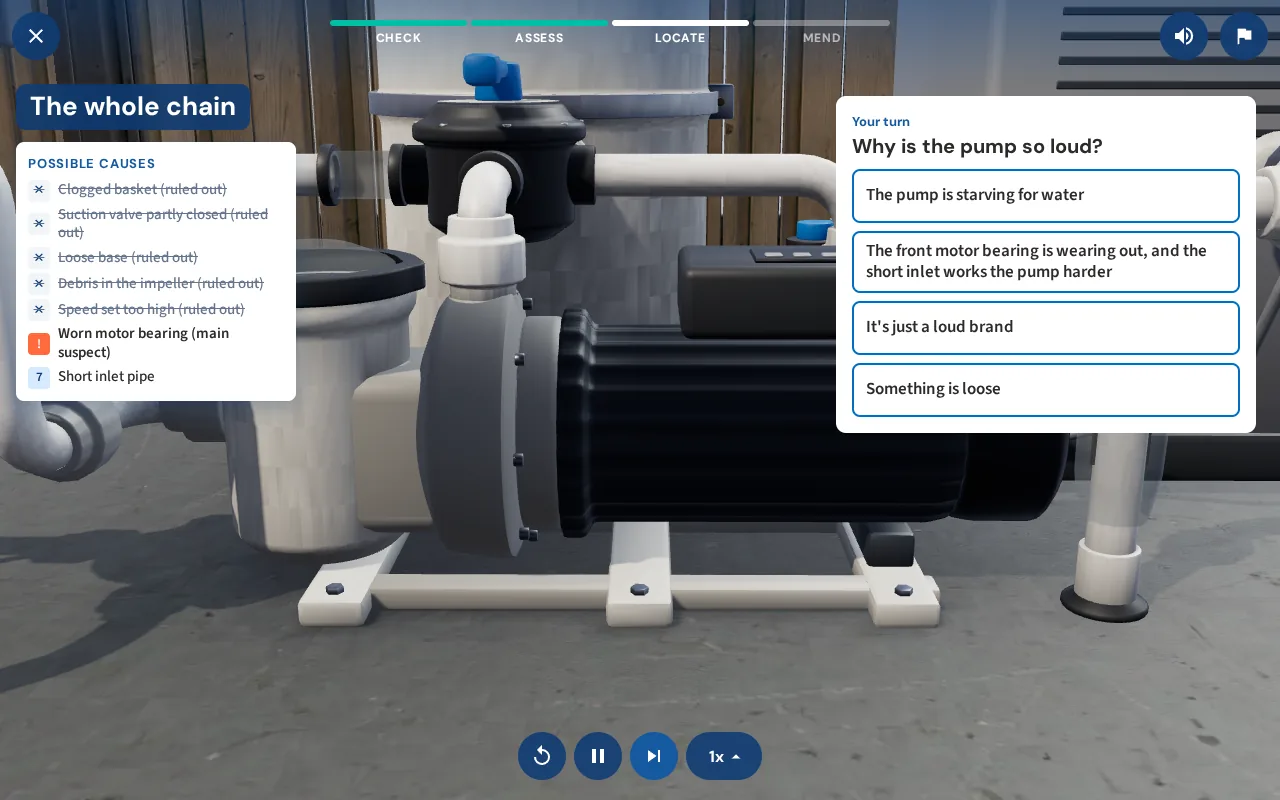
Step 4. Mend: Pick the Smallest Fix That Reaches the Cause
A whole new pump would be quiet for a while. But it costs far more than new bearings, and it would sit on the same short pipe. This pump is only a year and a half old, so check its warranty before anyone pays for a repair.
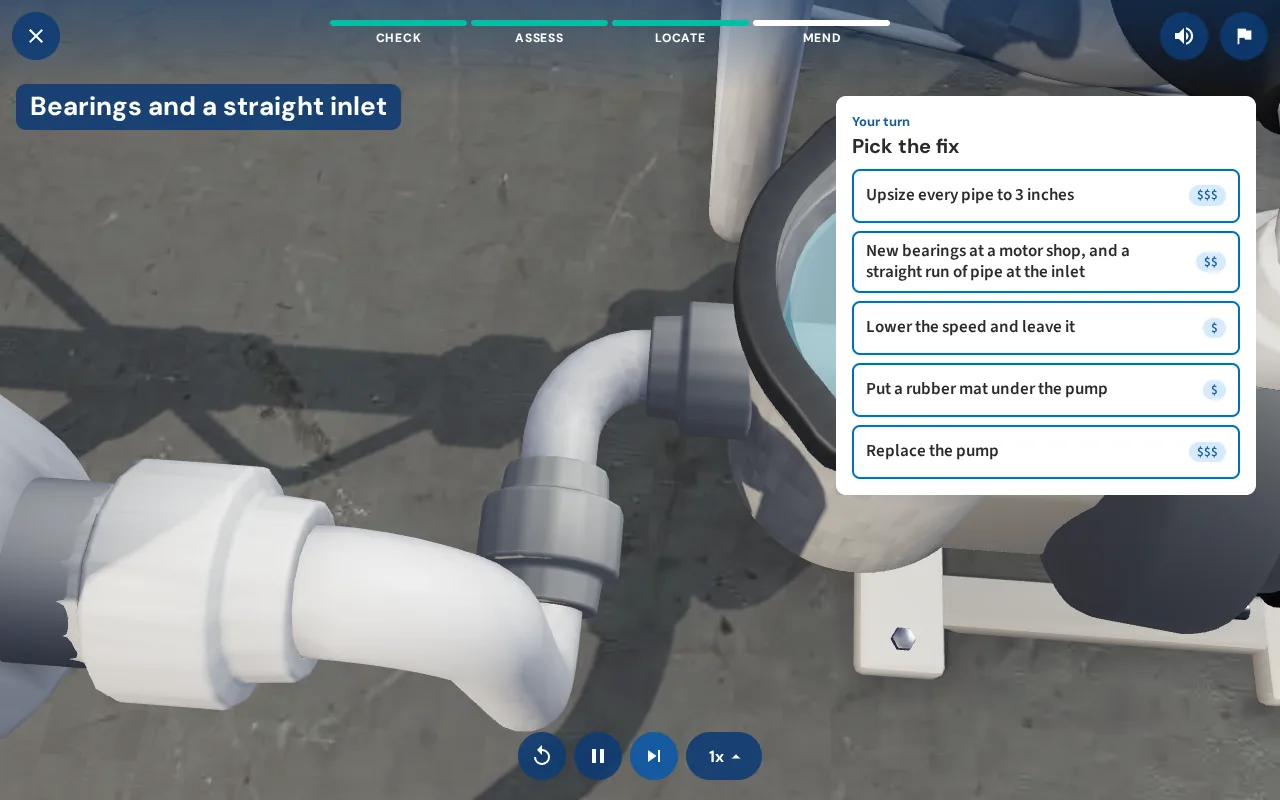
The fix on this call has two parts:
- New bearings. The motor goes to a motor shop for new bearings. A new shaft seal goes in while the motor is off.
- A straight inlet. You re-plumb the inlet so it has a straight run of about ten inches.
Unhooking the motor's wiring is a licensed electrician's job. The electrician disconnects the motor and hooks it back up. If the pump has to move back to make room for the pipe, the electrician moves the wiring too.
Some shops will say a new motor makes more sense than new bearings. That can be the right call too.
Prove It, Twice
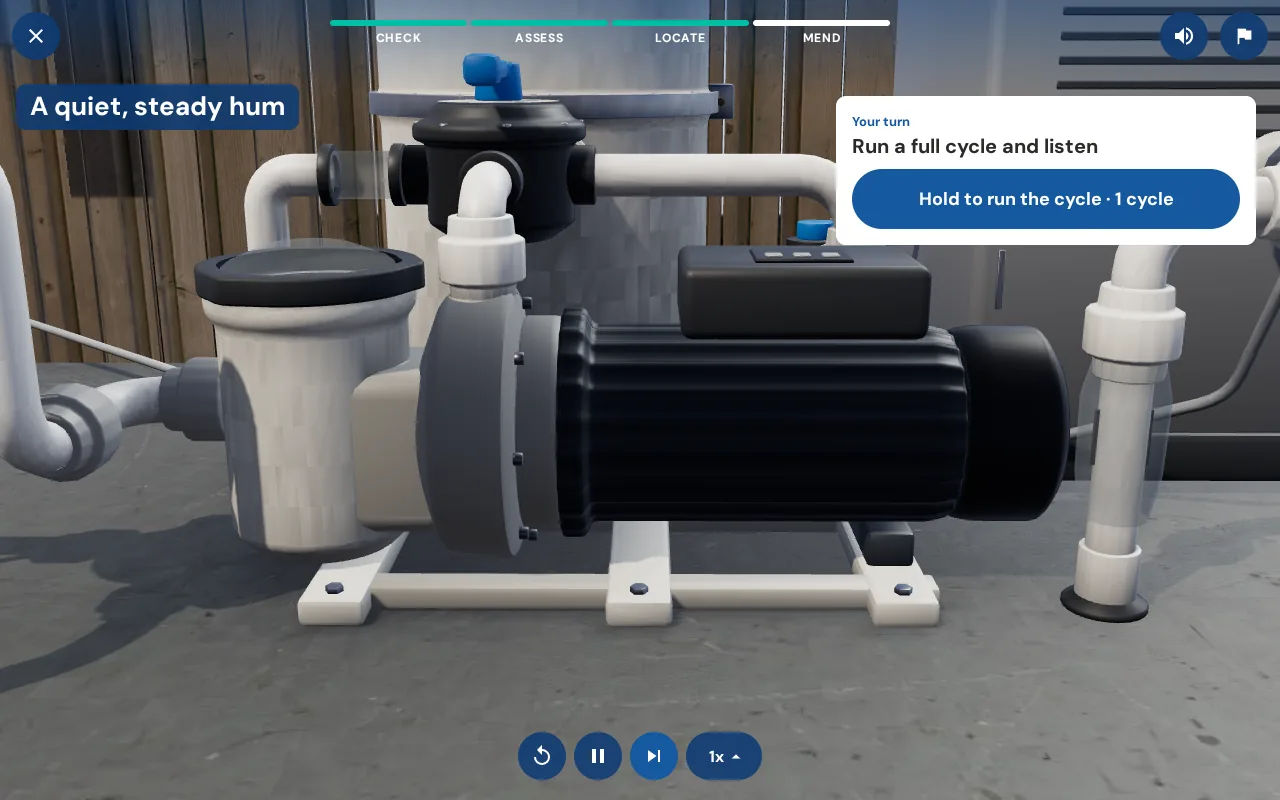
A fix is not done until you prove it. Run the pump for a full cycle and listen. You should hear a steady, low hum and the rush of water with no whine, and you should be able to talk next to it.
One quiet start is not enough to be sure. Let the pump stop, then start it again and listen for the whine. On this call it stays quiet.
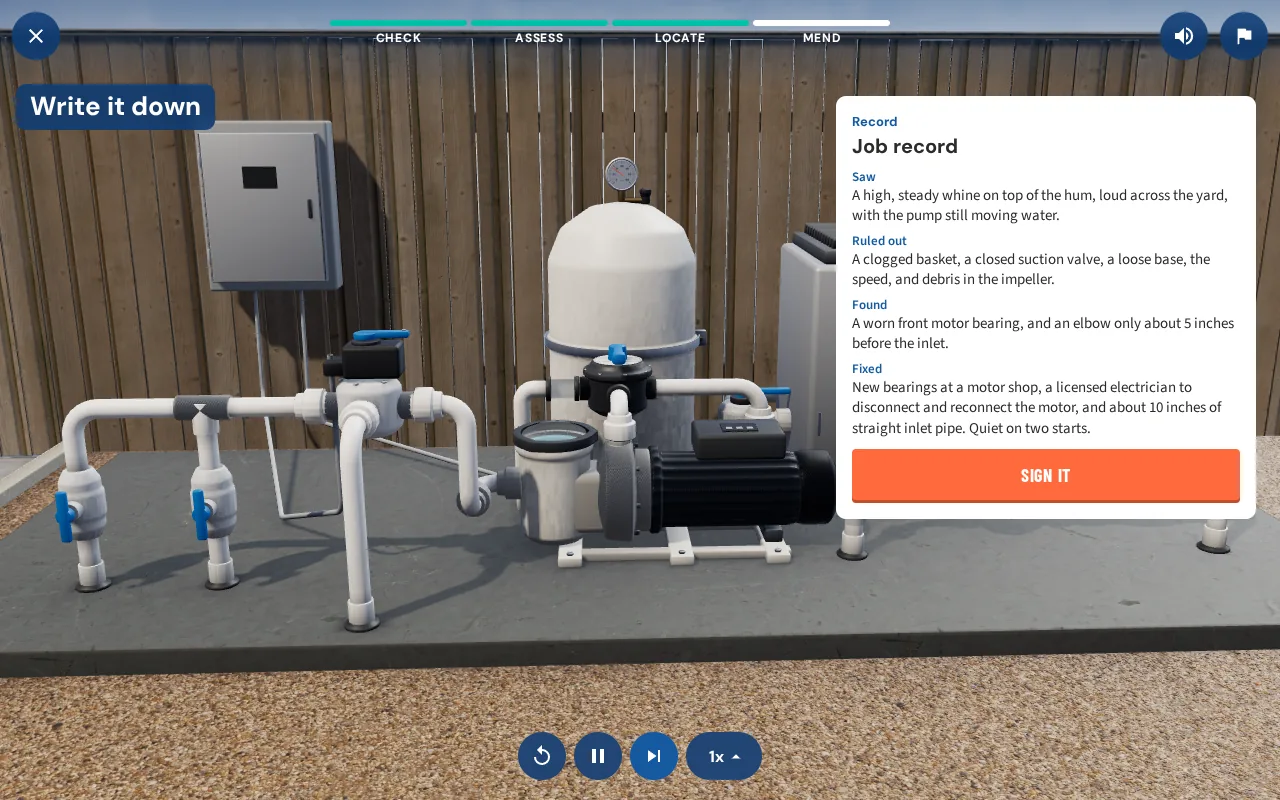
Last, write it down. Note the whine, what you ruled out, where the screwdriver said the noise was loudest, the short inlet, and the new bearings and straight pipe. If the noise comes back, the next tech knows where to listen first.
Wrong Moves That Cost Money or Get People Hurt
- Putting your hands near the fan. You listen while the pump runs. Keep your hands away from the fan at the back of the motor and anything else that turns.
- Replacing the pump. That would quiet it for now at far more cost, and the new pump would sit on the same short pipe.
- Upsizing every pipe to 3 inches. The valves and the filter on this pad are 2-inch. What matters is a straight run before the inlet, not bigger pipe everywhere.
- Lowering the speed and leaving it. The whine stayed at low speed. The bearing will keep wearing until it fails.
- Putting a rubber mat under the pump. A mat can soften a rattle. This is a bearing.
- Calling it a loud brand. The pump was quieter when it was new. If the neighbor can hear it now, something has changed.
- Fixing only the bearing. The elbow at the inlet still makes the pump work harder, so the same strain is still there.
- Calling it fixed after one start. Start it twice and listen both times.
When to Stop and Call a Pro
A pool tech can find this noise without opening anything. The repair needs other trades. Stop and refer the job when the next step means any of these:
- Unhooking or hooking up the motor's wiring. That belongs to a licensed electrician.
- Moving the wiring because the pump has to move back to make room for the pipe. The electrician does that too.
- Changing the bearings inside the motor. On this call that work goes to a motor shop.
Check the pump's warranty before any of that work is paid for.
Try This Call Yourself
Reading the steps is one thing. Making the choices yourself is how they stick, and on a noise call it helps to hear the whine. The lesson behind this guide is free, and it takes about 9 minutes.
Loud, and getting louder
Work this exact call in a 3D equipment pad. Free, with a sign-in. Repair School is in beta. Its lessons are drafts, and a working pro has not reviewed them yet.
Try this call in the simulatorRelated Pool Pump Guides and Tools
To see where the impeller and the motor sit inside the pump, read how a pool pump works. If the basket is not full and the returns spit bubbles, follow the air in the pool pump basket guide. If the pump will not come on at all, follow the pool pump not turning on guide. For one model's own noise guide, see Pentair WhisperFlo motor noise. More brands are in the equipment troubleshooting guides.
Once the pump runs quiet, the pump run time calculator helps you set the pump's schedule, and the pump energy cost calculator shows what that schedule costs.
Frequently Asked Questions
Why is a pool pump making a loud noise?
Sort the noise by what it sounds like. A sound like gravel or marbles inside the pump usually means the pump is starving for water. A rattle or a knock means something is loose. A steady, high whine that does not let up usually means a worn bearing in the motor.
What does a bad pool pump bearing sound like?
A worn motor bearing usually makes a steady, high whine on top of the normal hum. On this call the whine stayed when the speed was turned down. It only dropped a little in pitch.
How do you find where a pump noise comes from?
Hold the handle of a long screwdriver to your ear and touch the tip to the front of the motor, the back of the motor and the pump body. The screwdriver carries the sound to your ear. The spot where the noise is loudest is where to look. Keep your hands away from the fan at the back of the motor and anything else that turns.
Does a loud pool pump need to be replaced?
Not on that sign alone. On this call the cause was a worn front motor bearing and an elbow too close to the pump inlet. New bearings and a straight run of pipe at the inlet fixed it for far less than a new pump. Some shops will say a new motor makes more sense than new bearings, and that can be the right call too.
How much straight pipe should there be before a pool pump?
Pros like a straight run of about five pipe widths before the pump inlet. That is about ten inches on a two-inch pipe. When the pipe turns closer than that, the water hits the impeller unevenly and the pump works harder.
This guide follows one PoolDial Repair School lesson, and every repair step in it comes from that lesson. The call is a teaching example built around problems techs actually run into, not a record of one job. The equipment manual and the local codes control any real repair.