


Key Takeaways
- Ask one thing first: does the motor hum, or is it silent? A silent motor usually means power is not reaching it.
- Follow the power in order: timer, breaker and GFCI, the switch by the pump, the panel's call, the relay, the wires, then the motor.
- You can look, listen, read a screen, check a breaker and reset a GFCI once. Testing live wires is a licensed electrician's job.
- Do not buy a pump until you know power is reaching the old one. A new pump with no power will sit silent too.
A customer calls. The pool pump ran fine yesterday. Today it will not come on at all. They want to know if they need a new pump.
That is the first guess most people make. It is often wrong, and it is the most costly guess on the list. This guide walks one service call from start to finish so you can see how to find the real cause.
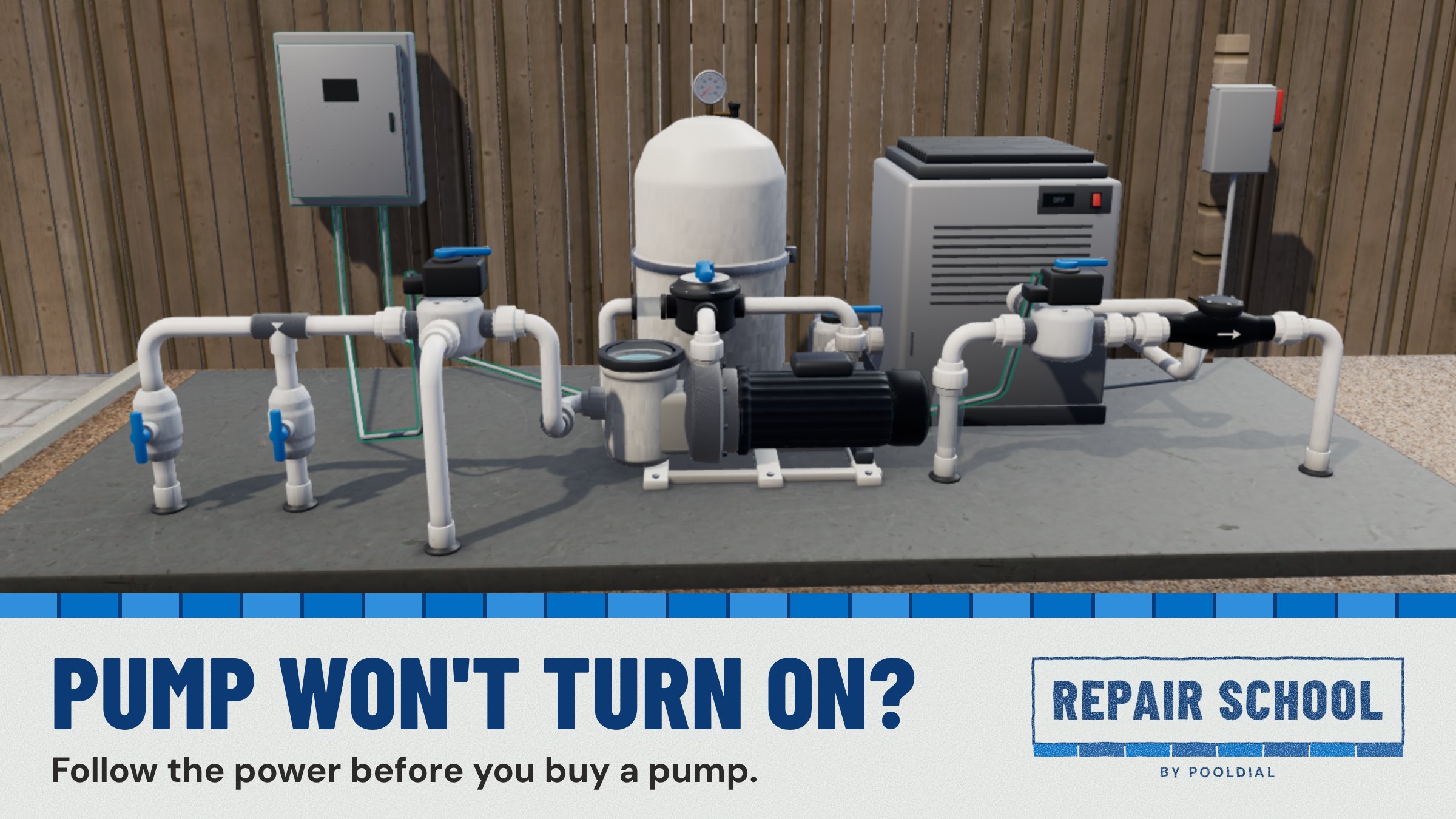
The pictures come from PoolDial Repair School, our free 3D repair simulator. They show one worked example on one equipment pad. Your pad will look different, and your cause may be different. The order of the steps is what carries over.
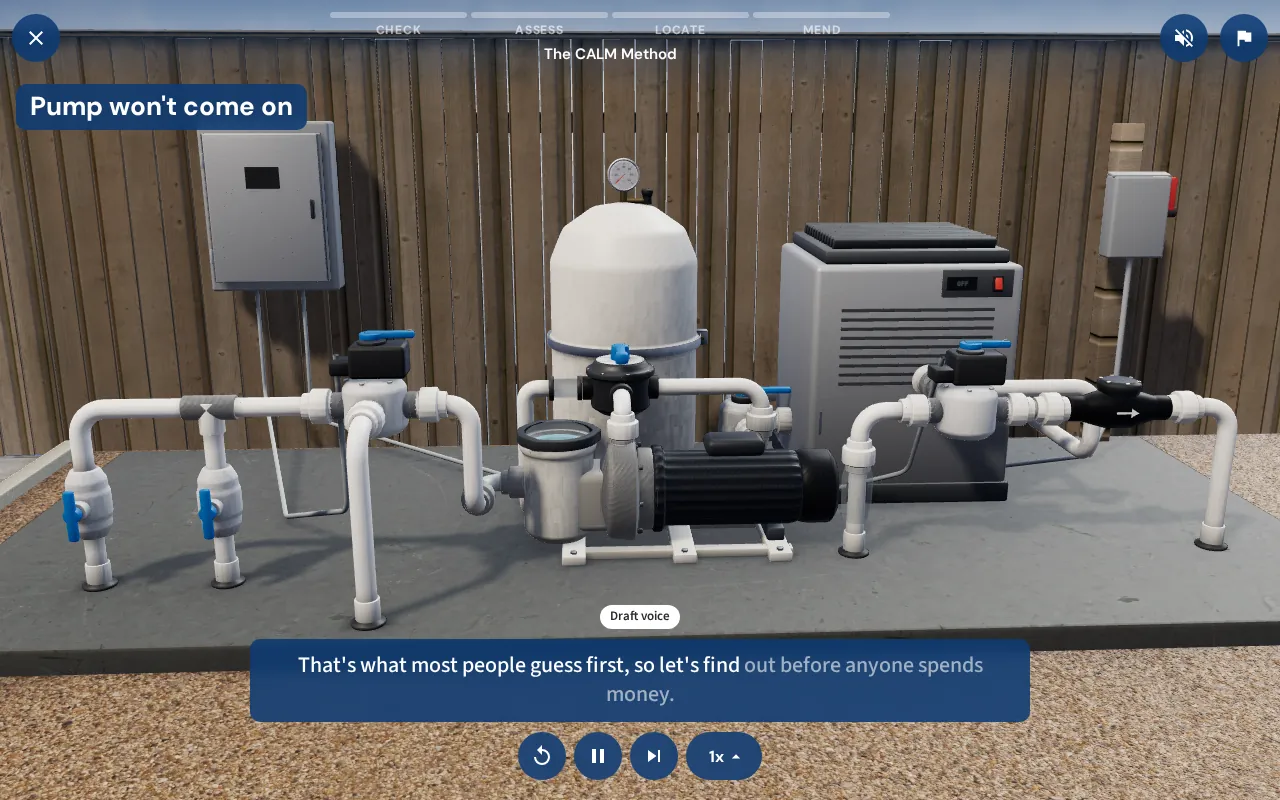
We work every call the same way. We call it the CALM Method: Check, Assess, Locate, Mend. It keeps you from skipping to a fix before you know the cause.
Step 1. Check: Make the Pad Safe
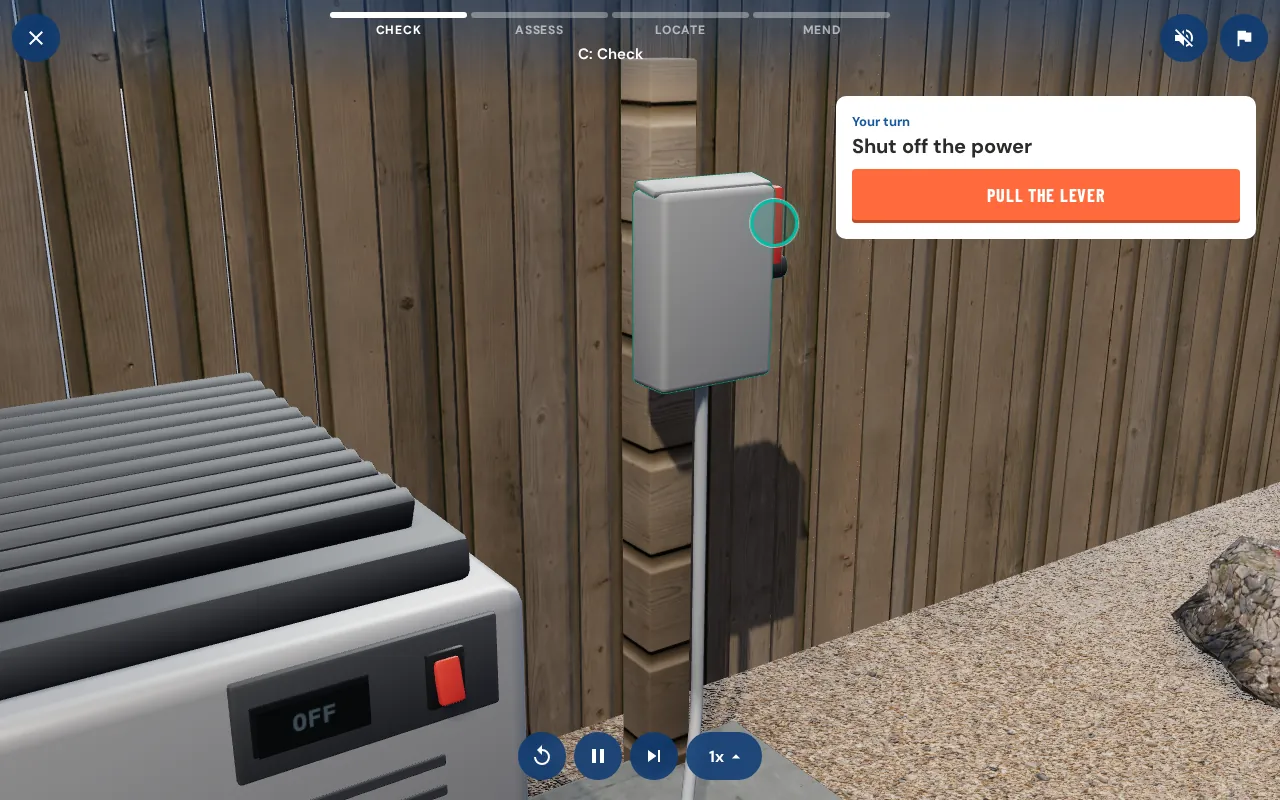
When a pump will not run, it is tempting to pull the cover off the motor and start poking around. Do not do that. A pump that is not running can still have power on its wires. On this pad that wiring carries 240 volts.
Shut off the power at the switch by the pump before you put your hands near the pump. Then try to start the pump. If nothing happens, the switch did its job.
Pool pros take this step seriously because the warning signs can be small. One host on the Talking Pools Podcast described grabbing a piece of equipment to plug in a pump and feeling a tingle. He let go and stopped the job.
Step 2. Assess: What Should Happen, and What Does?
Start by saying what a good start looks like. When the panel calls for the pump, you hear a click from the panel. The motor starts within a second. The basket under the clear lid fills with water, and the returns in the pool start to push.
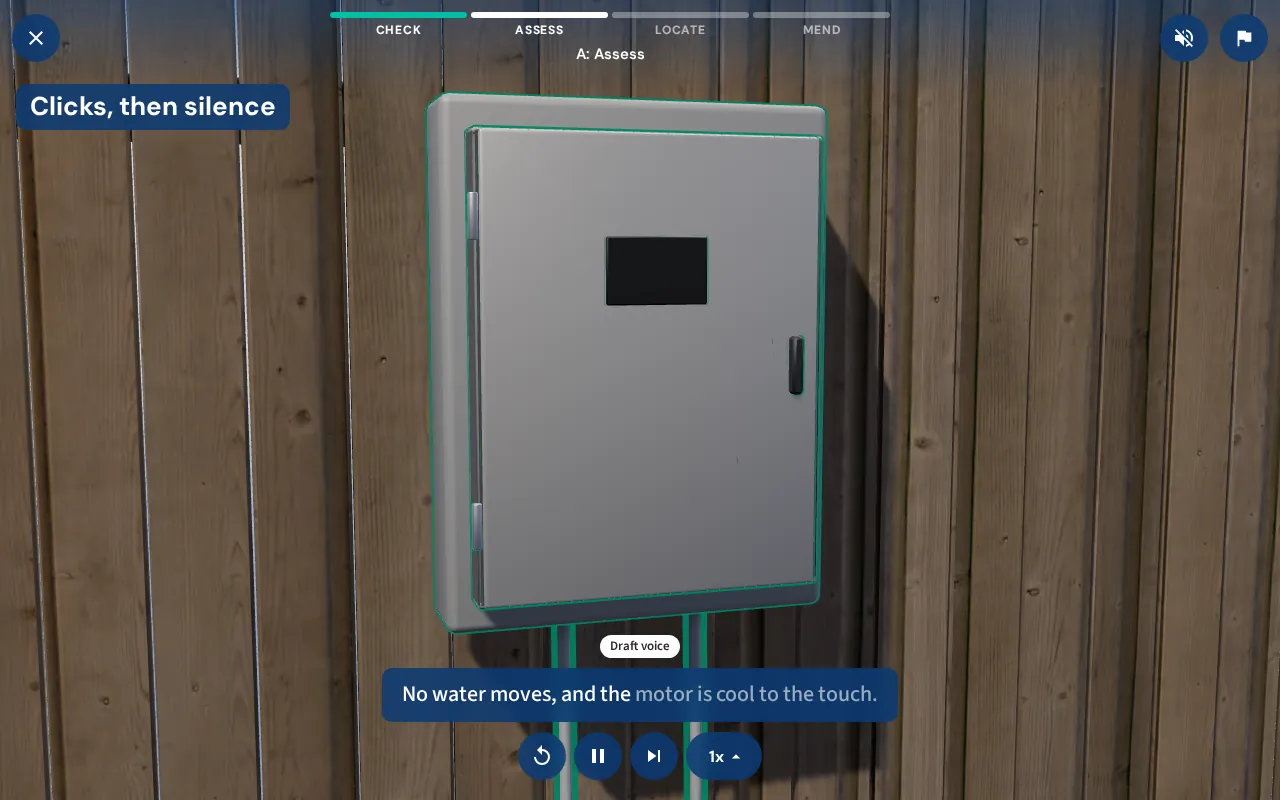
Now turn the power back on, call for the pump, and watch what really happens. On this call the panel clicks. Then nothing. The motor makes no sound. No water moves. The motor is cool to the touch.
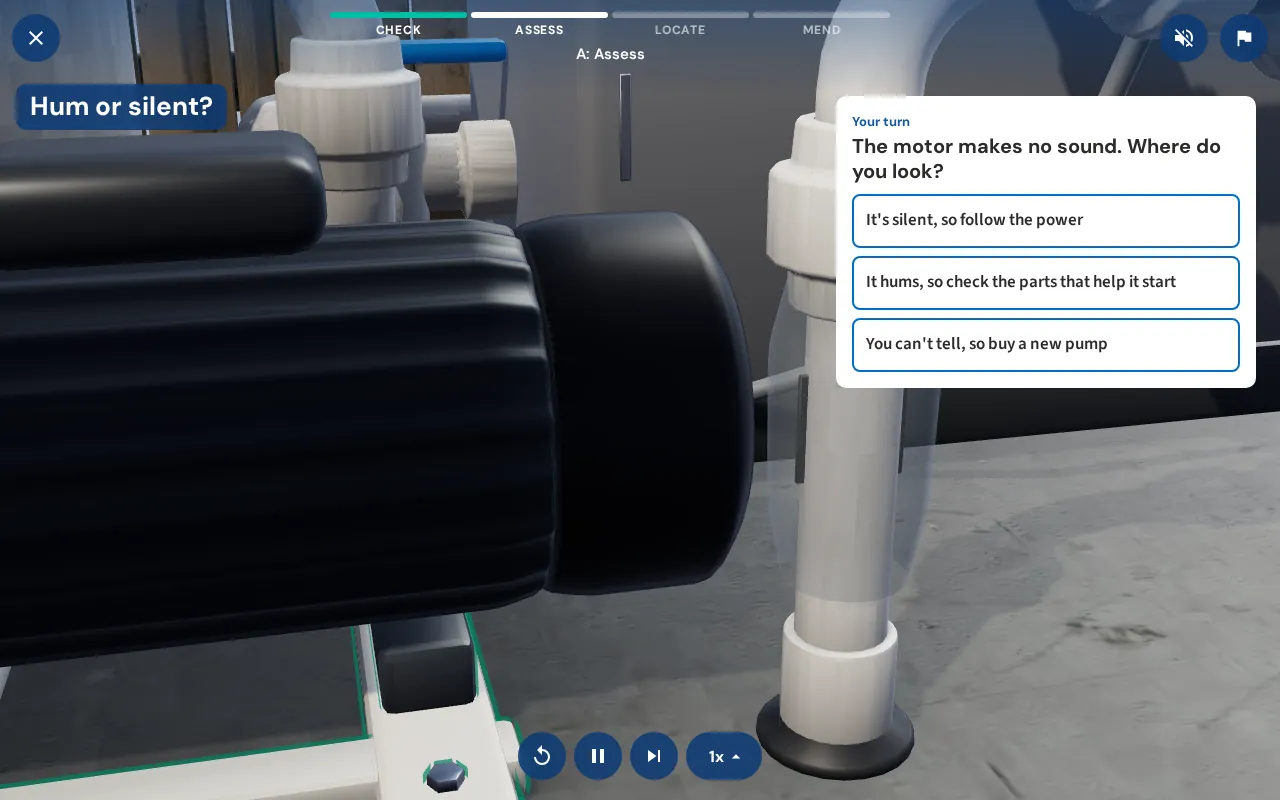
Does It Hum, or Is It Silent?
This is the question pros ask before anything else. The answer tells you which half of the problem to look at.
| What the motor does | What it points to | What you do |
|---|---|---|
| Silent. No hum, no turn. | Power is probably not reaching the motor. | Follow the power, as far as it is safe. |
| Hums but does not turn. | Power is reaching the motor, but something stops it. Pool pros commonly report a failed start part or a stuck shaft. | Switch it off so it does not overheat. Call a licensed electrician or a motor shop. |
| Ran, got hot, then quit. | The motor's heat protector may have shut it off. The manual says it restarts when it cools, and keeps shutting off until the cause is fixed. | Let it cool. Do not keep restarting it. Find out why it ran hot. |
This motor is silent, so the motor itself is not the first suspect. We follow the power.
Ask What Changed
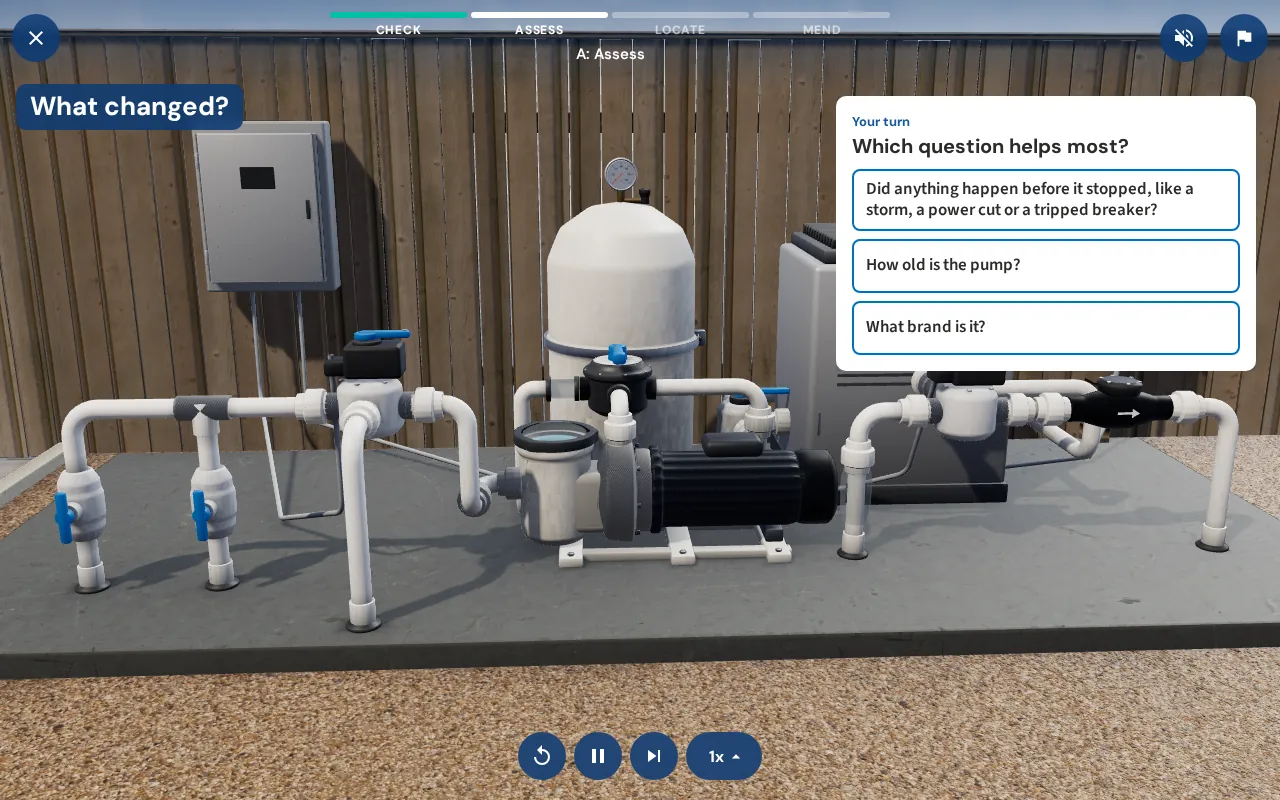
Next, ask the customer what happened before it stopped. A storm, a power cut, a tripped breaker and recent work on the pad all point you somewhere. The pump's age and brand do not tell you why it stopped today.
Ask about the timer too. A pump that "won't turn on" is sometimes a pump that was told to stay off. One pool pro put it this way:
On this call the customer says nothing changed. No storm, no power cut, and nobody has worked on the pad. It ran yesterday and stopped today.
Step 3. Locate: Follow the Power
Before you test anything, list every place the power could stop on its way to the motor. On this pad the path looks like this:
- The breaker. Here it is a GFCI breaker, which shuts off if electricity leaks.
- The panel's call. The automation panel has to ask for the pump.
- The relay. A relay is a switch the panel flips with a small signal. When it closes, it sends power out to the pump.
- The switch by the pump.
- The wires to the motor.
- The motor itself.
Start with what you can see without tools. Look at the breaker. It is on and has not tripped. The GFCI holds when you reset it. The switch by the pump is on. That rules out three stops on the list.
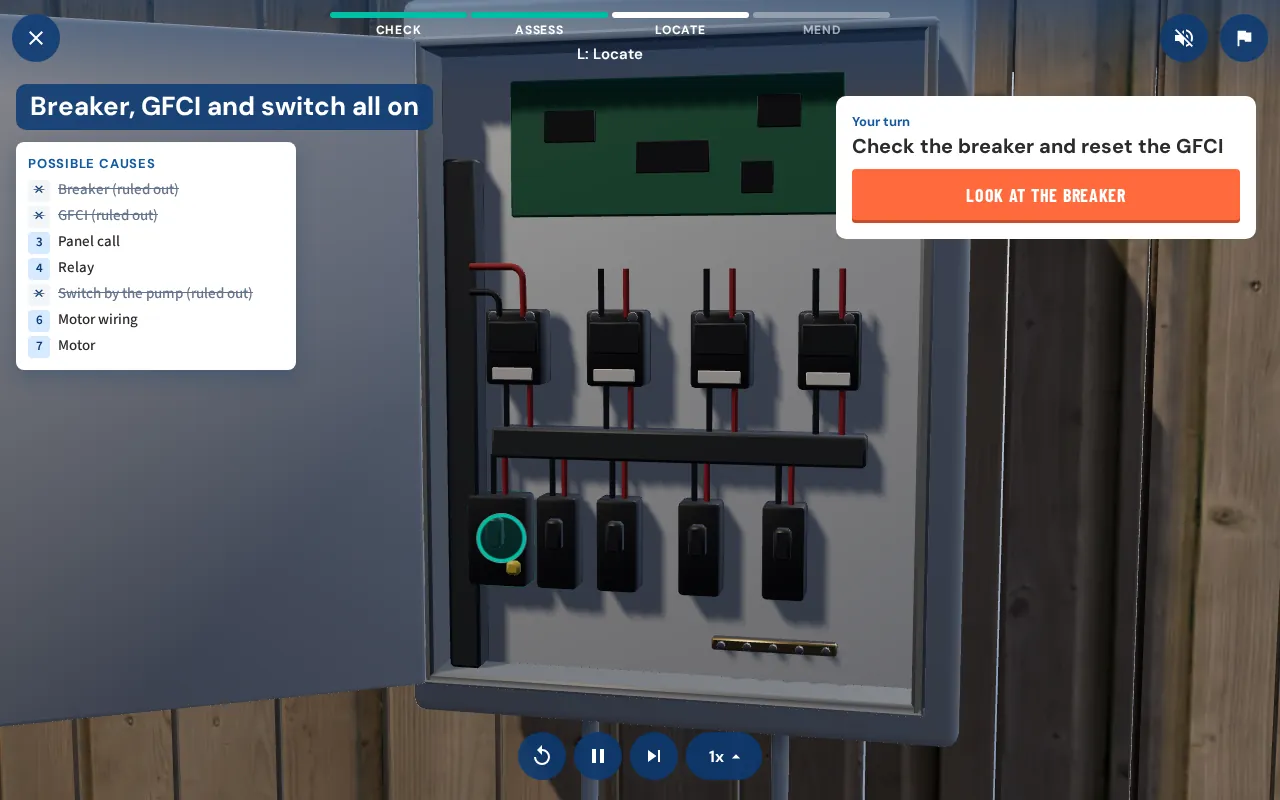
The manuals for common pumps start in the same place. For a pump that fails to start, the first cause they list is that mains voltage is not present, and the first action is to reset the breaker or GFCI.
Reset a GFCI once. If it trips again, stop there. Something is making it trip, and finding that is an electrician's job.
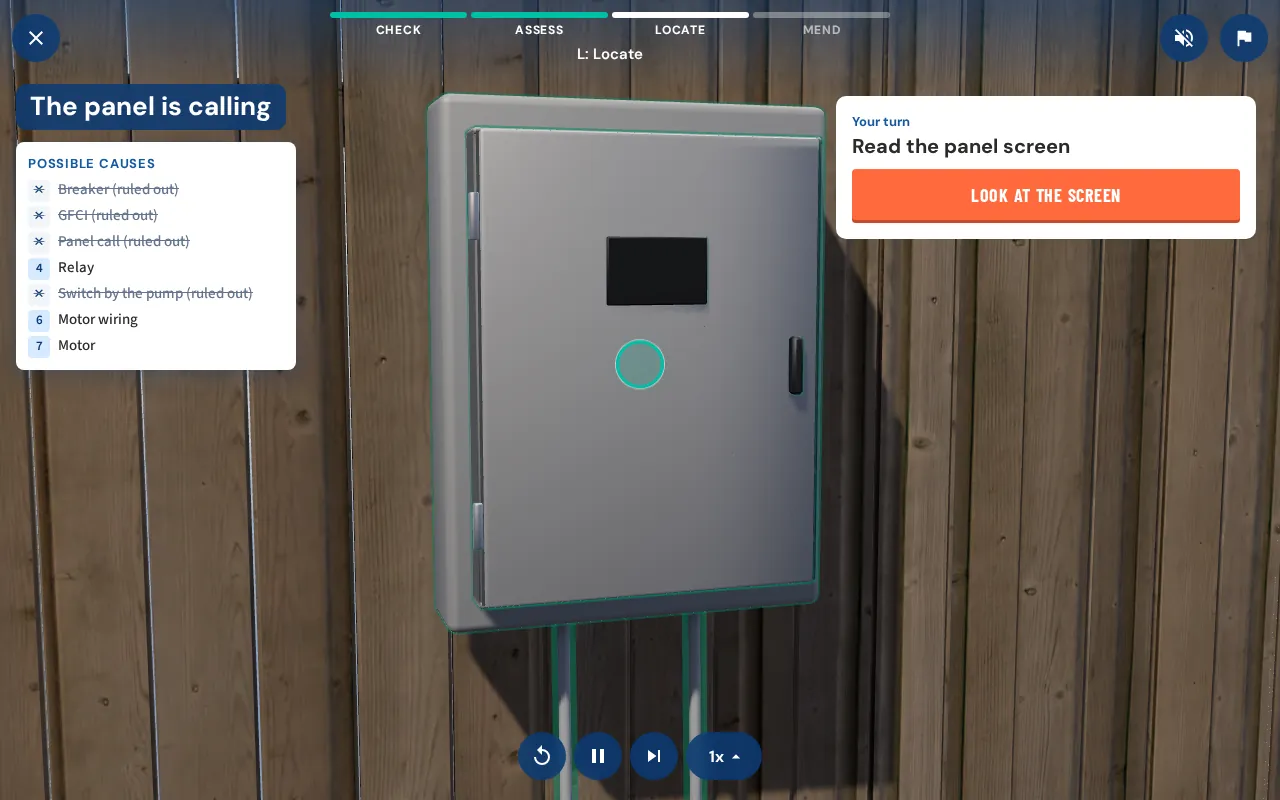
Now look at the panel. In the lesson, the screen says the pump is on, and you heard the relay click when it was called. So the panel is asking for the pump. The schedule is not the problem.
Where a Pool Tech Stops
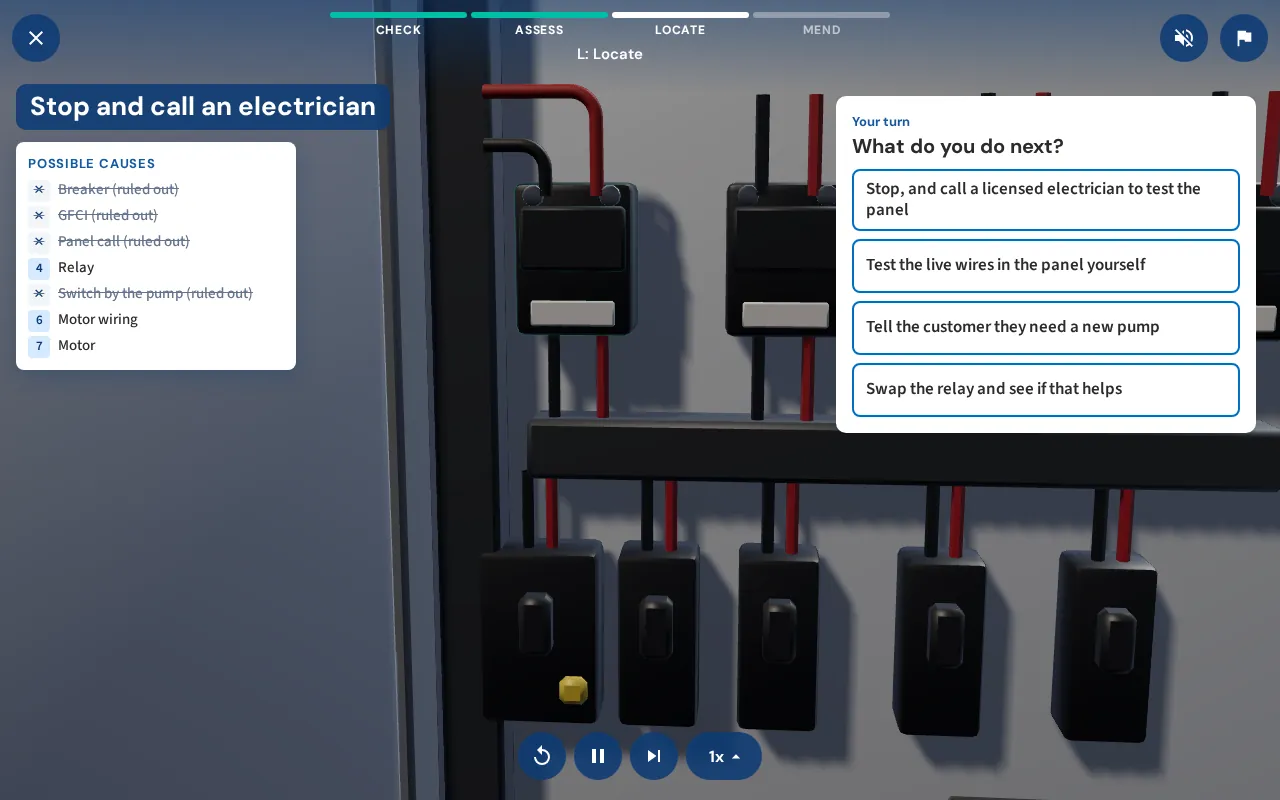
Everything you can check safely points the same way. The panel is calling, but power is not reaching the motor. The next test means putting a meter on live wires inside the panel.
That is the stop. Call a licensed electrician. Do not test the live wires yourself. Do not swap the relay to see if it helps. Do not tell the customer they need a pump.
What the Electrician Found
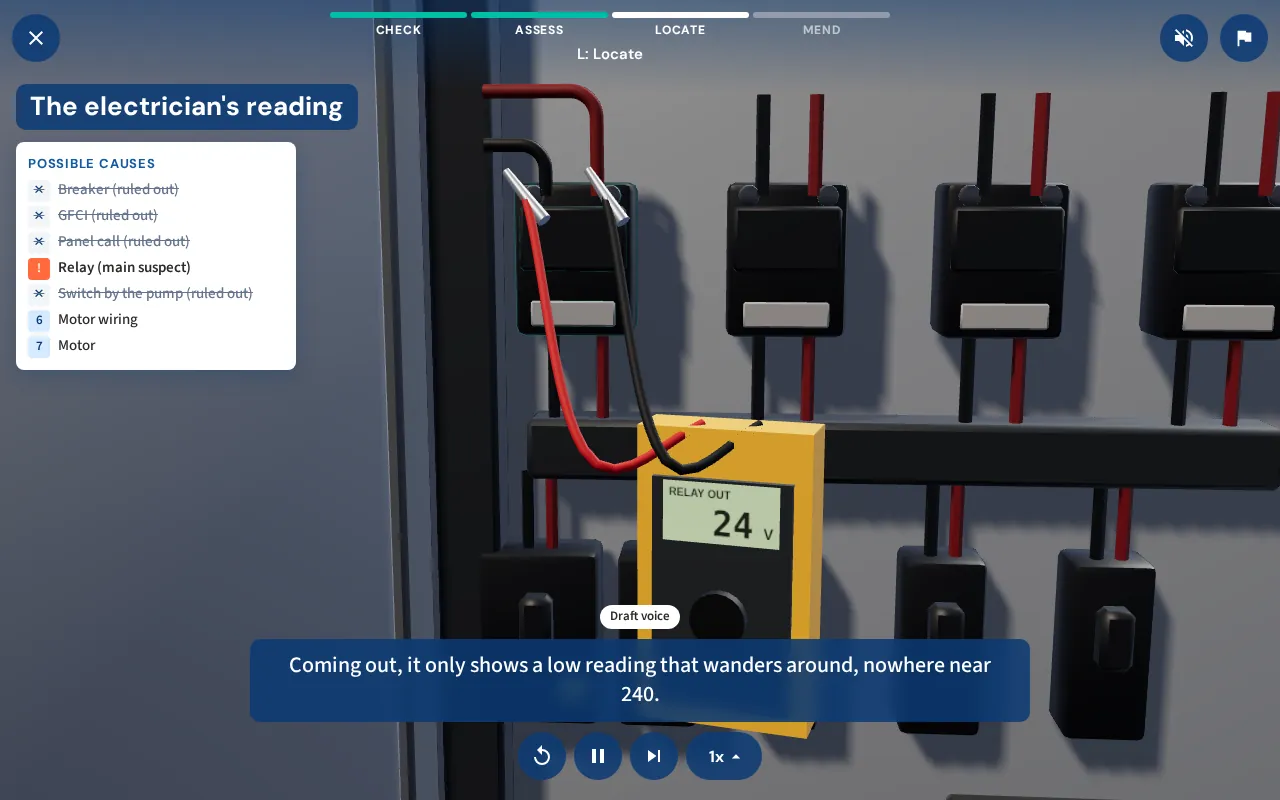
The electrician measures the relay. Going in, it has the full 240 volts. Coming out, the meter shows only a low reading that wanders around.
So the relay clicks, but its contacts are worn. Almost no power gets through. That is why a click alone does not prove a relay is good.
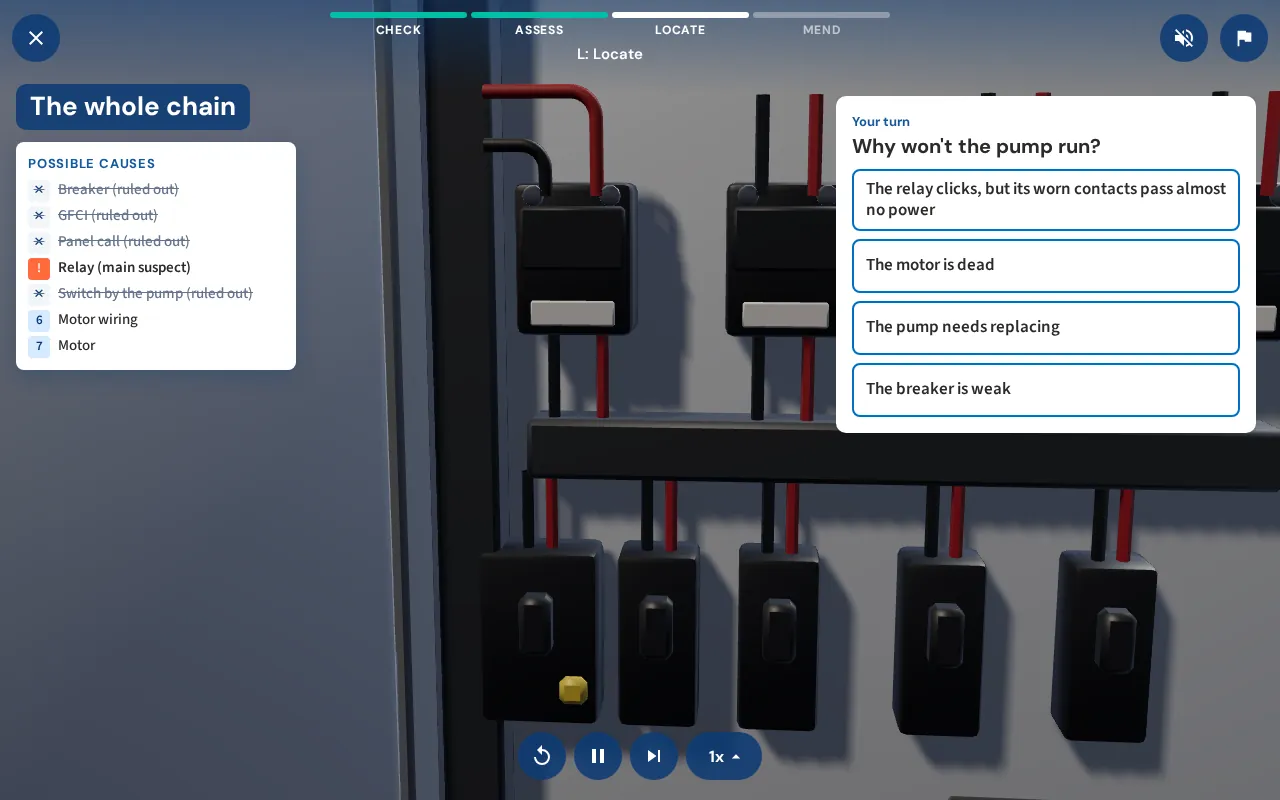
Now you can say the whole chain out loud. Power reaches the panel. The panel calls for the pump. The relay clicks, but its worn contacts pass almost no power. The motor sits silent. Nothing points at the pump.
Step 4. Mend: Pick the Smallest Fix That Works
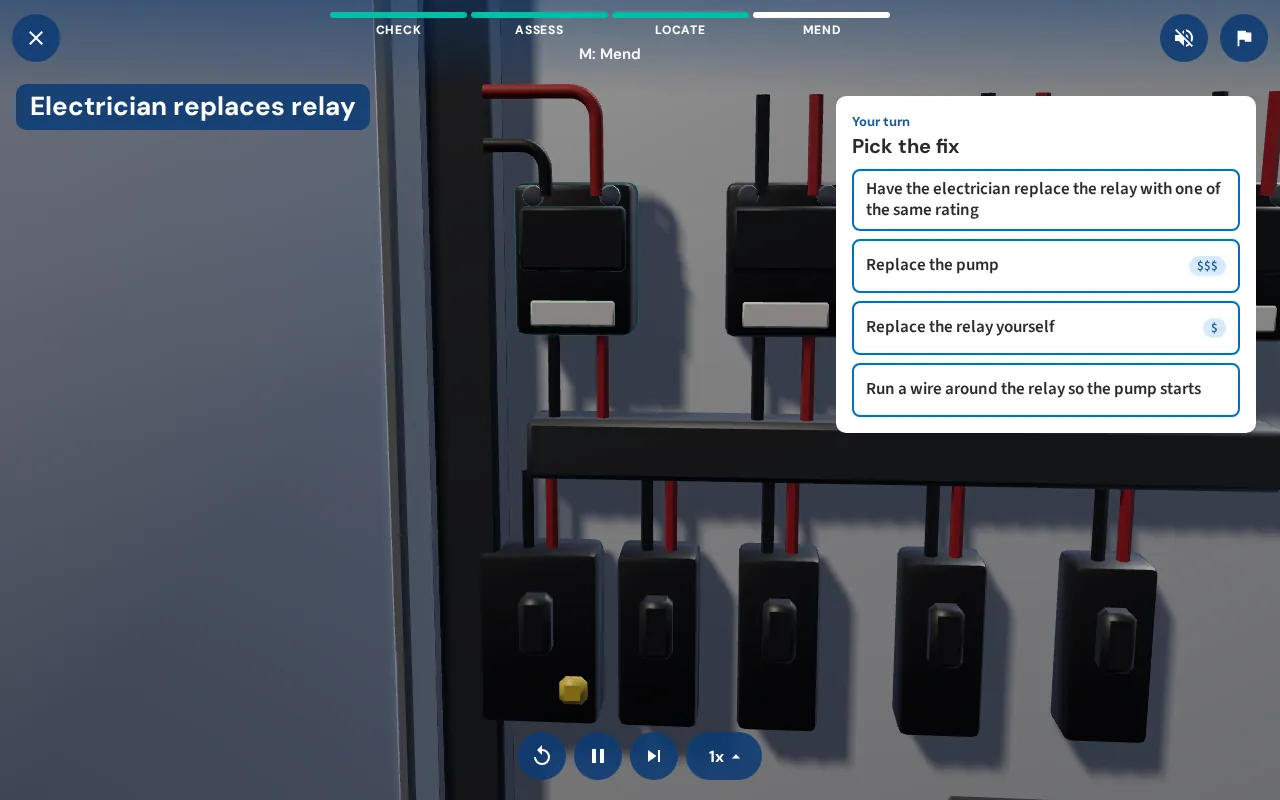
A relay costs a small part of what a pump costs. And on this call a new pump would not have run at all, because the power still could not reach it.
The electrician replaces the relay with one of the same rating. Your job is to tell the customer what was found, and that they keep their pump.
Prove It, Twice
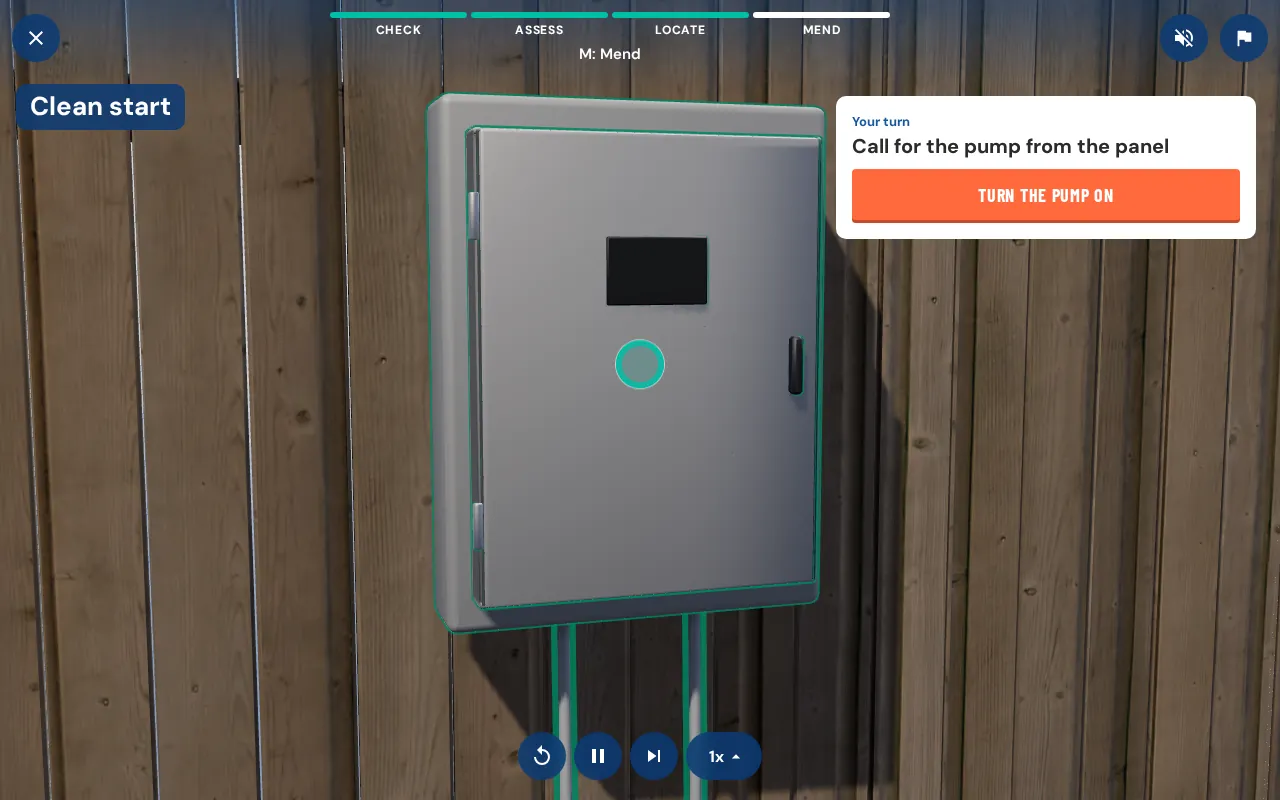
A fix is not done until you prove it. Call for the pump from the panel. The relay clicks and the motor starts right away. The basket fills and the returns push water. That also proves the motor and its wiring were fine all along.
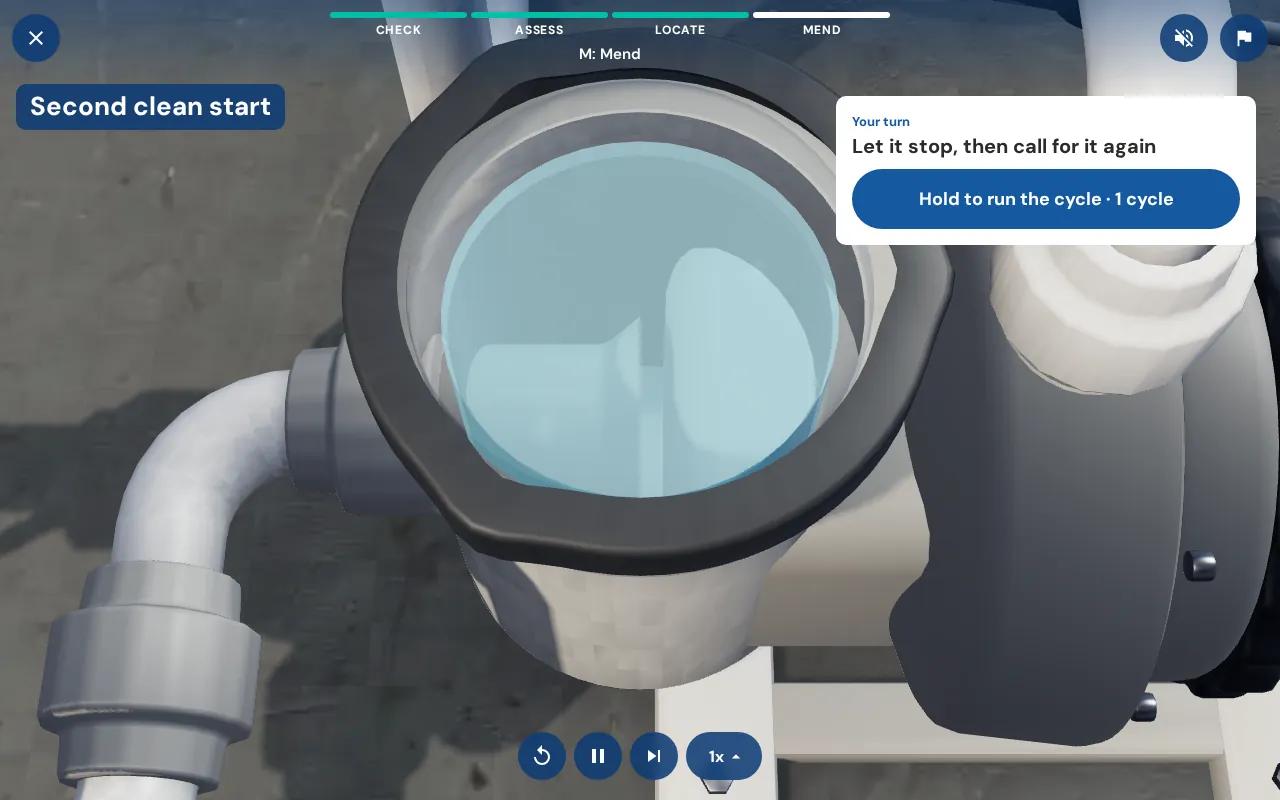
One good start is not enough. Let the panel turn the pump off, then call for it again. A second clean start tells you the first one was not luck.
Last, write it down. Note that the motor was silent, that the panel was calling, that you stopped and called an electrician, what the electrician found, and that the pump started twice. If it stops again, the next tech can start where you left off.
Wrong Moves That Cost Money or Get People Hurt
- Buying a pump first. If power is not reaching the motor, a new pump sits silent too.
- Testing live wires yourself. That is high voltage inside the panel.
- Swapping the relay to see if it helps. That is electrical work, and it is a guess.
- Running a wire around the relay. It skips the panel's control and safety. It is not a repair.
- Resetting a breaker or GFCI over and over. If it trips again after one reset, it is telling you something.
- Leaving a humming motor switched on. It is drawing power without turning. Switch it off.
- Trusting the click. A relay can click and still pass almost no power.
When to Call a Licensed Electrician
Call one when the next step means any of these:
- Opening the wiring side of a panel or the cover on the back of a motor.
- Putting a meter on live wires.
- Changing a relay, a breaker, a capacitor or any wiring.
- A breaker or GFCI that trips again after one reset.
- A tingle, a burning smell, burn marks or water in an electrical box.
Pump manuals say the same about the pump's own wiring. The ones we checked say the pump must be installed by a licensed or certified electrician or a qualified service professional.
Try This Call Yourself
Reading the steps is one thing. Making the choices yourself is how they stick. The lesson behind this guide is free, and it takes about 9 minutes.
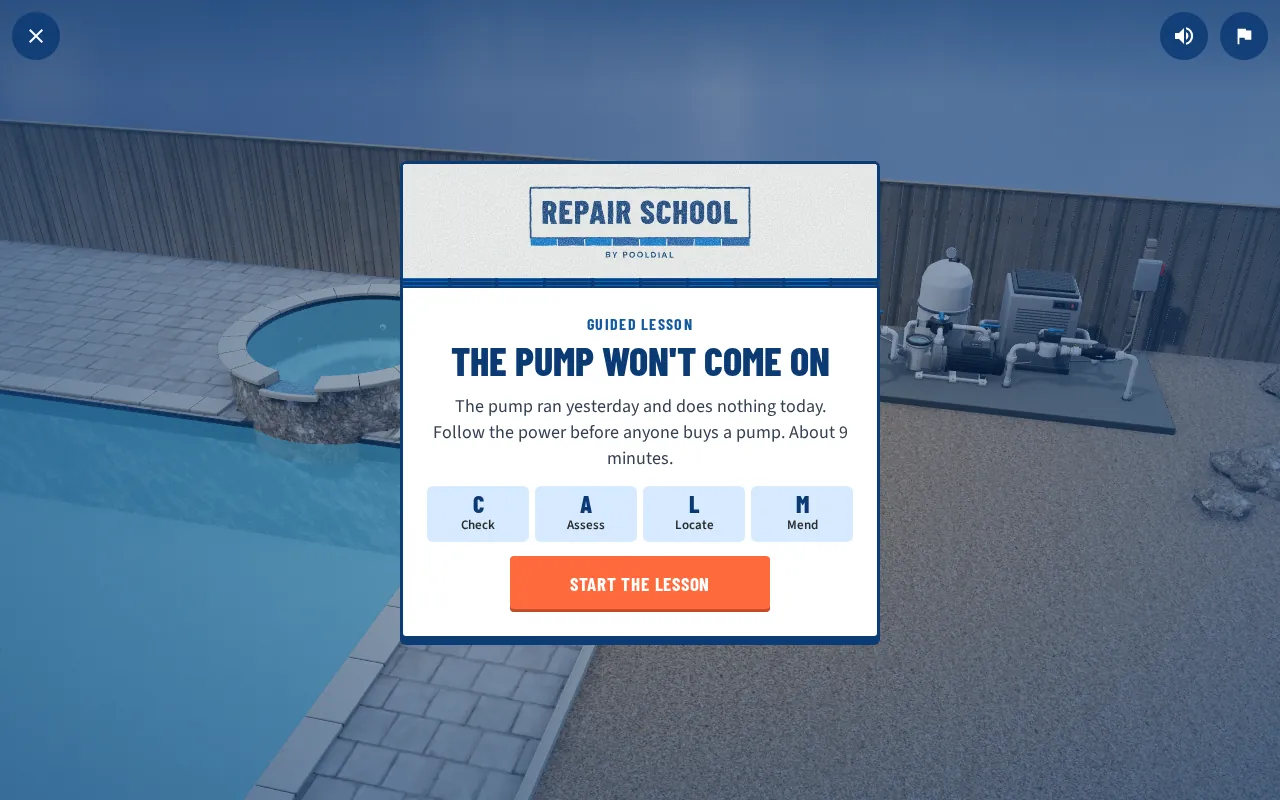
The pump won't come on: a relay that clicks
Work this exact call in a 3D equipment pad. Free, with a sign-in. The lessons are drafts and have not been checked by an outside expert yet.
Try this call in the simulatorRelated Pool Pump Guides and Tools
To see what is inside the pump, read how a pool pump works. For one model's own start-up faults, see the Pentair SuperFlo VS pump won't start and Pentair WhisperFlo VST pump won't start guides. More brands are in the equipment troubleshooting guides.
Once the pump is running again, the pump run time calculator helps you set its schedule, and the pump energy cost calculator shows what that schedule costs.
Frequently Asked Questions
Why is my pool pump not turning on?
If the motor is silent, power is usually not reaching it. The usual stops are a timer or schedule set to off, a tripped breaker or GFCI, a switch by the pump that is off, a control panel that is not calling for the pump, a worn relay, or the wiring. If the motor hums, power is reaching it and something is stopping it from turning.
My pool pump hums but will not start. What does that mean?
A hum means power is reaching the motor but it cannot turn. Pool pros commonly report a failed start part or a stuck shaft as the cause. Switch the pump off so it does not overheat, and call a licensed electrician or a motor shop.
Do I need a new pool pump if it will not turn on?
Not until you know power is reaching the motor. A new pump on a circuit with no power will sit silent too. Find where the power stops first.
Can I reset the breaker or GFCI myself?
You can look at a breaker and reset a GFCI once. If it trips again, stop. A breaker or GFCI that keeps tripping is doing its job, and the cause needs a licensed electrician.
When should I call an electrician for a pool pump?
Call a licensed electrician when the next step means opening a panel or a motor cover, testing live wires, or changing an electrical part. Also call if a breaker or GFCI trips again after one reset, or if you feel a tingle or see burn marks.
This guide follows one PoolDial Repair School lesson. The call is a teaching example built from what pool pros commonly report, not a record of one job. The lessons are drafts and have not yet been reviewed by an outside pool professional or electrician. The equipment manual and your local electrical code control any real repair.
- Pentair, SuperFlo VS and WhisperFlo VST installation and user's guides, troubleshooting tables ("Pump fails to start") and electrical installation warnings.
- Pentair/Sta-Rite, Swimming Pool and Spa Pumps training material, motor nameplate section on the thermal overload protector.
- Talking Pools Podcast and r/PoolPros, quoted above.