Customer Transparency: Sharing Service History and Chemical Readings


You drove to the house. You tested the water. You added chemicals. You brushed the walls. You emptied the baskets. You checked the equipment. Then you drove to the next house and did it all again. At the end of the day, you serviced 20 pools. You did great work.
But here is the problem. Your customer has no idea any of that happened. All they know is that the water looks okay today. They did not see you work. They did not see the readings. They do not know what you added or why. And when the bill shows up, some of them are going to wonder: what am I even paying for?
That question is the start of churn. And the fix is simple. Show them what you did.
Key Takeaways
- Transparency is the cheapest retention tool you have. It costs nothing extra but makes customers feel like they are getting their money's worth.
- Most pool companies share nothing. Just showing up in a customer's inbox after each visit puts you ahead of 90% of your competitors.
- Chemical readings tell a story. When customers can see their chlorine and pH over time, they understand why consistent service matters.
- Photos stop complaints before they start. A picture of a clean pool on Tuesday prevents "my pool is green and you were just here" on Thursday.
- You do not need to do extra work. PoolDial's customer portal shares everything automatically after each visit.
Why Most Pool Companies Hide Their Work (and Why PoolDial Changes That)
Pool service is invisible work. You show up when the customer is at their job. You leave before they get home. The only evidence you were there is a clean pool, and even that fades by the weekend if the kids are in it every afternoon.
Most pool companies do not share service data on purpose. It is not that they are trying to hide anything. It is that sharing takes time they do not have. Writing up a service report after every stop? That adds 5 to 10 minutes per pool. Over a full route, that is an extra 2 hours of paperwork every day. Nobody signed up for that.
So the default in this industry is silence. You do the work. You send the bill. You hope the customer trusts that you showed up and did a good job. And most of the time, that works fine. Until it does not.
The moment a customer starts to doubt, silence works against you. They cannot call you and say "show me what you did last Tuesday" because you have nothing to show. You might remember what you did, but memory is not proof. And without proof, it becomes your word against their doubt.
This is where documentation changes everything. When your service data is recorded and shared, every visit speaks for itself. The customer does not have to trust you blindly. They can see the numbers, the notes, and the photos. Trust built on evidence is stronger than trust built on hope.
What to Share With Customers Using PoolDial
You do not need to write a novel after every service visit. Customers want facts, not essays. Here is what matters most:
Chemical readings. This is the most valuable data you can share. Free chlorine, pH, alkalinity, CYA, salt (if applicable). When a customer can see that their chlorine was at 3.0 ppm and their pH was at 7.4, they know the water is balanced. They do not need to understand the chemistry. They just need to see that the numbers are in the right range. PoolDial's chemical tracking logs every reading and shows customers exactly where their water stands.
Service notes. A quick line about what you did. "Cleaned filter, brushed walls, treated algae spot near steps." It takes 10 seconds to type on your phone. But to the customer reading it that evening, it shows that a real person was at their pool and paid attention to the details.
Photos. One photo of the pool after service is worth a thousand words. It takes 3 seconds to snap. It proves you were there. It shows the water was clear when you left. And if the pool turns green by the weekend, you have proof that it was not green when you serviced it.
Inspection results. If you run inspections or equipment checks, share those too. A checklist showing that you looked at the pump, checked the filter pressure, and inspected the heater tells the customer you are doing more than just dumping chlorine and leaving.
Chemicals added. List what you put in the water and how much. "Added 2 lbs of calcium hypochlorite, 1 quart of muriatic acid." This helps customers understand what their service fee covers. Chemicals are expensive, and showing the amounts makes the bill feel justified.
| Data Type | Time to Record | Value to Customer |
|---|---|---|
| Chemical readings | 30 seconds | Very high. Shows water is safe and balanced. |
| Service notes | 10 seconds | High. Shows what work was done. |
| Photos | 3 seconds | Very high. Visual proof of clean pool. |
| Inspection results | 1-2 minutes | High. Shows thorough equipment checks. |
| Chemicals added | 15 seconds | Medium. Justifies the cost of service. |
The total time to record all of this? About 2 minutes per pool if you are using a mobile app like PoolDial. That is not extra paperwork. That is part of the service. And it pays for itself in customer retention many times over.
How PoolDial Helps You Stop the "What Am I Paying For?" Conversation
Every pool pro has had this call. The customer says "I'm paying you $175 a month and I don't even know if you're coming." It stings because you know you are showing up every week. You know you are doing the work. But the customer does not see it, so to them it feels like they are paying for nothing.
This conversation almost never happens when you share service data. When a customer can open their phone, tap into their customer portal, and see a log of every visit with readings, notes, and photos, the question answers itself. They can see exactly what they are paying for.
Think about it from their side. They pay for a gym membership, and they can see every workout logged. They pay for a streaming service, and they can see their watch history. They pay for pool service, and they should be able to see their service history. It is the same idea. People want to see the value of what they buy.
Here is what changes when you start sharing:
- Fewer phone calls. Customers stop calling to ask "did you come this week?" because they can check for themselves.
- Easier price increases. When a customer can see 52 weeks of consistent service with detailed records, a $10/month price increase feels reasonable. When they have no records, any price increase feels like a grab.
- Faster renewals. Customers who can see their service history renew without hesitation. They have proof that the service works.
- Better reviews. Customers who feel informed leave better reviews. "They send me a report after every visit" is a powerful thing to say in a Google review. For more on building strong customer relationships, see our guide on customer communication.
How PoolDial Handles the "My Pool Is Green and You Were Just Here" Complaint
This is the complaint that makes pool pros want to pull their hair out. You serviced the pool on Monday. The water was perfect. By Thursday, the pool is green. The customer calls, angry, and says "you were just here and my pool is green. What am I paying you for?"
Without records, you are stuck. You can say "the pool was fine when I left" but you have nothing to back it up. It becomes a he-said, she-said argument, and the customer usually wins because they are the one paying.
With records, the conversation changes completely. You pull up Monday's service report and say:
- "I was there at 10:15 AM on Monday. Here's the photo of the pool when I left. Water was clear."
- "Free chlorine was at 3.5 ppm. pH was 7.4. Alkalinity was 90. Everything was in range."
- "I added 2 pounds of chlorine and half a quart of acid."
- "It looks like something happened between Monday and Thursday. Did anyone leave the pool uncovered? Was there a big rainstorm? Did the kids have a pool party?"
Now you are not defending yourself. You are helping them solve a problem. The records show you did your job. The conversation shifts from blame to troubleshooting. And the customer walks away thinking "this company really knows what they are doing" instead of "this company is ripping me off."
This alone is worth the 2 minutes it takes to log each visit. One saved complaint can save a $2,000/year account.
How Chemical Trend Charts in PoolDial Build Long-Term Trust
Individual readings are useful. But trend charts are powerful. When a customer can see their chlorine levels plotted over weeks and months, they start to understand something important: pool chemistry is not a one-time fix. It is ongoing maintenance.
PoolDial's chemical tracking automatically builds these trend charts from the readings your techs log at each visit. Customers can see them in their portal without you doing any extra work.
Here is why trends matter:
They show improvement. If you took over a pool that was in bad shape, the trend chart tells that story. The customer can see chlorine going from 0.5 to 3.0 over the first few weeks. They can see pH stabilizing. They can see the water getting better because of your work. That is a story that makes them want to keep paying you.
They explain seasonal changes. Customers do not understand why pool chemistry is harder in summer. But when they see their chlorine demand spike in July and August on a chart, it clicks. They understand why you might need to add more chemicals during hot months. They understand why the price might go up a little in summer. The chart does the explaining for you.
They justify CYA treatments. CYA is one of the hardest things to explain to customers. "We need to partially drain your pool and refill it to lower the stabilizer." That sounds expensive and confusing. But when the customer can see CYA climbing from 50 to 120 over 18 months on a chart, the conversation is easy. "See this line going up? That is why your chlorine stopped working. We need to bring it back down." For more on chemical documentation best practices, read our chemical documentation guide.
They reduce cancellations. A customer who has 6 months of chemical trend data in their portal is invested. They can see the history. They can see the patterns. Switching to a new company means starting over with no data. That switching cost keeps them with you, even if a competitor offers a lower price.
How PoolDial Helps You Stand Out From Competitors Who Share Nothing
Most pool companies in your area share nothing with their customers. No readings. No notes. No photos. The customer gets a bill every month and that is it. This is your opportunity.
When you share service data, you are not just building trust with your current customers. You are building a competitive advantage that is almost impossible to copy. Here is why.
Sharing data requires a system. You need software that makes it easy for techs to log readings and notes in the field. You need a portal where customers can view that data. You need the discipline to do it at every stop. Most pool companies are not set up for this. They are still using pen and paper or basic apps that do not have customer-facing portals.
So when a potential customer asks "what makes you different from the other pool company?" you have a real answer. Not "we care more" or "we're more reliable." Those are things everyone says. Instead you say: "After every visit, you get a report with your chemical readings, photos of your pool, and notes about what we did. You can see your entire service history and chemical trends in your own portal, anytime you want."
That is concrete. That is different. That is something the other company does not offer. And for a customer choosing between two pool companies at similar prices, it tips the scale. You can manage all of this through your customer management system, where every customer's data lives in one place.
Here is how transparency stacks up as a competitive advantage:
| Your Company (With Transparency) | Typical Competitor (Without) |
|---|---|
| Customer sees a service report after every visit | Customer sees a monthly bill and nothing else |
| Chemical readings logged and visible in portal | No chemical records shared |
| Photos prove pool condition at time of service | No visual proof of service |
| Trend charts show improvement over months | Customer has no way to track progress |
| Complaints resolved with data and facts | Complaints become he-said, she-said arguments |
| Price increases backed by documented service history | Price increases feel arbitrary |
The companies that share data keep their customers longer. They get fewer complaints. They charge higher prices. And they grow faster through referrals because their customers can actually show their friends what the service looks like.
How PoolDial's Customer Portal Shares Data Without Extra Work
The biggest objection to transparency is time. "I don't have time to write reports for every customer." And that is a fair concern. If sharing data meant sitting down every evening to type up reports, nobody would do it.
That is why the system has to do it for you. With PoolDial, here is how it works:
- Your tech arrives at the pool. They open the PoolDial app on their phone and start the service visit.
- They log readings. Tap in the numbers from their test kit. Free chlorine, pH, alkalinity, CYA. Takes 30 seconds.
- They add notes. Quick text or voice memo. "Cleaned filter, noticed small crack in skimmer basket, pool was cloudy on arrival." Takes 10 seconds.
- They snap a photo. One photo of the pool after service. Takes 3 seconds.
- They complete the visit. Tap "done." PoolDial saves everything.
That is it from the tech's side. No extra paperwork. No reports to write. No emails to send. Everything happens inside the app they are already using to manage their route.
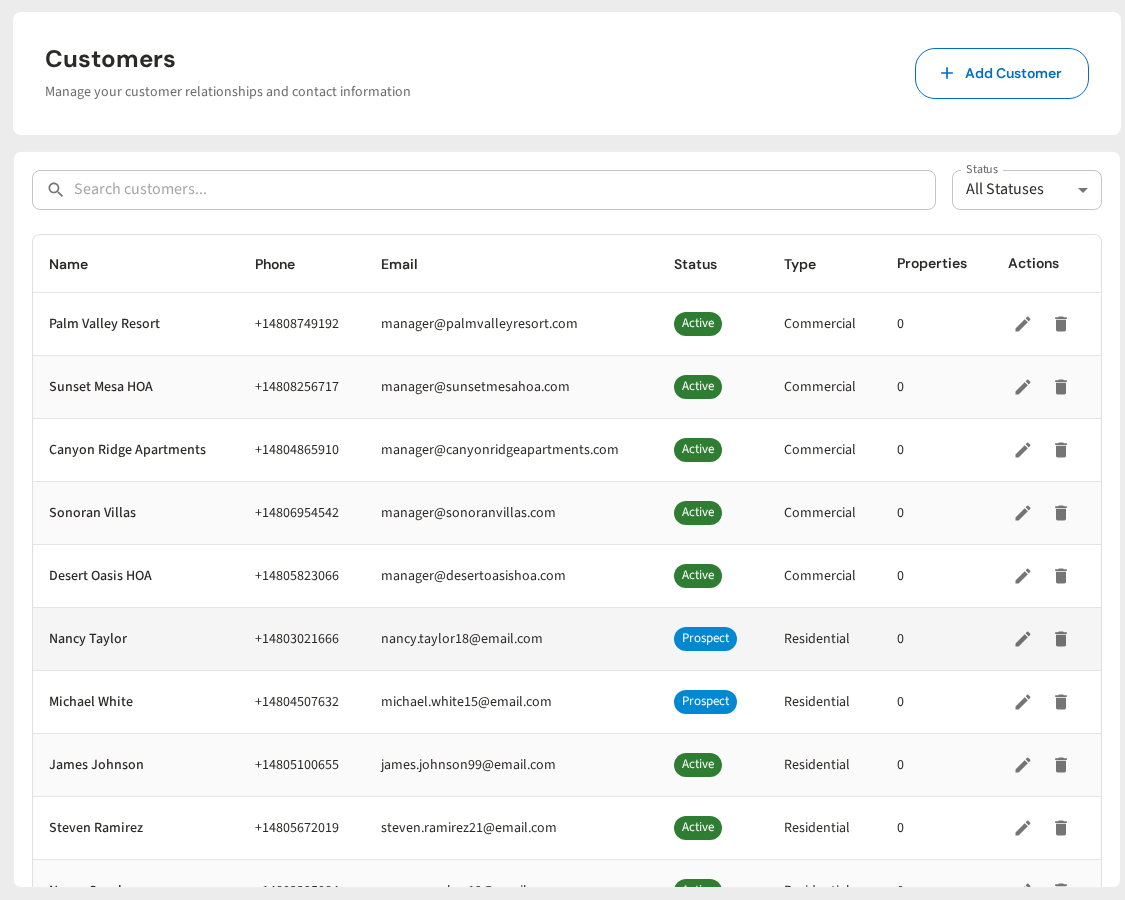
On the customer's side, all of that data shows up in their customer portal right away. They can log in anytime and see:
- Every past visit with date, time, and tech name
- Chemical readings from each visit
- Service notes and photos
- Chemical trend charts over weeks and months
- Inspection results and equipment checks
- Upcoming scheduled visits
The customer can also get automatic notifications after each visit if they want them. A text or email that says "Your pool was serviced today. Tap here to see the details." This keeps them in the loop without you having to do anything. For more on setting up self-service features, check out our guide on customer self-service.
The key insight here is that the data your techs are already logging for their own use is the same data your customers want to see. You are not creating new information. You are just making existing information visible. That is what a good customer portal does.
Why PoolDial Transparency Is the Cheapest Retention Tool You Have
Let us talk about the math. Losing a customer costs you real money. The average residential pool account is worth $150 to $200 per month. That is $1,800 to $2,400 per year. If you lose 10 customers a year to churn, that is $18,000 to $24,000 in lost revenue.
Now think about what it costs to replace those customers. Marketing, sales calls, the first visit where you assess the pool, maybe a discount to win them over. Replacing one customer costs $200 to $500 in time and money. Ten customers? That is another $2,000 to $5,000.
So customer churn costs you $20,000 to $29,000 per year for just 10 lost accounts. And the number one reason customers leave (besides moving) is that they feel like they are not getting value for their money. They do not feel the service is worth the price. Not because the service is bad, but because they never see what the service includes.
Transparency fixes this at near-zero cost. Your techs spend an extra 2 minutes per pool doing what they should already be doing: logging readings and taking notes. PoolDial shares that data with the customer automatically. There is no extra software to buy. No extra staff to hire. No extra time at the end of the day.
Compare that to other retention strategies:
- Discounting prices to keep customers costs you real revenue. A $20/month discount across 50 customers is $12,000/year.
- Hiring a customer service person to call customers and check in costs $35,000 to $50,000/year.
- Running loyalty programs with free cleanings or upgrades costs time and margin.
- Sharing service data costs 2 minutes per pool and keeps customers who would have left.
Transparency is not a marketing gimmick. It is a business strategy. The pool companies that share data have lower churn, higher lifetime value, and better word-of-mouth. And it all starts with showing the customer what you already do every single day.
How to Start Sharing Data With PoolDial Today
You do not need to overhaul your business to become transparent. Start small. Here is a step-by-step plan:
Week 1: Start logging readings. If your techs are not already logging chemical readings in PoolDial, make it a requirement. Every pool, every visit. Free chlorine, pH, and alkalinity at minimum. This is the foundation of everything else.
Week 2: Add photos. One photo per pool, taken after service. Make it part of the routine. Service the pool, snap the photo, move on. It takes 3 seconds and creates a visual record that customers love.
Week 3: Turn on the customer portal. PoolDial's customer portal is already built into your account. Just turn it on and invite your customers. They will get a link where they can see their service history, readings, and photos.
Week 4: Tell your customers about it. Send a message to all your customers. Keep it simple: "We just launched a new feature. You can now see your service history, chemical readings, and photos from every visit. Here is your link." Watch the replies come in. Customers love this.
After the first month, review the results. Count how many customers logged into their portal. Look at your complaint calls. Ask your techs if customers are mentioning it. You will see a difference fast.
The pool companies that do this report fewer complaints, fewer "did you come this week?" calls, and stronger relationships overall. It is one of those rare changes that makes your life easier and your customers happier at the same time.
Transparency is not about doing more work. It is about showing the work you already do. Your customers deserve to see it. Your business benefits from sharing it. And your competitors are not doing it yet, which means every day you wait is a day you are leaving that advantage on the table.
Show Your Customers What You Do
PoolDial's customer portal shares service history, chemical readings, photos, and inspection results automatically. No extra work for you. Plans start at $2/pool.
Start Your Free Trial