


Key Takeaways
- A trip that comes when a pool light is switched on may be stopping a shock. Nobody swims until you know why it trips.
- A tech may reset the GFCI once, and only once, with nobody in the pool and the lights switched off at the panel.
- Switch the lights on one at a time. The light that brings the trip back is the one to look at, through the water, without touching it.
- Then stop. Opening the junction box and lifting the light belong to a licensed electrician.
A customer calls about the pool light. Every time they switch it on, it flickers once, and then the power to the lights shuts off. They have reset it many times.
That trip is telling you something. This guide walks one service call from start to finish. It shows what a pool tech can safely check, and where the tech stops and a licensed electrician takes over.
The pictures come from PoolDial Repair School, our free 3D repair simulator. Its lessons are built around problems techs actually run into. Repair School is in beta. Its lessons are drafts, and a working pro and a licensed electrician have not reviewed them yet. This is one worked example on one pool, and the cause may be different on the next call. The order of the steps is what carries over.
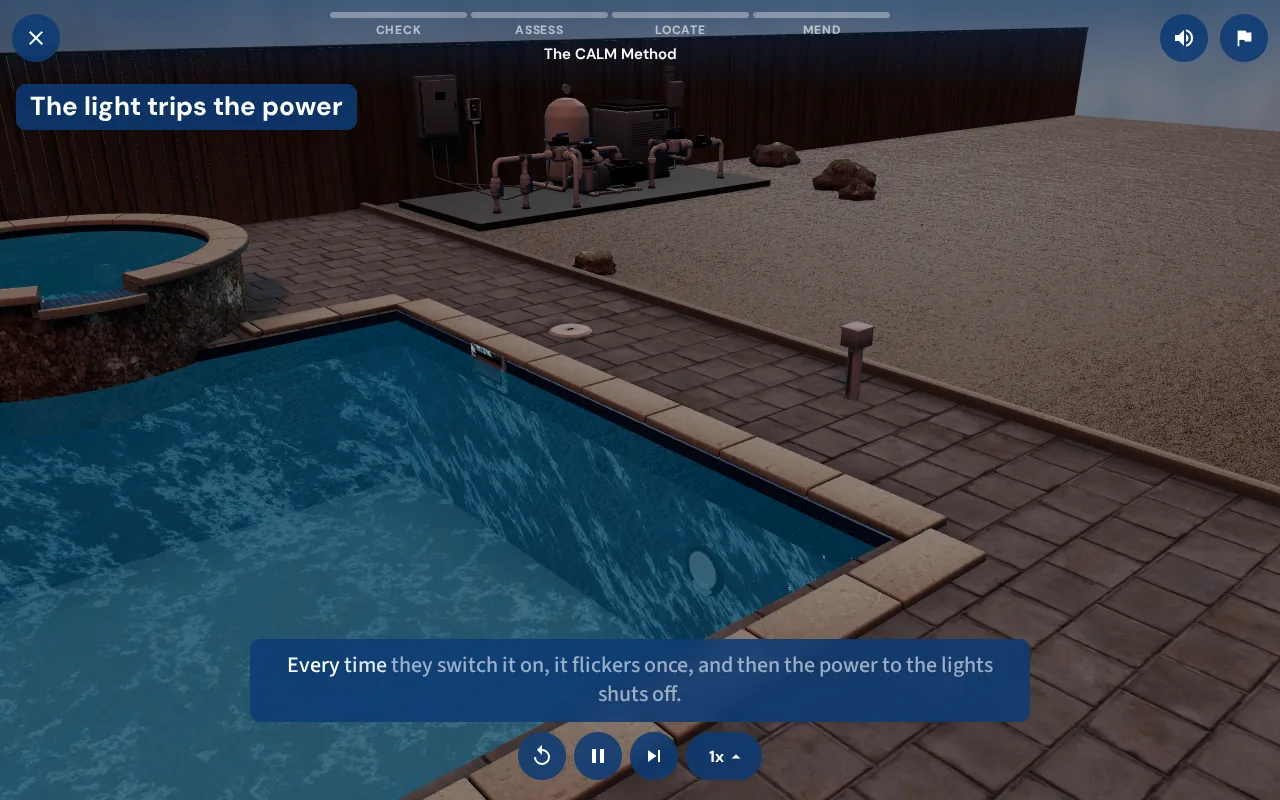
We work every call the same way. We call it the CALM Method: Check, Assess, Locate, Mend. It keeps you from skipping to a fix before you know the cause.
Step 1. Check: Swimmers First
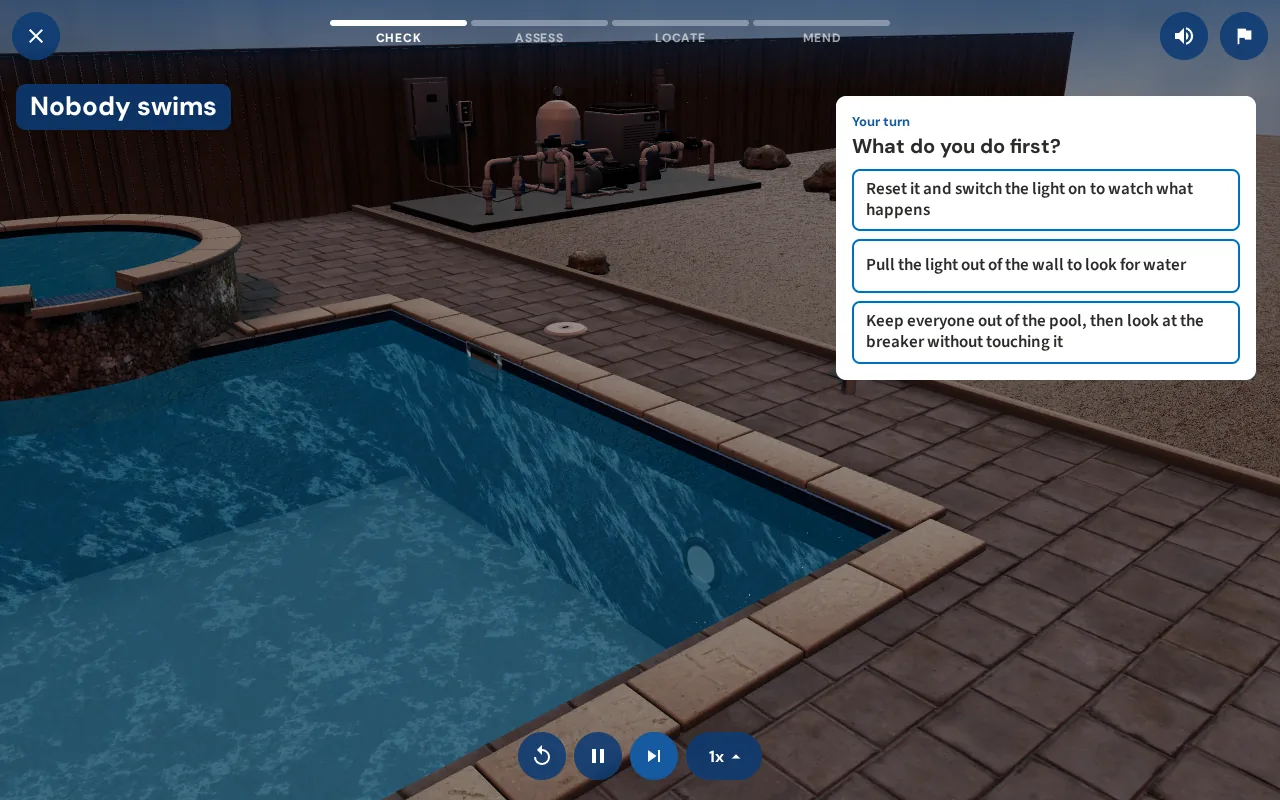
Check means making the job safe before you start. A pool light sits in the water with the swimmers, so they are the ones at risk.
A trip that comes when a pool light is switched on may be stopping a shock. So nobody swims until you know why it trips. Keep everyone out of the pool. Then look before you touch anything.
Next, look at the breaker for the pool and spa lights. On this pool it has a GFCI built in. A GFCI is a safety device that cuts the power when it senses electricity leaking out of the circuit. The handle sits in the middle, which means it has tripped.
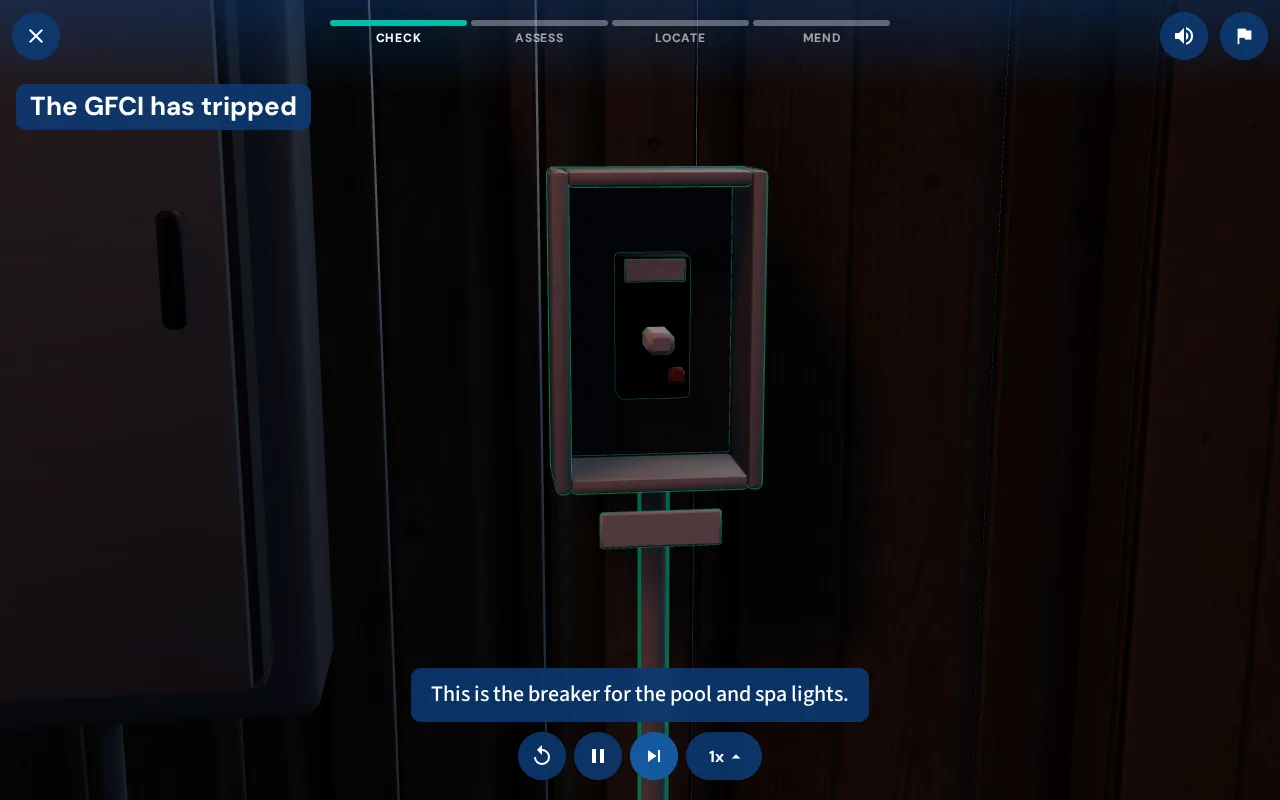
Nobody is in the pool, and the lights have no power because the GFCI tripped. That is a safe place to start.
Step 2. Assess: What Should Happen, and What Does?
Start by saying what should happen. When the panel calls for the pool light, the light should come on and stay on, and the GFCI should stay set. The spa light runs through the same GFCI, and it should work too.
What really happens is different. The customer says the pool light flickers once, and then the GFCI trips.
Find Out What Kind of Light It Is
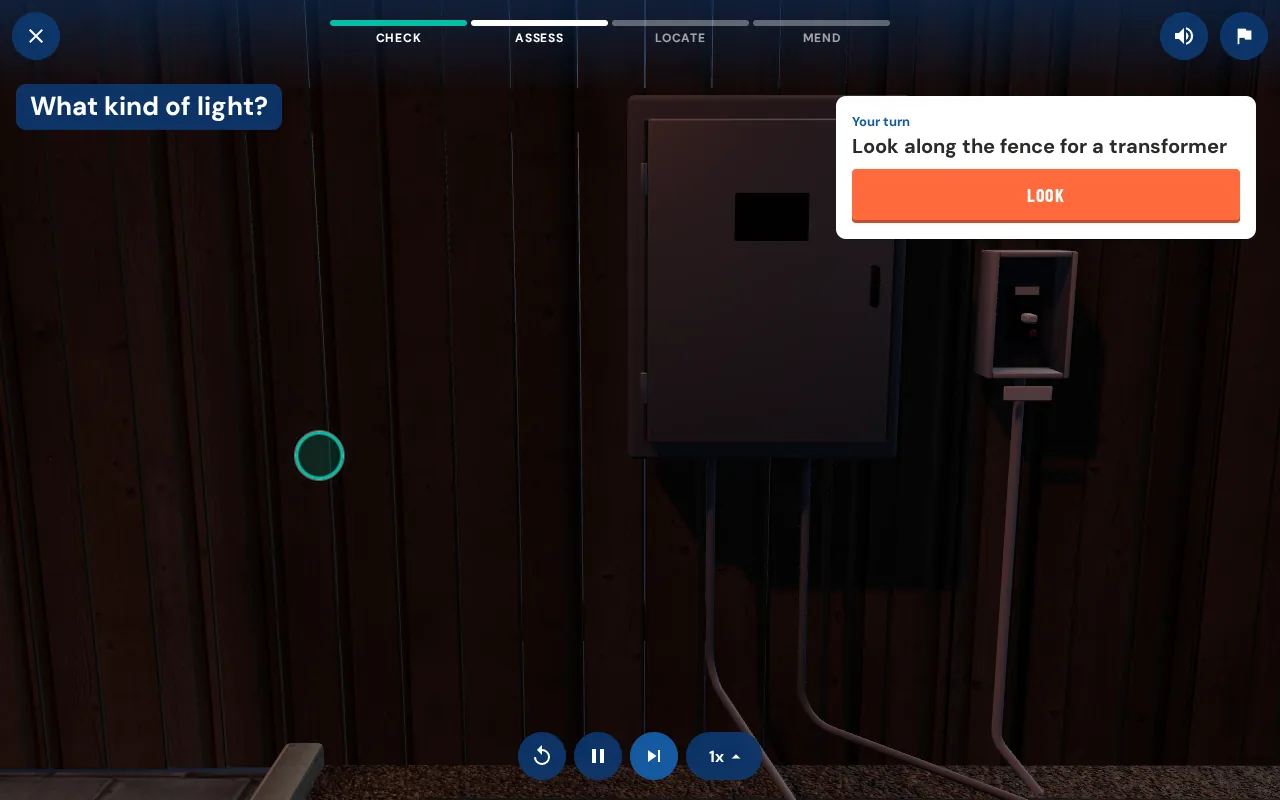
Look along the fence for a transformer. A transformer is a box that steps house power down to 12 volts. There is not one here. So this is most likely a 120-volt light, which runs on full house power. That is one more reason to leave the wiring alone.
Ask What Changed
A light that worked for years and then starts to trip has a reason, and the customer may know it. The age of the house does not say why the light trips now. The color of the light does not tell you where electricity is leaking. Ask if anyone has changed the bulb or opened the light.
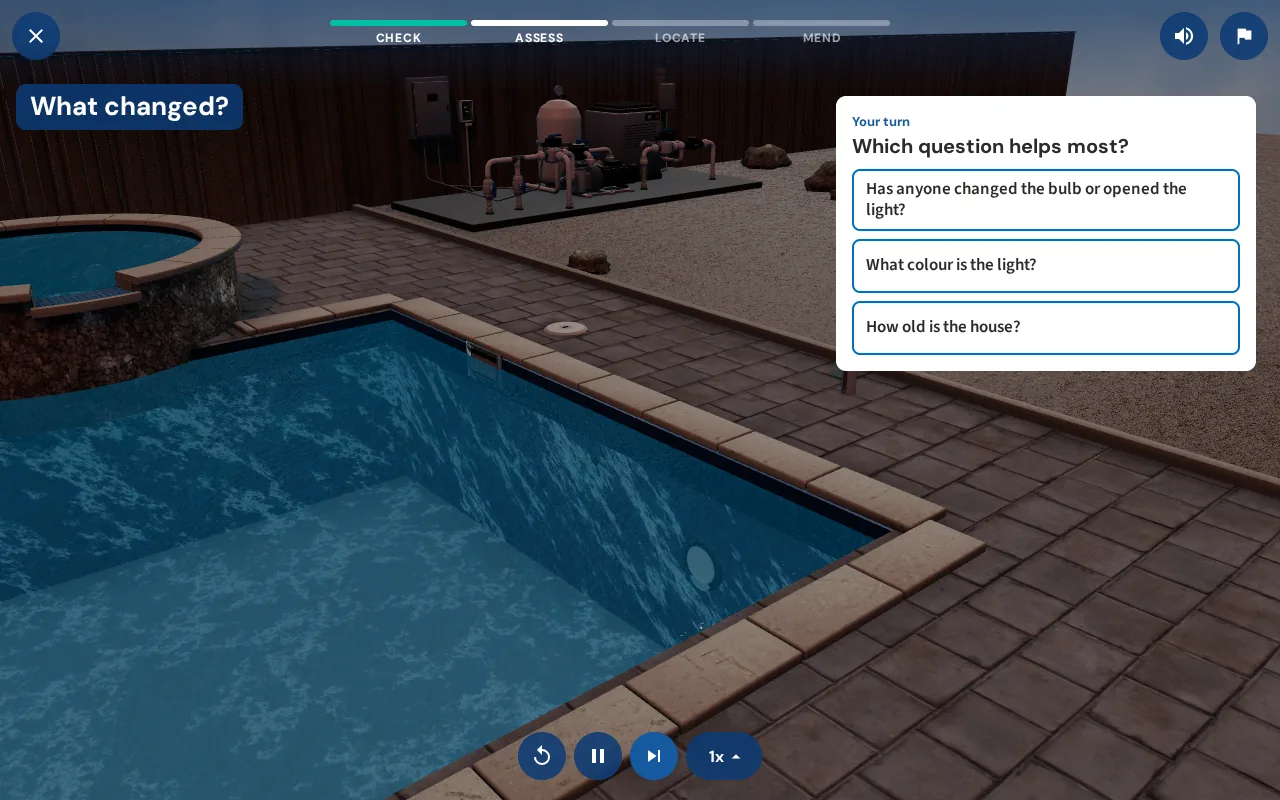
On this call, a handyman changed the bulb about two months ago. The light worked for a few weeks, and then the trips began.
Keep that in mind. One maker's manual says to fit a new gasket every time a light is opened. The gasket is the rubber seal that keeps water out of the light.
Step 3. Locate: Find Where the Fault Is
Before you test anything, list every place the fault could be. On this call there are five:
- The GFCI. It could be worn out.
- The spa light. It shares this GFCI, so it could be the one that leaks.
- The wiring to the box. The wiring from the panel to the junction box could be damaged.
- The cord. The light's cord could be cut.
- Water in the light. Water could have got into the pool light.
Reset the GFCI Once
You may reset a GFCI once, and only once. Each reset sends power back toward the fault. Make sure nobody is in the pool and the pool light is switched off at the panel. Then reset it and watch.
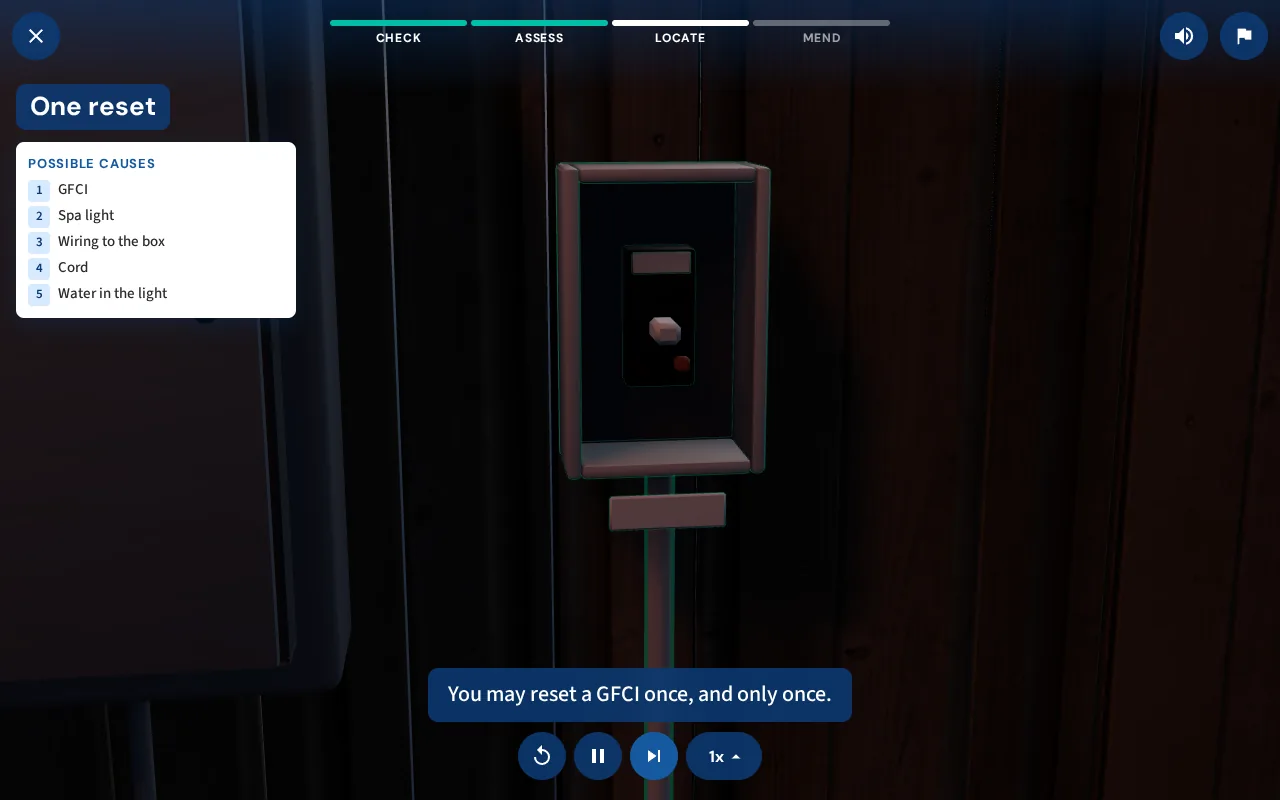
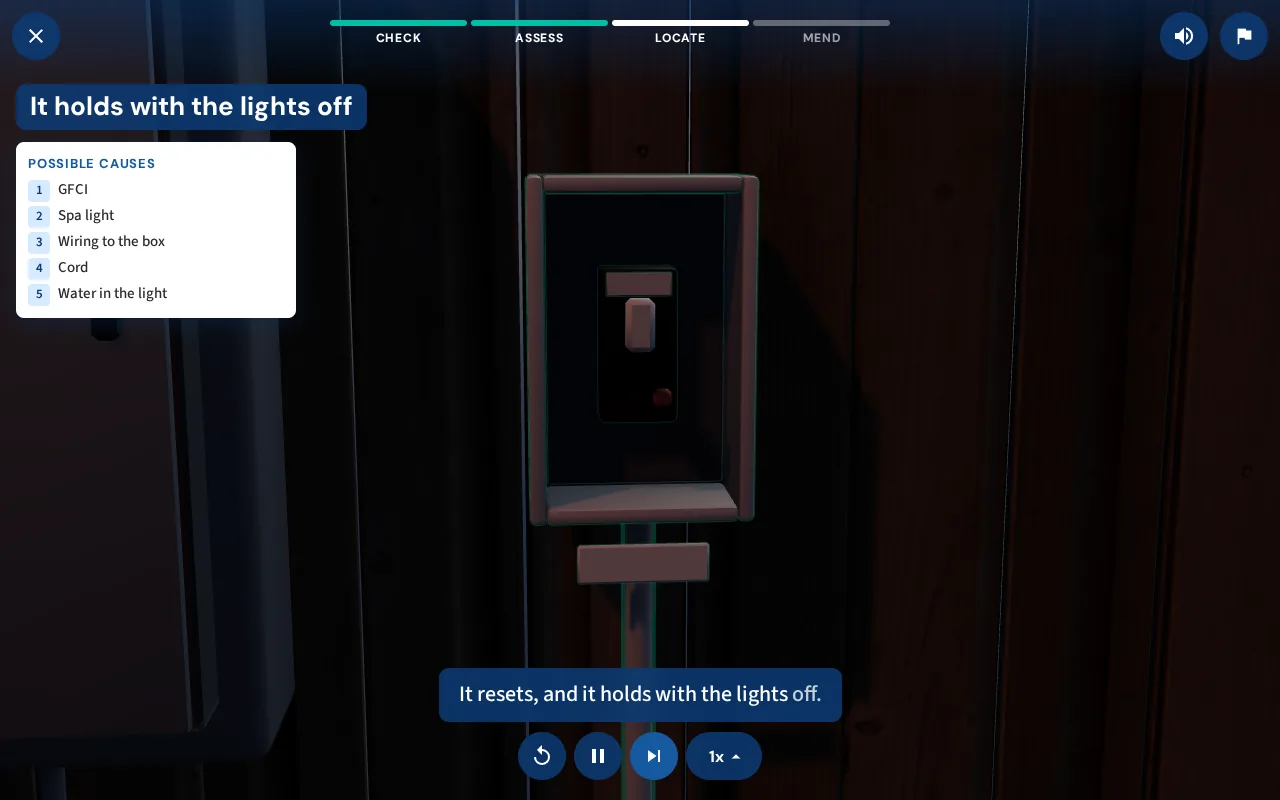
On this call it resets, and it holds with the lights off. So the GFCI is not tripping all by itself. Something makes it trip.
Try the Lights One at a Time
Now switch the lights on one at a time from the panel. Start with the spa light alone. It comes on and stays on, and the GFCI holds. So the spa light is not the problem, and it comes off the list.
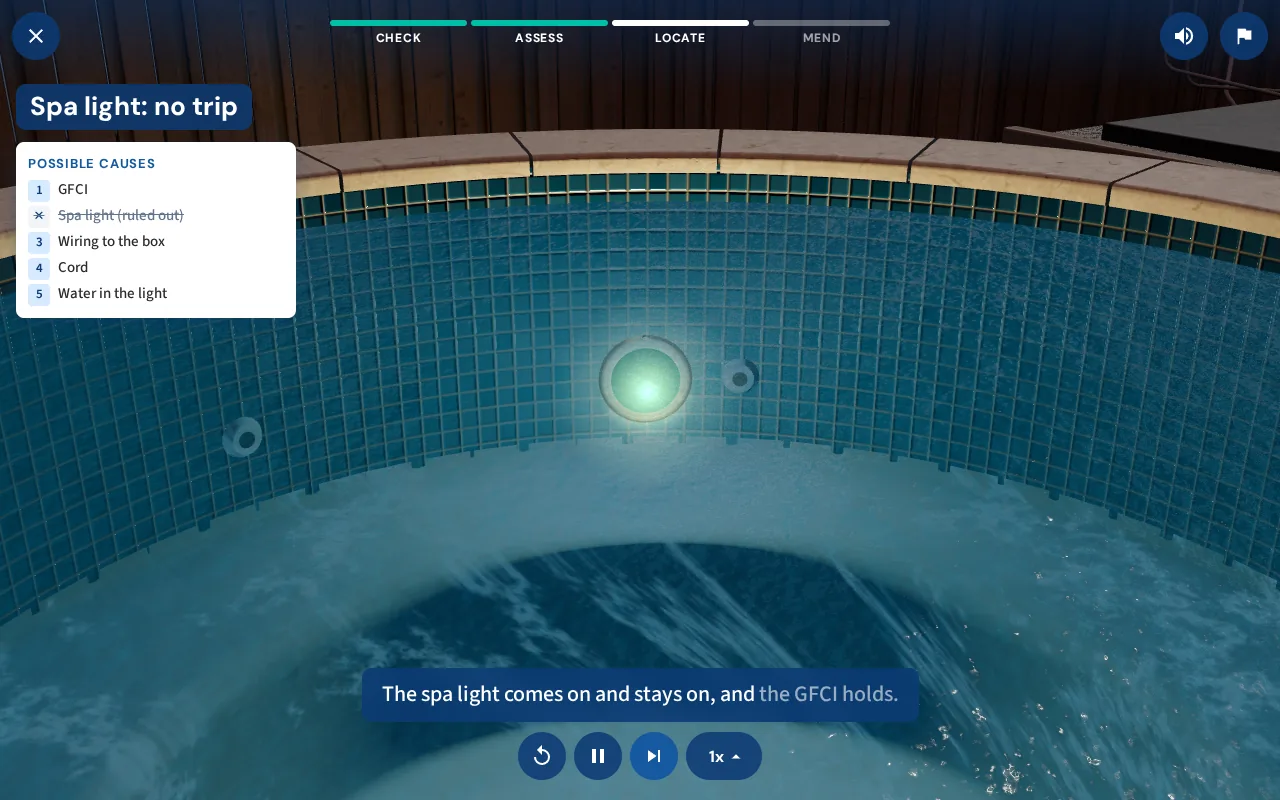
Switch the spa light off, and try the pool light alone. The pool light flickers once, and the GFCI trips. The trip follows the pool light and nothing else.
That was your one reset. Do not reset it again.
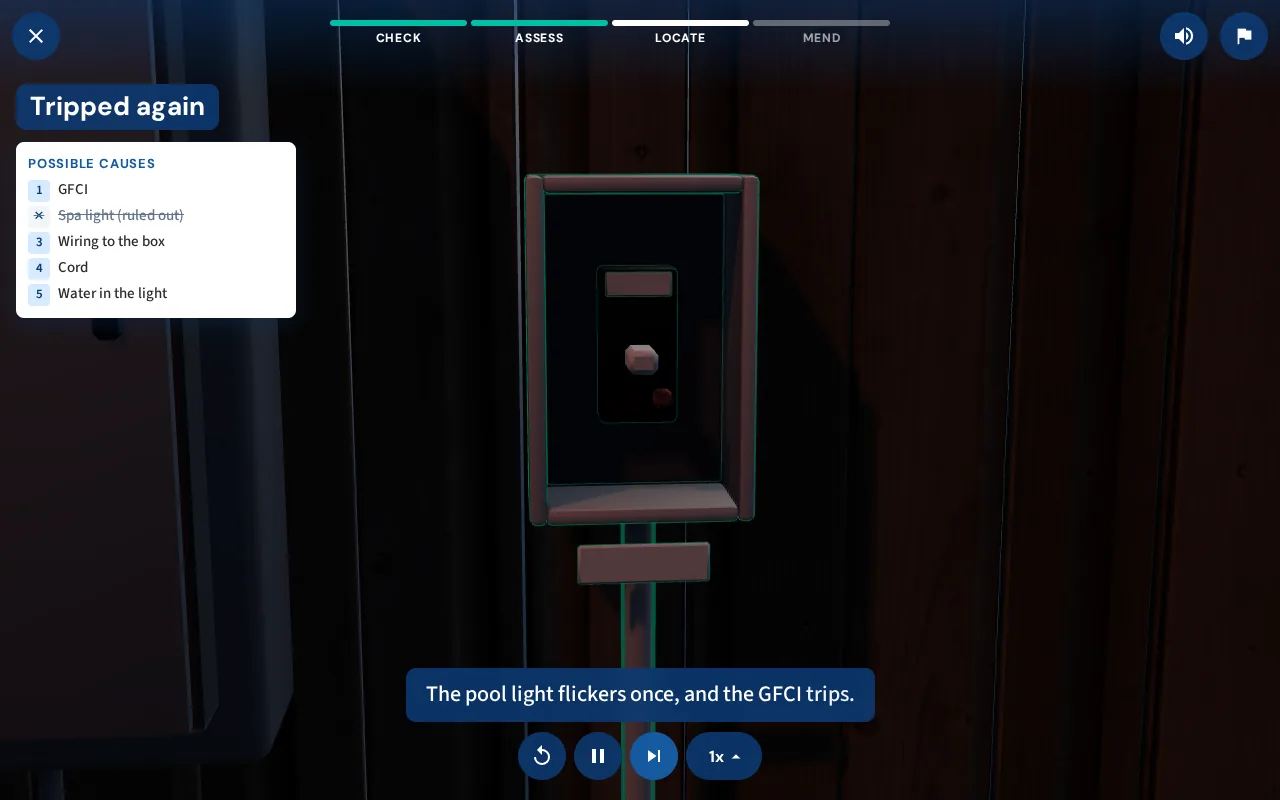
Here is what the three tests told us on this call:
| What you see | What it tells you | What you do |
|---|---|---|
| The GFCI resets and holds with the lights off. | It is not tripping all by itself. Something makes it trip. | Switch the lights on one at a time. |
| The spa light comes on alone and stays on. The GFCI holds. | The spa light is not the problem. | Switch it off and try the pool light alone. |
| The pool light flickers once, and the GFCI trips. | The trip follows the pool light. | Leave it tripped. Do not reset it again. |
Look at the Light Through the Water
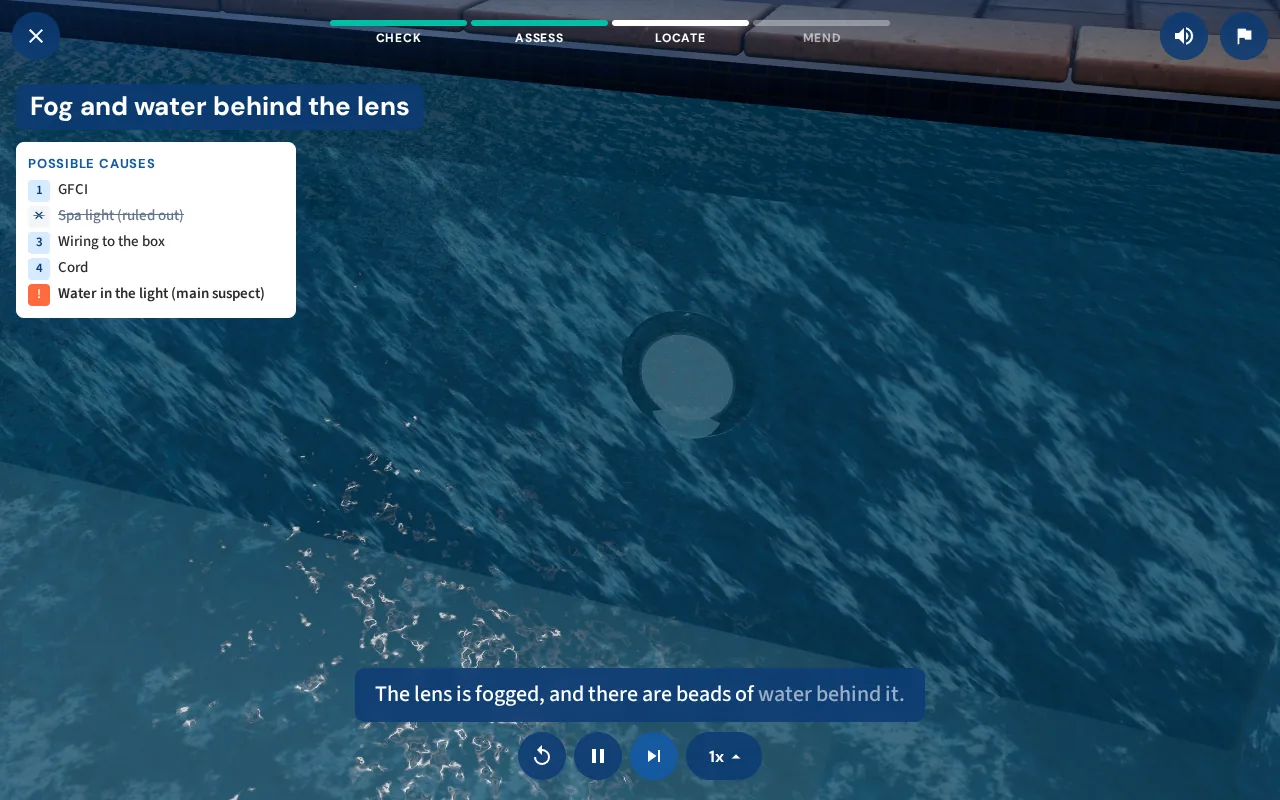
There is one more thing you can do without touching anything. Look at the pool light through the water.
On this call the lens is fogged, and there are beads of water behind it. Water in the light is now the main suspect. But you cannot prove it from the deck, and the GFCI, the wiring and the cord are still on the list.
Stop, and Call a Licensed Electrician
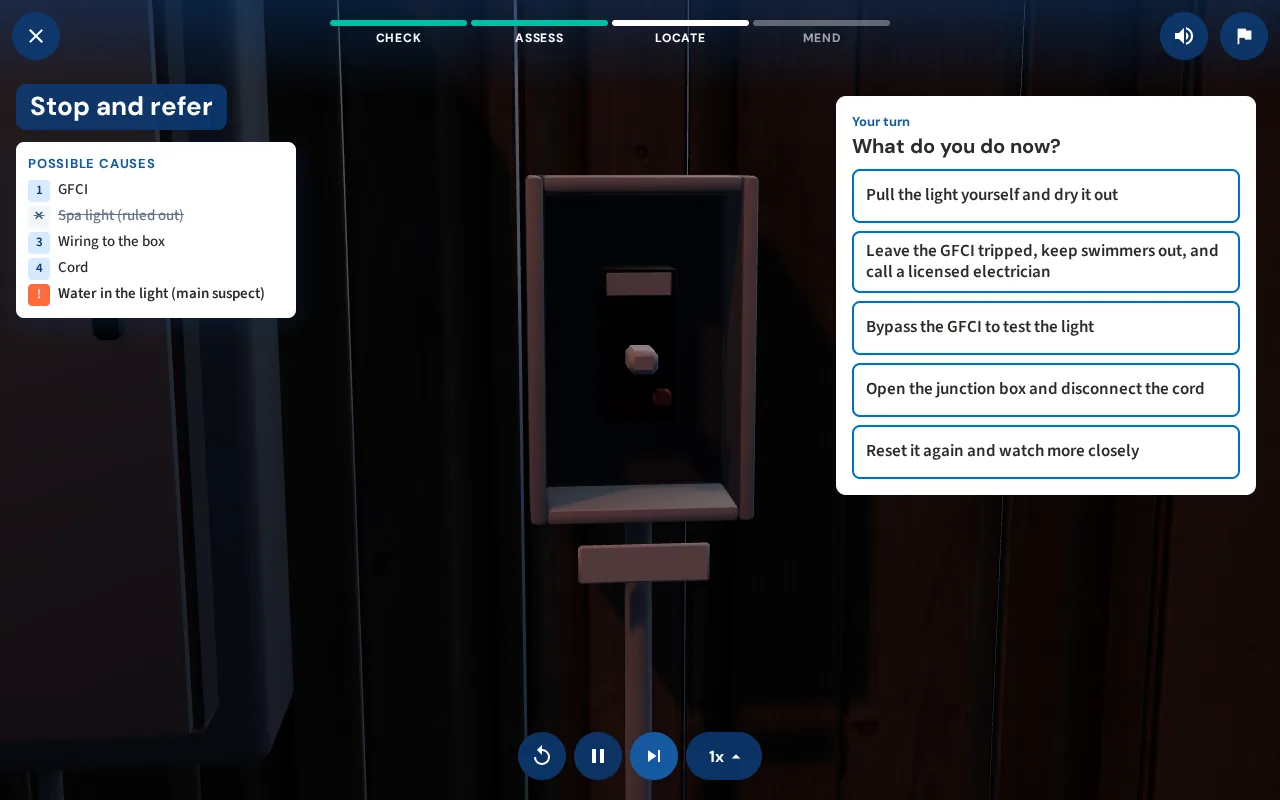
This is where the tech's part of the testing ends. Every test from here means opening the junction box or lifting the light, and both jobs belong to a licensed electrician.
Leave the GFCI tripped. Tell the customer to leave the breaker alone, and to keep everyone out of the pool until the electrician has been.
What the Electrician Found
The rest of the search is the electrician's work. The lesson shows it so you can follow the reasoning, not so you can do it.
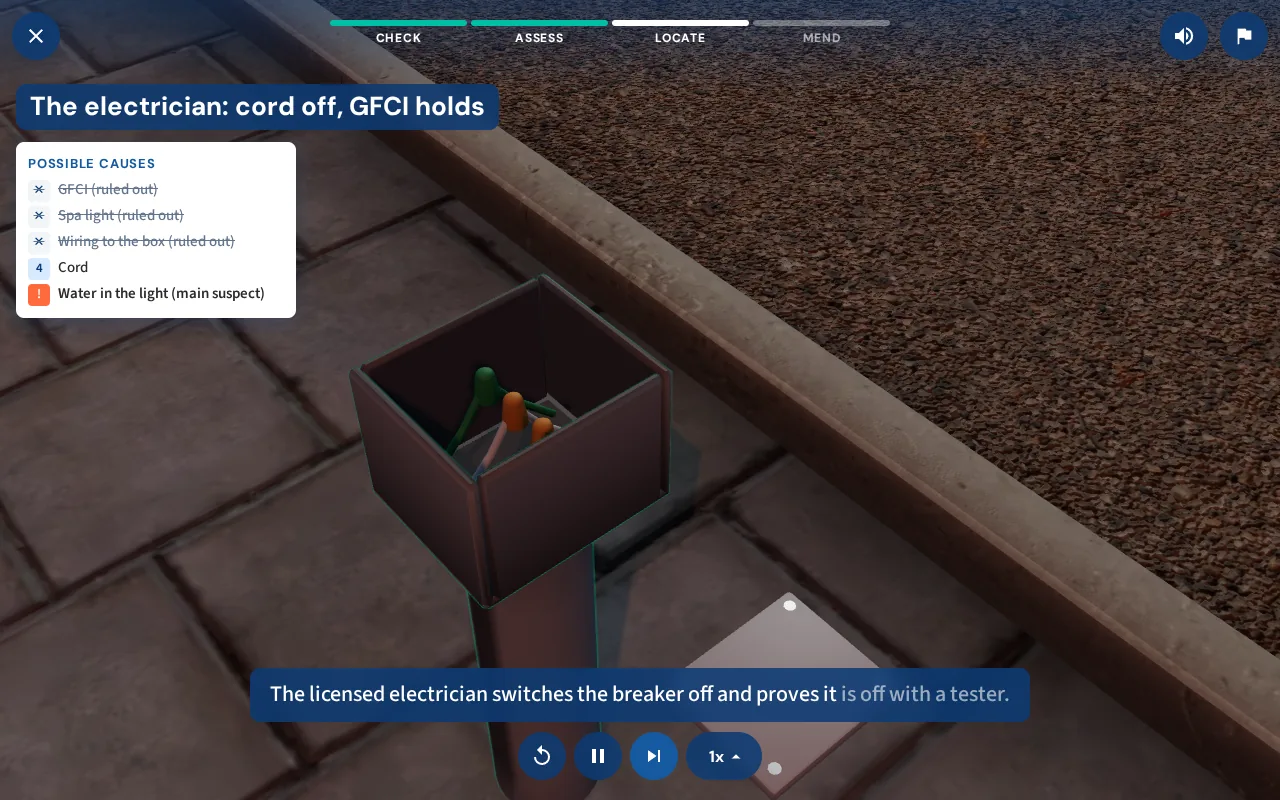
The licensed electrician switched the breaker off and proved it was off with a tester. Then they disconnected the light's cord inside the junction box and switched the power back on. With the cord disconnected, the GFCI held. So the GFCI was sound, and so was the wiring up to the box. The fault was past the box, in the cord or in the light.
With the power off again, the electrician lifted the light up to the deck on the cord coiled behind it. The cord had no cuts. Inside the light there was water, and the metal parts were corroded, which means crusted and eaten away. The gasket was flat and hard. It was the old one, put back at the bulb change.
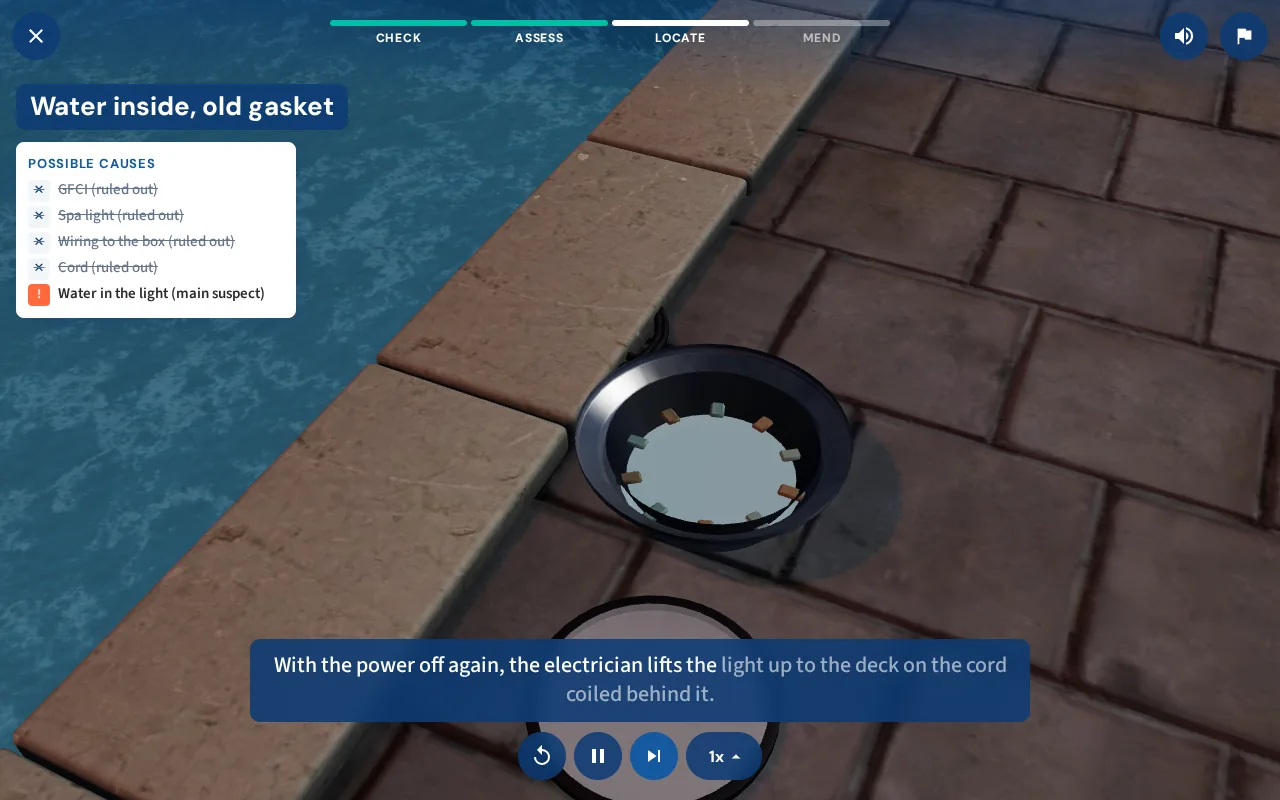
Now you can say the whole chain. The bulb was changed, and the old gasket went back in. It did not seal, so water crept into the light. When the light is switched on, electricity leaks through that water to ground. The GFCI senses the leak and cuts the power.
Every time it tripped, it was protecting the swimmers.
Step 4. Mend: Pick the Smallest Fix That Leaves the Pool Safe
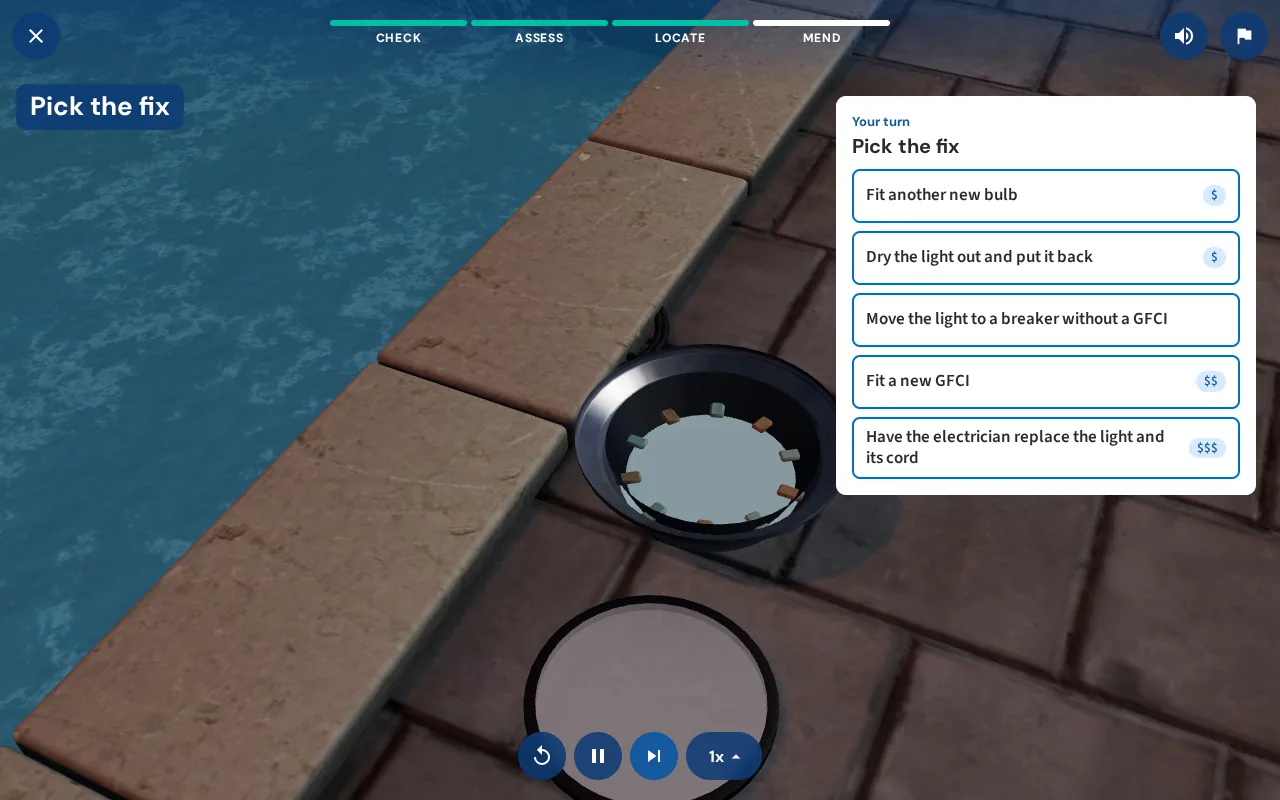
Think about what the electrician found inside the light. The inside was corroded, so that light could not be trusted again. Drying it out would not make it safe. A new bulb would sit in the same wet, corroded light. A new GFCI would trip the same way, because the old one is working.
The fix on this call is to have the electrician replace the light and its cord. The electrician fits a new light, which comes with its own cord and a new gasket, and pulls the cord through to the junction box. A light cord is never joined behind the light or under the water.
Prove It, Twice
A fix is not done until you prove it. Switch the pool light on from the panel, and watch the GFCI. The light comes on and stays on, and the GFCI stays set.
Then try it once more, with the spa light on as well. Both lights are on, and nothing has tripped.
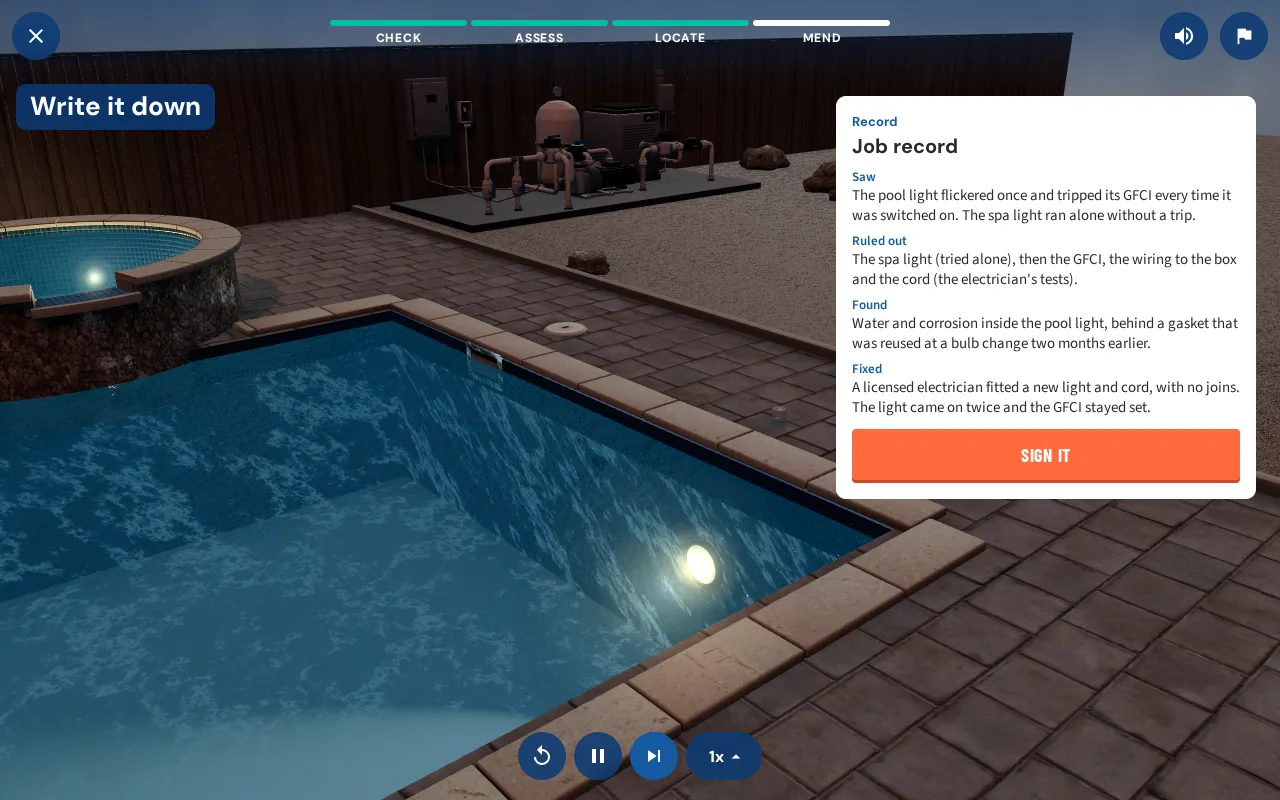
Last, write it down. Note the one reset, the lights tried one at a time, the fogged lens, and what the electrician found and fitted. Add that the old gasket was reused at the bulb change, so the next tech knows why it failed.
Wrong Moves That Get People Hurt
- Letting people swim while it is still tripping. A trip that comes with the pool light may be stopping a shock.
- Resetting it again to watch more closely. One reset showed the trip comes back with the pool light. Every reset after that sends power back into the fault.
- Bypassing the GFCI to test the light. The GFCI is what stands between this fault and a swimmer.
- Moving the light to a breaker without a GFCI. That stops the trips by taking away the protection, and it leaves a leaking light in the water with the swimmers.
- Pulling the light yourself and drying it out. Lifting and opening a pool light is electrical work, and a light that has had water in it cannot be trusted once it is dried.
- Opening the junction box yourself. Disconnecting the cord there is the right next test, but it means opening wiring. It belongs to a licensed electrician.
- Blaming the GFCI or the bulb. The GFCI held once the cord was disconnected. A failed bulb goes dark. It does not leak electricity to ground.
When to Stop and Call a Pro
On this call the tech stops before any repair is made. Stop and refer the job when the next step means any of these:
- A second reset of a GFCI that has already tripped again.
- Opening the junction box, or disconnecting anything inside it.
- Lifting the light out of the wall, or opening it.
- Any test on the wiring.
Until the licensed electrician has been, the GFCI stays tripped, the customer leaves the breaker alone, and everyone stays out of the pool.
Try This Call Yourself
Reading the steps is one thing. Making the choices yourself is how they stick. The lesson behind this guide is free, and it takes about 10 minutes.
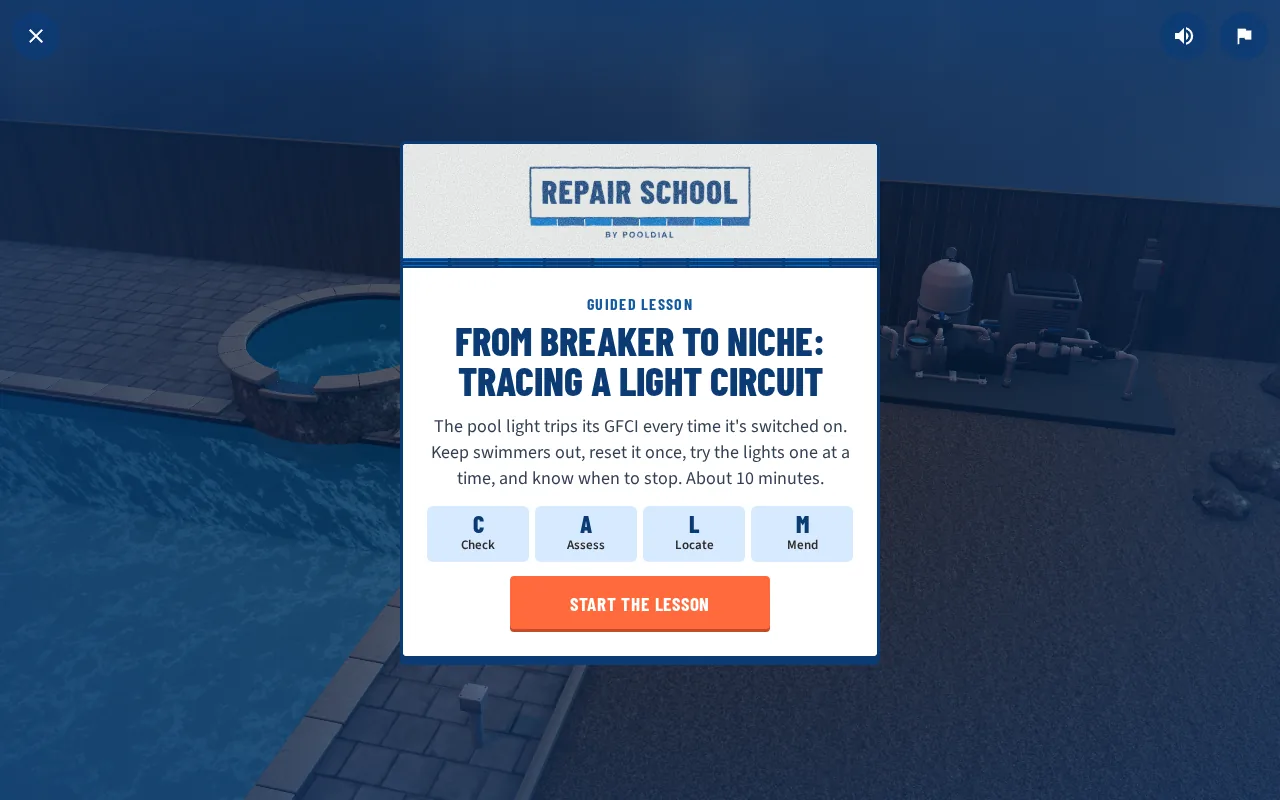
From breaker to niche: tracing a light circuit
Work this exact call in a 3D pool and equipment pad. Free, with a sign-in.
Try this call in the simulatorRelated Repair Guides
For two more calls worked the same way, read the pool pump not turning on guide and the air in the pool pump basket guide. Brand manuals and fault guides are in the equipment troubleshooting guides.
Frequently Asked Questions
Why does a pool light trip the GFCI?
A GFCI is a safety device that cuts the power when it senses electricity leaking out of the circuit. On this call, water had got into the pool light, and electricity leaked through that water to ground each time the light was switched on. The fault could also have been the GFCI itself, another light on the same GFCI, the wiring to the junction box, or the light's cord.
How many times can a tech reset a GFCI that a pool light trips?
Once, and only once. Keep everyone out of the pool, switch the lights off at the panel, and reset it one time while you watch. Each reset after that sends power back toward the fault.
How do you tell which light is tripping the GFCI?
Switch the lights on one at a time from the panel. On this call the spa light came on alone and the GFCI held. The pool light alone flickered once and the GFCI tripped. So the trip followed the pool light and nothing else.
Can a pool tech pull the light to look for water?
Not in this course. Lifting a pool light or opening the junction box is electrical work, and it goes to a licensed electrician. A tech can look at the lens through the water without touching anything.
Does a GFCI that keeps tripping need to be replaced?
Not on that sign alone. On this call the electrician disconnected the light's cord at the junction box, and the GFCI held. It was working. It tripped because it sensed a real leak, and a new one would have tripped the same way.
This guide follows one PoolDial Repair School lesson. The call is a teaching example, not a record of one job. The light maker's manual, a licensed electrician and your local electrical code control any real repair.
- PoolDial Repair School, guided lesson: From breaker to niche: tracing a light circuit.