Customer Retention Strategies for Pool Service Companies


Losing a customer who pays $160 a month costs you $1,920 a year. Lose five customers and that is almost $10,000 gone. Most pool service owners spend all their energy on getting new customers. But keeping the ones you already have is cheaper, easier, and more important for long-term growth.
The good news is that most customers do not leave because of price. They leave because of poor communication, missed visits, or the feeling that nobody cares about their pool. All of those problems are fixable. Here is how.
Key Takeaways
- Most customers leave because of silence, not price. If they never hear from you, they assume you do not care.
- One lost customer at $160/month costs you $1,920/year. Retention is the fastest way to protect your revenue.
- Proactive updates build trust. Share service reports through PoolDial's customer portal so customers always know what was done.
- Autopay and clear billing reduce friction. Make it easy to pay and hard to forget.
- Ask for feedback before problems grow. A quick check-in can save a relationship.
Why Pool Customers Leave (and How PoolDial Helps You See It Coming)
Customers cancel for three main reasons. The first is poor communication. They feel like they are paying for a service but have no idea what is happening. The tech comes and goes, and the customer never hears a word. Over time, they start to wonder if the service is even worth it.
The second reason is inconsistent service. A pool turns green. A filter goes uncleaned for weeks. A tech skips a visit and nobody tells the customer. One bad experience might not cause a cancellation, but a pattern of them will.
The third reason is price. But here is the thing: price is almost always the last reason, not the first. Customers bring up price when they have already lost faith in the value. If they trust you and see the results, the monthly fee feels fair. If they do not, any price feels too high.
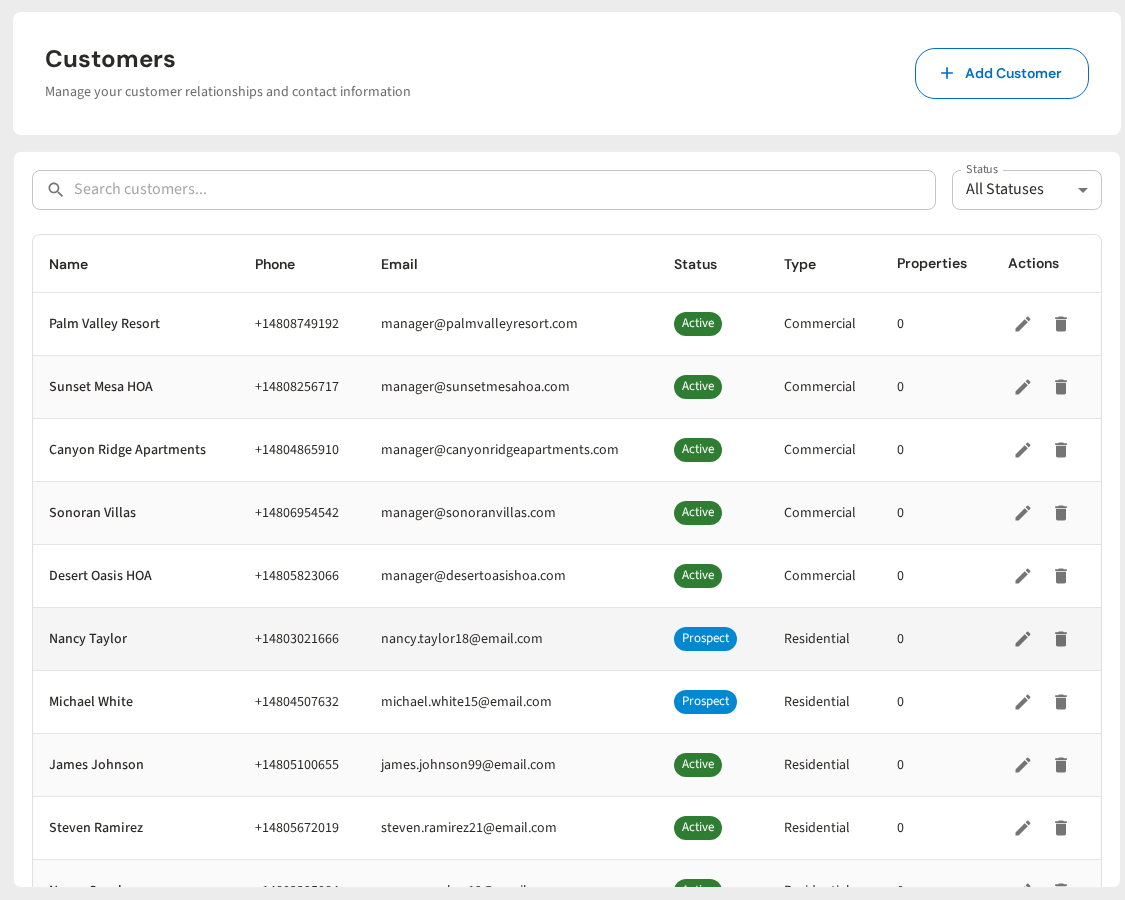
PoolDial's customer management tools help you track every interaction, service visit, and note in one place. When you can see the full picture, you can spot warning signs before a customer picks up the phone to cancel.
How to Build Trust with Proactive Communication in PoolDial
The easiest way to keep customers is to talk to them before they have a reason to complain. Most pool service companies only reach out when something goes wrong or when a bill is due. That is not enough.
Proactive communication means telling your customer what you did at their pool today. It means sending a note when you notice their pump is getting loud. It means giving them a heads-up before pool season starts that you will be adjusting the schedule.
With PoolDial's customer portal, your customers can log in anytime and see their full service history. They can view chemical readings, see what was done at each visit, and check their billing status. This kind of transparency turns a service into a relationship.
You can also use broadcast messaging to send updates to all your customers at once. A quick text before a holiday weekend, a note about a chemical shortage, or a reminder to run their pump longer during a heat wave. These small touches show that you are paying attention. For more tips on staying in touch, read our guide on pool service customer communication.
How to Share Service Reports Through PoolDial's Customer Portal
One of the most powerful retention tools is proof of work. When a customer can see exactly what happened at their pool, they stop guessing and start trusting.
Every time a tech completes a stop in PoolDial, the system logs the visit. Chemical readings, tasks completed, photos taken, and notes added all go into the customer's record. That information flows straight to the customer portal, where the homeowner can see it on their phone or computer.
This matters because most customer complaints come from a lack of information. "I do not think anyone came this week." "My pool was green and nobody told me why." "I have no idea what chemicals are in my pool." When you share service reports, all of those questions answer themselves.
You do not have to do anything extra. PoolDial handles the sharing automatically. Your tech does their job, logs the visit, and the customer sees the report. It is that simple.
How to Handle Price Increases in PoolDial Without Losing Customers
Price increases are part of running a business. Chemical costs go up. Gas prices change. You hire better techs and need to pay them more. But a price increase handled poorly is one of the fastest ways to lose customers.
Here is how to do it right:
- Give notice. Tell customers at least 30 days before the increase takes effect. Nobody likes surprises on their credit card statement.
- Explain why. You do not need a long letter. A simple message works: "Due to rising chemical and fuel costs, your monthly rate will increase from $160 to $175 starting next month. We appreciate your business."
- Show your value first. Before you announce a price increase, make sure you have been communicating well, delivering consistent service, and sharing reports. A customer who sees the value will accept a fair increase.
- Use broadcast messaging. PoolDial's broadcast messaging lets you send a professional price-increase notice to all affected customers at once by text or email.
- Update billing automatically. Once you adjust the rate in PoolDial's billing system, the change applies to the next invoice cycle. No manual work, no missed updates.
The customers who leave over a $10 to $15 increase were probably on their way out already. The ones who stay are the ones who trust you. Focus on building that trust long before the increase.
How to Ask for Feedback and Fix Problems in PoolDial
Most unhappy customers do not complain. They just leave. That is why you need to ask for feedback before small problems become cancellations.
A simple check-in works well. Once or twice a year, send a short message: "Hi, this is [your company]. How is everything going with your pool service? Anything we can do better?" You can send this through PoolDial's broadcast messaging to reach everyone at once.
When a customer does raise a concern, respond fast. Speed matters more than perfection. A quick reply that says "Thank you for letting us know. We will take care of it this week" goes a long way. For a deeper look at handling complaints well, see our guide on responding to pool service complaints.
Log every piece of feedback in the customer's record in PoolDial. Over time, you will see patterns. If three customers on the same route complain about missed visits, you have a tech problem, not a customer problem. PoolDial's chemical tracking and service history give you the data to find and fix these patterns.
How to Use Autopay in PoolDial to Reduce Cancellations
Billing friction is a hidden cause of churn. When customers have to write a check, remember to pay online, or deal with confusing invoices, they start to think about whether the service is worth the hassle. Autopay removes that friction entirely.
When a customer is on autopay through PoolDial's billing system, their card is charged automatically each month. They do not have to think about it. There is no late payment to chase, no awkward reminder texts, and no reason for them to "forget" to pay.
Set up autopay from day one with every new customer. Make it part of your onboarding process. The easier you make it to pay, the longer they will stay. For a step-by-step walkthrough, read our guide on setting up autopay for pool customers.
How to Calculate the Cost of Losing a Customer in PoolDial
Every pool service owner should know this number. It makes retention feel urgent instead of optional.
Take your average monthly rate and multiply it by 12. That is the yearly revenue from one customer. For a $160/month customer, that is $1,920 per year. Now think about how long the average customer stays. If they stay for three years, that one customer is worth $5,760 in total revenue.
Now think about what it costs to replace them. Marketing, sales calls, the first visit, the onboarding time. Most pool companies spend $100 to $300 to acquire a new customer. So when you lose one, you lose the future revenue and you have to spend money to find a replacement.
Here is a simple way to look at it:
| Metric | Value |
|---|---|
| Monthly rate | $160 |
| Annual revenue per customer | $1,920 |
| Average customer lifespan | 3 years |
| Lifetime value | $5,760 |
| Cost to acquire a replacement | $100 to $300 |
| True cost of losing 1 customer | $2,020 to $2,220 (first year alone) |
When you see those numbers, spending 10 minutes on a check-in call or sending a quick service update through PoolDial does not feel like extra work. It feels like protecting your income.
See Customer Retention Tools in Action with PoolDial
PoolDial brings together everything you need to keep customers happy and loyal. Customer profiles, service history, chemical logs, billing, autopay, broadcast messaging, and a customer portal all work together in one system. When your customers feel informed, valued, and taken care of, they stay.
Keep More Customers, Grow Faster
PoolDial gives you the communication tools, service reports, and billing automation to reduce churn and protect your revenue. Plans start at $2/pool.
Start Your Free Trial