
Two-Week vs Weekly Pool Routes: Which Makes More Money?



A customer calls and wants pool service every other week instead of every week. They'll pay half the monthly rate. Sounds fair, right? Not so fast. Biweekly pools look like easy money, but they come with hidden costs that most pool pros don't think about until it's too late.
Here's how to figure out whether two-week service makes sense for your business, or whether you're better off sticking with weekly.
Key Takeaways
- Weekly pools are almost always more profitable per hour. You spend less time at each stop because the pool stays cleaner.
- Biweekly pools use more chemicals per visit. Two weeks of sun and debris means more work to bring the water back in line.
- Scheduling biweekly is harder. Alternating weeks create gaps and make route planning more complex.
- Biweekly can work in the right market. Winter months, mild climates, and budget customers are good fits.
- Price biweekly at 60-70% of weekly, not 50%. The extra work per visit means you need more than half the rate.
The Math: Weekly vs Biweekly
On paper, biweekly looks simple. Half the visits, half the price. But the work per visit is not half. It's more. A pool that sits for two weeks collects more leaves, more algae, and more chemical drift. You spend longer at each stop.
| Factor | Weekly Service | Biweekly Service |
|---|---|---|
| Visits per month | 4 | 2 |
| Time per visit | 15-20 min | 25-35 min |
| Chemical cost per visit | $4-8 | $8-15 |
| Typical monthly price | $140-180 | $85-120 |
| Revenue per hour on-site | $105-145 | $70-100 |
| Callback risk | Low | High (algae, cloudy water) |
The real killer is revenue per hour. A weekly pool at $160/month takes about 70 minutes total per month (4 visits x 17 min). That's $137 per hour of on-site time. A biweekly pool at $100/month takes about 60 minutes total (2 visits x 30 min). That's $100 per hour. The weekly pool earns you 37% more per hour. PoolDial's analytics show revenue per hour for each stop so you can compare weekly and biweekly side by side.
Why Biweekly Pools Cost More Per Visit
When a pool sits for two weeks, things go wrong. Chlorine drops. Algae starts. Leaves pile up. The filter gets dirtier. You show up and spend the first ten minutes just getting the pool back to where a weekly pool would have been.
This is doubly true for biweekly pools. If you price a biweekly account based on how it looks in December, you'll lose money every visit from May through September. Summer heat eats through chlorine fast. Two weeks without service in July is a recipe for a green pool callback.
Use our chemical dosage calculator to see how much more product a pool needs after two weeks of sun and use versus one week. PoolDial's chemical tracking logs readings at each visit so you can see the cost difference over time.
The Scheduling Problem
Biweekly pools make route scheduling harder. A weekly pool is on your route every Tuesday. Simple. A biweekly pool is there every other Tuesday. That means some Tuesdays you have it, some you don't. Your route changes week to week.
This creates two problems:
- Uneven days. One week you have 18 stops on Tuesday, the next week you have 14. It's hard to plan your time and your techs' hours when the count keeps changing.
- Gaps in the route. If the biweekly pool is between two weekly pools, you drive right past it every other week. That's wasted density on the off weeks.
Some companies solve this by pairing biweekly customers. Pool A gets service on Week 1, Pool B on Week 2. If both pools are in the same area, the slot stays full. But finding pairs that line up by location is tricky. PoolDial's route planner handles alternating schedules so the right stops show up each week.
When Biweekly Makes Sense
Winter / Off-Season
Pool use drops. Chemical demand drops. Algae risk is low. Biweekly can keep the pool clean without overspending on labor.
Mild Climates
Cooler areas with less sun and fewer swimmers put less stress on pool chemistry. The water holds better between visits.
Budget Customers
Some homeowners can't afford weekly service. Biweekly at a higher per-visit rate is better than losing them entirely.
Vacation Homes
Empty homes don't need weekly service. Biweekly keeps the pool from turning into a swamp without wasting visits on a pool nobody uses.
PoolDial lets you set the service frequency for each pool, so you can mix weekly and biweekly on the same route.
When to Say No to Biweekly
In hot climates during summer, biweekly service is a liability. A pool in Phoenix or Houston that sits for two weeks in July will go green. Then you get a callback, a complaint, and an hour of extra work for free. You lose money and the customer is unhappy.
If a customer insists on biweekly during summer, either charge enough to cover the risk or be clear about what's not included. Put it in the service agreement: "Biweekly service does not include green pool recovery. Algae treatment will be billed separately." PoolDial's customer portal lets customers see their service agreement and billing details anytime.
How to Price Biweekly Service
The biggest mistake is charging exactly half your weekly rate. You do more work per visit, use more chemicals, and take on more callback risk. Price accordingly.
A good rule: charge 60-70% of your weekly rate for biweekly service. If weekly is $160/month, biweekly should be $96-112/month, not $80. Use our service price calculator to find the right number for your market and costs.
Some companies keep it simple: one price for weekly, no biweekly option. This avoids the headache entirely. If a customer can't afford weekly, you refer them to someone else. Your routes stay clean, your schedule stays even, and your callbacks stay low. PoolDial's billing makes it easy to set different rates for weekly and biweekly customers.
Mixing Both on the Same Route
If you do offer biweekly, keep it to a small part of your route. A good rule is no more than 15-20% of your total pools. Any more and the scheduling gets too messy.
Group biweekly pools on the same day. Don't scatter them across your week. If all your biweekly pools are on Friday, you have one day that changes week to week instead of five. Use PoolDial's route planner to tag biweekly pools and see them on the map separate from weekly stops.
See It in Action: PoolDial Route Planner
PoolDial handles both weekly and biweekly schedules. Set any pool's service frequency, and the route planner shows the right stops for each week. No forgetting which week is which. No showing up at a pool that's not due.
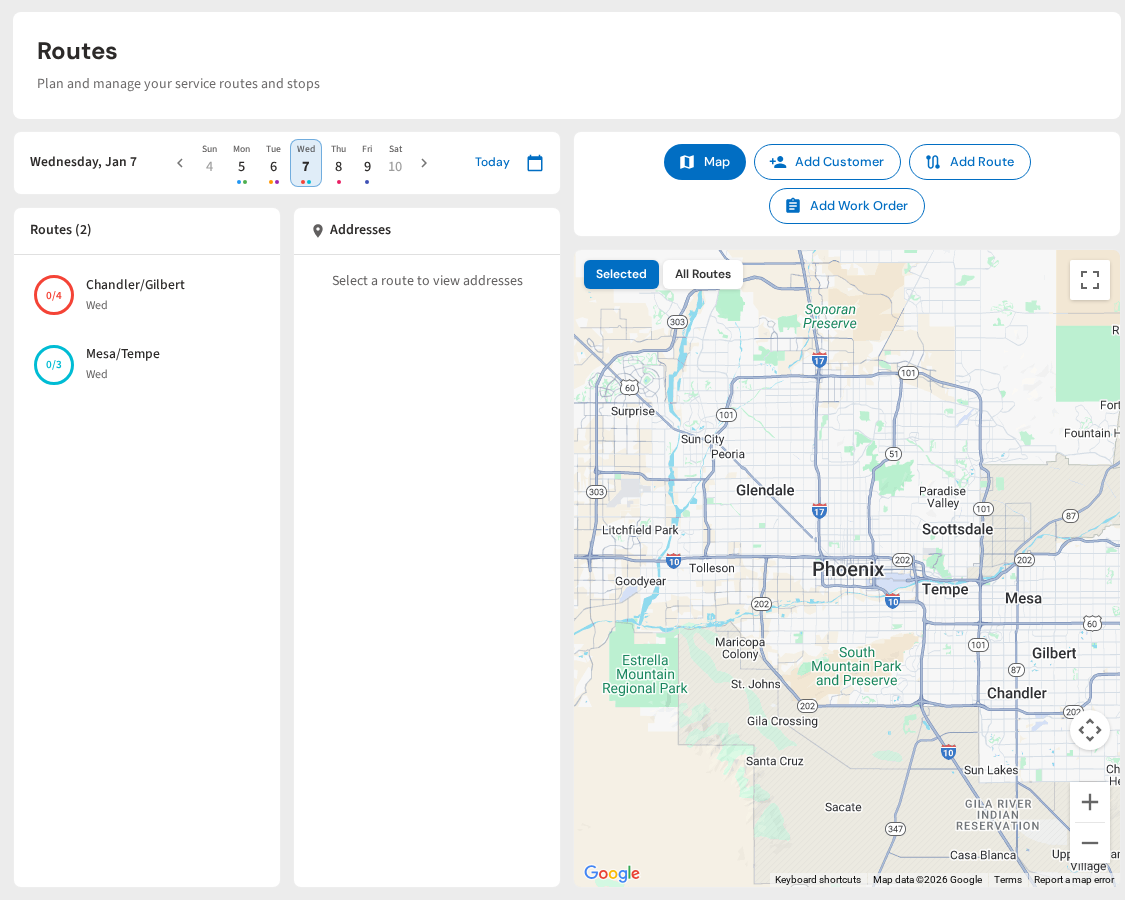
Weekly, Biweekly, or Both. PoolDial Handles It.
Set service frequency per pool. See the right stops each week. No guessing, no missed visits. Plans start at $2/pool.
Start Your Free Trial