
Pool Route Density: How to Build a Profitable Service Area


Route density is the number of pools you service in a small area. The tighter your pools are packed together, the less time you spend driving. The less time you spend driving, the more money you keep. It's the single biggest factor in whether a pool route makes money or loses it.
Key Takeaways
- Density beats pool count. 60 pools in two zip codes is more profitable than 100 pools spread across ten.
- Target your marketing by neighborhood. Grow where you already are instead of chasing pools across town.
- Five minutes between stops is the sweet spot. Anything over ten minutes is eating your profit.
- A dense route is worth more if you sell. Buyers pay a premium for tight, efficient routes.
- Check your density twice a year. It drifts as you add and lose pools.
What Route Density Looks Like
Picture two pool companies. Both have 80 pools. Company A services pools in three neighborhoods within a five-mile circle. Company B services pools across eight cities and 30 miles of highway. Company A finishes by 3 PM. Company B is still driving at 5:30.
Here's what good density looks like in numbers:
| Metric | Low Density | High Density |
|---|---|---|
| Avg. drive between stops | 12-18 minutes | 3-5 minutes |
| Pools per day (solo) | 12-15 | 20-28 |
| Daily drive time | 3-4 hours | 45 min - 1.5 hours |
| Gas cost per week | $180-250 | $60-100 |
| Revenue per hour | $55-75 | $100-140 |
The difference is huge. A dense route can earn nearly double per hour compared to a spread-out one. Use our cost per pool calculator to see how drive time changes your real profit per stop. PoolDial shows your drive times between every stop so you can see exactly where you fall on this chart.
Why Density Is the Fastest Fix
There are lots of ways to make more money in pool service. You can raise prices. You can add upsells. You can cut chemical waste. But none of them work as fast as fixing your route density.
You don't need to change your prices. You don't need to hire anyone. You don't need new equipment. You just need to look at your map, move some stops around, and stop driving to pools that are too far away. Read our guide on reducing drive time for the step-by-step process. PoolDial's route planner makes this a drag-and-drop fix you can do in one sitting.
How to Build Density From Scratch
If you're just starting out, you have a big advantage. You can pick your service area before you have any pools. Here's how to choose the right one:
- Pick one area and stay there. Choose a neighborhood or group of neighborhoods with lots of pools. Focus all your marketing there. Don't take a pool across town just because someone called.
- Look for pool density, not just houses. A neighborhood of 500 homes where 300 have pools is better than a neighborhood of 2,000 homes where 50 have pools.
- Check the competition. An area with no pool companies is not always good. It might mean there aren't enough pools. An area with two or three competitors usually means strong demand.
- Start with the neighbors. When you sign your first customer, knock on the doors of the five closest houses with pools. Your truck is already parked there. That's your best marketing.
PoolDial's map view shows where your pools cluster, so you know exactly which streets to market on next.
How to Increase Density on an Existing Route
Already have a route? You can still improve your density. Here are the moves that work:
1. Market where you already are. Look at your current route map. Find the neighborhoods where you have 3-5 pools. Those are your best growth zones. A door hanger, a yard sign, or a referral bonus in those areas will bring in pools that slot right into your route with zero extra drive time.
2. Ask for referrals from neighbors. Your best leads are next door to your current stops. Ask your customers if their neighbors need service. Offer a small discount or a free month to both parties. A pool next door adds one minute to your day, not fifteen.
3. Trade or drop outliers. Every route has a few pools that are far from everything else. Either move them to a day when you're nearby, raise the price to cover the drive, or let them go. Read our guide on rearranging routes for new customers for how to handle this.
4. Buy a route in your area. If someone is selling a route in a neighborhood you already cover, that's a golden opportunity. You add 20 pools with almost no extra drive time. The route valuation calculator can help you figure out what it's worth. PoolDial's import tool lets you load a purchased route and merge it with your existing stops in minutes.
The Vacation Rental Advantage
Vacation rental neighborhoods are a density goldmine. The properties are often clustered together in the same development. The owners care about the pool because it's a selling point for guests. And they don't argue about price the way some homeowners do.
If your area has vacation rental clusters, go after them. One property manager can hand you 10-15 pools in the same subdivision. That's an entire day's route in one phone call. PoolDial lets you group pools by property manager so billing and communication stay simple.
How Dense Routes Affect Route Value
If you ever plan to sell your route, density is one of the first things buyers look at. A tight route with 80 pools in two zip codes is worth more than a sloppy route with 120 pools across six cities. Buyers know that dense routes are easier to run, easier to grow, and more profitable from day one.
The standard pool route valuation uses a multiplier on monthly revenue. Dense routes often sell at the high end of that range (10-12x monthly) while spread-out routes sell at the low end (6-8x) or don't sell at all. PoolDial's analytics can help you show a buyer exactly how tight and profitable your route is.
Measuring Your Density
You can't improve what you don't measure. Here are two simple ways to check your density:
- Average drive time between stops. Add up your total drive time for the day, then divide by the number of stops. Under 5 minutes is great. Over 10 is a problem.
- Map test. Plot all your stops on a map. If they look like tight clusters with short lines between them, you have good density. If they look like a spider web with long lines crossing the city, you don't.
PoolDial's route planner shows drive times between every stop. You can see at a glance which areas are tight and which need work.
See It in Action: PoolDial Route Planner
PoolDial shows all your stops on a color-coded map. See your density at a glance. Find gaps where you should market for new pools. Spot the outliers that are costing you money. Drag stops between days to tighten each cluster.
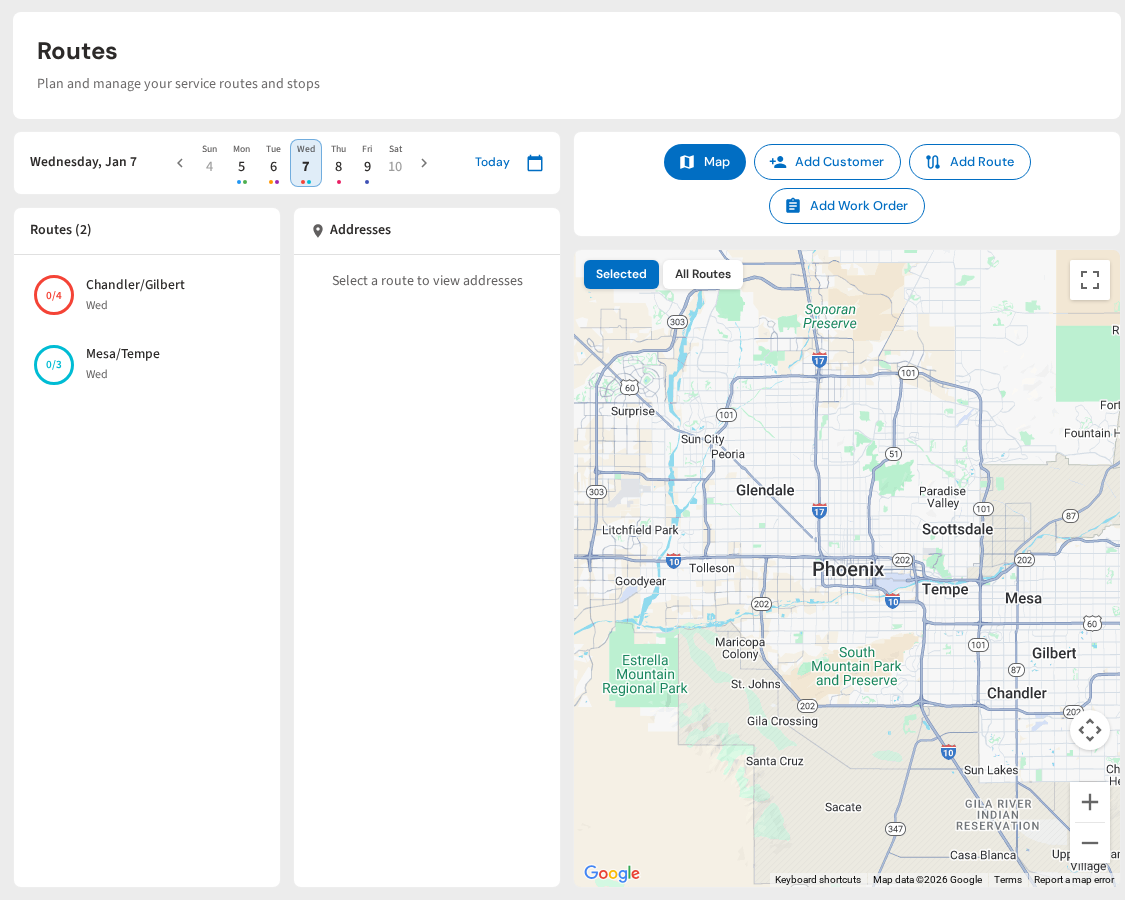
See Your Route Density on a Map
PoolDial shows where your pools are, where the gaps are, and where to grow next. Plans start at $2/pool.
Start Your Free Trial