
PB4-60 Broken Outlet Fitting: Repair or Replace?


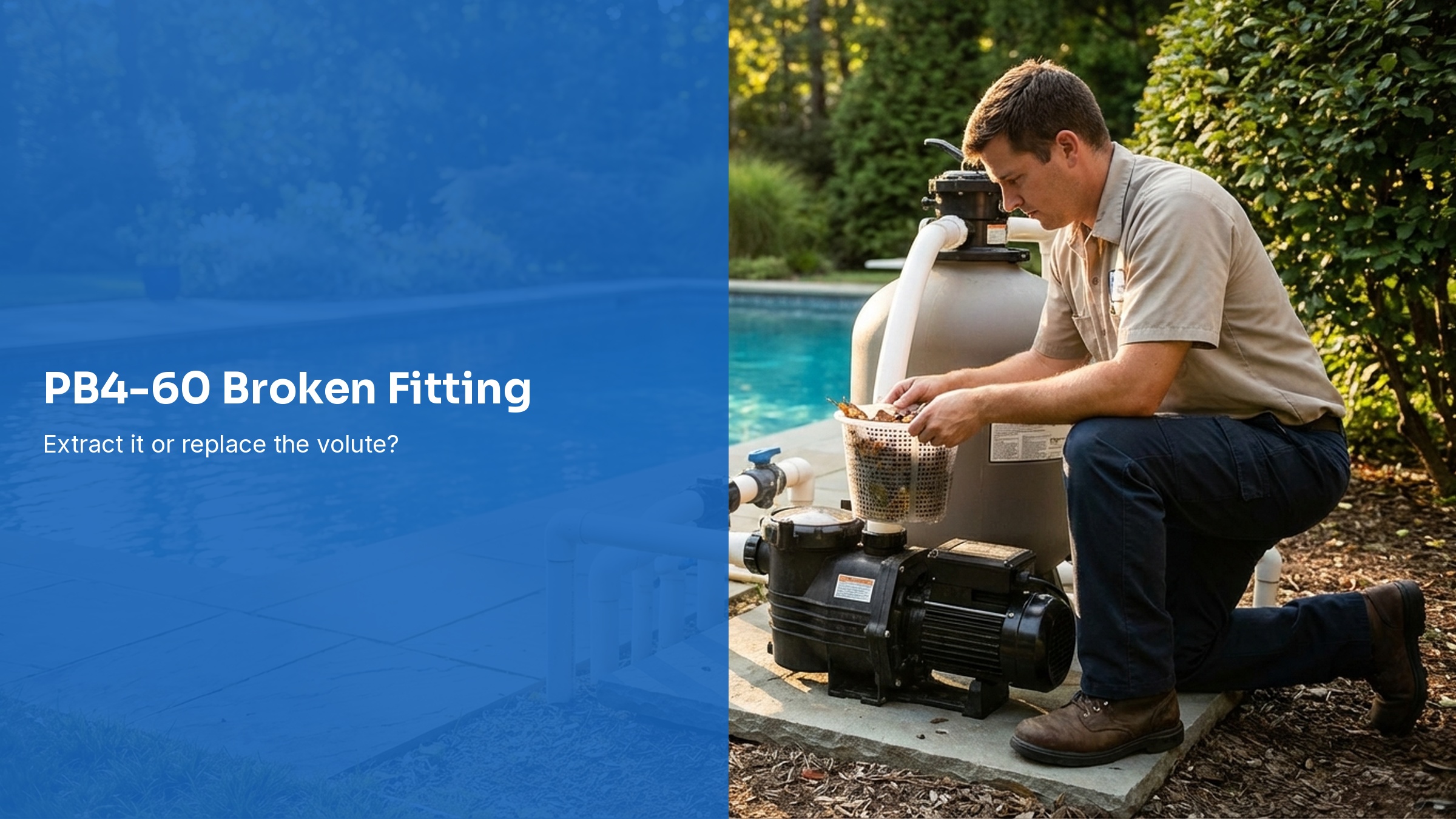
A Polaris PB4-60 quick-connect barb can break off flush inside the outlet port and leave a plastic ring threaded into the volute. The tempting move is to drill, cut, or hammer until the fragment turns. The better move is to decide first whether the housing is still worth saving.
The official PB4-60 manual lists the quick-connect fittings and volute as replaceable parts. That gives a technician two legitimate outcomes: remove the broken fitting without damaging the female threads, or replace the volute when the port is cracked, distorted, or no longer able to seal.
This guide is for qualified pool service professionals. The PB4-60 has a high-voltage motor and pressurized plumbing. Follow the current manual, local requirements, and your lockout procedure.
Key Takeaways
- De-energize and isolate first. Turn off power to both the filter pump and booster pump, close required isolation valves, and relieve water pressure.
- Inspect before extracting. A cracked or stretched port needs a replacement volute, not a clever removal.
- Use the least destructive tool first. A properly sized internal pipe or nipple extractor gives more control than a drill or improvised wedge.
- Protect the plastic threads. Cutting too deep or expanding the broken ring can ruin a housing that was otherwise reusable.
- Install the new fitting by the book. Polaris warns against pipe dope and overtightening on its plastic quick-connect threads.
What Broke on the PB4-60?
The PB4-60 uses reinforced hose and threaded quick-connect fittings at the pump. On the current official parts list, the quick-connect install kit is R0617100, the four-pack of quick-connect fittings is R0621000, and the PB4-60 volute is R0536300. That volute includes the drain plug and O-ring.
Before ordering, confirm the exact pump and manufacturing range. The manual linked from the current Polaris product page applies to PB4-60 pumps with serial numbers beginning with "PB" and a manufacturing date on or after December 1, 2011. Older assemblies can use different parts.
If only the male plastic portion of the barb remains in a clean, round port, extraction may save the volute. If the port has a radial crack, white stress marks, an oval opening, missing thread material, or a history of leaking, replacement is the stronger repair.
Make the Equipment Safe Before Touching the Port
High voltage and trapped pressure
Polaris says all electrical work must be performed by a licensed electrician and that the pump must be serviced by a qualified professional. The replacement instructions call for disconnecting power to both pumps at the breakers, closing isolation valves when the equipment is below water level, and allowing at least five minutes for the capacitor to discharge before electrical work.
For a fitting-only repair, no one should need to open the motor wiring. The electrical shutoff still matters because the filter pump can supply water to the booster pump and the booster motor can start unexpectedly from automation or a timer.
- Identify and switch off the filter-pump and booster-pump breakers.
- Confirm that automation, timers, and remote commands cannot start either pump.
- Close the applicable isolation valves if the equipment is below pool level.
- Relieve system pressure through the filter's approved air-relief procedure.
- Disconnect the hose and give the equipment pad time to drain.
- Verify the port is dry enough to see cracks and thread damage.
Field Extraction Methods, Ranked by Risk
Polaris does not publish a broken-fitting extraction procedure. The following methods come from working technicians, so they should be treated as field techniques rather than manufacturer instructions.
| Method | Why a tech may use it | Main risk |
|---|---|---|
| Internal pipe or nipple extractor | Purpose-built tool can grip the inside of the broken fitting and turn it counterclockwise. | An oversized or overdriven extractor can expand the fragment against the plastic port. |
| Drain-style internal extractor | May fit a large hollow fragment when the correct pipe extractor does not. | Poor fit can slip, gouge, or load the port unevenly. |
| Two-bolt bridge | Two long bolts set inside the fitting create purchase for a screwdriver used as a turning bar. | The bolts can spread the broken ring and stress the housing. |
| Spade bit used as a wedge | A slightly larger bit can bite into the fragment and provide a turning surface. | Hammering can crack the volute or drive plastic into the water path. |
| Saw relief cut | A shallow cut can let a stubborn ring collapse inward. | One cut into the female thread can make a leak-free repair impossible. |
The least destructive approach is a correctly sized internal extractor used with controlled hand torque. Stop if the tool is spreading the fragment, the housing flexes, or the remaining fitting will not move. The objective is not to win against the old plastic. It is to leave sound female threads behind.
A drain extractor may work because it grips from the inside. It still needs to fit the broken fitting without touching the volute threads or loading the housing at an angle.
The Two-bolt Technique
One technician described an improvised bridge that avoids cutting into the port.
The follow-up explains why the trick gets passed between repair technicians.
Use this only when the bolt ends bear on the broken fitting, not the housing. Keep the turning force even and low. If the bolts start expanding the ring, move to the replacement decision.
Why the Spade-bit Method Is a Last Resort
This can create strong internal purchase, but hammering is exactly what an aged plastic volute may not tolerate. A bit that is too large pushes outward. A bit driven too far can contact the water passage. A power drill can remove material faster than the technician can see it.
If a controlled hand extractor cannot remove the fragment and a replacement volute is available, replacing the housing is often cheaper than taking responsibility for a damaged port that leaks after startup.
Inspect the Port After Extraction
Do not install the new barb immediately. Clean out loose plastic and inspect the full circumference under good light.
Reuse the volute only when all checks pass
- No cracks extend from the outlet boss.
- The port remains round and has no white stress marks.
- The female threads are continuous and not cross-threaded.
- No deep saw or drill marks cross the sealing path.
- The new genuine fitting starts by hand without force.
- The fitting can be installed to the current Polaris instructions.
Replace the volute when the housing fails any of those checks. Record the model, serial number, part number, cause found, and repair in your equipment history. PoolDial's equipment tracking keeps that record with the property for the next technician.
Install the Replacement Fitting Correctly
The current Polaris quick-connect instructions contain two warnings that directly explain many broken ports. Do not use pipe dope on the barb threads or any plastic threads. The manufacturer says it can weaken the plastic and cause leakage or fracture. Do not overtighten the fitting because that can strain or fracture the inlet or outlet port.
Use the genuine quick-connect fitting specified for the model and follow the illustrated fitting and hose instructions in H0609400. Do not substitute a rigid connection that transfers pipe load or vibration into the volute unless the current manufacturer documentation specifically approves it.
After reassembly, restore the system according to the manual. The filtration pump must be running and the system must be free of air before the booster pump operates. The PB4-60 is not self-priming, and Polaris warns that running it dry damages the pump. The cleaner must also be connected during operation.
When to Replace More Than the Volute
A fitting failure can be the only problem. It can also be one more symptom on an old booster pump. Check the seal area, motor bearings, base, hose condition, vibration, previous leaks, corrosion, and service history before quoting only the smallest part.
A volute repair makes sense when the motor is quiet, the shaft and seal are sound, the assembly is not heavily corroded, and the repair can be warranted. A full pump replacement becomes easier to justify when several major items are worn or the labor and parts approach the cost of a supported replacement.
Use the same written comparison described in our pool repair quoting guide. Give the customer the salvage option only if the housing passes inspection. Otherwise, quote the volute or complete pump as the repair you can stand behind.
Prevent the Next Broken Fitting
- Support plumbing so the port is not carrying pipe weight.
- Use the Polaris reinforced hose and quick-connect components listed for the pump.
- Start plastic threads by hand and stop if they resist or cross-thread.
- Never use pipe dope on the plastic barb threads.
- Do not overtighten the fitting.
- Bolt the pump to a solid foundation as the manual recommends to reduce vibration.
- Replace stiff, cracked, or pulling hose before it loads the fitting.
- Keep chemical storage away from the equipment pad because the manual warns that spills and fumes can weaken equipment.
The broken ring is often removable. The successful repair is not the extraction alone. It is a sound port, correct new fitting, supported hose, dry startup, and a leak-free result that remains safe after the technician leaves.
Keep Every Repair Attached to the Equipment
PoolDial keeps model details, photos, estimates, repair notes, and service history together so the next technician knows exactly what changed.
Start Your Free Trial