
New Plaster Brush: Nylon, Combo, or Steel?


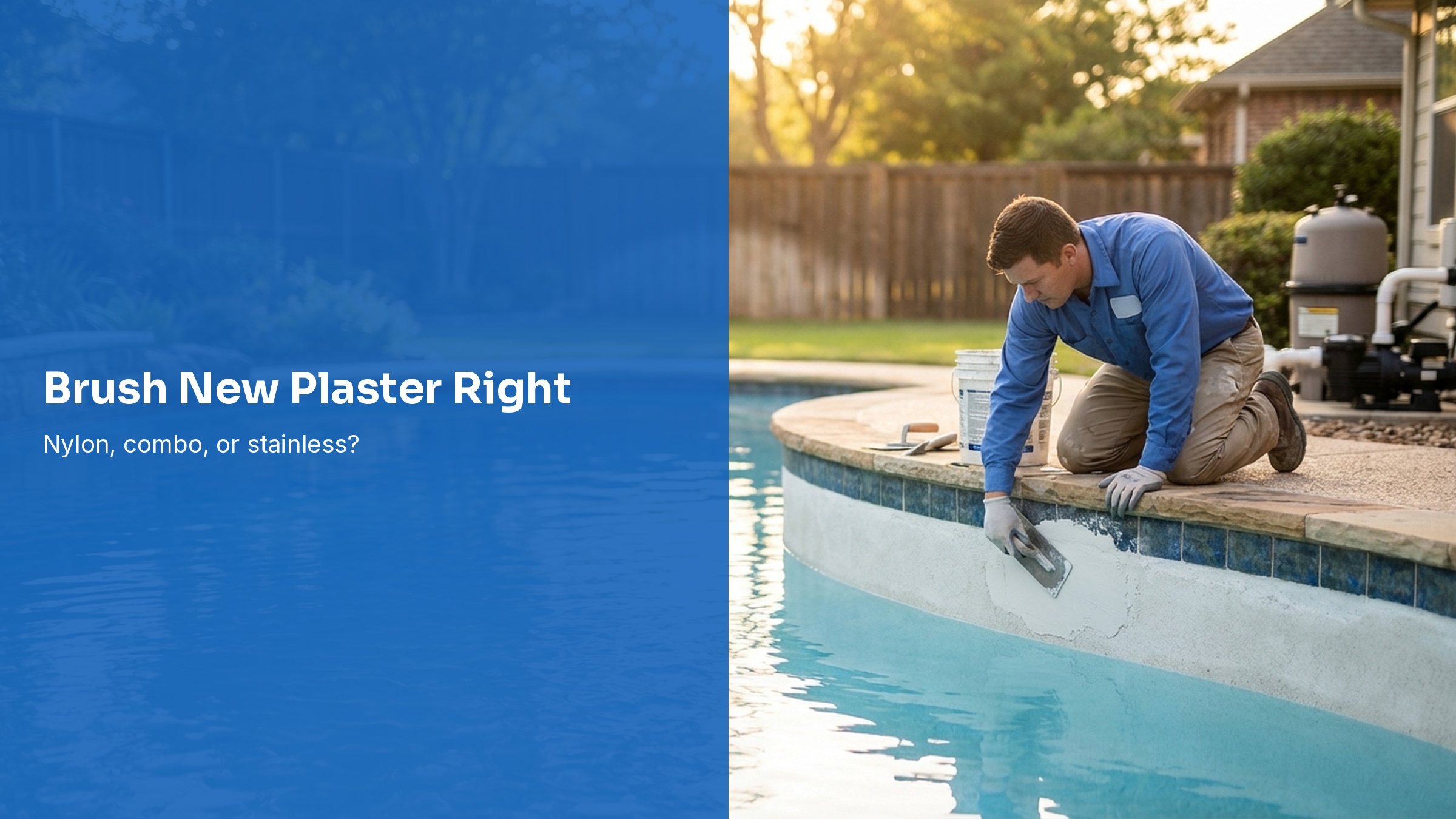
For a new cementitious pool finish, the safest default brush is nylon. That is not a universal permission to ignore the finish maker or applicator. It is a starting point while you obtain the exact written startup instructions for that pool.
PebbleTec specifically recommends a nylon pool brush during initial startup because it is less aggressive. SGM's current Diamond Brite literature requires frequent brushing during startup but does not turn that requirement into a general instruction to use stainless steel. A combo or stainless brush belongs in the plan only when the written instructions for the installed finish call for it.
The brush question is really a responsibility question. Who selected the finish, who applied it, who owns startup, what instructions control, and who will answer if the surface is marred?
Key Takeaways
- Start with the finish, not the brush. Record the manufacturer, product line, color, application date, and applicator.
- Use nylon unless written instructions say otherwise. It is less aggressive and is the explicit PebbleTec startup recommendation.
- Do not treat all wire brushes as equal. Stainless steel and ordinary steel have different corrosion risks, and either can mar a fresh surface when used badly.
- Frequency matters as much as material. A correct brush used too little may fail to move plaster dust and support an even startup.
- Keep the applicator's direction in writing. Do not let a service technician inherit a surface warranty through an undocumented favor.
Why Pool Pros Disagree About Startup Brushes
Two recent r/PoolPros threads asked nearly the same question and produced three common answers: nylon only, a nylon-and-stainless combo for aggregate finishes, and whatever the applicator directs in writing. The disagreement reflects differences in local practice, finish type, exposure method, and who is responsible for the result.
Tradition is useful field context, but it is weak warranty evidence. The written instructions for the actual finish should beat the habit that worked on a different finish or for a different builder.
Nylon is the sensible default because it removes dust with less cutting action. It cannot correct a bad exposure or application problem, and the service company should not use a more aggressive brush to hide one.
What Each Brush Type Does
Nylon
Least aggressive common pool brush. Best default for initial startup and the explicit choice in PebbleTec's customer guidance.
Combo
Mixes nylon and stainless bristles. Provides more bite, but should be used on a new finish only when the applicator or manufacturer directs it.
Stainless steel
Aggressive tool for specific compatible surfaces and problems. It is not PebbleTec's daily startup recommendation and can mar a surface when misused.
Ordinary steel wire
Do not substitute it for a specified stainless tool. Corroding bristles can create staining, and aggressive contact can scratch or burnish fresh material.
The surface is also changing during cure. A tool that might be used later for a specific deposit is not automatically appropriate on day one. PebbleTec says more aggressive brushes such as stainless steel may be used for certain buildup or staining after cure, but it does not recommend them for daily use.
Manufacturer Guidance Beats a Generic Rule
| Finish or source | Published direction | Field takeaway |
|---|---|---|
| PebbleTec brand finishes | Nylon brush recommended during initial startup because it is less aggressive. | Do not assume exposed aggregate means stainless from day one. |
| Diamond Brite care literature | Brush the entire pool twice daily for the first three days, then daily for the first two weeks. | The public care sheet establishes frequency. Confirm brush type with the applicator and current product instructions. |
| Diamond Brite installation manual | During the separate exposure process, applicators begin with soft bristles and may move to stiffer bristles as the material sets. | Application-day exposure is not the same task as routine startup brushing after fill. |
| National Plasterers Council | Provides a living startup card and a certification program for new cementitious surfaces. | Use the current NPC method unless the finish maker requires a different approved startup. |
Do not combine pieces of several methods into a new company recipe. The plaster finish, fill water, startup chemistry, brushing schedule, and equipment timing work together. Follow one documented plan.
The Correct Liability Answer
The strongest Reddit response did not name a favorite brush. It named the decision owner.
That approach needs one refinement: the applicator's instruction should agree with the current manufacturer guidance for the installed product. If someone verbally asks for "wire," clarify whether they mean stainless steel, a combo brush, or another tool. Ask for the product-specific reason and the brushing schedule.
A service company should still avoid blindly performing a direction that conflicts with a published manual. Pause, send the manufacturer document, and request written clarification from the applicator. If the dispute continues, recommend an independent expert rather than experimenting on the finish. See our guide on when to hire a pool plaster expert.
Build a Written Startup Hand-off
Record these items before the first brush-down
- Finish manufacturer, product, color, batch details if available, and application date
- Applicator and builder contact information
- Warranty registration and current care document
- Who owns filling, startup chemistry, brushing, testing, and equipment startup
- Approved brush type and brushing frequency
- When cleaners, heaters, and salt chlorination may begin
- Target chemistry method and who reviews exceptions
- Photos at fill, after each early brushing visit, and at hand-off
- Procedure for reporting streaks, mottling, roughness, streaks, cracks, or other concerns
PoolDial's custom inspections can turn this hand-off into a required field form. A technician can photograph the brush, surface, water level, and test results at the same visit. That makes the record easier to defend than a text message saying "builder told me wire."
Why the Written Hand-off Matters
A newer PoolPros startup discussion described the exact failure this hand-off prevents:
The service company should not reconstruct the first week from memory. Before accepting the account, request the finish product, fill date, startup method, daily test log, chemical additions, brushing record, heater and salt-system restrictions, and the name of the party holding the finish warranty. Photograph the surface and water condition on the first visit. If those records do not exist, tell the owner what is unknown before routine service begins.
A Practical Brush Selection Workflow
- Identify the finish. Do not accept "new plaster" as the full product name.
- Obtain the current manufacturer care guide. Save it with the job, not only as a browser tab.
- Obtain the applicator's written startup plan. Resolve any difference before service begins.
- Choose the listed brush. If the documents are silent, use nylon while requesting clarification.
- Inspect the brush. Remove rust, sharp edges, bent bristles, grit, and residue from prior pools.
- Use even pressure. Do not dig into corners, steps, fittings, or one discolored spot.
- Follow the specified frequency. Record each completed brush-down.
- Stop on damage. New lines, burnishing, aggregate loss, or unusual color change need photos and applicator review.
The same discipline prevents the startup mistakes described in pool technician lessons learned the hard way. Fresh finishes leave little room for an undocumented shortcut.
Common Questions
Should every pebble finish get a combo brush?
No. PebbleTec's published customer guidance recommends nylon during initial startup. Other aggregate systems may have different instructions, so use the product-specific document.
Can stainless steel ever be used?
Yes, on compatible surfaces for a specific purpose and with written direction. That does not make it a universal day-one startup brush. Never substitute ordinary rust-prone wire for specified stainless bristles.
Does brushing harder remove a bad exposure?
Do not make that assumption. Exposure is part of finish application. If aggregate was not exposed correctly, route the condition back to the applicator instead of trying to change the surface during routine service.
Who should own the first 28 days?
One party should have clear written responsibility. It may be the builder, applicator, startup specialist, or service company. Dividing tasks without a shared plan creates gaps in chemistry, brushing, documentation, and warranty communication.
The Bottom Line
Use nylon as the conservative default for a new finish, but do not turn that default into a claim that every product is identical. Use a combo or stainless brush only when the installed finish's written instructions and applicator support it. Document the decision, frequency, and condition of the surface.
A good startup is repeatable and boring. The brush should never be a guess, and the service tech should never discover after the fact that one undocumented tool choice transferred responsibility for an expensive finish.
- r/PoolPros startup-brush discussion
- r/PoolPros metal-versus-nylon discussion
- r/PoolPros startup hand-off discussion
- PebbleTec pool-care and brush guidance
- SGM Diamond Brite product and startup guidance
- SGM Diamond Brite installation and exposure manual
- National Plasterers Council technical resources
Make Startup Instructions Visible to Every Tech
PoolDial keeps finish details, inspection forms, photos, chemistry, and service notes together through the full startup period.
Start Your Free Trial