


Key Takeaways
- Treat another contractor’s work as a new system condition, not a continuation of your old quote.
- Photograph and test before touching the repair.
- Use a paid assessment and a new written authorization.
- Exclude concealed defects and work you did not perform from your warranty.
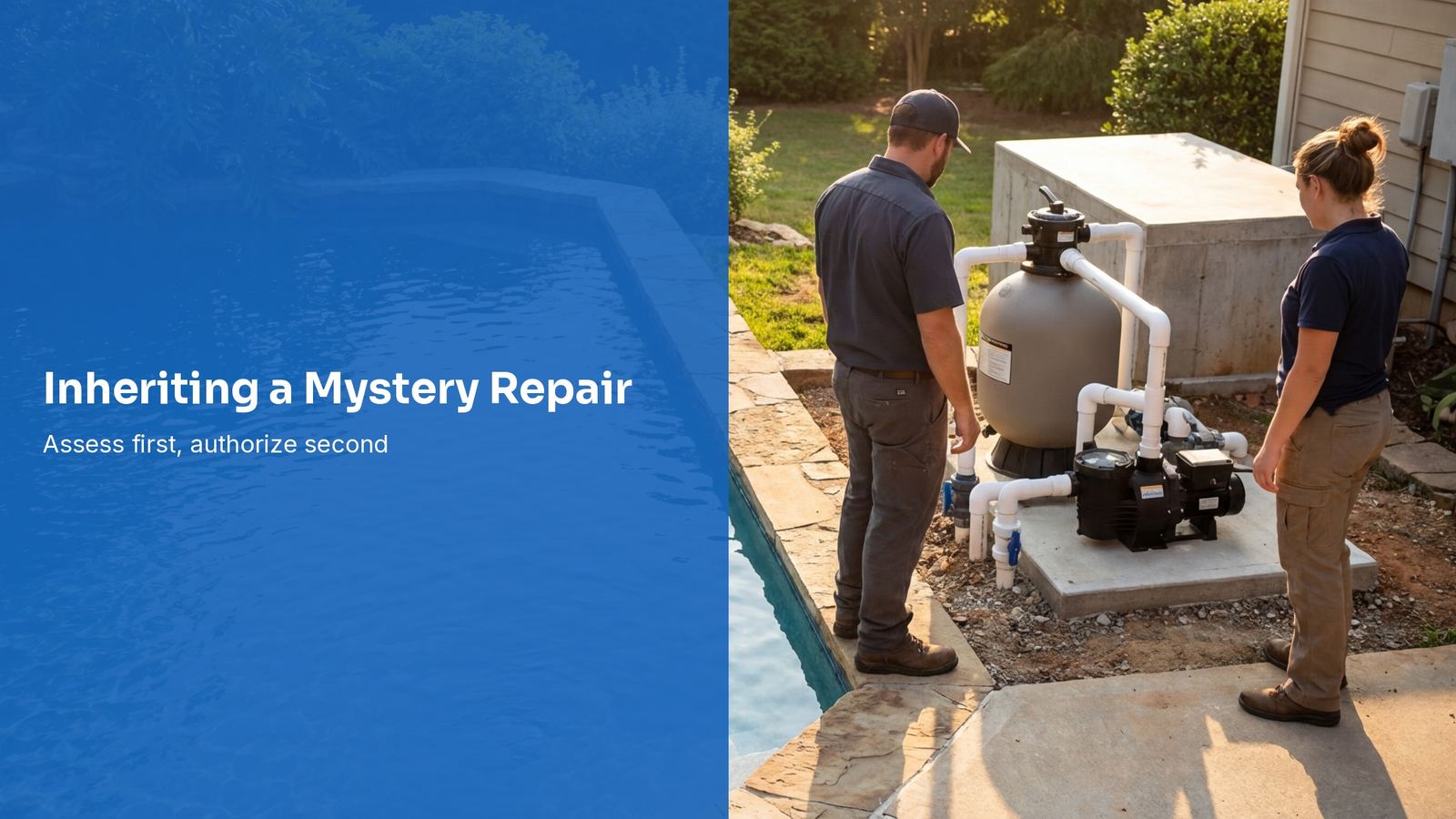
One technician returned after losing a suction-side replumb and found a very different equipment condition. Read the original field post.
"I quoted a customer on a pump and I guess he didnt like my quote because I show up to this mess."
— Pool pro via Reddit
What Other Pool Pros Added
One pool pro drew a firm warranty boundary around work performed by the other contractor. Read the discussion comment.
"Live with it and if anything is wrong with it or not working correctly direct them back to who fixed it."
— Pool pro via Reddit
A customer may reject your estimate, hire someone cheaper, and expect you to keep the entire pool working afterward. That does not make every new problem your responsibility. It does mean you need a calm process that separates routine service from the work another contractor changed.
Stop and Record the New Condition
Do not start cutting, tightening, gluing, or reprogramming during the weekly stop. Photograph the full pad and close views of joints, valves, unions, labels, wiring, supports, leaks, and temporary materials. Record which equipment is running and what the customer says was changed.
Compare the new condition with your prior service photos and estimate. Those records establish what existed when you quoted the job and what appeared later. They also help the customer understand why the old estimate no longer describes the work.
Create a Fresh Diagnostic Scope
The new task is not “finish the pump.” It may include finding a leak, mapping an unfamiliar flow path, identifying incorrect fittings, testing electrical supply, or checking whether an equipment warranty still applies. Write a paid assessment that names the observations and testing included.
- Visible plumbing and support inspection
- Operating pressure, prime, flow, and leak observations
- Equipment model and installation-manual comparison
- Photos and a written finding
- A separate correction estimate if needed
Do not promise to find every concealed defect for one flat diagnostic fee. State the access limits and what further testing would require.
Keep the Conversation About Scope
Avoid insulting the other contractor or telling the customer “I told you so.” Describe what you can see, what you measured, what remains unknown, and what the next decision costs. A factual tone protects the relationship and creates a better record if the customer later disputes the result.
The equipment condition has changed since our original estimate. Before we alter work performed by another company, we need written approval for a new assessment. We will document visible conditions, perform the listed tests, and provide a correction estimate. Our assessment does not warranty the prior installation or concealed work.
Decide Whether the Pool Is Serviceable
Some inherited work is ugly but operating. Some creates an active leak, unsafe electrical condition, unsupported pipe load, blocked flow, or repeated equipment damage. Define whether weekly maintenance can continue while the customer decides.
If the condition can harm equipment or make normal service unreliable, give a written repair deadline, temporary operating limits, or a service pause. Connect that rule to the pool service agreement instead of inventing it during a conflict.
Price the Risk You Are Taking
Another contractor’s repair often takes longer because you must reverse-engineer it. Charge for diagnosis, special access, cleanup, replacement of damaged adjacent parts, and testing. Do not hide those hours in the old quote simply to prove your original price was fair.
The repair-bid shopping guide covers the customer relationship. For the new estimate, use the pool repair quoting process and list allowances for conditions that cannot be known until disassembly.
Write the Warranty Boundary
Your warranty should cover the materials and labor you provide. It should not imply that you certified every prior joint, hidden pipe, electrical connection, or programming decision. Name the corrected section and the test used to accept it.
If your work connects to a questionable component that the customer refuses to replace, identify that component and the consequence in the authorization. A signature does not make unsafe work acceptable, but it prevents uncertainty from being hidden.
Close the Loop
After repair, photograph the finished layout, record pressures and operating state, save model and part numbers, and explain changed controls or schedules. Update the account equipment record so the next technician does not have to rediscover the history.
The professional response to a mystery repair is neither revenge nor free rescue. It is a new scope, a clear price, and evidence that shows exactly what your company accepted.
Turn the Playbook Into Daily Work
PoolDial keeps routes, equipment history, service records, customer messages, and billing connected.
Start Your Free TrialFrequently Asked Questions
Do I have to warranty another pool contractor’s work?
No. Your written agreement should identify the work you performed and exclude prior or concealed work that you did not inspect and accept.
Can I charge to inspect a repair I originally bid?
Yes. The condition and scope changed after another contractor performed work. Explain the paid assessment before touching the installation.
Should I stop servicing the pool?
Pause or end service when the condition cannot be maintained safely or within the agreement. For other cases, document temporary limits and a correction deadline.
Reddit posts and comments are firsthand field anecdotes, not technical or legal authority. Comment quotations are exact archived excerpts linked to their original discussion. Product, safety, compliance, and contract decisions should follow current manuals, local rules, and qualified professional advice.
- What's with this loop?, r/PoolPros field post