


Key Takeaways
- Pros in the field say dry hands matter more than warm hands. Lined, chemical-resistant gloves come first.
- Dress in layers you can peel off. Cold mornings can turn into warm afternoons.
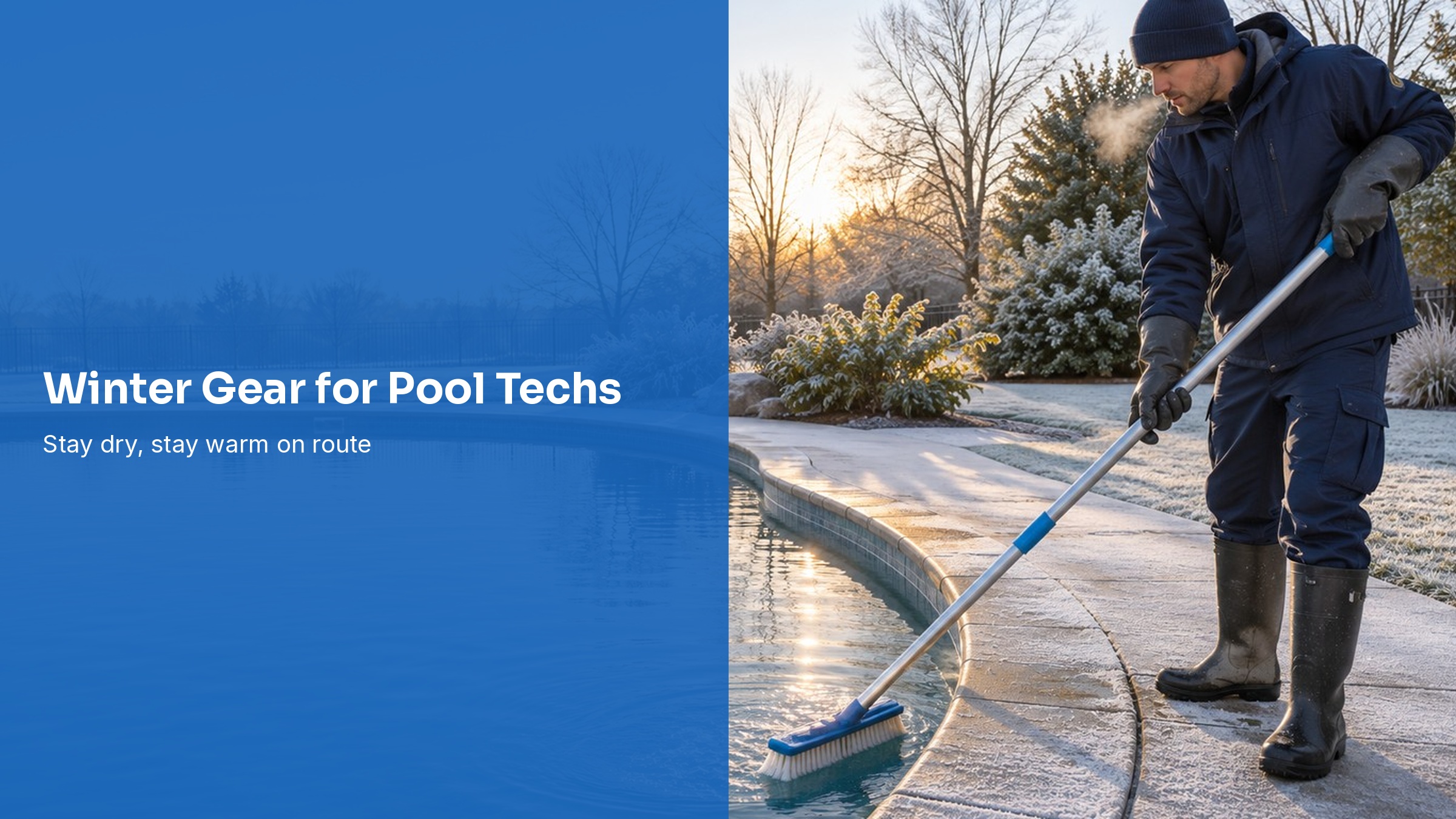
- Waterproof boots, rain pants, a jacket, and a beanie keep the rest of you dry.
- Battery hand warmers help, but one pro said the batteries don't last long. Pack backups.
- For cold dives, pros split between thick wetsuits and drysuits. Get trained before you use a drysuit.
- Owners should treat winter gear as work equipment and train crews on cold stress.
Winter pool service is wet work in cold air. You reach into skimmers, brush walls, and pull cleaners all day. Wet hands and wet clothes pull heat out of your body fast.
A spouse of a pool tech asked r/PoolPros what would keep her husband comfortable on winter routes. His company works year round in the South. Pros from colder places answered with a simple kit. One summed it up in a single line:
“Long underwear, wool socks, waterproof boots/jacket/pants and ice fishing gloves.”
The same pro added that winter pools are often cleaner. Most customers mainly care whether anything freezes and how the spa looks. So the job gets lighter, but the weather gets harder. This guide covers what pros in the thread said works, from gloves to dive suits. These are a few pros' experiences, not lab tests. Pick what fits your climate.
Why do dry hands matter more than warm hands?
Your hands are in the water at every stop. Once a glove soaks through, it stops keeping you warm. One pro shared a pair of heavy PVC-coated, flock-lined, chemical-resistant gloves and explained why:
“These will keep your hands dry which is a lot more important than warm.”
Another pro named ice fishing gloves. The original poster had already bought waterproof insulated gloves. The common thread is the same: a waterproof outside with a lining inside.
Look for these traits:
- Waterproof coating. PVC or rubber keeps water out when you reach into a skimmer.
- A warm lining. Flock or fleece lining helps, as long as it stays dry.
- Long cuffs. Short gloves let water pour in at the wrist.
- Chemical resistance. You still handle acid and chlorine in winter. Check the safety data sheet for the right glove type. Our OSHA chemical safety guide explains how.
A lined glove that gets wet inside can stay wet all day. Keep a second pair in the truck. Swap them at lunch. Our injury prevention guide covers skin damage from constant water and chemical contact.
How should you layer for a cold morning?
Many routes start cold and warm up fast. A pro on the coast of North San Diego County said early mornings can get into the high 30s. By the afternoon, things change:
“I dress in layers because by afternoon I’m usually in shorts and a T-shirt.”
Pros in the thread built layers like this:
- Base layer. Long underwear or snug compression clothing. One pro named the 32 Degrees long sleeve shirts and long underwear sold at Costco. Another got base layers from Cabela's and similar outdoor stores.
- Socks. Wool socks came up more than once.
- Outer layer. A waterproof jacket you can take off when the sun comes out.
One pro also said clothes should be flexible enough to move with your body. You bend, reach, and kneel all day. Stiff, bulky layers make every stop harder. When it warms up, the summer rules return. Our summer workwear guide covers sun and heat.
What keeps your feet, legs, and head dry?
Water splashes on your legs when you clean filters and dump baskets. Wet pants on a cold, windy day make you miserable fast. Pros in the thread listed:
- Waterproof boots. One pro said very durable, highly waterproof hunting boots. Our footwear guide covers grip and fit.
- Rain pants. The same pro liked light rubber rain pants that don't get in your way.
- A beanie. One pro said, in short, don't forget it.
- A face mask. A full face wind mask helps on windy mornings.
Watch your step, too. Pool decks can turn icy, and wet tile is slick in any weather. A slip near the water is a real hazard.
Do heated jackets and hand warmers help?
The thread had less proof here. The spouse already gave her husband hand and foot warmers. One pro uses rechargeable hand warmers to thaw out his hands. He also warned that the batteries don't last long. If you rely on them, carry a charged spare or a disposable pack.
Heated jackets came up, but no one in the thread had tested one on route. One pro asked about them:
“I’ve been eyeing a dewalt heated jacket but curious how they hold up.”
That is an open question, not a review. A heated layer still needs a waterproof shell over it in pool work. The same pro, and the original poster, liked a warming lunch box. A hot meal at noon is a cheap way to reset on a cold day.
Wetsuit or drysuit for cold pool dives?
Sometimes you have to get in. A main drain ring on a new liner pool may not be seated. The heater may not have gas yet. A tech in another thread asked whether a cheap 7mm wetsuit was enough for a dozen short dives a year.
Pros split into two camps. Two pros said a drysuit is worth it. One pro dives several pools a day for leak detection, all year long:
“Staying dry makes dealing with cold water so much more comfortable.”
Others stick with wetsuits. One pro uses a 7mm suit with a hood, booties, and gloves. A pro in San Diego uses an old surf wetsuit in pools down to the mid 50s. He also said a weight belt and fins help you stay on the bottom at a main drain. Another pro suggested a "farmer John" setup that puts 14mm of neoprene around your core.
One pro gave a clear warning about drysuits:
“Dude I’d be wary of buying a dry suit unless you’re certified for it.”
He explained that air trapped in a drysuit can rush to your legs and flip you upside down if it is not vented right. Training teaches you how to handle that. If you have not trained, a thick wetsuit is the simpler choice.
Price the dive for the cold, too. Pros in the thread charge more for cold dives. One pro said:
“Charge accordingly $300-$500 per dive.”
Others said their dives start at $500 in warm water, with $800 or more for cold or off-season dives. Those are a few pros' local prices, not a market rate. Still, a cold dive should cost more than a warm one. Your gear and your recovery time are part of the job.
What should owners provide for their techs?
If you have employees, winter gear is work equipment. A tech with cold, wet hands rushes stops and makes mistakes. Here is a simple plan:
- Supply the wet-work gear. Give each tech lined, chemical-resistant gloves and a spare pair. Gloves wear out fast in winter.
- Stock the truck. Keep extra socks, gloves, a hat, and a dry layer in each vehicle. Our truck setup guide covers how to organize space.
- Train on cold stress. The CDC's NIOSH cold stress page tells employers to train workers on risks, symptoms, and protective gear. It also suggests hot drinks and warm break areas.
- Allow warm-up breaks. A few minutes in a heated truck between stops counts. NIOSH also suggests watching coworkers for signs of cold stress.
- Set a dive rule. Decide who may dive, in what suit, and in what water temperature. Don't send an untrained tech into cold water in a drysuit.
- Adjust the schedule. NIOSH suggests doing cold work in the warmer part of the day when you can. Put dives and filter cleans in the afternoon.
Write these rules into your onboarding. Our hiring guide covers what new techs need on day one.
Winter route checklist
- Lined, waterproof, chemical-resistant gloves, plus a spare pair
- Long underwear or compression base layer
- Wool socks, plus a dry pair in the truck
- Waterproof boots with good grip
- Light rain pants and a waterproof jacket
- Beanie and a wind mask for windy days
- Hand warmers with charged backups
- A hot lunch or a warm drink
- A wetsuit or drysuit, if you dive, and the training to use it
Keep your hands dry first. Then build the rest of the kit around the coldest hour of your day. Read the field discussion on staying warm, or the thread on cold pool dives.