


Key Takeaways
- Organize by job and frequency before choosing a storage brand.
- Keep the daily service kit reachable without unloading repair gear.
- Restrain heavy tools low and separate wet, clean, chemical, and electronic storage.
- Give debris and customer trash a lidded container instead of leaving disposal to chance.
A solo operator working from a hatchback described the constraint that should drive the storage plan. Read the original field post.
"I run my solo pole operation out of my hatchback, and need everything to be as organized as possible."
— Pool pro via Reddit
What Other Pool Pros Added
A working technician emphasized battery-platform consistency over brand collecting. Read the discussion comment.
"Like the others have said regarding power tools, keep to one brand."
— Pool pro via Reddit
A debris-handling reply showed how a small container solves a recurring route problem. Read the discussion comment.
"I keep an empty tab bucket in the back of the truck."
— Pool pro via Reddit
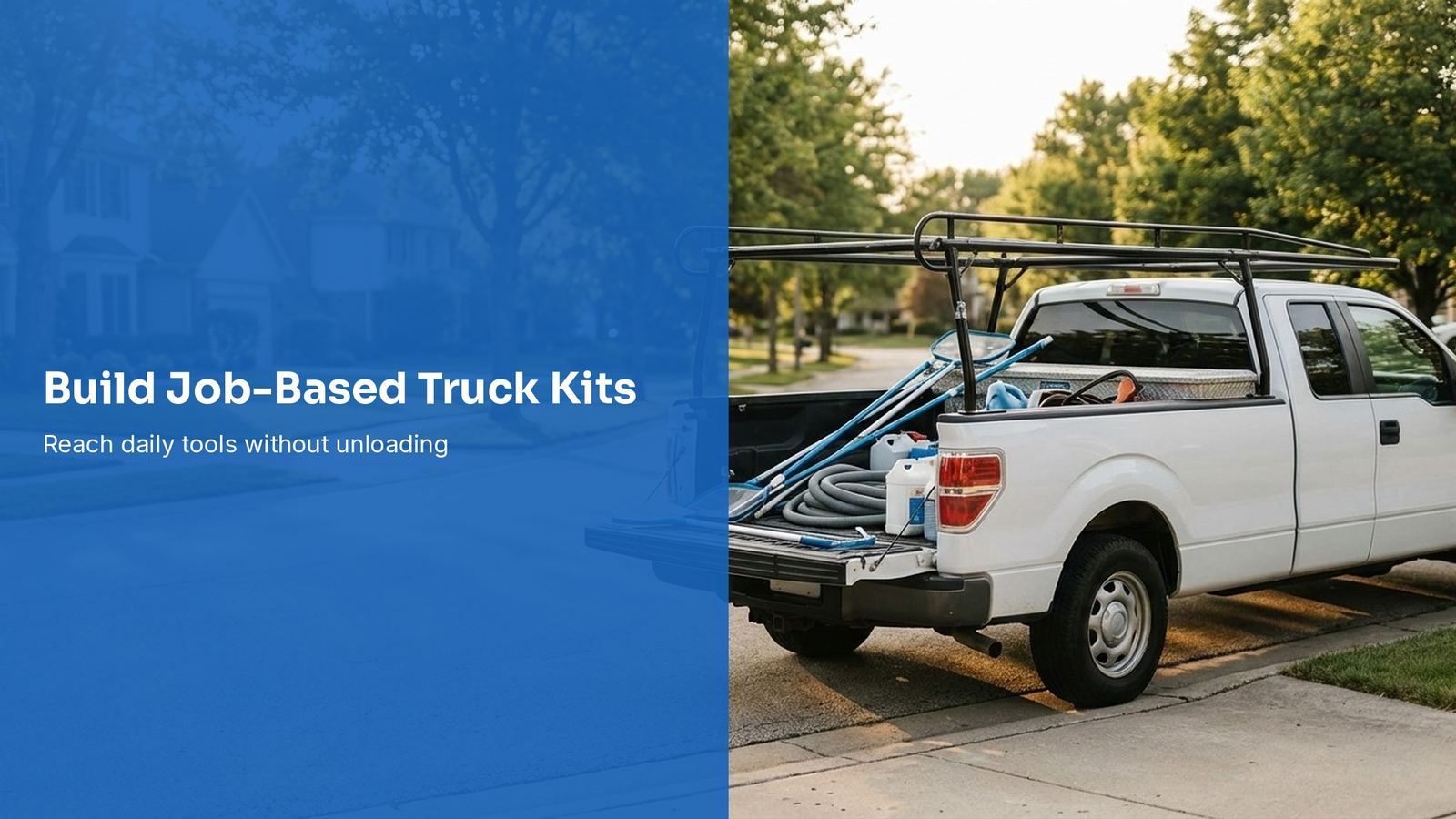
A good truck setup is not a wall of matching boxes. It is a system that lets a technician reach the right tool, complete the job, contain waste, and reload without searching. The vehicle can be a pickup, van, or hatchback. The logic stays the same.
List the Work Before Buying Storage
Review the last month of jobs and group the tools actually used. Separate daily route service from scheduled filter work, plumbing, cleaner repair, electrical diagnosis, and major equipment installation. Count how often each kit leaves the vehicle.
The pool service truck setup guide covers the broader vehicle and safety choices. This job-based approach decides where each item belongs.
Build the Daily Service Zone
Water test supplies, basic hand tools, PPE, service phone, pole attachments, and common small replacements should be reachable first. A technician should not unload a saw or filter-cleaning kit to find reagents.
- Protected test kit with current reagents
- Dedicated measuring and dosing tools
- Brush, net, vacuum accessories, and pole
- Basic screwdrivers, nut drivers, pliers, and inspection light
- Gloves, eye protection, handwashing supplies, and spill materials
- Common baskets, O-rings, and small approved service parts
Create Separate Job Modules
Filter service
Model-specific tools, drain control, cleaning gear, PPE, replacement seals, and containment.
Plumbing
Cutting, prep, measurement, fittings, cure documentation, and cleanup tools.
Electrical diagnosis
Qualified test tools, lockout supplies, labels, documentation, and dry protected storage.
Cleaner repair
Common wear parts, test items, hand tools, and customer-owned equipment tags.
A module should be small enough to carry and complete the defined job. Refill it from a shop inventory rather than scattering bulk stock through the vehicle.
Design for a Hatchback or Small Vehicle
Use low, restrained containers and preserve rear visibility. Keep the heaviest tools close to the floor and forward of the rear axle where the vehicle design permits. Do not let loose tools become projectiles.
Separate the clean cabin from wet poles, dirty cartridges, debris, and chemicals. Respect vehicle payload, ventilation, product labels, incompatible-material separation, heat, and local transport rules. A storage box does not make an unsafe chemical load safe.
Match Nets to Route Debris
One PoolPros discussion noted that fine mesh captures small debris but adds drag and can trap air. Carry the net that fits the route instead of one universal answer. A deep leaf rake, flat skimmer, and fine-mesh option solve different conditions.
Hang or sleeve nets so the mesh can dry and the frame does not catch other gear. Inspect wear before a torn net dumps a load back into the pool.
Give Trash a Destination
Customer pools collect toys, wrappers, metal, glass, and other inorganic debris. Use a lidded bucket or bin for waste that should not be left on the property. Keep sharp or contaminated items separate and follow local disposal rules.
Do not throw wet debris into a tool drawer. Use washable containment and empty it on a schedule. The end-of-day process is part of organization.
Use a Reload Standard
- Remove waste and wet filter material.
- Clean and dry tools as required.
- Return every item to its labeled position.
- Refill parts and consumables to set minimums.
- Check reagents, batteries, PPE, and spill supplies.
- Flag damaged or missing equipment before the next route.
A photo of the correct loaded state helps every technician reset the vehicle the same way.
Audit What the Setup Saves
Track forgotten-tool trips, supply stops, time spent searching, damaged items, duplicate purchases, and jobs delayed by missing parts. Remove tools that have not supported the route and do not belong in an emergency kit.
The best setup makes the safe next action obvious. It should work for the technician on a hard afternoon, not only look organized in a photo.
Turn the Playbook Into Daily Work
PoolDial keeps routes, equipment history, service records, customer messages, and billing connected.
Start Your Free TrialFrequently Asked Questions
What tools should stay closest in a pool service vehicle?
Keep the daily service kit and PPE most accessible. Less frequent repair modules can sit behind it as long as weight and restraint remain safe.
Is a modular box system worth it for a pool truck?
It can be useful if modules match real jobs and fit the vehicle. A brand of boxes cannot replace job analysis, weight control, or safe chemical storage.
What should technicians do with trash removed from pools?
Use a dedicated lidded container and follow local disposal rules. Do not leave customer debris on the deck or mix it with clean tools.
Reddit posts and comments are firsthand field anecdotes, not technical or legal authority. Comment quotations are exact archived excerpts linked to their original discussion. Product, safety, compliance, and contract decisions should follow current manuals, local rules, and qualified professional advice.
- Recommendations for power tool brand and line as well as equipment, tool and material checklist for pool and spa service technician, r/PoolPros field post
- Must have pool guy Milwaukee pack out, r/PoolPros field post
- What net do you use?, r/PoolPros field post
- Trash in pool, r/PoolPros field post