How Pool Service Companies Can Turn Local Facebook Posts Into Good Leads


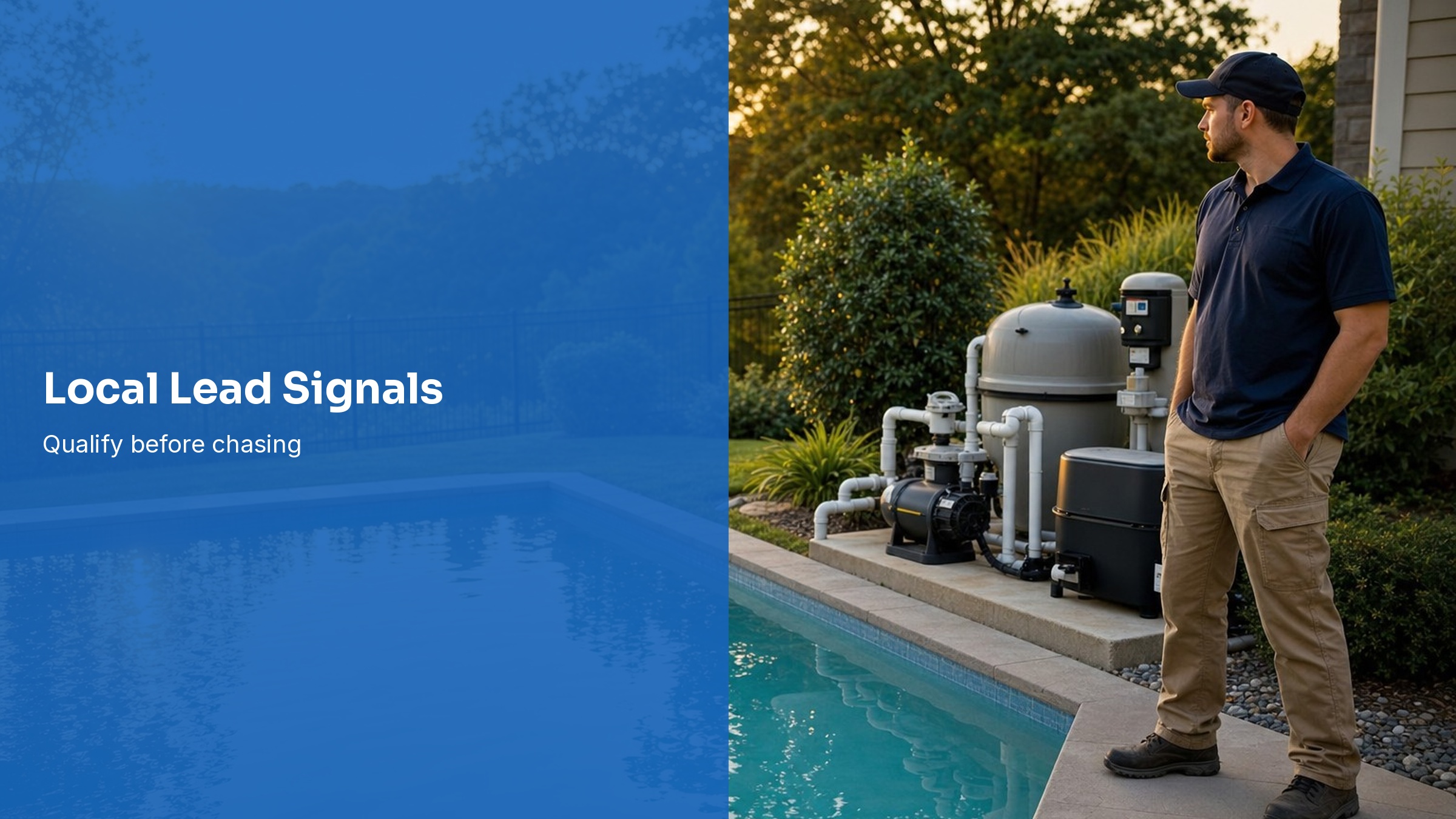
Local Facebook posts can be real pool service leads. A homeowner says they need someone to clean a pool in town. A neighbor asks who handles weekly service. A new homeowner needs help after moving in. Those posts are clear demand signals.
They are not all good leads.
The difference is qualification. A good lead has a real address area, a clear service need, reasonable timing, and a pool that fits your route. A bad lead burns time, pulls you across town, or turns into a one-time cleanup priced like weekly service.
Key Takeaways
- Local social posts work best when you qualify location, service type, urgency, and route fit before quoting.
- Reply quickly, but do not give a real price from a vague public post.
- Ask for neighborhood, weekly versus one-time need, pool photos, equipment photos, access details, and timing.
- Route density matters more than raw lead count. A faraway lead can cost more than it is worth.
- Track every lead source so you know which local channels produce paying customers, not just conversations.
Why Local Posts Can Work
Most homeowners do not describe pool service the way operators do. They do not ask for "aquatic maintenance solutions." They ask for someone to clean a pool, fix a green pool, check a pump, or take over weekly service.
That plain language is useful. It tells you what they think they need and how urgent the problem feels.
"Looking for someone to clean pool in Tampa"
Pool homeowner via Facebook
A post like that is simple, but it is not enough to price from. You still need to know the neighborhood, the current condition, whether they want weekly service or a one-time cleanup, and whether the pool fits your service area.
The First Filter: Route Fit
Pool service growth is local. A lead ten minutes from your Tuesday route is worth more than a lead forty minutes away, even if both customers pay the same monthly rate.
"You don't have a ton of time, so you want route density"
Pool pro via Reddit
That line applies to every local lead source. Before you chase a post, ask whether the account would make your route stronger. If it would pull a truck away from your core area, it should either pay a premium or be referred to another company.
If you are still building your route, it can be tempting to take anything. That is how new companies end up with scattered accounts and too much windshield time. Use local posts to build tighter clusters, not just a bigger map.
For the route math behind this, read the pool route density guide and use the cost per pool calculator.
What to Ask Before You Quote
Your goal is to move from vague interest to qualified lead in one or two messages. Keep the questions short. The homeowner should not feel like they are filling out a long form.
| Question | Why It Matters |
|---|---|
| What part of town are you in? | Confirms route fit before you spend time quoting. |
| Are you looking for weekly service or a one-time cleanup? | Separates recurring revenue from a short job. |
| When do you need help? | Shows urgency and whether rush pricing may apply. |
| Can you send pool and equipment photos? | Reveals green water, debris, broken equipment, and cleaner issues. |
| Is there locked access or pets on site? | Prevents wasted trips and skipped visits. |
| Who has been maintaining it? | Helps you spot neglected pools, owner-maintained pools, and price shock. |
These questions protect you from underquoting. A green pool, a no-cleaner pool, locked access, or a one-time emergency should not be priced like a normal weekly account.
A Simple Reply Script
The first reply should show you are local, helpful, and serious. It should also qualify the lead before you move into private messages or a phone call.
Public Reply
This reply does three things. It names your service area, asks for the two most important qualifiers, and avoids guessing at price in public. It also gives the homeowner an easy next step.
Private Follow-Up
If the answer is outside your route, say that quickly and politely. If the job is a fit, move it into your normal intake flow so it does not get lost in messages.
Do Not Chase Every Lead
The hardest part of local lead generation is saying no. Early in the business, every message feels valuable. But a full calendar does not always mean a profitable route.
"Good clients typically give good referrals."
Pool pro via Reddit
The best local leads often come from the same pockets where you already have good customers. Those customers know neighbors with similar homes, similar expectations, and similar budgets. When you see a request near a strong route cluster, move fast. When you see a request far outside your area, protect the route.
If the lead is outside your target map, you can still handle it in a professional way:
- Refer it to a trusted company in that area.
- Quote a travel premium if you truly want the work.
- Offer a one-time inspection or cleanup only if the price makes sense.
- Tell the homeowner you are not the best fit and keep the relationship clean.
Red Flags in Local Social Leads
Some posts look promising but turn into low-margin work. Watch for these warning signs before you send a tech or quote a low number.
| Red Flag | How to Handle It |
|---|---|
| No location details | Ask for neighborhood or cross streets before discussing price. |
| Wants the cheapest option | Explain your service standard and minimum price. |
| Green pool described as a quick cleaning | Quote it as recovery work, not weekly maintenance. |
| Same-day emergency with no budget | Use rush pricing or decline politely. |
| Will not send photos | Do not commit to a price without seeing the condition. |
| Far outside your service area | Refer, decline, or price the extra drive time. |
This is not about being picky for no reason. It is about keeping your route profitable and your team focused.
Turn One Post Into a Neighborhood Cluster
The best outcome from a local post is not one customer. It is a cluster.
If you win the account and it is in a target neighborhood, build around it. Ask for a referral after the first good service. Leave a clean door hanger nearby if that fits your market. Add photos and service-area details to your Google Business Profile. Mention the neighborhood on your website. Keep notes on which streets are producing calls.
That is how one local lead becomes route density.
For related growth tactics, read the pool service marketing strategies guide, the Google Business Profile guide, the Nextdoor marketing guide, and the referral program guide.
Track the Source and the Outcome
Do not judge local posts by how many comments or messages they create. Judge them by retained customers.
Track at least five fields:
- Where the lead came from.
- Neighborhood or ZIP code.
- Service type requested.
- Whether it became a quote, customer, or referral.
- Whether the customer stayed after the first month.
That tracking keeps you honest. If local Facebook posts produce low-close conversations, change your script or stop spending time there. If they produce dense weekly accounts, make them part of your growth system.
How PoolDial Helps
PoolDial helps pool service companies turn loose local interest into organized follow-up. Add a lead, attach notes and photos, assign a route area, send a quote, and keep the conversation tied to the customer record.
That matters because local social leads are easy to lose. They start in comments, texts, calls, and DMs. Without a system, the best-fit leads get buried while the loudest leads get attention.
Keep Local Leads Organized
Use PoolDial to track prospects, customer notes, quotes, routes, and follow-up so good local leads do not disappear in message threads.
Bottom Line
Local Facebook posts can be useful, but only when you treat them like lead signals instead of guaranteed customers. Reply quickly. Qualify location and service need. Ask for photos. Protect route density. Track what converts.
The goal is not to answer every post. The goal is to win the right accounts in the right neighborhoods at the right price.