Log chemical readings for every pool visit. Ideal ranges built in.
Free spreadsheet to track weekly chemical readings for every customer with ideal ranges and trend tracking.

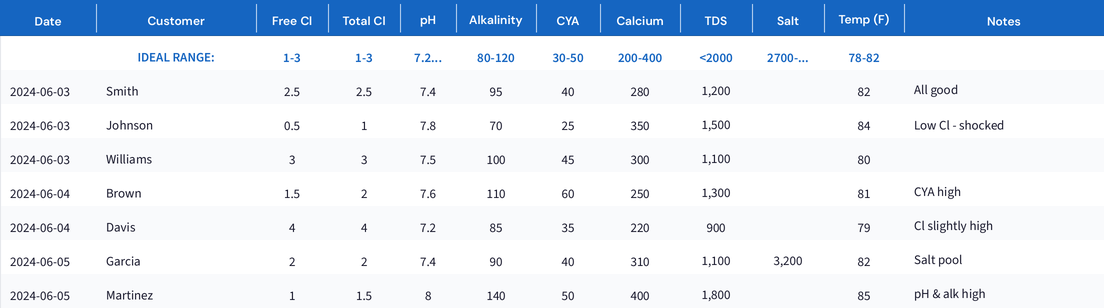
Free. Just enter your email.
Maintaining detailed water chemistry records serves three purposes: demonstrating professional service standards, enabling trend analysis for proactive problem prevention, and providing documentation in the event of liability disputes. Many pool service professionals undervalue record keeping until they need historical data and don't have it.
This spreadsheet tracks all major water chemistry parameters per visit: free chlorine, total chlorine, pH, total alkalinity, cyanuric acid, calcium hardness, TDS, salt level (for salt pools), and water temperature. The header row includes ideal ranges for quick reference — an out-of-spec reading is immediately visible.
Consistent record keeping reveals patterns that single-visit testing cannot. A pool with steadily increasing CYA levels indicates excessive trichlor tab use and suggests switching to liquid chlorine. Persistent pH drift may indicate a plaster issue or CO2 off-gassing problem. Gradually rising TDS levels signal the need for a partial drain and refill. These insights transform reactive maintenance into proactive service.
In the event of a customer complaint or liability claim, documented chemistry records demonstrate that proper water balance was maintained during your service visits. Without records, you have no defense against allegations of improper maintenance. The nominal time investment in logging readings provides significant legal protection.
When spreadsheets stop scaling, PoolDial picks up where they leave off.
Start Free Trial