
What Is a Variable-Speed Pool Pump (VSP)?


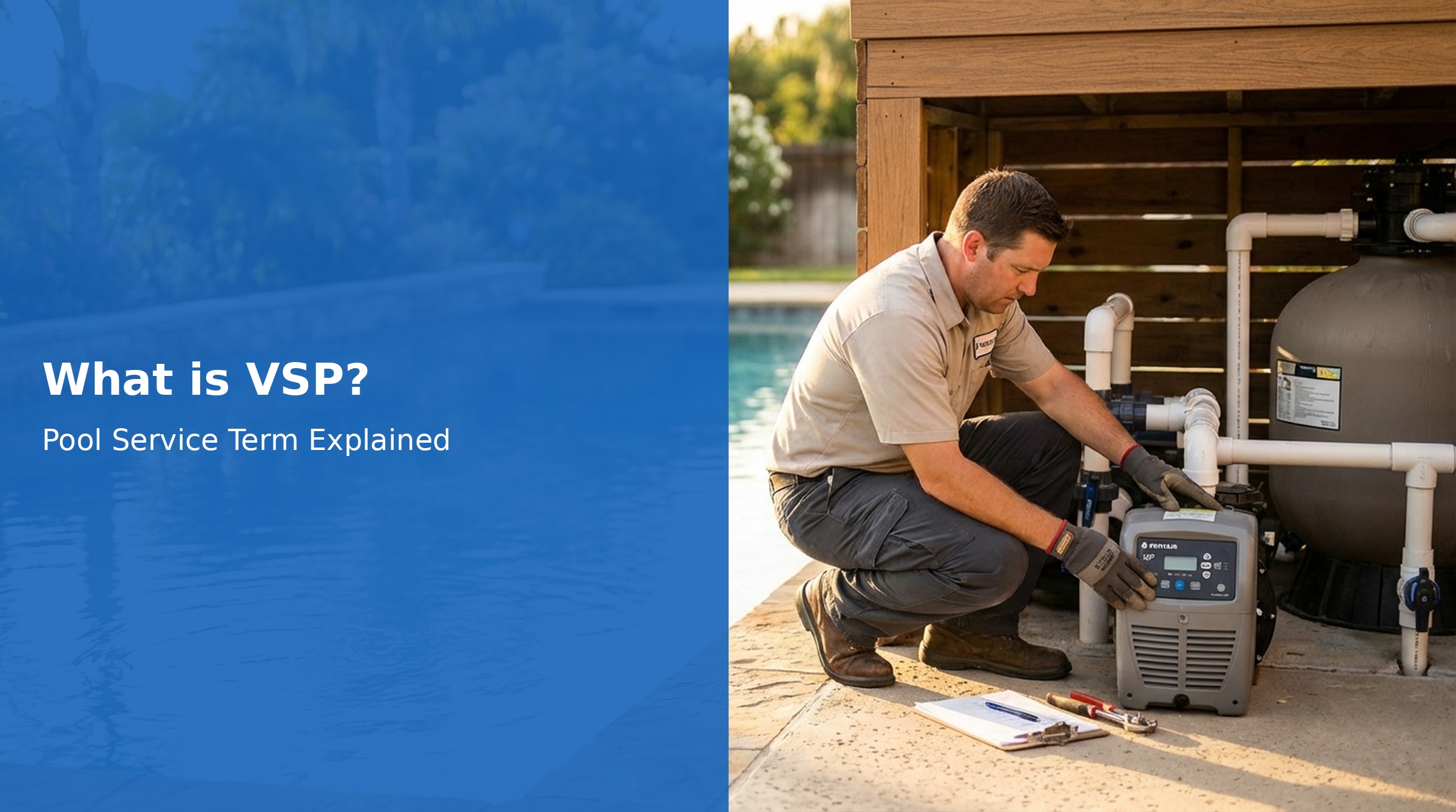
Variable Speed Pumps (VSP) have revolutionized the pool service industry, offering unprecedented energy efficiency and cost savings for both pool service professionals and their clients. Understanding VSP technology, proper installation, and maintenance procedures is essential for modern pool technicians looking to provide cutting-edge service and maximize customer satisfaction while reducing operational costs.
Key Takeaways
- VSP pumps can reduce energy consumption by 50-90% compared to single-speed pumps
- Proper programming requires understanding flow rates for different pool functions
- Installation involves electrical considerations including GFCI protection and proper wiring
- Regular maintenance includes cleaning debris, checking connections, and software updates
- ROI typically occurs within 1-3 years through energy savings
Understanding Variable Speed Pump Technology
Variable Speed Pumps utilize permanent magnet motors and sophisticated electronic controls to adjust pump speed automatically based on programmed requirements. Unlike traditional single-speed pumps that operate at a constant 3,450 RPM, VSP systems can run anywhere from 400 to 3,450 RPM, dramatically reducing energy consumption.
The technology relies on the pump affinity laws, which demonstrate that reducing pump speed by half decreases energy consumption by approximately 87%. This mathematical relationship makes VSP pumps incredibly efficient for pool circulation, which typically requires much lower flow rates than what single-speed pumps deliver.
How VSP Motors Differ from Standard Pool Pumps
Traditional induction motors in single-speed pumps waste significant energy through heat generation and constant high-speed operation. VSP motors use rare earth magnets that create stronger magnetic fields with less electrical input, resulting in motors that are typically 85-95% efficient compared to 65-75% efficiency in standard motors.
Programming and Optimization for Pool Service Routes
Successful VSP implementation requires understanding the specific flow rate requirements for different pool functions. Most residential pools need only 20-30 GPM for effective circulation, far less than the 80-120 GPM that single-speed pumps typically provide.
Essential Programming Parameters
When setting up VSP systems, pool service professionals should program multiple speed schedules:
- Circulation Speed: Typically 1,200-1,800 RPM for 6-8 hours daily
- Cleaning Speed: 2,400-3,000 RPM when automatic cleaners are operating
- Spa Mode: Higher speeds for heating and jet operation
- Chemical Dosing: Medium speeds to ensure proper mixing without over-circulation
Proper chemical balance becomes even more critical with VSP systems since lower flow rates can affect chemical distribution. Pool service professionals should utilize tools like our chemical dosage calculator to ensure accurate dosing at reduced flow rates.
Installation Considerations for Pool Service Professionals
VSP installation requires attention to several technical factors that differ from standard pump installations. The sophisticated electronics in these systems demand proper electrical protection and environmental considerations.
Electrical Requirements and Safety
Most VSP systems require 230V electrical service with proper GFCI protection. The control systems are sensitive to power fluctuations, making surge protection essential. Additionally, many VSP pumps require a dedicated electrical circuit due to their startup amperage requirements.
Pool service technicians should always verify local electrical codes, as many jurisdictions now mandate VSP installation for new pools and pump replacements. Some areas offer utility rebates for VSP installations, providing additional value for customers.
Plumbing and Flow Considerations
VSP systems work most effectively with properly sized plumbing. Undersized pipes create excessive back pressure, forcing the pump to work harder and reducing efficiency gains. Pool service professionals should evaluate the entire circulation system, including:
- Pipe diameter and condition
- Filter type and sizing
- Number and type of return fittings
- Skimmer and main drain configuration
Maintenance and Troubleshooting VSP Systems
While VSP pumps are generally more reliable than traditional pumps, they require different maintenance approaches due to their electronic components and sophisticated control systems.
Routine Maintenance Procedures
Monthly VSP maintenance should include inspecting the control panel for error codes, verifying programmed schedules are operating correctly, and checking all electrical connections for corrosion or looseness. The pump housing and impeller require the same maintenance as traditional pumps, but the motor typically requires less frequent attention due to improved efficiency and reduced operating temperatures.
Pool service professionals should also maintain detailed records of VSP performance, including energy consumption data when available. This information helps identify potential issues before they become major problems and provides valuable data for customer reports.
Common VSP Issues and Solutions
The most frequent VSP problems relate to power quality issues, incorrect programming, or restrictions in the circulation system. Error codes displayed on the control panel typically provide specific diagnostic information, making troubleshooting more straightforward than with traditional pumps.
When VSP systems fail to prime properly, the issue is often related to programming rather than mechanical problems. Unlike single-speed pumps that operate at full power during startup, VSP systems may need manual priming assistance or temporary high-speed operation to establish circulation.
Economic Benefits and Customer Value
The compelling economics of VSP technology create significant opportunities for pool service professionals to add value for clients while potentially increasing service profitability. Energy savings typically range from $600-1,500 annually for residential pools, depending on local electricity rates and previous pump efficiency.
Beyond energy savings, VSP systems offer quieter operation, longer equipment life, and often qualify for utility rebates or tax incentives. Pool service professionals can leverage these benefits to justify premium service rates while delivering genuine value to customers.
Calculating Return on Investment
When presenting VSP options to customers, accurate cost-benefit analysis requires understanding local electricity rates, current pump operating schedules, and pool-specific factors. The initial investment typically ranges from $800-2,000 more than single-speed pumps, but energy savings usually provide payback within 1-3 years.
Pool service professionals should maintain familiarity with water chemistry calculations using tools like our Langelier Saturation Index calculator to ensure optimal water balance at reduced flow rates.
Future-Proofing Your Pool Service Business
VSP technology represents the current standard in pool circulation, with many areas mandating their use for new installations and major renovations. Pool service professionals who understand VSP installation, programming, and maintenance position themselves advantageously in an increasingly competitive market.
Staying current with VSP technology and related pool service terminology through resources like our comprehensive pool service terminology glossary ensures technicians can communicate effectively with customers and other industry professionals about these advanced systems.
Variable Speed Pumps represent a fundamental shift in pool circulation technology, offering substantial benefits for both pool service professionals and their customers. Mastering VSP installation, programming, and maintenance creates opportunities for business growth while delivering genuine value through energy savings and improved system performance.