
What Is a Pool Water Photometer?


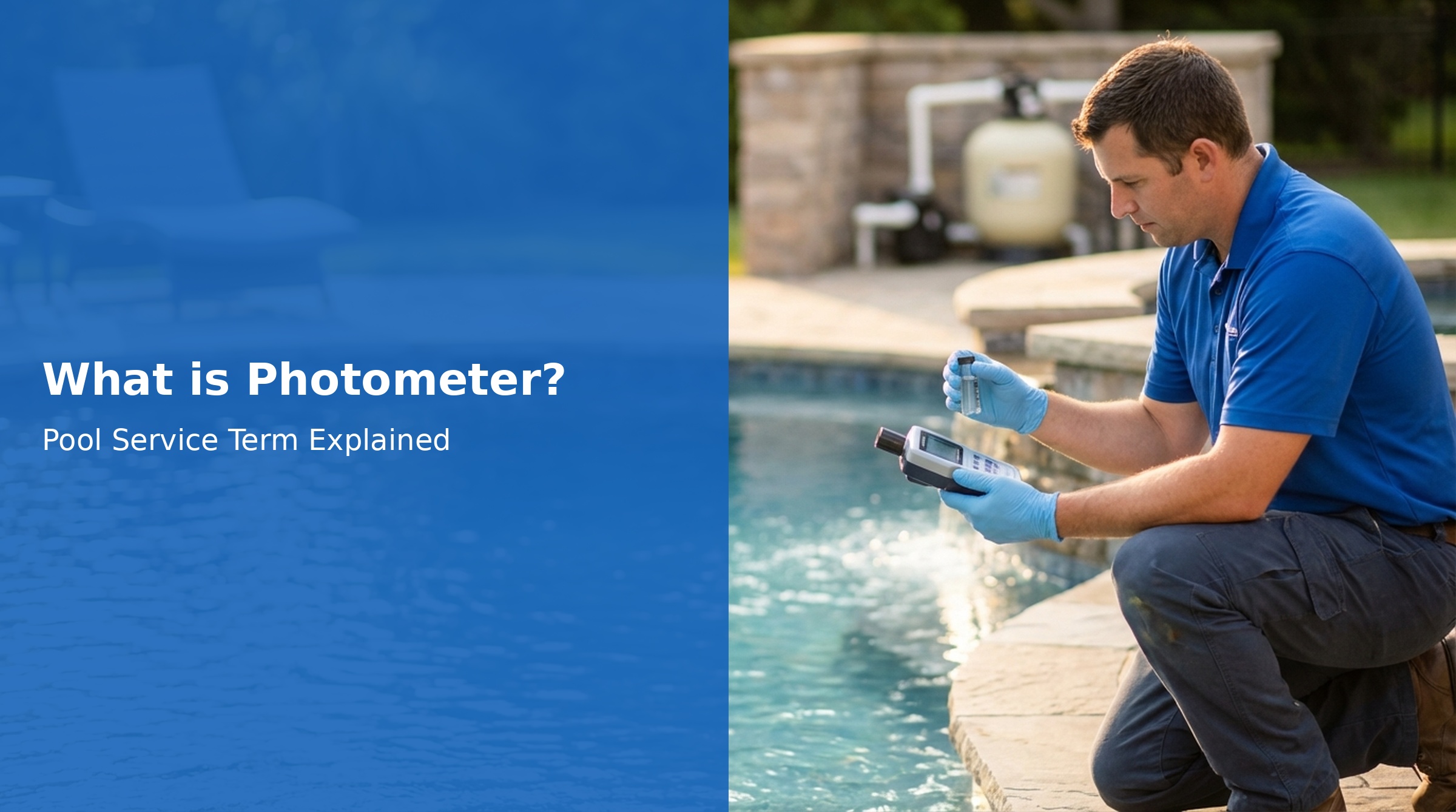
In the pool service industry, accuracy in water testing can mean the difference between crystal-clear water and costly chemical imbalances. While traditional test strips and liquid reagent kits have long been the standard, photometers represent a technological leap forward in water chemistry analysis. These electronic devices eliminate guesswork by providing precise, numerical readings of chemical levels through advanced light absorption technology.
Key Takeaways
- Photometers measure chemical levels by analyzing light absorption through water samples
- They provide significantly more accurate results than visual color-matching methods
- Modern devices like the Spin Touch can test 10+ parameters in under 60 seconds
- Initial investment costs are offset by reduced chemical waste and improved service quality
- Regular calibration and proper maintenance ensure consistent, reliable results
What Is a Pool Photometer?
A photometer is an electronic testing device that measures chemical concentrations in pool water by analyzing how much light is absorbed when passed through a water sample. Unlike traditional test kits that rely on visual color comparison, photometers use precise optical sensors to detect even minute changes in light transmission, translating these measurements into exact chemical concentrations.
The technology works on the principle of spectrophotometry, where specific wavelengths of light are passed through a water sample containing chemical reagents. Different chemicals absorb light at different wavelengths and intensities. The photometer's internal computer processes these light absorption patterns and converts them into accurate parts-per-million (ppm) readings displayed on a digital screen.
Popular Photometer Models
The LaMotte Spin Touch represents one of the most advanced pool testing photometers available today. This device can analyze over ten different water parameters in approximately 60 seconds, including free chlorine, total chlorine, pH, alkalinity, calcium hardness, and cyanuric acid. Other reputable manufacturers like Hanna Instruments and Palintest also produce professional-grade photometers designed specifically for pool and spa applications.
Why Photometers Matter for Pool Professionals
Accuracy in water testing directly impacts every aspect of pool maintenance. When chemical readings are imprecise, service technicians may over-dose or under-dose chemicals, leading to water balance issues, increased chemical costs, and potential equipment damage. Photometers address these challenges by providing laboratory-quality results in the field.
Enhanced Accuracy and Consistency
Traditional color-matching tests are subject to human interpretation, lighting conditions, and even color blindness. A technician might read a chlorine level as 2.0 ppm when it's actually 1.4 ppm, leading to unnecessary chemical additions. Photometers eliminate these variables by providing objective, numerical results with accuracy typically within ±0.1 ppm for most parameters.
Professional Credibility
When explaining water chemistry issues to clients, having precise numerical data carries significantly more weight than approximate color readings. Photometer results can be printed or stored digitally, providing documentation for service reports and helping justify chemical treatments or equipment recommendations.
Time and Cost Efficiency
While the initial investment in a quality photometer may seem substantial, the long-term benefits include reduced chemical waste, fewer callbacks due to water problems, and the ability to command premium pricing for superior service quality. Modern photometers can complete comprehensive water analysis in the time it takes to perform just two or three traditional tests.
Essential Parameters for Pool Testing
Professional-grade photometers typically measure the most critical pool water parameters that directly impact water balance and sanitizer effectiveness.
Sanitizer Levels
Accurate chlorine measurement is fundamental to pool maintenance. Photometers can distinguish between free available chlorine and total chlorine, helping identify chloramine problems that traditional tests might miss. This precision is particularly valuable when working with chemical dosage calculations to achieve optimal sanitizer levels.
pH and Alkalinity
pH readings from photometers are typically accurate to within 0.05 units, crucial for maintaining proper water balance. Similarly, precise alkalinity measurements help prevent pH bounce and ensure sanitizer effectiveness. These accurate readings are essential when calculating Langelier Saturation Index values for balanced water.
Cyanuric Acid (Stabilizer)
Traditional cyanuric acid testing can be challenging and imprecise, often leading to over-stabilization problems. Photometers provide exact stabilizer readings, helping technicians maintain optimal levels between 30-50 ppm for most pools while avoiding the negative effects of excessive cyanuric acid buildup.
Best Practices for Photometer Use
Maximizing the benefits of photometer technology requires proper technique and maintenance protocols that ensure consistent, reliable results.
Sample Collection and Preparation
Always collect water samples from elbow depth, away from returns and skimmers, to ensure representative readings. Allow the sample to reach ambient temperature if it's been stored in a hot vehicle, as temperature variations can affect accuracy. Use clean sample containers and avoid contamination from previous tests or cleaning chemicals.
Regular Calibration
Most professional photometers require periodic calibration using certified standard solutions. Follow manufacturer guidelines for calibration frequency, typically monthly for heavy-use devices. Keep calibration standards stored properly and replace them before expiration dates to maintain accuracy.
Maintenance and Care
Clean sample chambers thoroughly between tests using distilled water. Protect the device from extreme temperatures and moisture when not in use. Replace reagents before expiration dates, as expired chemicals can produce inaccurate results even with perfect photometer function.
Integration with Modern Pool Service
Photometers complement digital pool management systems by providing the accurate data needed for precise chemical calculations. Many service companies integrate photometer readings with route management software, creating detailed service records and enabling data-driven maintenance decisions.
The precision offered by photometer technology becomes particularly valuable when dealing with challenging water conditions, commercial pools, or high-end residential accounts where water quality expectations are elevated. Understanding and utilizing this technology, along with comprehensive knowledge of pool service terminology, positions professionals as technical experts rather than basic maintenance providers.
Conclusion
Photometers represent a significant advancement in pool water testing technology, offering accuracy and consistency that traditional methods simply cannot match. While the initial investment may be substantial, the long-term benefits of precise chemical management, reduced waste, enhanced professional credibility, and improved customer satisfaction make photometers an essential tool for serious pool service professionals. As the industry continues to evolve toward more sophisticated water management practices, photometer technology provides the foundation for delivering consistently superior results that clients can see and appreciate.