
What Are Borates in Pool Water?


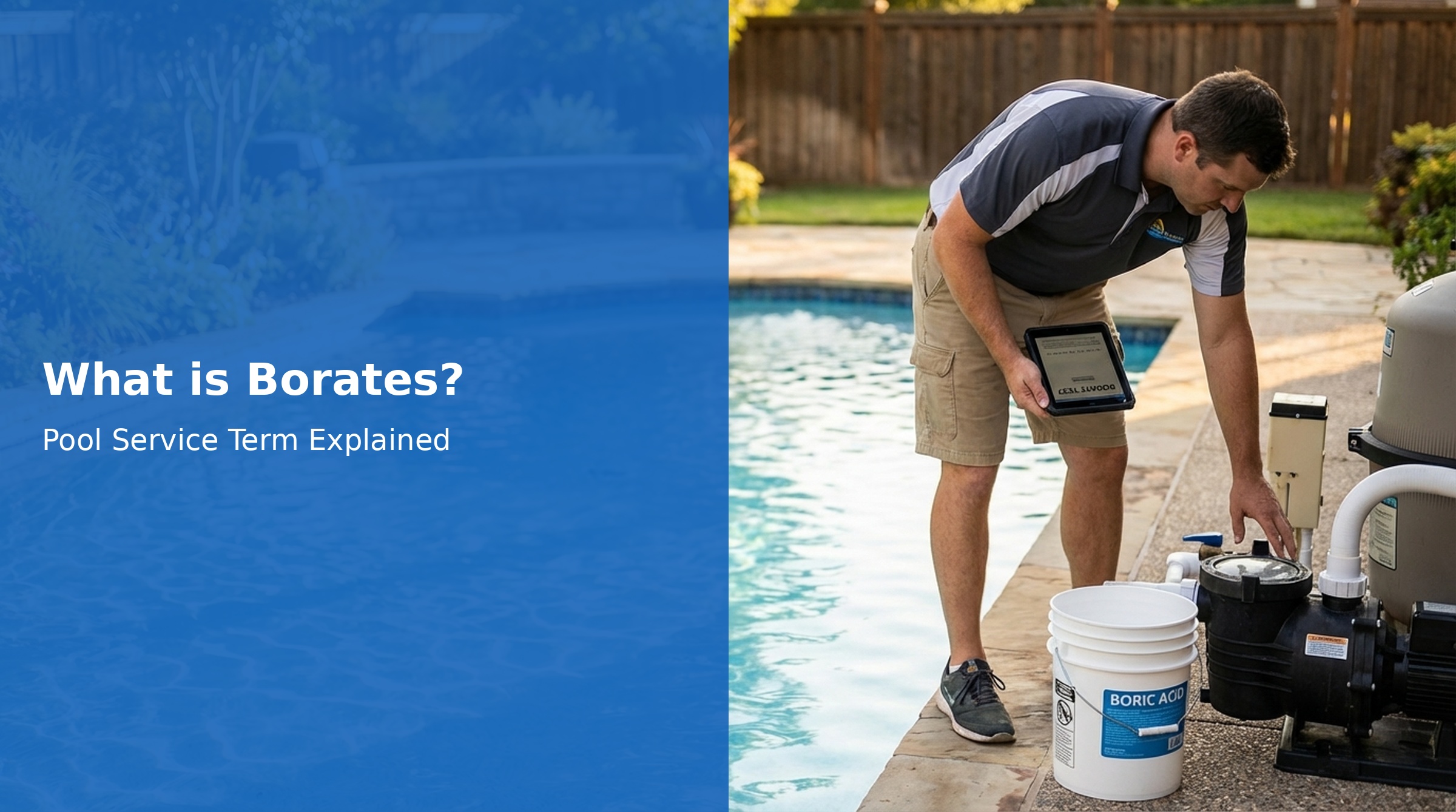
Borates have quietly revolutionized pool water chemistry, offering pool service professionals a powerful tool to enhance water quality while reducing maintenance demands. These naturally occurring mineral compounds provide buffering capabilities that go beyond traditional alkalinity, creating more stable water conditions that both technicians and pool owners appreciate. Understanding how to properly utilize borates can significantly improve your service efficiency and customer satisfaction.
Key Takeaways
- Borates provide pH buffering that reduces chemical fluctuations and maintenance frequency
- Optimal borate levels range between 30-50 ppm for residential pools
- Boric acid is the most common source for adding borates to pool water
- Borates enhance sanitizer effectiveness and create softer-feeling water
- Regular testing and monitoring are essential for maintaining proper borate levels
Understanding Borates in Pool Chemistry
Borates are chemical compounds containing boron and oxygen that naturally occur in many water sources. In swimming pool applications, borates serve as a secondary buffer system that works alongside total alkalinity to maintain stable pH levels. Unlike traditional alkalinity buffers, borates provide consistent pH stability across a broader range, making them particularly valuable for pools that experience heavy bather loads or environmental stress.
The most commonly used borate source in pool maintenance is boric acid (H₃BO₃), though sodium tetraborate (borax) can also be used. When dissolved in pool water, these compounds dissociate to form borate ions that create the buffering effect. This buffering action helps prevent rapid pH swings that can lead to sanitizer inefficiency, equipment corrosion, or bather discomfort.
Benefits of Borate Treatment
Enhanced pH Stability
The primary advantage of borates lies in their superior pH buffering capacity. While total alkalinity primarily buffers pH in the lower range (7.0-7.4), borates provide effective buffering in the ideal swimming pool pH range of 7.4-7.6. This complementary action creates a more stable chemical environment that requires fewer adjustments throughout the service cycle.
Improved Water Quality
Pools treated with borates consistently demonstrate improved water clarity and feel. The compounds help create softer-feeling water that's gentler on skin and eyes. Additionally, the enhanced pH stability allows sanitizers to work more effectively, reducing the likelihood of algae growth and waterborne contaminants.
Reduced Chemical Consumption
Service professionals often report significant reductions in acid and base usage when maintaining pools with proper borate levels. The buffering action minimizes pH drift, which translates to fewer chemical additions and more predictable water chemistry. This benefit extends to sanitizer usage as well, as stable pH conditions optimize chlorine effectiveness.
Optimal Borate Levels and Testing
For most residential swimming pools, maintaining borate levels between 30-50 ppm provides optimal results. Commercial pools or those with heavy usage may benefit from levels up to 80 ppm. It's crucial to avoid exceeding 100 ppm, as higher concentrations can begin to affect water balance and may cause eye irritation.
Testing borate levels requires specialized test kits or strips designed specifically for boron detection. Standard pool test kits don't measure borates, making it essential to invest in appropriate testing equipment. Many service professionals incorporate monthly borate testing into their regular maintenance protocols, adjusting levels as needed based on dilution from backwashing, splash-out, and rainfall.
Application Methods and Dosing
Adding borates to a swimming pool requires careful calculation and gradual application. Boric acid is typically the preferred source due to its ease of handling and neutral pH impact. The general dosing rate is approximately 1.5 pounds of boric acid per 10,000 gallons to achieve 10 ppm of borates.
For initial treatment of a pool without existing borate levels, dissolve the calculated amount of boric acid in a bucket of warm water before adding to the pool. Distribute the solution around the pool perimeter while the circulation system is running. Allow at least 24 hours for complete dissolution and distribution before retesting.
When making chemical adjustments to pools with established borate levels, consider using our chemical dosage calculator to ensure proper dosing of other chemicals, as borates can influence the effectiveness of pH adjusters and sanitizers.
Integration with Water Balance
Borates work synergistically with traditional water balance parameters but don't replace the need for proper total alkalinity, pH, and calcium hardness management. When calculating water balance using the Langelier Saturation Index, borate-treated pools often demonstrate improved stability within the acceptable LSI range. Pool professionals can utilize our Langelier Saturation Index calculator to verify proper water balance in borate-treated pools.
It's important to note that borates don't significantly impact total alkalinity readings, so standard alkalinity adjustments may still be necessary. However, the presence of borates often allows for operation at the lower end of the acceptable alkalinity range (80-100 ppm) while maintaining excellent pH stability.
Common Challenges and Solutions
One challenge with borate treatment is the initial cost and time investment required for proper implementation. Unlike other chemical adjustments that show immediate results, establishing optimal borate levels requires patience and multiple applications over several weeks.
Another consideration is customer education. Many pool owners are unfamiliar with borates and may question the additional expense. Successful service professionals address this by explaining the long-term benefits: reduced chemical costs, improved water quality, and less frequent service visits.
For pools experiencing persistent pH drift despite proper alkalinity levels, borate treatment often provides the solution. This is particularly common in pools with salt water chlorine generators, where the electrolytic process tends to drive pH upward.
Maximizing Service Efficiency
Incorporating borates into your service protocols can significantly improve route efficiency. Pools with stable borate levels require fewer chemical adjustments, allowing technicians to focus on other aspects of maintenance. This efficiency gain often justifies any initial cost concerns from customers.
Documentation becomes crucial when working with borates. Track initial dosing, ongoing levels, and any correlations with other water chemistry parameters. This data helps refine your approach and demonstrates value to customers through reduced chemical usage and improved water quality.
For comprehensive understanding of borate applications alongside other pool chemistry terms, reference our complete pool service terminology glossary to ensure consistent communication with customers and team members.
Conclusion
Borates represent a valuable advancement in pool water chemistry management, offering enhanced pH stability, improved water quality, and reduced maintenance requirements. For pool service professionals seeking to differentiate their services and improve operational efficiency, understanding and implementing proper borate treatment protocols provides tangible benefits for both service routes and customer satisfaction. The key to success lies in proper testing, gradual implementation, and ongoing monitoring to maintain optimal levels while educating customers about the long-term advantages of this advanced water treatment approach.