How to Service Swimply and Rental Pools Without Losing Your Mind


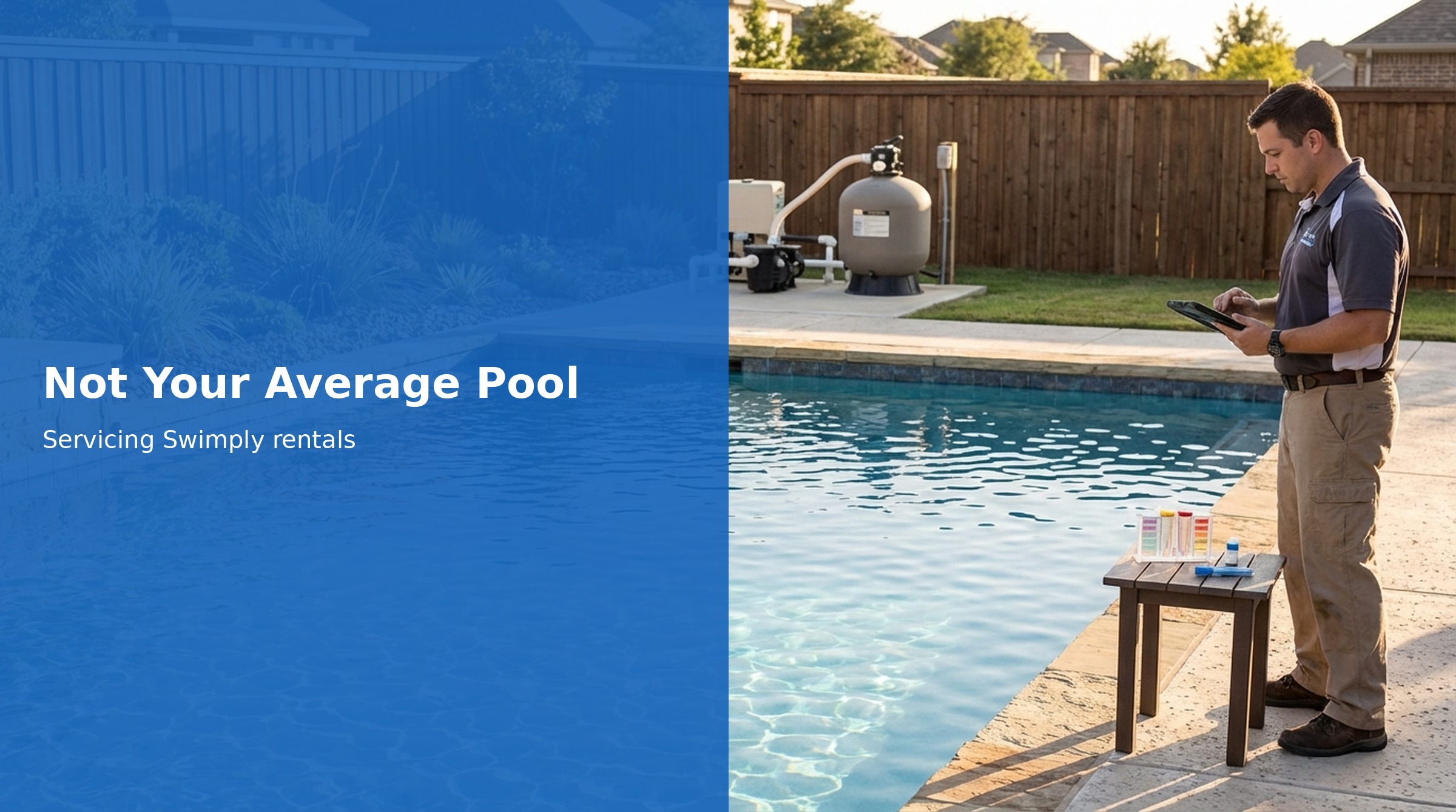
Swimply and other pool rental platforms turned backyard pools into mini businesses. Homeowners list their pool by the hour, strangers show up in groups of 10-15, and at the end of the weekend the water looks like it hosted a frat party. Then your phone rings on Monday morning.
Servicing rental pools is a growing niche, and the money can be excellent — if you price it right and set hard boundaries. But most pool pros who take these on without adjusting their approach get burned. Here's what experienced techs have learned the hard way.
Key Takeaways
- Swimply/rental pools need 2x weekly service at 2x your residential rate — the bather load and chemical demand justify premium pricing
- Bather load destroys FC levels and clogs filters — sunscreen and body oils are the silent killer
- Salt systems are almost mandatory — manual chlorine dosing can't keep up between bookings
- Treat rental pools like commercial for insurance purposes — your insurer will tell you the same
- Set boundaries in writing — you're not the host's on-call pool guy for guest complaints
The Bather Load Problem
A typical residential pool sees 2-4 people a few times per week. A Swimply pool sees 10-15 people per session, with multiple sessions per day on peak weekends. That's not a residential pool anymore — it's commercial use in a residential body of water.
The chemistry implications are immediate and severe. Free chlorine gets destroyed. Every person who jumps in brings sunscreen, body oils, sweat, cosmetics, and whatever else was on their skin. That organic load overwhelms your chlorine residual in hours, not days.
"I service a couple pools in Hawaii that get rented out on Swimply. The biggest issue is bather load. A regular residential pool might see 2-4 people a few times a week. A Swimply pool can get 10-15 people in a single session, multiple sessions a day on weekends. That absolutely destroys your FC levels and your filter."
— Pool pro, Hawaii
Cartridge filters are the worst hit. Sunscreen and body oils coat the pleats and don't come off with a simple rinse. You're looking at deep cleans or replacement far more frequently than a standard residential account. Expect to replace cartridges yearly instead of every 2-3 years.
This isn't something you can fix by just adding more chlorine on your regular weekly visit. The pool needs a fundamentally different service approach.
Equipment Recommendations for Rental Pools
If a host is serious about renting their pool, the equipment needs to match the demand. Here's what experienced pros recommend:
- Salt chlorine generator — Almost mandatory. A salt system keeps producing chlorine between bookings when nobody is there to dose manually. This is the single biggest upgrade for any rental pool
- Robotic cleaner — Handles debris between guests without requiring the host to vacuum. Program it to run after the last booking each day
- Cartridge filter — Easiest for frequent cleaning, which these pools demand. But budget for yearly replacement given the sunscreen and oil load
- Chemical controller / ORP system — For high-traffic pools, automated chemical monitoring takes the guesswork out of maintaining proper sanitizer levels between your visits
"Get the pool drunk on enzymes. Drop a keg in that shit."
— Pool pro
The enzyme approach is worth emphasizing. Body oils and sunscreen create a persistent organic load that normal chlorine struggles to oxidize fast enough. A quality enzyme product breaks down those organics before they consume all your free chlorine, which means your sanitizer can actually do its job — killing bacteria and keeping the water safe for the next group of strangers.
Service Schedule and Pricing
Weekly service doesn't cut it for rental pools. The minimum is twice per week, and the pricing should reflect the increased demand on your time, chemicals, and expertise.
Charge 2x your standard residential rate. That second visit exists specifically for filter maintenance and water balance — things that wouldn't need a separate visit on a normal residential account. The host is making hundreds or thousands of dollars per weekend from bookings. They don't blink at 2x pricing when you explain the math.
"I charge about 2x my normal residential rate for Swimply pools because the wear and tear on equipment and chemicals is significantly higher. The hosts make enough from bookings that they don't blink at it."
— Pool pro, Hawaii
One critical point: the host must do a quick skim and visual check between bookings. That's their job, not yours. Put it in writing. If the pool looks green or has visible debris when the next guest arrives, that's between the host and their guests — unless it happened on your service day.
Use your billing system to set up the premium rate with clear line items so the host understands exactly what they're paying for: two visits per week, chemical adjustment, filter maintenance, and weekly enzyme treatment.
Chemical Management
Chemical management on rental pools requires a more aggressive approach than standard residential service. The bather load changes everything.
- Shock after any day with 3+ bookings — This is non-negotiable. The combined chlorine buildup from that many bathers needs to be burned off. The host can do this themselves if you train them, or you can bill for it
- Keep CYA tight — You can't afford stabilizer eating into FC effectiveness when chlorine demand is already this high. Keep CYA at the lower end of your target range. Use the CYA calculator to dial in the right ratio
- Daily chem tests needed — Either by the host (teach them to use test strips at minimum) or by you on each visit. With this kind of bather load, water chemistry can swing wildly in 24 hours
- Enzymes weekly — As mentioned above, a heavy enzyme dose breaks down the body oils and sunscreen that overwhelm normal chlorine oxidation
Log every chemical reading with your chemical tracking system. When the host asks why the water went cloudy after a Saturday with six bookings, you can pull up the data showing FC was at 4.0 ppm Friday evening and 0.2 ppm Monday morning. The numbers tell the story — and protect you from blame.
"Shock after any day with 3+ bookings. Non-negotiable."
— Pool pro, Hawaii
Use the chemical dosage calculator to figure out the right shock dose for each pool's volume, and write it on the card you give the host. Make it idiot-proof. The less they have to think, the more likely they'll actually do it.
The Insurance Question
This is where things get serious. Multiple pool service professionals have flagged insurance as a major concern when servicing rental pools, and for good reason.
Your standard general liability policy covers residential pool service. A Swimply pool is not a standard residential pool — it's a commercial operation running out of a residential property. The paying public is using that water. If someone gets sick, gets injured, or worse, everyone's insurance gets examined very carefully.
"I spoke to my insurance about these once. They said treat all rental pools like a commercial pool. If for some reason someone wants to sue, treating it like a standard resi pool might not hold up in court."
— Pool pro who consulted their insurer
Here's what experienced pros recommend:
- Call your insurer before taking on any rental pool accounts. Ask specifically about pools rented to the public. Get the answer in writing
- You may need commercial liability coverage — or at minimum an endorsement on your existing policy that covers this use case
- Require the host to carry their own liability insurance — Swimply requires hosts to have coverage, but verify it. If something goes wrong, you want to make sure you're not the only insured party
- Document everything — Every visit, every chemical reading, every recommendation you made. If litigation happens, your service records are your defense
"Swimply is a huge insurance liability. I would never service or do it."
— Pool pro who avoids rental pools
That's a legitimate position. Not every pro needs to service rental pools. But if you do, go in with your eyes open and your insurance sorted out first.
Setting Boundaries
This is where most pros get burned. The money is good, the chemistry is manageable, and then the host starts treating you like a personal employee.
Put everything in writing before you start service. Your agreement should clearly state:
- Service includes X visits per week — specify the days. Anything outside those visits is billed as an emergency or additional service call
- Emergency calls are billed separately — at your emergency rate, not your regular rate. Define what constitutes an emergency (green water, equipment failure) vs. what doesn't (guest complained the water was cold)
- You service the pool — the host handles everything else. Guest issues, booking scheduling, towels, deck furniture, noise complaints — none of that is your problem
- The host is responsible for between-booking maintenance — quick skim, visual check, post-heavy-use shocking. Write it down and have them sign it
"Had a few on service and it was a nightmare. Both homeowners assumed I worked for them personally. Always had calls outside of the days I serviced the pool. I turn those calls down now."
— Pool pro who stopped servicing Swimply pools
The solution isn't to avoid rental pools entirely — it's to set boundaries before the relationship starts and enforce them consistently. The hosts who respect your boundaries are the ones worth keeping. The ones who don't will drain your time and energy no matter what you charge.
Is It Worth It?
Opinions are genuinely mixed in the pool service community. The deciding factors come down to two questions:
- Does the host understand this is commercial-level service at commercial pricing? If they expect residential service with a rental pool's demands, walk away
- Will the host handle their side? Between-booking cleanup, post-heavy-use shocking, guest management, and respecting your service boundaries. If they won't, you're inheriting all of their problems at any price
Pros who love rental pool work tend to share a few traits: they price aggressively, they have ironclad service agreements, and they've learned to say no to hosts who won't do their part. The premium rate and consistent work make it a profitable niche.
Pros who hate it usually got burned by boundary violations, insurance concerns, or hosts who expected 24/7 availability for a twice-weekly service rate.
Whether rental pools are profitable depends entirely on boundaries and pricing. Pros who make it work charge aggressively, have ironclad service agreements, and have learned to say no to hosts who won't do their part. The ones who got burned usually underpriced, over-accommodated, or both.
If you decide to take on rental pools, go in with commercial-level pricing, commercial-level documentation, and commercial-level boundaries. Anything less and you'll lose your mind — and possibly your shirt.
High-traffic pools need high-frequency tracking
PoolDial logs every chemical reading so you can show rental pool owners exactly what their pool demands and justify your premium rate. Track FC swings, filter pressure trends, and chemical costs per pool — all in one place.
Start Your Free Trial