
Pool Tech Biggest Mistakes: Real Stories and Hard Lessons From the Field


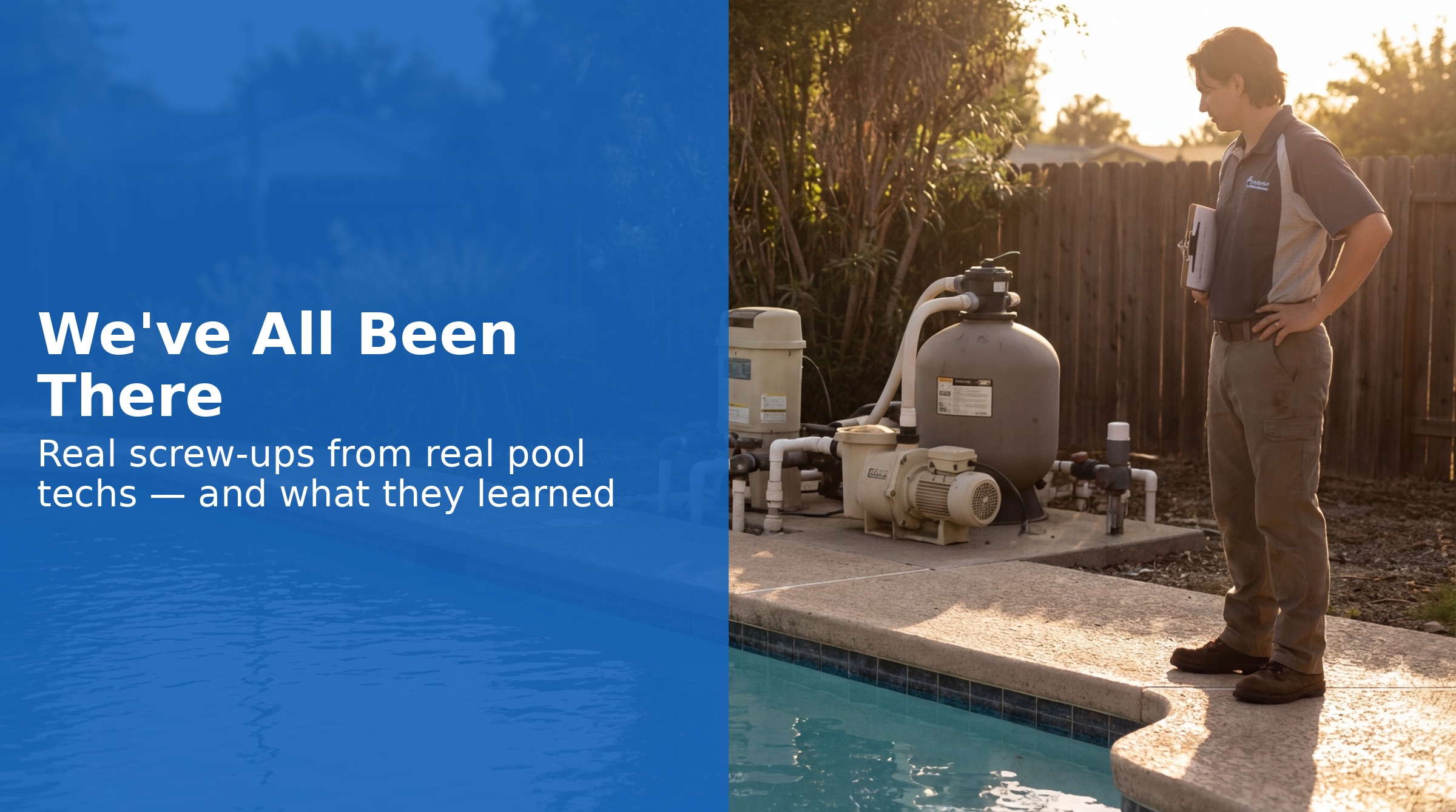
Every pool tech has a story. The kind you laugh about years later but definitely weren't laughing about when it happened. We collected real stories from working technicians about the worst mistakes they've made on the job — not to shame anyone, but because every screw-up in this list carries a lesson that can save you time, money, or a trip to the emergency room.
Key Takeaways
- Label everything — Unlabeled chemical buckets are a disaster waiting to happen
- Never open a sealed chlorinator without caution — Chlorine gas can blind and choke you in seconds
- Always inspect before reassembly — A missing filter band can turn a filter into a bomb
- Never mix copper algaecide with chlorine — You'll stain the plaster black
- Use a departure checklist — Open valves and running hoses are the #1 source of callbacks
Chemical Mix-Ups: When Every Bucket Looks the Same
One of the most common mistakes new techs make is grabbing the wrong chemical. When you're running 15 stops and your brain is on autopilot by stop 12, unlabeled buckets become a real hazard.
The fix is simple but easy to skip: label every bucket. One tech's system is worth copying: use cleaned-out 100-lb shock buckets with Brady label maker lids. One bucket each for shock, tabs, bicarb, DE, and trash. When you buy a new shock bucket, swap the labeled lid over.
Another tech keeps 5-7 black Sharpies in the truck at all times and uses them to mark serial and model numbers directly on equipment tubing for future reference. Basic? Yes. But basics save you when you're exhausted and moving fast.
If you're using chemical tracking software, your dosing records serve as a second check. When you log what you added and the app shows the expected results, a mismatch between what you recorded and what you see in the water is an early warning that something went wrong.
The Chlorine Gas Bomb
Multiple techs shared variations of the same terrifying story: opening a sealed chlorinator and getting blasted with concentrated chlorine gas.
This isn't a freak accident. It happened to tech after tech in the thread. One described being curled up on a customer's driveway for several minutes because he couldn't breathe after opening a bucket of wet tabs. Another was working in an underground equipment bunker, got instantly blinded, and had to flail around for the ladder to climb out. His boss later went down in scuba gear to retrieve the feeder.
The chemistry is straightforward: trichlor tabs in an enclosed container off-gas chlorine. When the lid has been sealed for weeks or months, the concentration builds. Opening it releases everything at once. It's the same principle as breakpoint chlorination but in your face, literally.
How to Open a Chlorinator Safely
- Turn off the pump so you're not pressurizing the system
- Stand upwind and to the side — never lean directly over the lid
- Crack the lid a quarter turn and wait 30 seconds for gas to vent
- If the space is enclosed (underground vault, equipment closet), ventilate first or use a P100 respirator
- Never open a chlorinator that's been sealed for an unknown period without full caution
The Exploding Pentair Filter
This one could have caused serious injury.
The tech didn't notice the missing band because he didn't know to look for it. He learned the hard way that a visual inspection before reassembly isn't optional — it's a safety requirement. From that day on, he checked every Pentair Clean & Clear for its internal band before putting it back together, and replaced any that were rusted or corroded.
This is where equipment tracking pays off. If you have your customers' filter make, model, and condition logged, you can flag aging equipment and known issues before you're standing next to it with a wrench. Notes like "internal band corroded — needs replacement" on the equipment record can save the next tech a dangerous surprise.
Copper Algaecide + Cal Hypo = Black Stains
The tech got the stains out, but it took significant extra work. Copper algaecide has its place, but it's not a cure-all. It should only be used in specific cases (persistent black algae, for example), and never simultaneously with shock. If you do use copper, wait for chlorine levels to drop below 5 ppm before adding it, and vice versa.
For most green algae situations, breakpoint chlorination alone will do the job. Save the copper for when you actually need it, and when you use it, check the chemical dosage calculator to make sure you're not overdosing.
The Running Hose and the Open Valve
If there's a single category that produced the most stories, it's this one: techs leaving water running or valves open when they leave a stop.
One tech's boss left a hose running at an apartment complex to raise the water level. He forgot to turn it off. It flooded the entire bottom floor of the apartment building.
These aren't carelessness stories. They're fatigue stories. By your 12th or 15th stop, your brain is running on muscle memory. That's exactly when you need a system that doesn't rely on remembering.
Departure Checklist
- Hose off and disconnected (or spigot closed)
- Filter valve returned to "Filter" position
- All suction and return valves in service position
- Pump running and primed
- Equipment pad dry (no active leaks)
- Gate closed behind you
If you're using work order checklists in your service software, you can build this departure check into every stop. It takes 30 seconds and prevents the kind of callback that costs hundreds of dollars and a customer relationship.
New Plaster, Wrong Chemical, Wrong Time
Calcium chloride that doesn't fully dissolve will settle on plaster and create permanent hot spots — concentrated calcium deposits that etch or discolor the surface. On days-old plaster, the damage can be irreversible. The startup period for new plaster is when the pool is most vulnerable, and cutting corners during this window can mean replastering.
Chemical Mixing Gone Wrong
The COVID-era chemical shortage forced many techs to improvise with unfamiliar products. This is a reminder that chemical safety isn't just about knowing your regular products — it's about having a process for handling anything new. When you pick up a chemical you haven't used before, read the label. Check whether it's compatible with what's already in the pool. Five minutes of reading can prevent an explosion.
The Gallon of Chlorine in the Hot Tub
A standard residential hot tub holds 400-500 gallons. A gallon of liquid chlorine (12.5% sodium hypochlorite) in 450 gallons would push the free chlorine level above 300 ppm. For reference, the target is 3-5 ppm. This is a training failure, not just a measurement error.
When training new techs, be specific: "Add 4 oz of liquid chlorine to the hot tub" is a safe instruction. "Add chlorine" is not. And always verify the dosage yourself until the new hire demonstrates they know the correct amounts for different water volumes.
Infinity Edge Gone Wrong
Infinity edge pools are more complex than standard pools, and the consequences of a valve mistake are immediate and visible. If you're servicing one, make sure you understand the relationship between the balance tank, the main pool, and the infloor system before touching any valves. If you're unsure, leave it alone and ask.
The Common Thread
Look at every story in this article. They all share the same root causes:
- Fatigue and rushing — Most mistakes happen late in the day or when techs are trying to move fast
- No systems — Relying on memory instead of checklists, labels, and procedures
- Insufficient training — New techs given vague instructions or sent out before they know the equipment
- Skipping the visual inspection — Reassembling equipment without checking for missing or damaged parts
None of these techs are bad at their jobs. Most of them are the ones who now train others not to make the same mistakes. The difference between a tech with 10 years of experience and a tech with 1 year is that the veteran has already made these mistakes and built systems to prevent them.
The fastest way to close that gap is to use service software that builds checklists, chemical logging, and equipment notes into every stop. Not because you can't remember, but because at 3 PM on a 105-degree day, you shouldn't have to.
Build the checklist that prevents the callback
PoolDial lets you create custom checklists for every stop, track chemicals with dosage calculations, and log equipment condition notes that follow the customer forever.
Start Your Free Trial