
Best Footwear for Pool Service: What the Pros Actually Wear


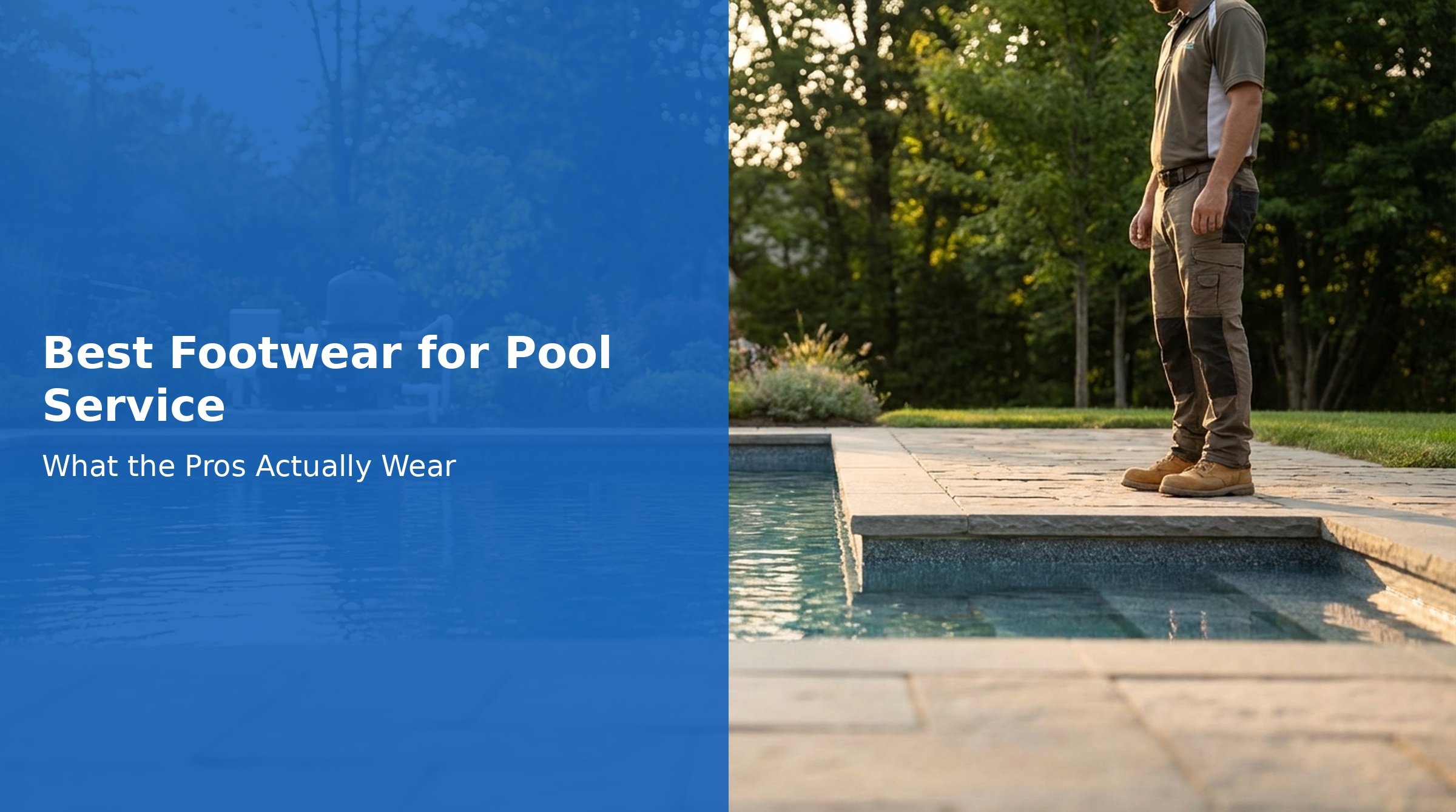
Ask a room full of pool service technicians what they wear on their feet and you will get answers ranging from Red Wing steel toes to bare flip flops. Footwear seems trivial until you are doing cold spring openings with soaked socks, hauling a DE filter across a paver patio, or standing in 120-degree heat on dark pool decking that could fry an egg.
A recent discussion among pool professionals produced dozens of strong opinions, brand loyalties, and a surprisingly heated argument about whether your shoes affect what the industry gets paid. This guide distills all of it into a practical breakdown of the most popular options and what actually works in the field.
Key Takeaways
- Crocs are the single most recommended shoe among pool pros online, beating every boot brand individually
- Waterproof boots are the most recommended category overall (41% of recommendations) with Huk, Ariat, and Merrell MOAB leading
- Most pros rotate footwear by season and task type. Route shoes and heavy-work shoes are different pairs
- Replace based on tread, not time. Worn tread on wet pool decks is a slip-and-fall waiting to happen
- Climate dictates category — what works in Arizona heat doesn't work for cold-weather openings
We tallied every footwear recommendation from five separate discussions among working pool service professionals, covering roughly 190 comments and over 130 individual shoe recommendations. Here is what they actually wear.
| Category | Price Range | Waterproof | Durability | Breathability |
|---|---|---|---|---|
| Waterproof Boots | $120 – $200+ | |||
| Hiking Shoes | $110 – $170 | |||
| Steel Toe Boots | $40 – $400+ | |||
| Crocs | $35 – $60 | |||
| Sandals | $30 – $110 |
Waterproof Boots: The Most Popular Choice
When experienced pool technicians recommend footwear, waterproof boots come up more than any other category (41% of all recommendations). The logic is straightforward: you are working around water every single day. Splashing, hosing down equipment, kneeling on wet decks, and occasionally stepping directly into puddles of backwash water are all part of the routine. Waterproof boots keep your feet dry and prevent the blisters, fungal infections, and general misery that come with spending eight hours in wet socks.
Huk Boots
Huk makes fishing boots that have found a loyal following among pool techs. They are designed for wet environments, offer solid traction on slippery surfaces, and are built to handle daily exposure to water without breaking down. Multiple professionals specifically called these out as their top pick, noting that the soles grip well on wet pool decking and the boots rinse clean easily at the end of the day. If you have ever worn fishing boots, you know the fit: roomy enough for thick socks, snug enough to move quickly.
Brunt Waterproof Boots
Brunt boots received some of the most enthusiastic endorsements in the discussion. One technician put it simply: once you try them, you cannot imagine wearing anything else. The brand focuses on work boots for trades professionals, so the construction is built for daily abuse. The waterproofing holds up through repeated exposure, and the comfort level is high enough for full-day routes. At the $130-$160 price point, they sit in the sweet spot between cheap boots that fall apart and premium boots that feel like overkill for service work.
Merrell Moab Waterproof
The Merrell Moab with Vibram sole has one of the more impressive track records in pool service. One veteran technician reported going through 22 pairs over a decade of daily use. That might sound like a lot, but the math tells a different story: roughly two pairs per year of full-time field work, with each pair lasting about six months of constant wet conditions, climbing in and out of trucks, and walking across every surface type imaginable. The Vibram sole provides exceptional grip and wears down predictably rather than failing suddenly. At around $120-$140 per pair, the cost-per-month is hard to beat.
Red Wing Boots
Red Wing is the name that comes up when someone wants to settle the "best boot" argument once and for all. Their 8-inch steel toe model is a favorite for techs who want maximum protection and bone-dry socks regardless of conditions. The height keeps water out during deep cleaning work and the steel toe protects against dropped equipment. For warmer months, the Traction Tred Lite Chukka 1221 works well with shorts and still delivers the quality Red Wing is known for. These are the most expensive option on this list, but the build quality means they outlast most alternatives.
Ariat Boots
Ariat brings the cowboy boot aesthetic into pool service, and a surprising number of techs swear by them. The western-style construction offers a taller shaft that keeps water out, and the soles are designed for all-day standing and walking. They look different from the typical work boot, which some technicians consider a plus: customers tend to notice and remember the tech with the cowboy boots. Whether that matters to you is a personal call, but from a functional standpoint, they deliver solid waterproofing and comfort.
Xtratuf Deck Boots
Xtratuf boots come from the commercial fishing world, and they have found a strong following in pool service. Multiple pros across different threads named them as their go-to for weekly service. One South Florida tech tried old sneakers, Crocs, waterproof work boots, and Merrell hiking shoes before settling on Xtratuf as the winner. The rubber construction handles chemical exposure better than leather or mesh alternatives, and the pull-on design means no laces to rot out from chlorine water.
Wolverine Rev UltraSpring
The Wolverine Rev UltraSpring CarbonMax boot has an enthusiastic following among pool techs. One pro recommended them across three separate discussions over two years, warning others not to tell too many people because they sell out every spring. The CarbonMax safety toe is lighter than steel but still provides protection for equipment work. At around $140-$160, they sit in the same range as Brunt and offer comparable waterproofing with better cushioning for long route days.
Danner Trail and Mountain Boots
Danner boots carry a reputation for extreme durability. One technician reported owning a pair of Danner Mountain Light boots for 30 years. For pool service specifically, the Danner Trail 2650 works well in warmer months as a lighter option while Keen boots handle spring and fall. Danner's resoleable construction means the upfront cost pays off over multiple seasons, similar to Whites and Nicks.
Georgia Boots
Georgia Boots offer a molded sole design that provides excellent waterproofing at a reasonable price. One tech reported going a year and a half of hard wear with zero leaking. The Eagle One Chelsea style is popular for its easy pull-on design and clean look. At around $100-$130, they are a solid mid-range option that outlasts many competitors at the same price point.
Waterproof Hiking Shoes: The Lightweight Alternative
Not everyone wants to wear boots on a 40-stop summer route. Waterproof hiking shoes offer most of the water protection in a lighter, more breathable package. They are particularly popular in warmer climates where full boots can feel like ovens by midday.
Columbia Low-Cut Waterproof
Columbia's low-cut waterproof hiking shoes are a go-to for techs who prioritize agility and breathability. The waterproof membrane keeps splashes and wet grass from soaking through, while the low profile lets your ankles breathe. A detail that multiple pros mentioned: the non-marking soles. When you are walking across a customer's light-colored pool deck or patio, leaving black scuff marks is a fast way to create a complaint. Columbia's soles avoid that problem entirely, which is a small courtesy that homeowners notice even if they never mention it.
North Face Vectiv
The North Face Vectiv series has earned a reputation for being exceptionally comfortable right out of the box. Experienced technicians describe them as lightweight enough to feel like sneakers but durable enough to handle daily service work. The rocker-style sole geometry reduces fatigue on long routes, which matters when you are on your feet for eight to ten hours. They are not the cheapest option at around $150-$170, but techs who have tried them report that the comfort difference is worth the price, especially for those dealing with foot or knee issues from years of service work.
Keen Waterproof
Keen's waterproof hiking shoes are a practical mid-range choice. The waterproofing holds strong for about a year of daily use, which aligns with the typical replacement cycle for pool service footwear. After the waterproof membrane eventually wears through, many techs report the shoes are still comfortable enough to keep wearing through the dry season. The wider toe box is a selling point for those who find most hiking shoes too narrow. Expect to pay $110-$140 and get solid performance for a full year before needing to reassess.
ON CloudVista Waterproof
ON running shoes have crossed over into pool service, with multiple techs praising the CloudVista waterproof model. The Swiss-engineered cushioning reduces fatigue on long routes, and the waterproofing holds up well for daily service work. One tech noted he only gets a single season out of them before holes develop at the crease points, but called them "incredibly comfortable and very waterproof" during that lifespan. At $160-$180, they are the priciest hiking shoe option, but techs with foot or knee problems say the comfort is worth it.
Hoka with Vibram Soles
Hoka's maximalist cushioning has earned fans among pool techs who spend long days on hard surfaces. The thick midsole absorbs impact from jumping in and out of trucks and walking across concrete pool decks all day. Paired with a Vibram outsole, the traction on wet surfaces is reliable. These are not waterproof by default, so they work best in dry climates or as warm-weather rotation shoes rather than a year-round daily driver.
Steel Toe Boots
Steel toe boots are more boot than most weekly service technicians need. But for techs who also handle installations, equipment swaps, or heavy repair work, the added protection is not optional. Dropping a pool pump or filter grid on an unprotected foot is the kind of mistake you only make once. One tech shared this lesson the hard way:
"A trucker ran over my foot with a pallet of liquid shock. I was wearing Converse All Stars and it left me with a disjointed fracture on my big toe and broke the toe next to it. I have never clocked in without steel-toe boots ever since."
— Pool pro via Reddit
Caterpillar 6-inch boots are a popular entry point. They are available everywhere, reasonably priced, and the steel toe meets safety standards without excessive weight. For techs who want something tougher, Whites and Nicks represent the upper tier of American-made work boots. They cost significantly more but are rebuildable, meaning a $400 boot can last five or more years with periodic resoling.
Red Wing's steel toe models show up in this category as well, particularly the 8-inch version mentioned earlier. The overlap between waterproof boot and steel toe is where Red Wing really shines for pool service.
Thorogood boots earned praise for being comfortable right out of the box with zero break-in period. They are American-made with a Goodyear welt construction, which means they can be resoled when the tread wears out. For pool techs who need warmth during cold-weather openings and closings, the insulated models keep feet warm without excessive bulk.
Salomon Tactical Boots are an unconventional pick that a few techs swear by. Originally designed for military and law enforcement, they offer exceptional ankle support and durability on varied terrain. The tread pattern handles wet concrete well, and the construction withstands the chemical exposure that pool service brings.
One of the more interesting recommendations was vintage U.S. Navy surplus deck boots from the 1980s. All leather, fully waterproof, and available for around $40 from surplus dealers. They were literally designed for standing on wet decks all day, which makes them oddly perfect for pool service. Availability is hit-or-miss, but for the budget-conscious tech who does not mind hunting through surplus shops, they are a remarkable value.
Crocs: The Most Recommended Individual Shoe
Across five separate online discussions among pool professionals, Crocs received more individual recommendations than any single boot brand. That surprised us too. But the logic holds up: they are rubber (chemical resistant), they dry in minutes, they rinse clean with a hose, and they cost $35-$50 to replace. For daily route work in warm climates, those advantages are hard to beat.
"I love Crocs as a tech but hate them as a business-owner because they aren't very professional and don't offer much foot protection."
— Pool pro via Reddit
That tension sums up the Crocs debate perfectly. They are objectively great for the work. They are objectively bad for the image. Most pros who wear them acknowledge both sides and make the trade-off knowingly.
Which Crocs for Pool Service
Not all Crocs are created equal for pool work. The work-rated non-slip models without holes solve two common complaints: your feet stay drier, and you avoid the polka-dot tan lines that classic Crocs leave behind. Several techs specifically recommended the enclosed work Crocs over the classic clog style.
For techs who want the Crocs concept without the Crocs look, Kane's recovery shoes offer a similar rubber construction without the holes. Sperry Floats are another option: boat shoes made from Croc-like material that look more professional on customer properties.
How Long Do Crocs Last in Pool Service?
Plan on 6-12 months per pair depending on how many stops you run daily. The tread is the thing to watch, not the upper.
"If the tread goes its time for a new pair. Can't slip and bust my ass."
— Pool pro via Reddit
At $6-8 per month, Crocs are the cheapest footwear option on this list by a wide margin. Most techs buy a new pair each season and consider it a minor business expense. One seasonal tech in the northeast buys one pair per 20-week season and reports they hold up fine.
Chemical Resistance
Rubber handles chlorine, muriatic acid splashes, and cal-hypo dust far better than leather or mesh. You can rinse them at the hose bib between stops and they will not absorb the chemicals the way sneakers do. One practical tip from a veteran tech: keep two cheap pairs in rotation.
"Two cheap pairs in rotation and rinse them at the hose bib when you splash chem on them. They dry fast, don't hold the stink like sneakers, and you're not starting every morning with yesterday's wet shoes."
— Pool pro via Reddit
Sandals: Survival Tactics for Extreme Heat
Before you dismiss sandals entirely, consider this: in parts of Arizona, Nevada, and Southern California, pool techs regularly work in temperatures exceeding 120 degrees Fahrenheit. At those extremes, enclosed footwear goes from protective to punishing. The sandal crowd is not lazy. They are deploying survival tactics.
Chacos occupy a step above basic sandals. The strapping system keeps them secured to your feet in a way that flip flops cannot match, and the Vibram soles provide genuine traction. Techs who run routes in extreme heat praise them for airflow while still offering enough foot protection for basic service stops. They also help with plantar fasciitis according to several techs who deal with chronic foot pain.
Tevas, Pali Hawaii sandals, and Skechers slip-ons round out the popular summer options. Pali Hawaii sandals earned a particularly loyal following: one tech wore the same pair from 2013 to 2017 before replacing them. The common thread across all sandal picks: maximum airflow, minimal weight, and easy cleaning.
The trade-off is obvious. You give up foot protection, ankle support, and professional appearance. For some techs in extreme climates, that trade-off makes sense during peak summer months. But a word of caution from a tech who learned the hard way:
"I wear work boots with 2 pairs of insoles year round. I tried wearing flip flops for 1 day. My feet killed me for a week. I had plantar fasciitis for about a year."
— Pool pro via Reddit
One useful tip from the sandal camp: wearing socks with sandals is not just a fashion crime in this context. Socks provide sun protection on the tops of your feet and actually help with cooling when they get wet. Several desert-climate techs reported this as a genuine comfort strategy, not a style choice.
Cold / Wet Season
- Waterproof boots (Huk, Brunt)
- Red Wing 8" steel toe
- Merrell Moab Waterproof
- Thick wool socks
Mild / Rainy
- Waterproof hiking shoes
- Columbia low-cut
- Keen Waterproof
- Non-marking soles a must
Warm / Dry Summer
- Crocs (work non-slip model)
- North Face Vectiv / ON CloudVista
- Red Wing Chukka 1221
- Columbia low-cut
Extreme Heat (110°+)
- Crocs or Kane's (no holes)
- Chacos with socks
- Tevas / Pali Hawaii
- Keep boots in the truck for equipment work
The Smart Rotation: Route Shoes vs. Heavy-Work Shoes
One of the most practical pieces of advice that came up across multiple discussions: do not wear the same shoes for everything. Your daily route shoe and your heavy-work shoe should be different pairs.
"I'd separate the normal route shoe from the nasty-work shoe. For summer routes, Crocs or water shoes are fine if you accept wet feet. For acid washes, green cleanups, or anything where you're stepping into a swampy liner, keep rubber boots on the truck."
— Pool pro via Reddit
The rotation strategy extends to daily wear too. A recent boot-dryer discussion included operators using low-airflow dryers, small fans, and a two-pair rotation after wet route days.
"Man especially for actual boots it’s a must have. I decided to try it on my regular shoes because I would end up having issues foot wise and stinky shoes and it just doesn’t happen anymore."
— Pool pro via Reddit
That is an operator's result, not proof that a dryer prevents or treats a foot condition. CDC foot-hygiene guidance says the fungi associated with tinea pedis thrive in warm, dark, moist environments and recommends keeping feet clean and dry while changing shoes and socks regularly. A dryer can support that routine, but it does not replace clean socks, foot hygiene, well-fitting footwear, or medical care for persistent symptoms.
"Peet dryer and 2 boots to rotate. I have a set of White's Foreman and a set of Nick's Builder Pros. After over a decade of burning through a set of CATs or Wolverines every 4-6 months (maybe 8 if I got lucky), I finally bit the bullet on expensive boots. My life has massively improved and I don't regret the cost at all."
— Pool pro via Reddit
The durability comparison is personal experience, not a controlled product test. The reliable takeaway is to give saturated footwear enough drying time and avoid making one pair perform every task.
A practical end-of-day routine is:
- Remove wet socks immediately and clean and dry your feet, including between the toes.
- Clean mud or chemical residue according to the footwear manufacturer's care instructions.
- Remove insoles only when the product instructions allow it and open the boot to improve airflow.
- Use ambient air, a fan, or a compatible boot dryer at the temperature and duration allowed for the leather, adhesive, membrane, and safety toe.
- Let the pair dry fully while wearing a second pair the next day.
- Inspect tread, seams, lining, odor, and skin symptoms before returning it to the route.
Avoid unapproved high heat, which can damage adhesives, leather, molded rubber, or waterproof membranes. Do not treat ozone, disinfectant spray, or an antifungal product as routine equipment care unless both the footwear maker and product label permit it. If itching, cracking, scaling, pain, or recurrent symptoms continue, get medical advice instead of trying to solve the condition with a dryer.
A common setup among experienced pros: Crocs or lightweight shoes for daily route work, Huk or rubber boots for filter cleans and wet work, and steel toe boots for equipment installations and repairs. Three pairs of shoes sounds like a lot until you factor in that each pair lasts longer when it is not doing every job. For more on how experienced techs structure their day in the field, see the pool tech mobile workflow guide.
Foot Health: What Nobody Talks About
Pool service is hard on your feet. You are on them for 8-10 hours, walking on concrete, pavers, and hot pool decks. You are climbing in and out of trucks dozens of times per day. Ignore your feet and they will make you pay for it.
Plantar fasciitis came up repeatedly in these discussions. One tech tried flip flops for a single day and dealt with plantar fasciitis for an entire year afterward. Another tech swears by double insoles in his work boots to prevent it. Custom insoles that transfer between shoes were another common recommendation, with one tech on his third pair of shoes using the same insoles.
If you are dealing with wide feet, options are more limited. Keen's wider toe box is frequently recommended for wide-footed techs. One tech with 6E width feet settled on New Balance safety toe shoes as the only brand that came close to fitting. If standard shoes cause pain, do not suffer through it. The cost of good insoles or properly fitted shoes is far less than the cost of chronic foot problems.
The Professionalism Debate: Do Your Shoes Affect Your Pay?
This section generated more heat than any specific boot recommendation. The argument started simply: one experienced professional pointed out that flip flops project a less-than-professional image, and a less-than-professional image leads to less-than-professional wages. The logic was not about individual customer relationships. It was about how the broader public perceives the pool service industry.
"People see flip flops as less than professional, so our pay will always be less than professional wages. As an industry we need to step it up and be more professional to command higher hourly rates."
— Pool pro via Reddit
Another pro added fuel to the fire:
"The amount of dudes in basketball shorts, flip flops, and an old graphic tee make all of us look bad. And then they don't itemize on an invoice, assuming they even send a proper invoice in the first place."
— Pool pro via Reddit
The argument extended beyond just footwear. Proper shirts, embroidered company polos, clean trucks, itemized invoices, and professional communication all contribute to customer perception. When a homeowner sees a uniformed tech step out of a well-organized service truck wearing proper work boots, the mental frame shifts. This person is a professional. When they see flip flops and a tank top, the frame shifts the other direction regardless of the technician's actual skill level.
The counterargument was equally passionate. You are paying for skill, not appearance. Sweating through a 120-degree Arizona summer in boots and long pants is unreasonable. Customers care about results, not outfits. And plenty of techs in sandals run successful businesses with loyal customers who would never consider switching.
Both sides have merit. But the professionalism argument makes a broader point worth considering. Pool service technicians are experts in gas appliances, electrical systems, plumbing, water chemistry, and mechanical repair. These are specialized skills that overlap significantly with union trades that command $80 or more per hour. Yet the average pool service rate is dramatically lower. Why?
Part of the answer is perception. The general public often views pool cleaning as unskilled labor rather than the technical trade it actually is. Every touchpoint a customer has with a pool tech either reinforces or challenges that perception. Your footwear, uniform, truck, invoicing, and communication all contribute. Consistent proof of service documentation is one of the clearest signals to customers that they are dealing with a professional operation. None of these factors alone will transform industry wages, but collectively they shape how millions of homeowners think about the value of pool service.
If you are starting a pool service business, consider your appearance as part of your brand strategy from day one. The boots versus sandals debate is really a question about positioning: are you building a premium service business or a budget one? Both can succeed, but the market you target and the prices you command will differ.
What to Look For in Pool Service Footwear
Regardless of which category appeals to you, here are the practical factors to weigh when choosing your next pair:
- Waterproofing matters most during opening season and cold weather. Spring openings involve standing water, hose work, and kneeling on wet surfaces for extended periods. If you only invest in waterproof footwear for one season, make it spring.
- Non-marking soles are a courtesy customers notice. Black scuffs on a light-colored pool deck are a silent complaint waiting to happen. Check the sole material before buying and test on a light surface if possible.
- Durability is measured in seasons, not years. Expect to replace service footwear annually at minimum. A $120 boot that lasts a full year beats a $60 shoe that falls apart in four months. Calculate your cost per month, not your cost at checkout. And replace based on tread wear, not calendar time. Smooth soles on wet pool decks are a hospital trip waiting to happen.
- Climate dictates category. Full waterproof boots in Phoenix summers are a health risk. Flip flops during Minnesota spring openings are a misery guarantee. Match your footwear to your market.
- Your footwear is part of your brand whether you want it to be or not. Customers see your feet. Dirty, destroyed, or inappropriate footwear creates an impression that no amount of excellent water chemistry can fully override.
- Factor gear costs into your pricing. Boots, uniforms, and other wearables are business expenses. Use a cost-per-pool calculator to make sure your service rate covers the full cost of operating professionally, including the gear that wears out every year.
Head-to-Head Comparisons
Want a deeper dive on two specific shoes? We compared the most popular pool service footwear brands side by side:
- Huk vs Xtratuf (rubber deck boots)
- Merrell MOAB vs Keen (waterproof hiking shoes)
- Crocs vs Huk (most popular shoe vs most popular boot)
- Red Wing vs Ariat (premium boots)
- Columbia vs North Face Vectiv (lightweight waterproof)
- Wolverine vs Brunt (mid-range work boots)
- Danner vs Merrell MOAB (trail boots)
- Crocs vs Chacos (warm-weather options)
- Merrell MOAB vs Columbia (waterproof hiking)
- Red Wing vs Wolverine (premium work boots)
The best footwear for pool service is ultimately the pair that keeps your feet protected, keeps you comfortable through a full day of stops, and projects the image you want for your business. For most techs, that means a good waterproof boot or hiking shoe as the daily driver, with lighter options available for peak summer heat. Whatever you choose, treat it as a business investment rather than an afterthought. Your feet, your customers, and your bottom line will all benefit.
Track every stop, optimize every route
PoolDial helps pool service professionals manage routes, track customers, and run their business efficiently.
Start Your Free Trial