Should Pool Service Companies Add Cold Plunge Maintenance?


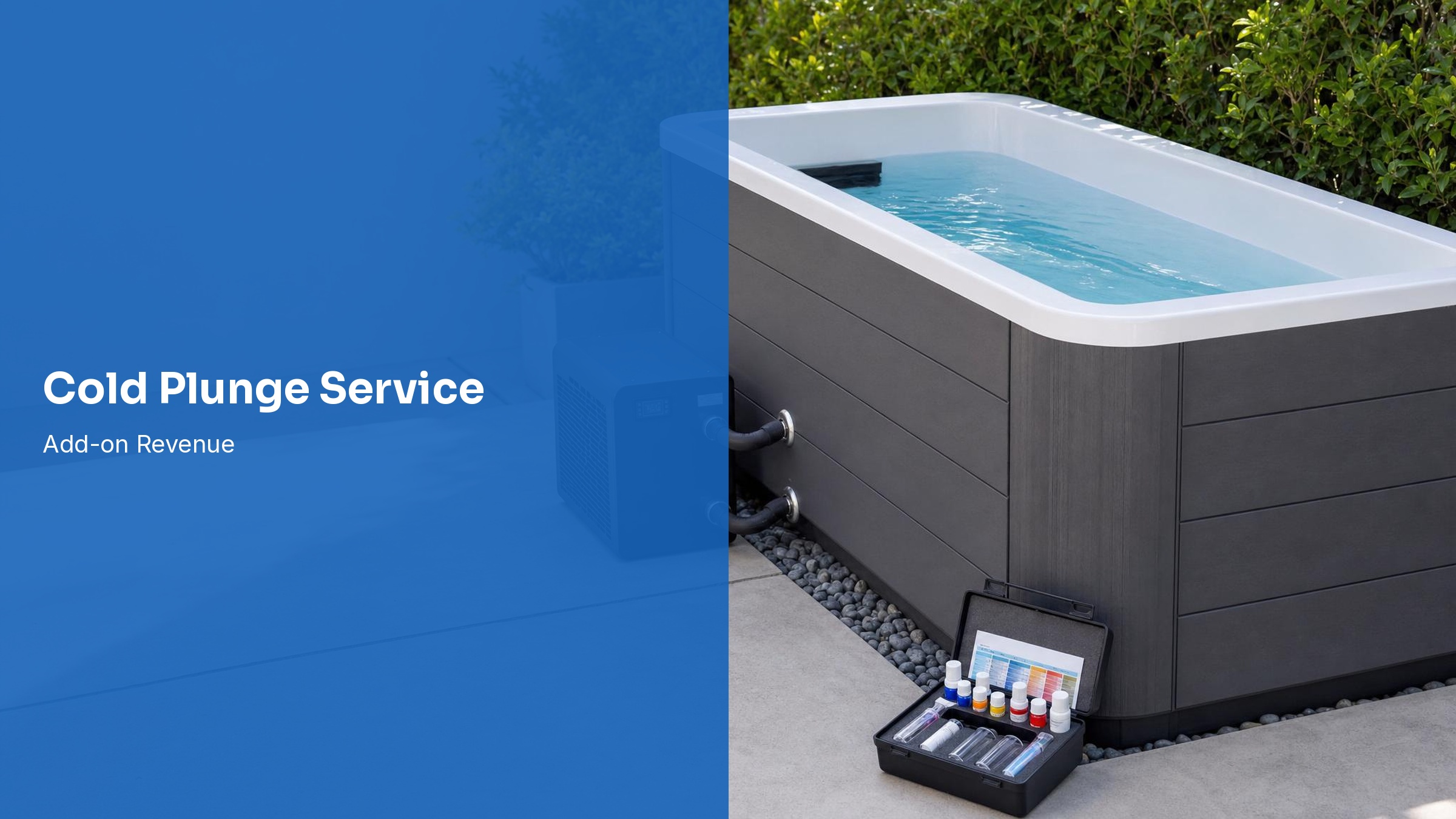
Cold plunge tubs are showing up in backyards, gyms, wellness studios, recovery centers, hotels, and sports facilities. For pool service companies, the category looks familiar at first glance. There is water. There is sanitation. There are pumps, filters, sensors, controllers, plumbing, and equipment that breaks.
That overlap creates a real question for pool pros: should cold plunge maintenance become an add-on service, or is it a distraction from higher-value pool work?
A recent Reddit thread from a cold plunge service network made the opportunity sound straightforward. The company was looking for pool, spa, HVAC, refrigeration, appliance, plumbing, electrical, and mechanical service pros in major metro areas. The pitch was additional revenue without spending time on marketing or lead generation.
"If you understand pumps, chillers, compressors, filtration, controls, sensors, water systems, or diagnostics, you’re already most of the way there."
Pool pro via Reddit
That part is true. Many pool pros already have useful skills for cold plunge work. But the thread also showed why experienced service companies should slow down before saying yes. The risk is not whether a pool pro can learn the equipment. The risk is whether the work pays enough, happens often enough, and fits the route.
Key Takeaways
- Cold plunge maintenance can fit pool service companies with strong repair skills and affluent routes.
- The work needs clear minimum pay, parts handling, warranty rules, and communication boundaries.
- Low service volume can make a national partner program look better on paper than it performs in the field.
- Pool companies should test cold plunge work as a paid add-on, not rebuild the business around it too early.
Why cold plunges look like a natural add-on
Pool pros already understand the basic logic of water systems. A cold plunge may be smaller than a pool, but it still needs clean water, circulation, filtration, sanitation, and working equipment. Many units add a chiller, compressor, controller, sensors, and proprietary parts.
That makes the category a better fit for pool and spa companies than it might be for a general handyman. A pool pro is already used to diagnosing flow problems, explaining chemistry, replacing pumps, documenting service, and dealing with customers who expect clean water on demand.
The customer base can also overlap. High-end residential accounts, gyms, recovery centers, wellness studios, short-term rentals, and boutique hotels may already sit near the neighborhoods or commercial zones a pool company serves. If your route includes customers who buy saunas, spas, heaters, automation, or premium weekly service, cold plunges may appear in that same market.
The business model matters more than the equipment
The skeptical comments in the thread were useful because they went straight to the business model. Pool pros were not asking whether cold plunges exist. They were asking how the money and responsibility would work.
"What is the minimum pay per service call?"
Pool pro via Reddit
That should be the first question. A cold plunge call can burn half a day if it sits outside your normal route, needs a second visit, requires parts you do not stock, or turns into unpaid troubleshooting with a manufacturer. A vague promise of "additional revenue" is not enough. You need a minimum diagnostic fee, a labor rate, a parts markup policy, and a rule for return visits.
"Do you expect me to reply to calls and texts from your customers?"
Pool pro via Reddit
That question matters because customer communication is work. If a partner sends you jobs but expects you to manage the customer, chase photos, explain warranty coverage, coordinate parts, and handle complaints, the job is no longer just a field visit. It becomes customer support with a wrench attached.
Good fit
You control pricing, get paid a clear diagnostic minimum, and only take jobs inside a defined route radius.
Bad fit
You inherit vague jobs, unpaid phone support, unclear parts sourcing, and customers outside your normal area.
Good fit
The partner handles intake, scheduling, billing, warranty approval, and basic customer communication.
Bad fit
You are paid like a subcontractor but expected to act like the brand's local service department.
The volume problem
Cold plunges are growing, but growth does not automatically mean route density. Pool service works because stops can be grouped. A small account can still be profitable if it sits between two other stops. A cold plunge call across town can destroy that math.
One comment captured the concern well:
"It's a good idea but I don't think they're at the volume to have a nationwide tech network yet."
Pool pro via Reddit
That is the core issue. A national network can sound impressive, but the pool company only cares about local density. How many calls happen in your county each month? How many are inside your normal service area? How many pay enough to beat pool repairs, filter cleans, green-to-cleans, heater work, or a new weekly account?
Another commenter pushed the same point harder:
"You might be trying to sprint before you learned to walk."
Pool pro via Reddit
That warning applies to both sides. A cold plunge network should prove demand before recruiting broadly. A pool company should prove profit before adding a new service line to the website, training the whole team, or buying parts inventory.
How to price cold plunge service
Do not price cold plunge work like a weekly pool stop. Weekly pool service is predictable. Cold plunge service may involve diagnostics, warranty rules, compact equipment, proprietary parts, and customer education.
Start with three prices:
- Diagnostic minimum: A flat fee that covers travel, first inspection, documentation, and basic troubleshooting.
- Hourly repair rate: A clear rate after the first included time block.
- Maintenance visit price: A recurring price only if the unit is close enough to route profitably.
If the work is through a manufacturer or service network, ask whether they set the customer price or whether you do. If they set the price, ask what you receive, when you get paid, and what happens when the job needs a second visit.
For more general pricing discipline, use the service price calculator and read our guide on how to price your pool service business. The same principle applies here: price from cost, time, margin, and demand, not from excitement about a new category.
Questions to ask before partnering with a cold plunge network
Before accepting jobs from a cold plunge brand, lead source, manufacturer, or service network, get the operating rules in writing.
Cold Plunge Partner Checklist
- What is the minimum pay per diagnostic visit?
- Who owns the customer relationship?
- Who handles calls, texts, scheduling, rescheduling, and complaints?
- Who approves warranty work before you roll a truck?
- How are parts sourced, shipped, stored, and marked up?
- What happens when the diagnosis requires a return visit?
- How many jobs did the network complete in your market in the last 90 days?
- How fast are technicians paid after documentation is submitted?
- Can you decline jobs outside your normal route radius?
- Are you allowed to sell your own recurring maintenance plan to that customer?
The answers will tell you whether the partner is building a real field service program or just hoping technicians will absorb the messy parts of growth.
When cold plunge maintenance makes sense
Cold plunge maintenance can be a smart add-on when it strengthens the business you already have. It makes the most sense for pool companies that already handle equipment repairs, heaters, automation, spas, or commercial service.
It also makes sense when your customer base is likely to own the product. A route in high-income neighborhoods, luxury rentals, wellness-heavy markets, or coastal fitness communities has a better chance of producing enough demand than a route built mostly around standard residential pools.
The best version looks like this: a customer already trusts your company, the unit is near your existing route, the work pays a strong diagnostic minimum, and the customer wants you to keep the system clean and working. That is an add-on. A one-off warranty call an hour away with vague parts support is not.
When to pass
Pass when the economics are unclear. If a partner cannot tell you the minimum pay, local call volume, parts process, customer communication expectations, and payment timeline, you do not have enough information.
Pass when the service area breaks your route. A $175 diagnostic fee can look good until the job takes 90 minutes of driving, a 45-minute phone call, and a second visit for a proprietary part.
Pass when it distracts from better work. Pool companies often have more profitable options available: price increases, filter cleans, repairs, remodel referrals, commercial accounts, and premium service tiers. Cold plunge work needs to beat those alternatives, not just sound new.
The practical way to test it
Treat cold plunge maintenance like a pilot program. Do not rewrite your whole business around it. Add a simple internal offer, take a few paid jobs, track time honestly, and compare the result to your normal work.
Track these numbers:
- Revenue per call
- Drive time
- On-site time
- Unpaid communication time
- Parts delays
- Return visits
- Customer conversion into recurring service
After 10 to 20 jobs, you will know whether cold plunge service belongs in your business. If it works, build a page, train a tech, and add it to your quote menu. If it does not, keep the skill in your back pocket for existing high-value customers only.
Bottom line
Cold plunge maintenance is a real opportunity for some pool service companies, but it is not automatically good business. The equipment overlap is real. The customer overlap can be real. The profit only becomes real when the pay, parts, route density, and communication load are clear.
If you can get paid well for nearby work that fits your existing skills, test it. If the offer is vague, far away, or built on promises of future volume, be careful. New revenue is only useful when it improves the route you already worked hard to build.
Track Every Add-On Job in PoolDial
Use PoolDial to manage customers, work orders, route notes, equipment, billing, and follow-up so new service lines do not disappear into texts and spreadsheets.
Book a Demo