
California Pool FDAS Requirements: Title 20 Explained


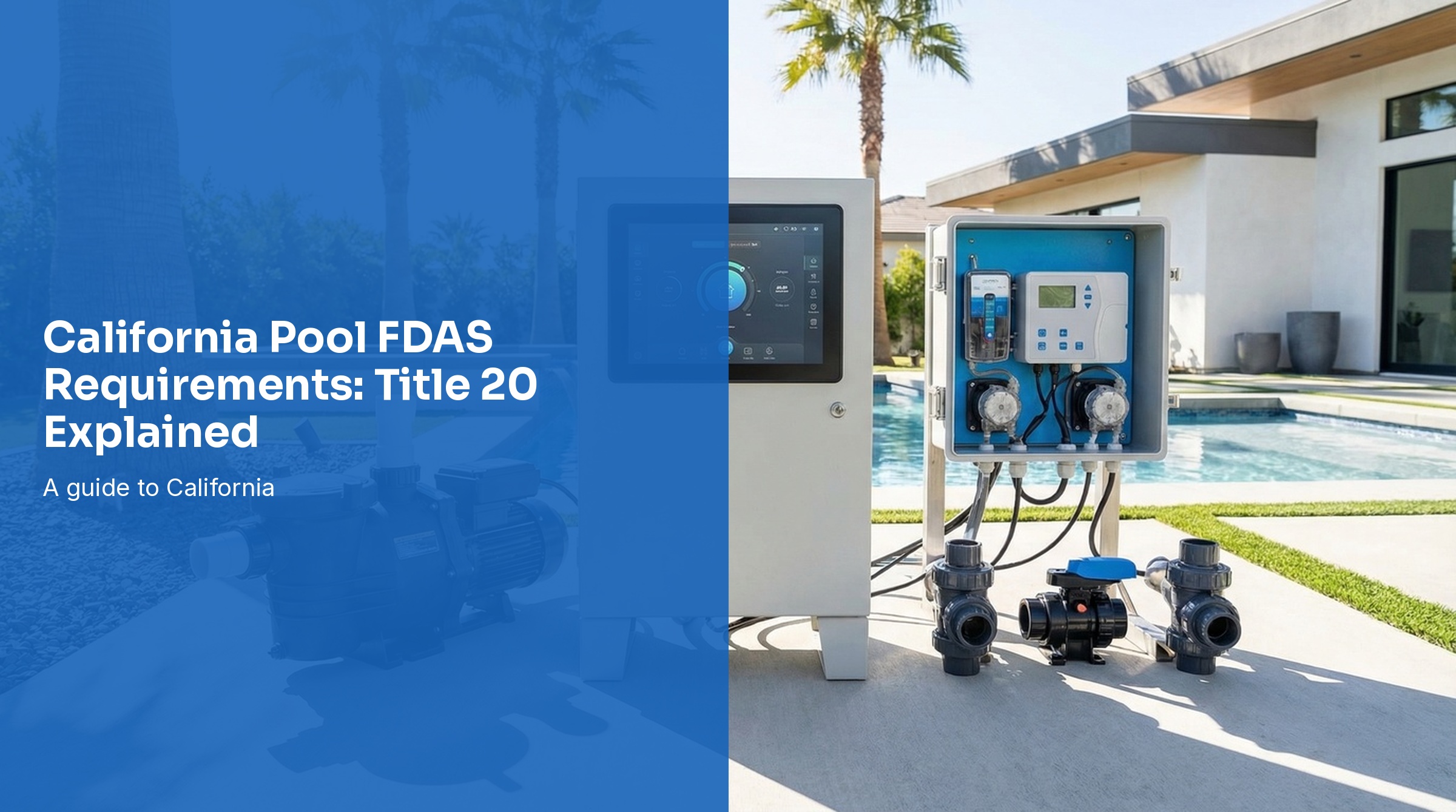
California's Title 20 Appliance Efficiency Regulations now include Flexible Demand Appliance Standards (FDAS) that apply to pool controls. These regulations represent a new approach to pool equipment efficiency by requiring "smart" controls that can communicate with the electrical grid and adjust operations based on energy availability and demand.[1]EnergyCodeAce Pool and Spa Fact SheetFDAS for Pool Controlsenergycodeace.com
Key Takeaways
- September 29, 2025 Effective Date — Pool controls manufactured on or after this date must be FDAS-certified[1]EnergyCodeAce Pool and Spa Fact SheetFDAS for Pool Controlsenergycodeace.com
- Title 20 Oversight — California's appliance efficiency regulations govern the FDAS requirements for pool controls[2]Title 20 Appliance EfficiencyCalifornia Energy Commissionenergy.ca.gov
- Flexible Demand Defined — Controls must adjust energy use based on grid conditions and renewable availability[1]EnergyCodeAce Pool and Spa Fact SheetFDAS for Pool Controlsenergycodeace.com
- Technology Mandate — Controllers must include communication protocols, clock synchronization, and default schedules[1]EnergyCodeAce Pool and Spa Fact SheetFDAS for Pool Controlsenergycodeace.com
- Consumer Control Options — Enhanced options for users to override or adjust schedules for efficiency[1]EnergyCodeAce Pool and Spa Fact SheetFDAS for Pool Controlsenergycodeace.com
What is FDAS for Pools?
A pool control is defined as a device that coordinates the activities of various pool equipment, such as filter pumps, electric heaters, and chlorinators.[2]Title 20 Appliance EfficiencyCalifornia Energy Commissionenergy.ca.gov Under the new FDAS rules, these controllers are no longer permitted to be simple "dumb" timers. Instead, they must be capable of "flexible demand," which refers to the ability to adjust when and how much energy is used based on the current supply of electricity.[1]EnergyCodeAce Pool and Spa Fact SheetFDAS for Pool Controlsenergycodeace.com
This technological shift supports California's decarbonization goals by allowing pool operations to automatically shift to times when renewable energy, such as solar power, is most available. This also helps grid reliability during times of high demand or system stress.[1]EnergyCodeAce Pool and Spa Fact SheetFDAS for Pool Controlsenergycodeace.com
"Pool controls manufactured on or after September 29, 2025... must meet the FDAS outlined in Title 20... The requirements include advanced features for pool controls such as communication protocols, clock synchronization, [and] default operating schedules..." — FDAS for Pool Controls Fact Sheet
Implementation and Compliance
The responsibility for certifying these products lies with the manufacturers, who must mark and list compliant products in the Modernized Appliance Efficiency Database System (MAEDbS).[1]EnergyCodeAce Pool and Spa Fact SheetFDAS for Pool Controlsenergycodeace.com However, the burden of compliance for installations falls on contractors and retailers. Professionals must verify that any pool control they sell or install after the effective date is certified to meet these advanced requirements.[1]EnergyCodeAce Pool and Spa Fact SheetFDAS for Pool Controlsenergycodeace.com
Installers and retailers must ensure all new stock manufactured on or after September 29, 2025 meets these standards before sale or installation in California. Non-compliant equipment cannot legally be sold, offered for sale, or installed within the state.[2]Title 20 Appliance EfficiencyCalifornia Energy Commissionenergy.ca.gov
Technical Requirements for Controls
The core of the FDAS mandate includes several advanced features that pool controls must incorporate:[1]EnergyCodeAce Pool and Spa Fact SheetFDAS for Pool Controlsenergycodeace.com
- Communication Protocols: Standardized ways for the controller to receive signals from the utility or a home energy management system
- Clock Synchronization: Ensuring the controller's time is accurate to align with time-of-use (TOU) utility rates
- Default Operating Schedules: Controllers will come with energy-efficient default settings that prioritize off-peak energy use
These requirements ensure that pool equipment can respond dynamically to grid conditions, shifting operations to times when electricity is cheaper and cleaner while maintaining pool water quality and safety.
Related Energy Code (Title 24) Rules
While Title 20 governs appliance efficiency standards including FDAS requirements, pool professionals should also be aware of California's Title 24 Building Energy Efficiency Standards. Title 24, Part 6 addresses pool heating requirements and mandates that new pools use heat pumps or solar systems as primary heating sources effective January 1, 2026.[2]Title 20 Appliance EfficiencyCalifornia Energy Commissionenergy.ca.gov
The combination of Title 20 FDAS requirements and Title 24 heating mandates represents California's comprehensive approach to reducing energy consumption and greenhouse gas emissions from residential and commercial pool operations.
Summary Table
| Requirement | Detail | Effective Date |
|---|---|---|
| Manufacture Date | Controls must be FDAS-certified | Sept 29, 2025 |
| Regulatory Code | Title 20, Chapter 4.1, sections 1690-1697 | Current |
| Primary Features | Communication, Clock Sync, Default Schedules | Sept 29, 2025 |
| Enforcement | Sales, Rentals, and Installations in CA | Sept 29, 2025 |
| Certification Database | Modernized Appliance Efficiency Database System (MAEDbS) | Current |
Sources
- [1] EnergyCodeAce Pool and Spa Fact Sheet, FDAS for Pool Controls. energycodeace.com
- [2] Title 20 Appliance Efficiency, California Energy Commission. energy.ca.gov