Interactive diagnostic wizard for Hayward OmniLogic pool automation systems. Troubleshoot touchscreen problems, WiFi connectivity, equipment not responding, sensor faults, valve actuator issues, and chlorinator errors.
Select the symptom your OmniLogic is displaying to get step-by-step troubleshooting guidance.
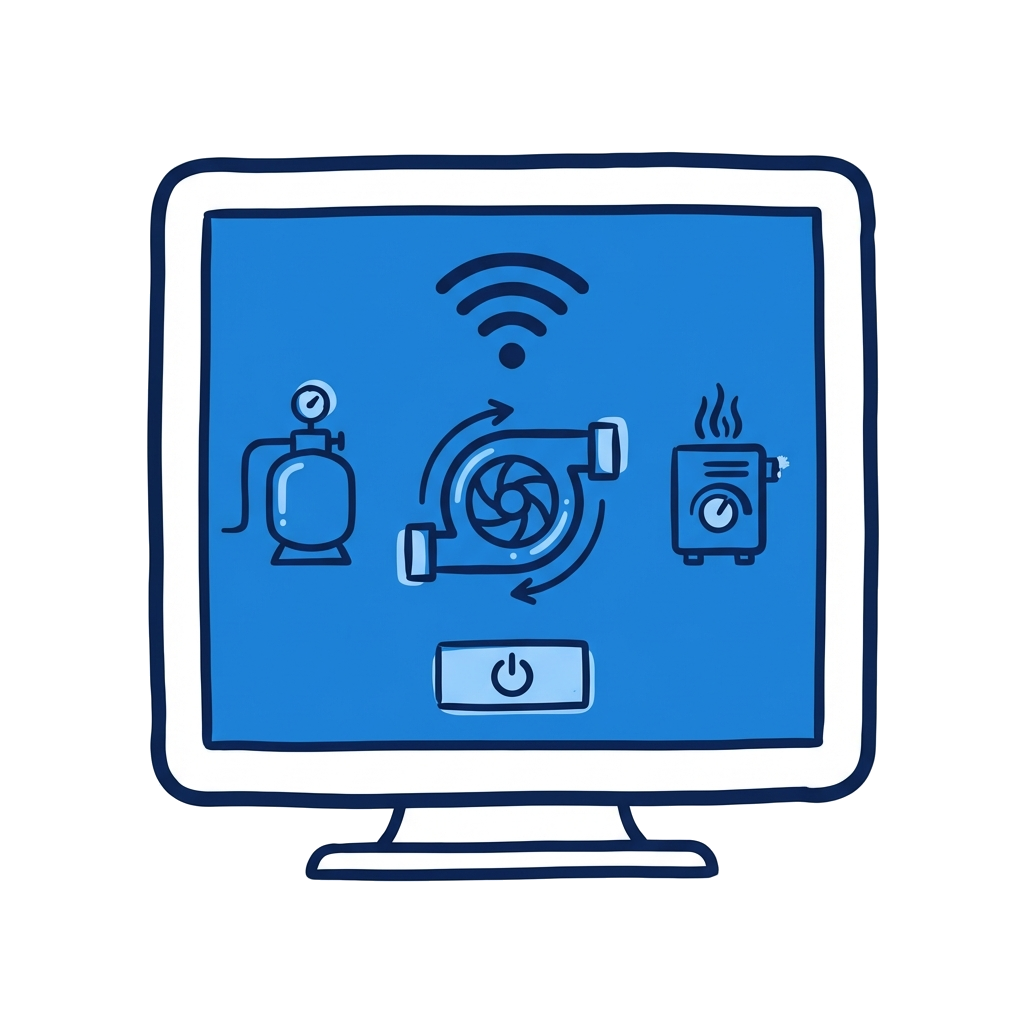
Click a symptom to see diagnostic steps.
This interactive troubleshooting wizard is designed specifically for the Hayward OmniLogic pool automation and chlorination system (HLBASE). Whether you are a pool homeowner trying to figure out why your equipment is not responding or a service technician running a structured diagnostic, the wizard adapts to your role and provides the appropriate level of guidance.
Select the "Homeowner" role for safe, practical checks you can perform yourself, or switch to "Technician" mode for detailed diagnostic procedures including voltage measurements, sensor resistance tests, and communication bus troubleshooting.
The table below summarizes the most common Hayward OmniLogic issues and their root causes. Click the troubleshooter above for step-by-step diagnosis of each problem.
| Issue | Description |
|---|---|
| Blank Touchscreen | No display or backlight — typically caused by a blown 120VAC input fuse, tripped breaker, or failed power supply |
| No WiFi / App | Cannot connect via phone, tablet, or PC — ethernet cable, HLWLAN, or router configuration issue |
| Equipment Not Responding | Relay or actuator fails to activate equipment despite being turned on in the OmniLogic interface |
| Sensor Fault | Temperature reading shows 0°F, 999°F, or dashes — open or shorted 10K ohm thermistor |
| No Flow Alarm | Flow switch does not detect water movement within 20 minutes of pump activation |
| Chlorinator Not Generating | TurboCell connected but salt reading is zero, cell amps are zero, or “Inspect Cell” message displayed |
| Valve Actuator Stuck | Pool/spa valve does not rotate or only moves partway — actuator cam, wiring, or fuse issue |
| Screen Color Change Alert | Display turns yellow or red indicating a warning or fault condition detected by the system |
| VSP Not Communicating | Variable speed pump shows disconnected or does not respond to speed commands from OmniLogic |
A blank touchscreen usually means the OmniLogic is not receiving power. Check that the dedicated 120VAC circuit breaker is ON in the subpanel. The OmniLogic requires 120VAC only -- connecting to 240V will cause permanent damage. Also verify the main board fuses are intact. If the breaker is on and fuses are good, the power supply or main board may need replacement.
The OmniLogic connects to your home network via a wired ethernet cable to your router's LAN port (not WAN). Loop the cable through the supplied ferrite bead. Alternatively, the optional HLWLAN wireless adapter provides 802.11b/g/n connectivity up to 250 feet from the router using the 2.4GHz band. Configure the network connection in the Configuration Wizard under network settings.
If "Enable Screen Color Changes For System Alerts" is turned on in configuration, the OmniLogic display changes to yellow for warning conditions (such as no flow detected or a sensor reading out of range) and red for critical faults. Check the alert message on screen to identify the specific issue and address the root cause.
The No Flow alarm means the Hayward flow switch did not detect water movement within 15-20 minutes of the filter pump turning on. Check that the pump is actually running and has prime, the flow switch arrow points in the direction of water flow, there is at least 12 inches of straight pipe upstream of the switch, and the flow switch connector is securely plugged into the main board. A dirty filter restricting flow can also trigger this alarm.
Hayward releases firmware updates periodically. The OmniLogic shipped with the firmware available at the time of manufacturing. To upgrade, refer to the OmniLogic Operation Manual for the USB-based update procedure. Firmware updates can be performed before or after configuration but should be completed before the system begins daily operation. Smart Heater communication requires firmware R4.3.0 or later.
Yes. Select the "Homeowner" role and the wizard will show only the checks that are safe and practical for a non-professional to perform. Technician-level steps such as voltage measurements and relay testing are hidden unless you switch to Technician mode. Always follow the safety warnings on screen, and consult a licensed pool service professional for any repair you are not comfortable performing.
PoolDial helps pool service professionals manage customers, routes, billing, and equipment tracking from one place. Try it free for 14 days.
Start Free Trial