
What Does Vacuum to Waste Mean for a Pool?


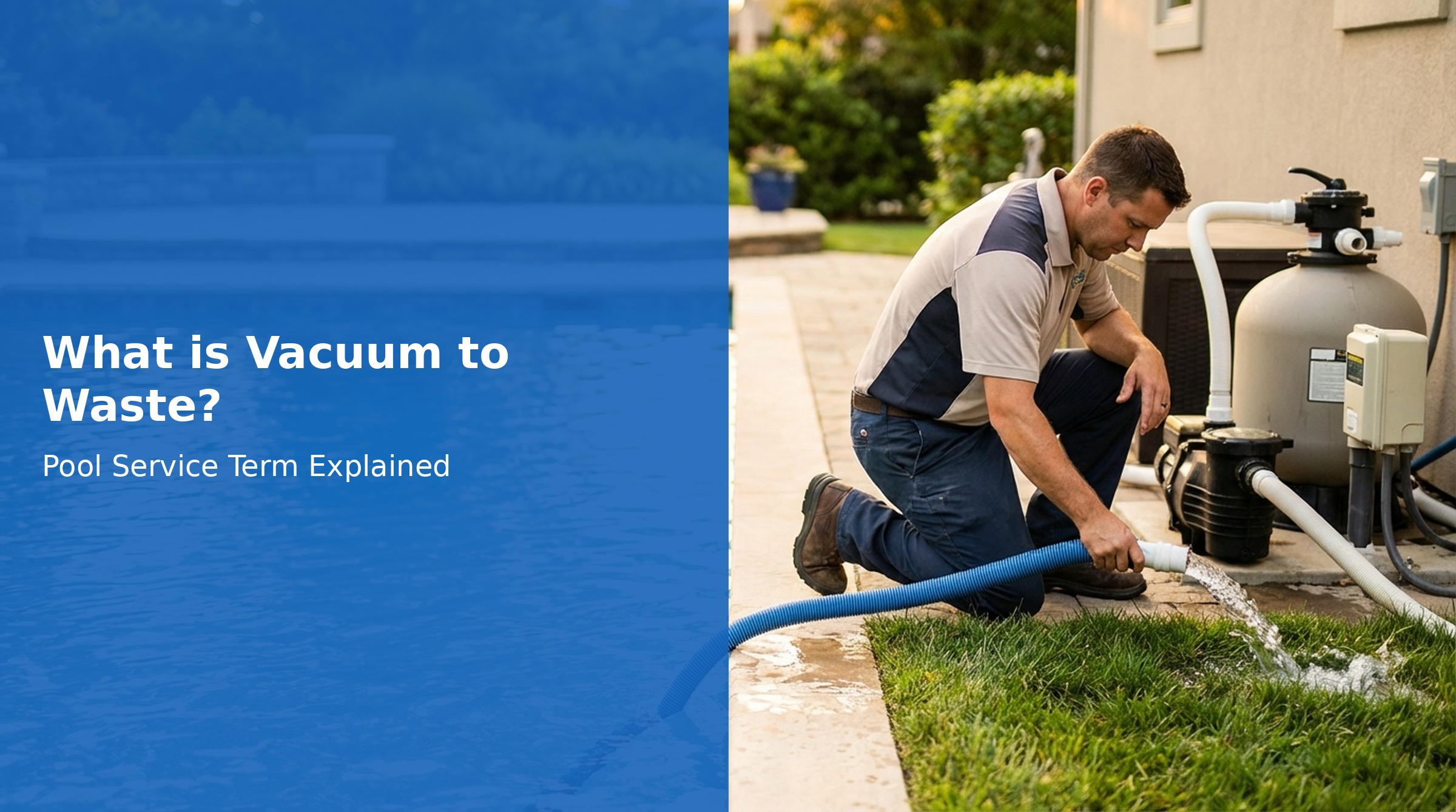
When dealing with heavily contaminated pools or stubborn debris that threatens to overwhelm your filtration system, the vacuum to waste method becomes an essential tool in your pool service arsenal. This technique bypasses the filter entirely, sending debris and water directly to the waste line—a crucial approach that can save both time and equipment when conventional vacuuming simply won't cut it.
Key Takeaways
- Vacuum to waste bypasses the filter system, sending debris directly to the waste line
- Essential for heavy debris, algae blooms, and post-flocculation cleanup
- Significantly lowers water level during operation—monitoring is critical
- Prevents filter clogging and reduces equipment strain
- Requires multiport valve set to "waste" position or dedicated waste line connection
Understanding the Vacuum to Waste Process
Vacuum to waste represents a fundamental departure from standard pool vacuuming procedures. Instead of circulating water through the filter system where debris gets trapped and water returns to the pool, this method creates a direct path from the vacuum head to the waste line. The water and everything it carries—algae, leaves, sand, flocculant, and other contaminants—exit the system entirely.
This process operates on the principle of sacrificing water to preserve equipment integrity and cleaning efficiency. While standard vacuuming relies on filtration to separate debris from water, vacuum to waste acknowledges that some contamination levels exceed what filters can reasonably handle without immediate clogging or damage.
Equipment Setup Requirements
Proper execution requires specific equipment configurations. Most commonly, you'll use a multiport valve system where the valve position switches to "waste." This redirects flow from the normal filter circuit directly to the waste line. Alternatively, some systems feature dedicated waste connections that bypass the multiport valve entirely.
The vacuum setup remains largely identical to standard procedures—vacuum head, telescopic pole, and vacuum hose connected to the skimmer or dedicated vacuum port. The critical difference lies in the valve positioning and flow pathway through the system.
When Vacuum to Waste Becomes Necessary
Recognizing the appropriate situations for vacuum to waste separates experienced technicians from novices. Several scenarios demand this approach over conventional vacuuming methods.
Algae Bloom Aftermath
Following successful algae treatment, pools often contain massive amounts of dead algae particles. Attempting to vacuum this material through the filter creates immediate clogging, reducing flow rates and requiring frequent backwashing or filter cleaning. Dead algae particles are particularly problematic because they're fine enough to penetrate deep into filter media while being abundant enough to quickly overwhelm capacity.
Post-Flocculation Cleanup
When you've used flocculating agents to bind fine particles into larger, settleable masses, vacuum to waste becomes the only practical removal method. Flocculant creates gelatinous clumps that would instantly clog any filter medium. The proper chemical dosing calculations that led to successful flocculation must be followed by appropriate removal techniques.
Heavy Debris Situations
Storm aftermath, construction dust, or neglected pools often present debris loads that exceed normal filtration capacity. Large quantities of leaves, dirt, sand, or organic matter require the unrestricted flow path that vacuum to waste provides.
Fine Sediment Removal
Pools with significant sand, silt, or clay contamination benefit from vacuum to waste because these particles can pass through many filter types while still clouding the water. Rather than cycling these materials repeatedly through the system, direct removal proves more efficient.
Operational Considerations and Best Practices
Successful vacuum to waste operations require careful attention to several critical factors that distinguish this technique from routine maintenance procedures.
Water Level Management
The most crucial aspect involves monitoring water levels throughout the process. Unlike standard vacuuming where water returns to the pool, vacuum to waste continuously removes water from the system. Depending on debris density and vacuum speed, water levels can drop rapidly.
Establish clear protocols for water level monitoring. Never allow levels to drop below the skimmer opening, as this introduces air into the system and can damage pump components. Consider marking critical water levels before beginning operations.
Pump Considerations
Vacuum to waste places different demands on circulation pumps compared to normal operations. The lack of filter resistance might increase flow rates, while debris passing through could affect pump components. Monitor pump performance indicators and be prepared to adjust operations if unusual sounds, vibrations, or pressure readings develop.
Systematic Approach
Develop methodical patterns for vacuum to waste operations. Work systematically across the pool surface, maintaining consistent speed and overlap to ensure complete coverage. Rushing the process often results in missed areas or stirred-up debris that settles elsewhere.
Integration with Water Chemistry Management
Vacuum to waste operations significantly impact pool water chemistry through dilution effects as replacement water enters the system. Fresh water typically has different chemical parameters than treated pool water, affecting chlorine levels, pH, alkalinity, and stabilizer concentrations.
Plan chemical adjustments before beginning vacuum to waste procedures. Calculate expected water loss and prepare appropriate chemical additions for the anticipated replacement volume. This proactive approach maintains water quality throughout the cleaning process.
Consider using Langelier Saturation Index calculations to ensure replacement water won't create corrosion or scaling issues as it mixes with existing pool water.
Professional Applications and Client Communication
Vacuum to waste procedures often surprise pool owners who notice significant water level changes during service visits. Clear communication about the process, reasons for its necessity, and associated costs helps maintain client relationships.
Document conditions requiring vacuum to waste through photos and service notes. This creates accountability and helps clients understand the value provided through professional service. Include water replacement costs in service quotes when vacuum to waste appears likely.
Equipment Protection Benefits
Emphasize how vacuum to waste protects expensive filtration equipment from damage or premature replacement. Filter elements, whether cartridge, sand, or DE, represent significant ongoing costs that proper technique helps minimize.
Conclusion
Mastering vacuum to waste technique expands your capability to handle challenging pool conditions that would otherwise require multiple service visits or equipment replacement. This method transforms potentially damaging debris loads into manageable cleaning operations while protecting valuable filtration equipment.
Success depends on recognizing appropriate applications, managing water levels carefully, and integrating the process with overall water chemistry management. When executed properly, vacuum to waste provides efficient solutions for the most challenging pool cleaning scenarios while demonstrating professional expertise to clients.
For comprehensive understanding of this and related pool service techniques, reference our complete pool service terminology glossary to build your technical knowledge foundation.