
Pool Service Dog Safety: How to Handle Dogs on Your Route


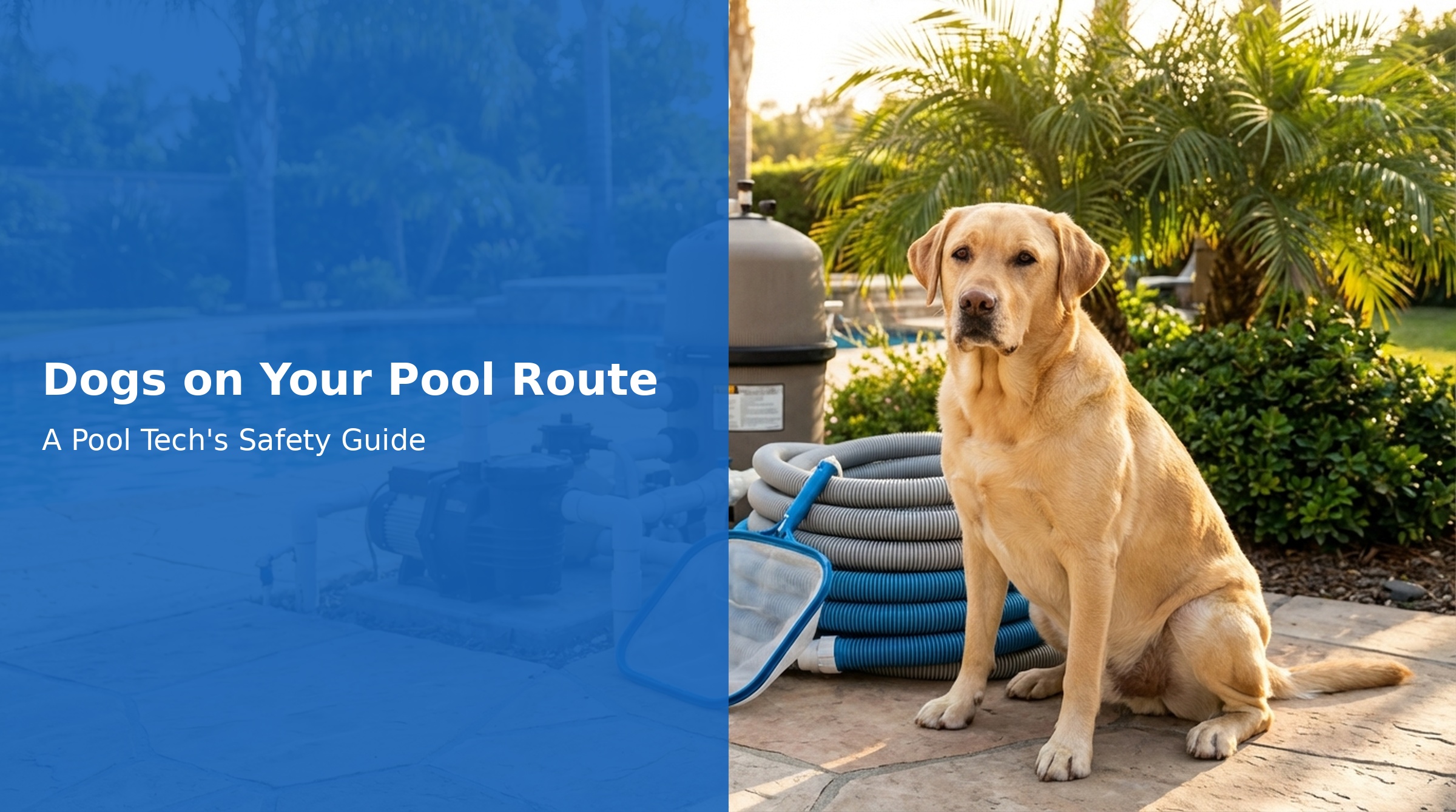
Ask any pool service technician about the best and worst parts of their job, and dogs will likely come up in both categories. For many pool pros, meeting friendly dogs is a daily highlight that makes the job enjoyable. But for others, aggressive dogs represent a serious occupational hazard that can result in painful bites, medical bills, and lost work time.
Key Takeaways
- Always require customers to secure aggressive dogs before you enter the yard
- Carry dog treats to build relationships with friendly dogs on your route
- Learn to read canine body language to identify defensive vs. aggressive behavior
- Document dog-related incidents and communicate clear policies to customers
- Never make sudden movements around unfamiliar dogs
This guide covers practical safety strategies for handling dogs on pool service routes, based on real experiences from pool professionals who've dealt with everything from lovable Golden Retrievers to trained attack dogs. Whether you're a solo operator or managing a crew, these tips will help you stay safe while maintaining good customer relationships.
The Reality of Dogs on Pool Routes
Dogs are everywhere in the pool service industry. Most residential customers with backyard pools also have dogs, and you'll encounter them at nearly every stop. According to discussions among pool professionals, the experience varies dramatically depending on the dog's temperament and the owner's responsibility level.
"I love dogs, but I tell customers I will not step foot in a backyard unless they are put away. It keeps me from getting bit, and keeps them from liability issues."
— Pool service professional
Many experienced technicians report being bitten multiple times over their careers. One 18-year veteran reported 9 bites—8 from small "ankle biters" and one from a large Bernese Mountain Dog. The common thread? Most bites occurred due to homeowner negligence: gates not fully latched, side doors left open, or owners simply forgetting to secure their pets.
Understanding Dog Behavior
The key to staying safe around dogs is understanding the difference between a dog that's genuinely aggressive versus one that's simply being territorial or defensive. Dogs naturally protect their home turf, and a pool technician entering the backyard is an intrusion from the dog's perspective.
Reading Body Language
Learning to read canine body language can prevent many dangerous encounters:
- Raised hackles (fur standing up along the back): The dog is alert and potentially ready to attack
- Stiff, rigid posture: Defensive or aggressive stance
- Direct eye contact with tense face: A challenge or threat display
- Circling behavior: Often seen with working dogs assessing a situation
- Low tail, relaxed body: Generally indicates a friendly or curious dog
- Play bow (front legs down, rear up): Invitation to play, not aggression
"Show some respect and they become friendly. I will carry dog treats to make it even easier. Most of them have become my helpers and just want my attention the entire time I am there. Some of them are still my sworn enemies to this day."
— Pool technician with years of experience
What Pool Pros Say About Different Breeds
While individual temperament matters more than breed, pool professionals have noticed patterns based on their daily encounters. Here's what they commonly report:
Important: Breed generalizations are just starting points. As one 40-year veteran noted, "In 40 years I've only been bitten once... It's usually the owners' lack of responsibility and less about the breed."
Essential Safety Protocols
Protecting yourself from dog bites requires a combination of policies, communication, and situational awareness. Here are the essential protocols every pool service professional should follow:
Communicate Before Arriving
Text or call customers before arrival so they can secure aggressive dogs. Use software that sends automatic arrival notifications to streamline this process.
Establish Clear Policies
Make it clear during onboarding that aggressive dogs must be secured before service. Put it in writing and follow through—skip service (without discount) if the dog isn't secured.
Assess Before Entering
Look through the gate before entering. Call out to see if dogs respond. If you hear aggressive barking or see a dog with threatening body language, do not enter.
Carry Dog Treats
Treats help build positive relationships with friendly dogs. Many become "helpers" who follow you around happily. This also gives you something to distract an uncertain dog with.
When You Encounter an Aggressive Dog
If you find yourself face-to-face with a potentially aggressive dog, follow these steps:
- Stop moving immediately: Running triggers chase instinct
- Avoid direct eye contact: This is seen as a challenge
- Turn slightly sideways: Presents less threatening profile
- Speak calmly: Low, soothing tones, not high-pitched or loud
- Let the dog approach and sniff: Offer a closed fist, not open palm
- Back away slowly if safe: Never turn your back on an aggressive dog
"I walked in through the gate and half way to the pool I heard barking. Before I could react, the female started circling me while barking. Then this huge doberman came around creeping towards me with full mohawk and teeth snarling. Didn't want to run so dropped to one knee, put my pole down and my other hand out in a fist. The male sniffed me up and down then walked away and sat down. I slowly picked up my pole, cleaned the pool, and left."
— Pool technician encountering trained attack dogs
Owners frequently say "oh, they're usually friendly" after a bite incident. Always verify dogs are secured or assess their behavior yourself before entering. The liability and medical costs of a bite far outweigh the inconvenience of waiting or skipping service.
Building Relationships with Customer Dogs
For many pool technicians, the dogs become one of the best parts of the job. Building positive relationships benefits everyone—you get a friendly greeting, the dog gets excited to see you, and the customer appreciates that you care about their pet.
Tips for Becoming a Dog's Favorite Pool Pro
- Consistency matters: Dogs remember people who treat them well. Regular weekly visits build trust over time.
- Learn their names: Greet dogs by name and use it while working. They'll associate you with positive experiences.
- Bring quality treats: Keep a variety on hand. Some dogs prefer soft treats; others like crunchy ones.
- Take a moment to pet them: Even 30 seconds of attention makes a difference. Many dogs just want acknowledgment.
- Talk to them while you work: Your voice becomes familiar and comforting. They may follow you around as a "helper."
"Getting to see all the dogs is the best part of the job. I carry treats for all the dogs and make sure to talk to them while I'm working."
— Pool service owner
For the dogs that will not stop barking no matter what, some pros carry an ultrasonic dog whistle. One pool tech shared his results training customer dogs over time: a quick press when the barking starts, then praise when they quiet down. After a few visits, most dogs stop barking entirely. It does not hurt them. It just gets their attention long enough to break the habit.
"Nothing worse than being in a yard cleaning the pool and having the dog bark at you the whole time you are there."
— Pool pro via Reddit
Communicating with Customers About Dogs
Clear communication prevents most dog-related problems. Here's how to handle conversations with customers about their pets:
During Customer Onboarding
Ask about pets during the initial consultation. Questions to cover:
- Do you have dogs? How many and what breeds?
- Are any of them protective or aggressive with strangers?
- Where will dogs be when we arrive for service?
- Is there a doggy door or way they might access the backyard unexpectedly?
- What's the best way to contact you if dogs aren't secured?
Setting Expectations
Be clear about your policies:
- Aggressive dogs must be indoors or kenneled during service
- If dogs aren't secured as agreed, service will be skipped without discount
- Repeated issues may result in account termination
- You're happy to work around friendly dogs that don't interfere with service
When Problems Occur
If a dog incident occurs, address it professionally:
- Document what happened in writing (photos of injuries if applicable)
- Contact the customer immediately to discuss
- Determine if the situation is fixable or if you need to drop the account
- If bitten, seek medical attention and file an incident report
Most customers are understanding when approached professionally. They don't want their dog to bite anyone, and a conversation about securing the pet usually resolves the issue.
Never Miss Important Customer Communications
PoolDial's customer management system helps you track pet information, send arrival notifications, and maintain clear communication with customers. Keep notes about dogs at each property so you and your team always know what to expect.
Start Free TrialWhat to Do If You're Bitten
Despite best precautions, bites can happen. Here's what to do:
Immediate Steps
- Control bleeding: Apply pressure with a clean cloth
- Clean the wound: Wash with soap and water for at least 5 minutes
- Seek medical attention: Especially for deep punctures or bites to hands/face
- Document everything: Photos, witness statements, time and location
- Get owner information: Name, address, phone, and dog's vaccination records
Reporting and Follow-Up
- File a report with local animal control if the bite is serious
- Contact your insurance company if medical treatment is needed
- The homeowner's insurance typically covers dog bite injuries to service workers
- Consider whether to continue service at that property
Managing Dogs When You Have a Crew
If you manage other technicians, dog safety becomes even more important. Not everyone has the same comfort level or experience with dogs.
Training Your Team
- Include dog safety in new hire training
- Share information about dogs at specific properties in your route management system
- Empower technicians to skip service if they feel unsafe
- Establish clear protocols for reporting incidents
Using Technology to Track Pet Information
Modern pool service software lets you add notes to customer profiles. For each property, document:
- Number and types of dogs
- Dog names and temperaments
- Where dogs should be during service
- Any past incidents
- Customer preferences for dog handling
This information ensures anyone on your team knows what to expect before arriving.
When to Drop an Account
Sometimes, despite your best efforts, a customer's dog situation becomes untenable. Consider dropping an account when:
- The customer repeatedly fails to secure an aggressive dog
- A serious bite incident occurs and the customer is dismissive
- You or your team no longer feel safe servicing the property
- The stress of the situation outweighs the revenue
Your safety is worth more than any single account. Communicate professionally when ending service, and don't hesitate to prioritize your well-being.
When You Save the Dog
Dogs on the route are not always a hazard. Sometimes you are the reason one survives. Pool pros have pulled dogs out of pools, performed CPR, and rescued pets that fell into spa basins. If you service unfenced properties, it is not a matter of if, but when.
"I was cleaning a pool in the countryside without any fencing when the owners' free range puppy fell off the infinity edge into the basin below and couldn't get out. If I hadn't been there to rescue it, it would have definitely died. I barely managed to get a thank you from the owner."
— Pool pro via Reddit
One Reddit post about a pool tech saving a drowning puppy pulled 126 upvotes. The community responded with their own rescue stories. The pattern is always the same: the owner is not home, the dog is in trouble, and the pool pro is the only one there.
If you service properties with dogs and no pool fence, mention the risk to the homeowner. It takes one gate left open, one aging dog that slips on wet decking, or one puppy that does not know how to find the steps. You may not get much of a thank-you, but you might save a life.
The Bottom Line
Dogs are an unavoidable part of pool service work—and for many technicians, they're one of the best parts. By establishing clear policies, communicating with customers, learning to read dog behavior, and taking reasonable precautions, you can minimize risks while enjoying the daily interactions with friendly four-legged clients.
Remember: most dogs are friendly once they get to know you. Keep treats in your truck, take time to build relationships, and you'll find that the dogs on your route become allies rather than obstacles. And for the few that can't be won over, a clear policy about securing them protects everyone involved.