
What Is Total Alkalinity (TA) in Pool Water?


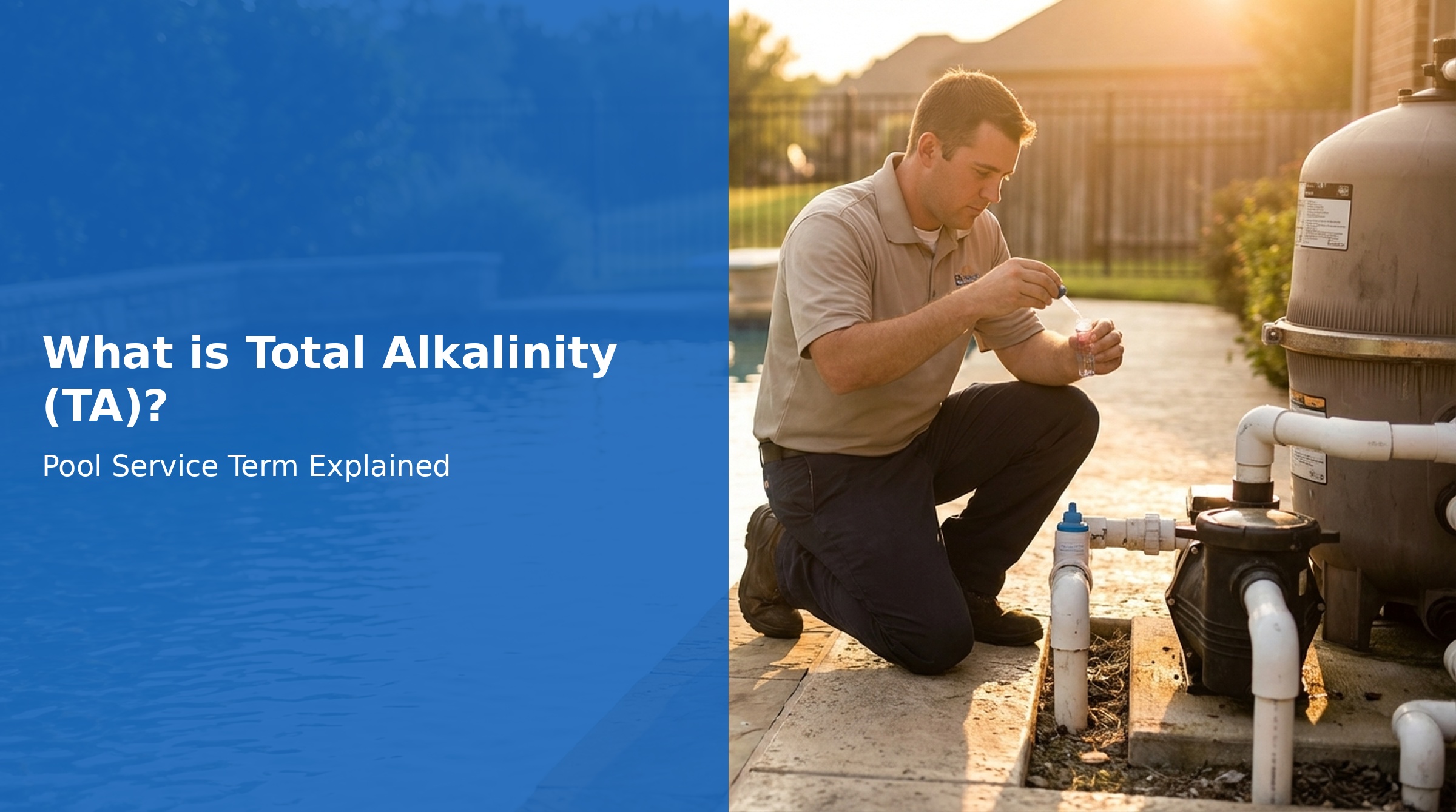
Total Alkalinity (TA) is one of the most critical yet frequently misunderstood parameters in pool water chemistry. As a pool service professional, mastering TA management is essential for maintaining stable, balanced water that keeps your clients happy and their pools sparkling. Unlike pH, which measures the intensity of acidity or alkalinity, total alkalinity measures the water's capacity to resist pH changes—acting as your first line of defense against the pH swings that can plague pool maintenance.
Key Takeaways
- Total Alkalinity acts as a pH buffer, preventing rapid fluctuations in water chemistry
- Ideal TA range is 80-120 ppm, with seasonal adjustments recommended
- Low TA causes pH instability and equipment corrosion
- High TA makes pH adjustment difficult and can cause cloudy water
- Proper TA management reduces chemical costs and service calls
Understanding Total Alkalinity: The Chemistry Behind the Buffer
Total Alkalinity represents the concentration of dissolved alkaline compounds in pool water, primarily carbonates, bicarbonates, hydroxides, and cyanurates. Think of TA as your water's shock absorber—when acid or base is added to the pool, these alkaline compounds neutralize the addition, preventing dramatic pH swings that can damage equipment and create uncomfortable swimming conditions.
The relationship between TA and pH is crucial to understand. While pH tells you the current acidity level, TA tells you how much that pH will fight against change. Water with proper alkalinity maintains stable pH levels even when bathers add organic waste, rain dilutes the water, or chlorine is added for sanitization.
Seasonal TA Adjustments
Professional pool technicians should adjust their TA targets based on seasonal conditions. During summer months, aim for the lower end of the range (around 80 ppm) when higher temperatures naturally increase pH drift. In winter, target the higher end (around 120 ppm) to provide extra buffering capacity when pools are covered and chemical circulation is reduced.
The Consequences of Improper Total Alkalinity
Low Total Alkalinity (Below 80 ppm)
When TA drops below optimal levels, you'll encounter several expensive problems. pH becomes extremely unstable, bouncing erratically with each chemical addition or environmental change. This instability leads to corrosion of metal equipment, etching of plaster surfaces, and rapid chlorine loss. Pool owners often complain about burning eyes and skin irritation when TA is too low, even if chlorine levels appear normal.
Low alkalinity also creates a false economy trap. Technicians find themselves constantly adjusting pH, only to have it swing wildly again within days. This cycle wastes chemicals, increases service time, and frustrates customers who see their water quality deteriorating despite frequent treatments.
High Total Alkalinity (Above 120 ppm)
Excessive alkalinity creates different but equally problematic issues. High TA locks pH in place, making it nearly impossible to adjust downward when needed. This often results in persistently high pH levels that reduce chlorine effectiveness, promote algae growth, and cause cloudy water from calcium precipitation.
The Langelier Saturation Index becomes increasingly positive with high alkalinity, leading to scale formation on pool surfaces and equipment. These mineral deposits not only look unsightly but can damage expensive pool equipment and require costly removal procedures.
Testing and Measuring Total Alkalinity
Accurate TA testing requires more precision than basic pH testing. Use a quality alkalinity test kit that measures to at least 10 ppm increments. Digital testers and professional-grade test kits provide the accuracy needed for proper water balance calculations.
Test TA weekly as part of your standard service routine, and always test before making pH adjustments. Many service technicians make the mistake of adjusting pH first, only to watch it drift back as the underlying alkalinity imbalance reasserts itself.
Adjusting Total Alkalinity: Practical Techniques
Raising Total Alkalinity
Sodium bicarbonate (baking soda) is the preferred chemical for increasing TA. It raises alkalinity with minimal impact on pH, making it ideal for fine-tuning water balance. Calculate dosages carefully using a chemical dosage calculator to avoid overshooting your target range.
Add sodium bicarbonate directly to the deep end with the pump running for even distribution. Allow the water to circulate for at least 4 hours before retesting, as full mixing takes time in larger pools.
Lowering Total Alkalinity
Reducing TA requires careful use of muriatic acid or sodium bisulfate. This process is more complex because these chemicals lower both TA and pH simultaneously. The key is to add acid, allow pH to drop significantly (even below 7.0 temporarily), then aerate the water to raise pH while leaving TA at the reduced level.
This technique, known as the "acid washing method," requires experience and careful monitoring. Add acid in small increments, test frequently, and use aeration or sodium carbonate to bring pH back to proper levels once TA reaches the target range.
Total Alkalinity in Different Pool Types
Different pool surfaces and equipment configurations require nuanced approaches to TA management. Plaster pools benefit from slightly higher alkalinity to prevent etching, while vinyl liner pools can operate effectively at the lower end of the range. Saltwater pools present unique challenges as the chlorine generation process constantly affects both pH and alkalinity levels.
For pools with high cyanuric acid levels, remember that cyanurates contribute to total alkalinity readings. Use a cyanuric acid calculator to account for this contribution when determining actual carbonate alkalinity levels.
Professional Tips for TA Management
Successful alkalinity management requires understanding the interconnected nature of water chemistry. Never adjust TA in isolation—always consider its impact on pH, sanitizer effectiveness, and the overall water balance. Keep detailed records of alkalinity levels and adjustments to identify patterns and predict future needs.
Educate your clients about factors that affect alkalinity, such as heavy bather loads, rainfall, and the use of certain cleaning products. This knowledge helps them understand the value of professional service and reduces emergency calls from panicked pool owners.
Conclusion
Total Alkalinity management separates professional pool technicians from casual service providers. By maintaining TA within the optimal 80-120 ppm range and making seasonal adjustments, you create stable water conditions that require fewer interventions, use fewer chemicals, and keep customers satisfied. Remember that proper alkalinity management is an investment in long-term pool health that prevents expensive problems and builds trust with your clients. For additional technical terms and definitions, consult our comprehensive pool service terminology glossary to continue expanding your professional knowledge base.