
What Are Total Dissolved Solids (TDS) in Pool Water?


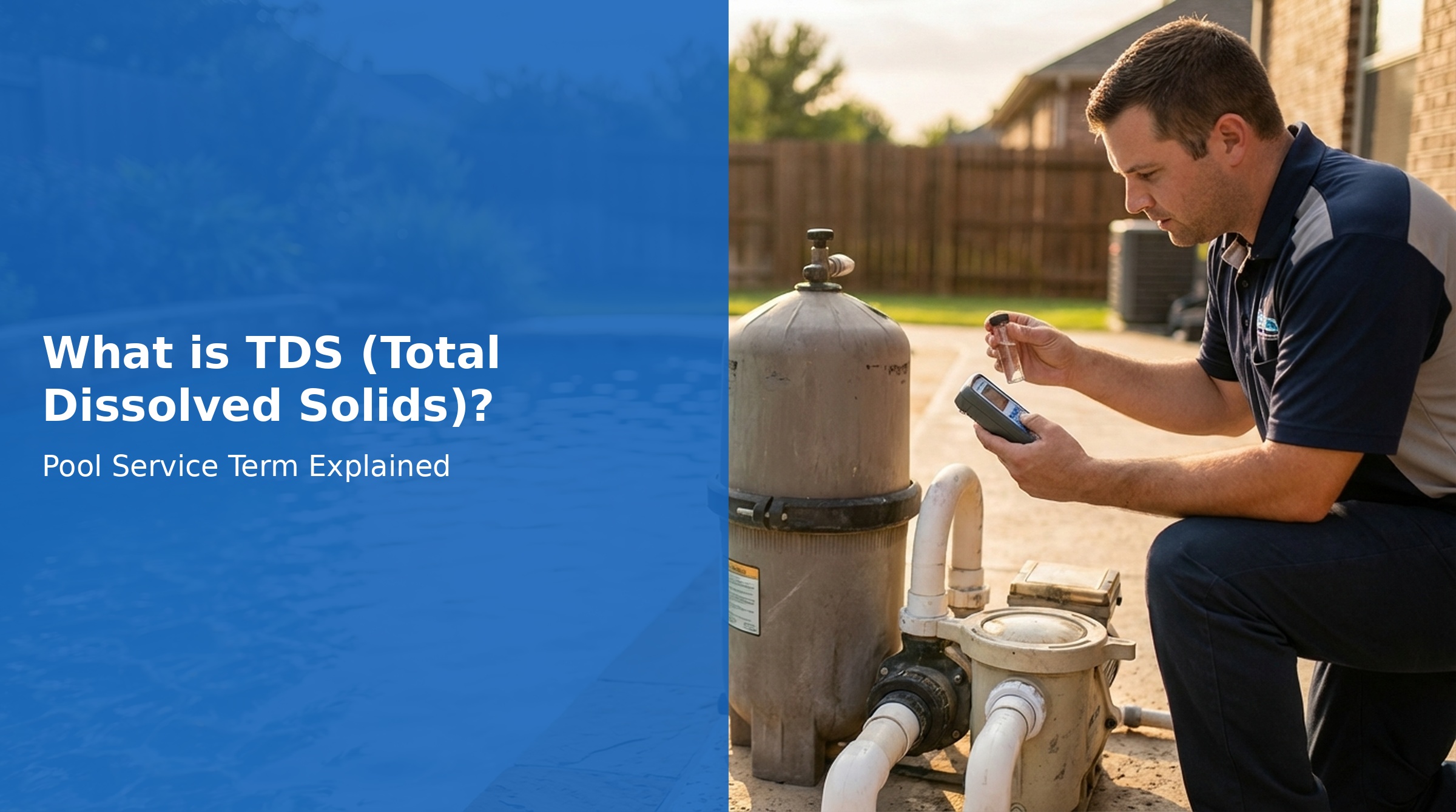
Total Dissolved Solids (TDS) represents one of the most misunderstood yet critical water quality parameters in pool maintenance. While many pool service professionals focus primarily on chlorine levels and pH balance, TDS quietly accumulates in pool water over time, eventually reaching levels that can compromise sanitizer effectiveness, create uncomfortable swimming conditions, and lead to costly equipment problems. Understanding TDS and its impact on pool water chemistry is essential for maintaining optimal water quality and ensuring long-term customer satisfaction.
Key Takeaways
- TDS measures all dissolved substances in pool water, including minerals, salts, and organic compounds
- Ideal TDS levels are 1,500-2,000 ppm for traditional pools and 3,000-4,000 ppm for saltwater pools
- High TDS reduces chlorine effectiveness and creates "heavy" feeling water
- The only reliable solution for excessive TDS is partial or complete water replacement
- Regular TDS monitoring helps prevent costly water quality problems
What Are Total Dissolved Solids?
Total Dissolved Solids encompass every substance dissolved in pool water at the molecular level. Unlike suspended particles that can be filtered out, TDS consists of ions and compounds that have completely dissolved and cannot be removed through standard filtration methods. These dissolved substances include:
- Natural minerals: Calcium, magnesium, sodium, and potassium from fill water
- Added chemicals: Chlorine compounds, pH adjusters, algaecides, and specialty treatments
- Organic compounds: Swimmer waste, sunscreen residues, and environmental debris
- Salt: In saltwater pools, sodium chloride from salt chlorine generators
TDS levels naturally increase over time as chemicals are added and organic materials accumulate. Unlike other water balance parameters that can be adjusted through chemical addition, TDS can only be reduced by diluting the water through partial drainage and refilling.
Why TDS Levels Matter for Pool Water Quality
Reduced Sanitizer Effectiveness
High TDS levels significantly impact chlorine's ability to sanitize pool water effectively. When dissolved solids exceed optimal ranges, chlorine molecules become less available for oxidation and disinfection. This phenomenon, known as chlorine demand, means that pools with elevated TDS require higher chlorine levels to achieve the same sanitizing effect, leading to increased chemical costs and potential over-chlorination issues.
Water Feel and Swimmer Comfort
Swimmers often describe water with high TDS as feeling "heavy," "sticky," or "flat." This uncomfortable sensation occurs because excessive dissolved solids change the water's density and surface tension. Additionally, high TDS can contribute to skin and eye irritation, even when chlorine and pH levels appear balanced using standard chemical dosage calculations.
Equipment Performance Impact
Elevated TDS levels can accelerate corrosion in metal pool equipment, reduce the efficiency of salt chlorine generators, and contribute to scale formation on pool surfaces. Heat pumps and other mechanical equipment may experience reduced performance and increased maintenance requirements when operating with high TDS water.
Optimal TDS Ranges and Testing
Traditional Chlorine Pools
For standard chlorinated pools, TDS levels should remain between 1,500 and 2,000 parts per million (ppm). New pool water typically starts with TDS levels between 200-500 ppm, depending on the source water quality. When TDS exceeds 2,000 ppm, water replacement becomes necessary to maintain optimal water quality.
Saltwater Pools
Saltwater pools naturally operate with higher TDS levels due to the dissolved salt required for chlorine generation. Typical TDS ranges for saltwater pools fall between 3,000-4,000 ppm, with most of this measurement attributed to the sodium chloride content. Problems arise when TDS exceeds 4,500-5,000 ppm, indicating accumulation of other dissolved substances beyond the necessary salt content.
Testing Methods
TDS testing requires electronic meters rather than chemical test kits. Digital TDS meters provide instant readings and should be calibrated regularly for accuracy. Some pool professionals use conductivity meters, which measure the water's ability to conduct electricity—a property directly related to dissolved ion content. When conducting comprehensive water analysis alongside Langelier Saturation Index calculations, TDS measurements provide crucial data for overall water balance assessment.
Managing High TDS Levels
Water Replacement Strategy
The only effective method for reducing TDS is partial or complete water replacement. For pools with moderately elevated TDS (2,000-2,500 ppm), draining 25-50% of the water and refilling with fresh water can restore acceptable levels. Pools with severely high TDS may require complete drainage and refilling.
Calculate the percentage of water to replace using this formula:
Replacement % = (Current TDS - Target TDS) / (Current TDS - Source Water TDS) × 100
Prevention Through Regular Monitoring
Implementing monthly TDS testing helps identify rising levels before they become problematic. Keep detailed records of TDS trends alongside chemical addition logs to identify patterns and optimize maintenance schedules. Consider TDS monitoring part of comprehensive water quality assessment, similar to tracking cyanuric acid levels with appropriate stabilizer calculations.
Real-World TDS Scenarios
The Over-Treated Pool
A residential pool serviced weekly shows gradually declining water quality despite proper chemical balancing. TDS testing reveals levels at 2,800 ppm after two seasons without water replacement. The solution requires draining 60% of the water and adjusting chemical dosing protocols to minimize unnecessary additions.
Saltwater Pool Complications
A saltwater pool experiences frequent algae blooms and requires excessive shock treatments. TDS measurements show 6,200 ppm, indicating significant accumulation of dissolved organics beyond the salt content. Partial water replacement combined with improved circulation and filtration resolves the persistent water quality issues.
Professional Recommendations
Pool service professionals should integrate TDS monitoring into regular maintenance routines, educate customers about the importance of periodic water replacement, and maintain accurate records of TDS trends. Understanding TDS behavior helps explain water quality issues that seem unrelated to standard chemical parameters and provides a scientific basis for recommending water replacement services.
For comprehensive understanding of water chemistry terminology and concepts, reference our complete pool service terminology glossary to enhance your technical knowledge and customer communication skills.
Conclusion
Total Dissolved Solids management represents a crucial but often overlooked aspect of professional pool maintenance. By understanding TDS accumulation patterns, implementing regular testing protocols, and recognizing the signs of elevated dissolved solids, pool service professionals can maintain superior water quality, reduce chemical costs, and provide better customer satisfaction. Remember that TDS cannot be chemically corrected—only diluted through water replacement, making proactive monitoring essential for long-term pool water health.