
What Is Sodium Hypochlorite for Pools?


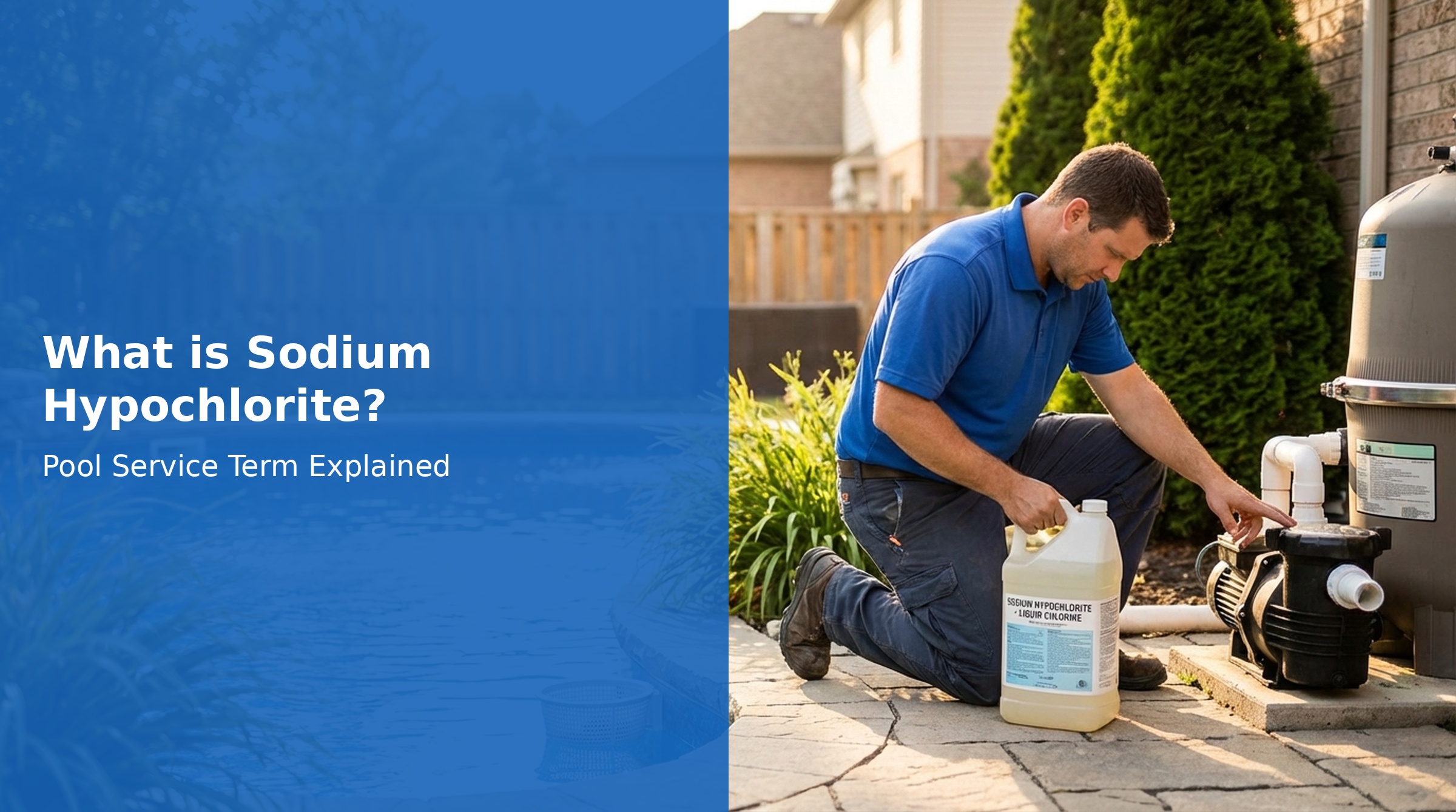
For pool service professionals, understanding the chemicals that keep water clean and safe is fundamental to delivering quality service. Sodium hypochlorite stands as one of the most widely used and effective sanitizers in the pool industry, yet many technicians don't fully grasp its properties, applications, and best practices. This powerful oxidizing agent serves as the backbone of pool sanitation, but its proper use requires knowledge of concentration levels, storage requirements, and interaction with other pool chemicals.
Key Takeaways
- Sodium hypochlorite is liquid chlorine, typically available in 10-15% concentrations for pool use
- It has a high pH (around 13) and will raise pool pH levels with each application
- Storage life is limited—loses potency over time, especially when exposed to heat and sunlight
- More expensive per unit of available chlorine than calcium hypochlorite but dissolves completely
- Ideal for pools with high calcium hardness levels where calcium-based chlorines should be avoided
What is Sodium Hypochlorite?
Sodium hypochlorite (NaOCl) is a chemical compound commonly known as liquid chlorine or liquid bleach when used in pool applications. In its concentrated form for pool use, it typically contains 10-15% available chlorine, making it significantly stronger than household bleach, which contains only 3-6% sodium hypochlorite.
This clear, slightly yellowish liquid serves as a powerful oxidizing agent and disinfectant. When added to pool water, sodium hypochlorite releases hypochlorous acid (HOCl), the active sanitizing agent that eliminates bacteria, viruses, and algae. The chemical formula represents a simple but effective sanitizer that has been trusted by pool professionals for decades.
Chemical Properties and Behavior
Understanding sodium hypochlorite's chemical behavior is crucial for proper application. The solution has an extremely high pH, typically around 13, which means every gallon added to a pool will raise the water's pH level. This characteristic requires pool technicians to monitor and adjust pH levels more frequently when using liquid chlorine as the primary sanitizer.
Unlike granular chlorines, sodium hypochlorite doesn't add calcium, stabilizer, or other byproducts to pool water. This makes it an excellent choice for pools with high calcium hardness levels or those already at maximum cyanuric acid levels.
Applications in Pool Service
Routine Sanitization
Sodium hypochlorite excels as a daily sanitizer for residential and commercial pools. Its liquid form allows for easy dosing and rapid distribution throughout the water. Pool service professionals often prefer it for route work because it eliminates the need to handle and dissolve granular products on-site.
For accurate dosing, professionals should use a chemical dosage calculator to determine the exact amount needed based on pool volume, current chlorine levels, and desired target levels. Typically, one gallon of 12.5% sodium hypochlorite will raise chlorine levels by approximately 10 ppm in a 10,000-gallon pool.
Shock Treatment
When pools require shock treatment due to algae blooms, heavy bather loads, or contamination events, sodium hypochlorite provides fast-acting results. Its immediate availability and rapid dissolution make it ideal for emergency situations where quick sanitizer distribution is essential.
However, the high pH characteristic means pool technicians must plan for pH adjustment following shock treatments. The Langelier Saturation Index calculator can help determine the overall water balance impact when using large quantities of liquid chlorine.
Advantages for Pool Professionals
Operational Benefits
Sodium hypochlorite offers several operational advantages that make it popular among service professionals. First, it leaves no residue or undissolved particles, eliminating concerns about product settling or filter clogging. Second, it's compatible with most pool surfaces and equipment, reducing the risk of staining or damage.
The liquid form also allows for precise dosing and eliminates the dust and handling issues associated with granular chlorines. For technicians managing multiple pools daily, this translates to faster service calls and reduced equipment contamination between stops.
Water Chemistry Benefits
Pools with high calcium hardness levels benefit significantly from sodium hypochlorite use. Unlike calcium hypochlorite, liquid chlorine doesn't contribute additional calcium to the water, helping maintain proper water balance. This is particularly valuable in areas with hard water or pools using calcium-based equipment like heaters and salt chlorine generators.
Additionally, sodium hypochlorite doesn't contain cyanuric acid, making it suitable for pools that have reached maximum stabilizer levels. Understanding these interactions is part of comprehensive pool service terminology that professionals must master.
Storage and Handling Considerations
Proper Storage Requirements
Sodium hypochlorite requires careful storage to maintain potency and ensure safety. The solution should be stored in cool, dark conditions away from direct sunlight and heat sources. Temperatures above 80°F accelerate decomposition, reducing available chlorine content and shortening shelf life.
Professional pool service operations should implement a first-in, first-out inventory system and regularly test stored sodium hypochlorite for available chlorine content. Properly stored liquid chlorine typically maintains effectiveness for 30-90 days, depending on storage conditions and initial concentration.
Safety Protocols
Working with concentrated sodium hypochlorite requires appropriate safety measures. The high pH solution can cause chemical burns and eye damage, making personal protective equipment essential. Technicians should wear safety glasses, chemical-resistant gloves, and appropriate clothing when handling the product.
Proper ventilation is also crucial, as sodium hypochlorite can release chlorine gas when mixed with acids or other incompatible chemicals. Never mix liquid chlorine with other chemicals, and always add it directly to pool water with the circulation system running.
Cost and Efficiency Analysis
While sodium hypochlorite typically costs more per pound of available chlorine than calcium hypochlorite, the operational benefits often justify the price difference. The time savings from easier handling, complete dissolution, and reduced pH adjustment requirements can offset the higher chemical costs, especially for service companies charging by the visit rather than materials used.
Pool service professionals should calculate the total cost of service, including labor time, additional chemical needs, and customer satisfaction factors, rather than focusing solely on chemical cost per pound.
Conclusion
Sodium hypochlorite remains a cornerstone chemical for professional pool service operations, offering reliable sanitization with predictable results. Its high pH characteristics and storage requirements demand professional knowledge and proper handling, but the operational benefits make it an excellent choice for many applications. Understanding when and how to use liquid chlorine effectively separates experienced pool professionals from newcomers to the industry. By mastering sodium hypochlorite applications, storage, and water chemistry interactions, service technicians can deliver superior results while maintaining safe, healthy pool environments for their customers.