
What Does Route Mean in Pool Service? SLANG


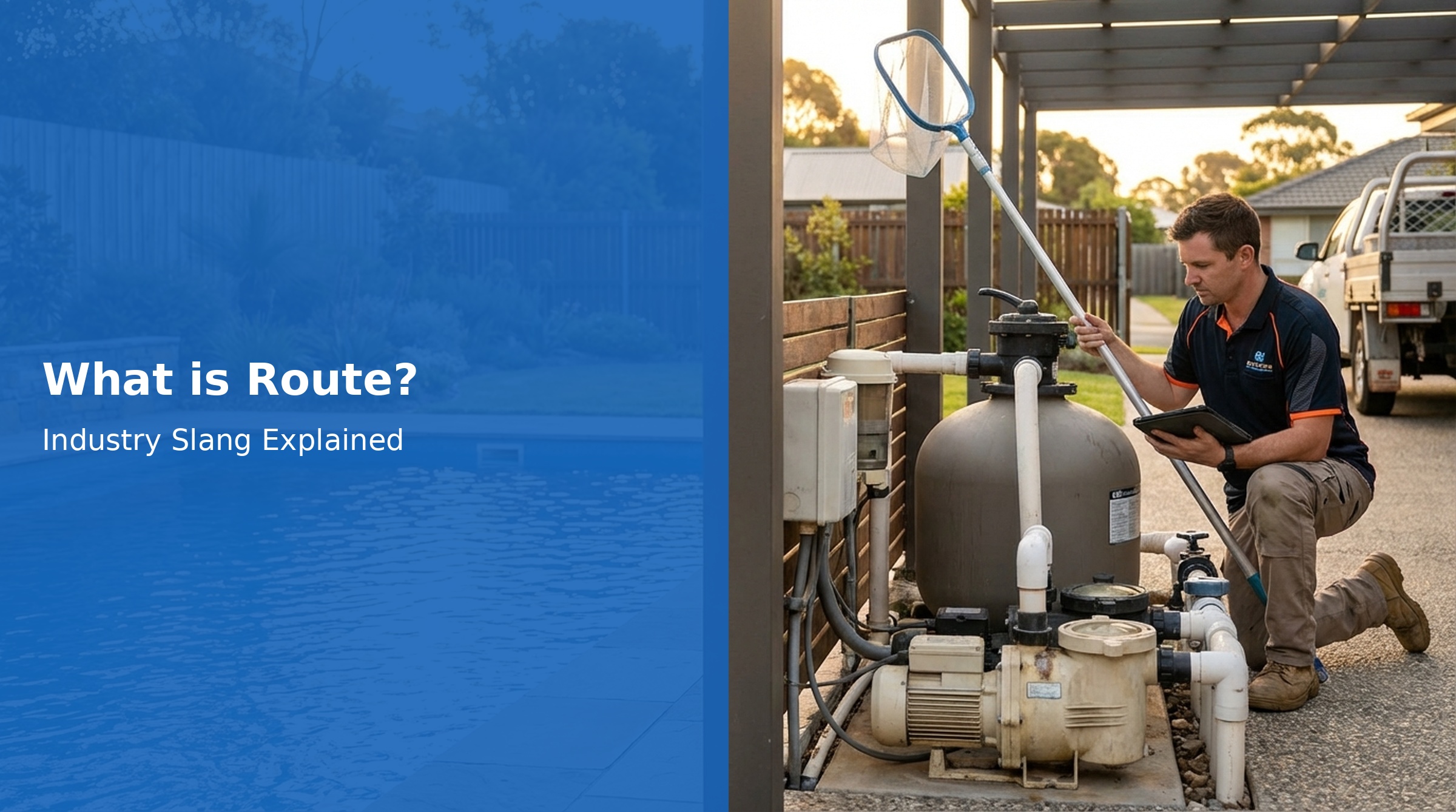
In the pool service industry, few terms are as fundamental to daily operations as "route." While it might sound simple on the surface, a well-organized route represents the backbone of any successful pool service business. More than just a list of addresses, a route is a carefully orchestrated schedule that determines profitability, customer satisfaction, and work-life balance for pool technicians across the country.
Key Takeaways
- A route is a pool technician's scheduled list of pools to service, organized by day and geographic area
- Efficient route planning can increase daily pool capacity by 25-40% while reducing fuel costs
- Routes typically range from 15-35 pools per day depending on service type and geographic density
- Proper route organization considers drive time, pool complexity, and customer preferences
- Digital route optimization tools have largely replaced paper-based systems for maximum efficiency
Understanding Pool Service Routes
A route in pool service terminology refers to a technician's organized schedule of pools to clean and maintain, typically arranged by specific days of the week and optimized for geographic efficiency. When a pool tech says, "I've got 20 pools on my Thursday route," they're referring to their predetermined list of customers scheduled for service on that particular day.
Routes form the operational foundation of pool service businesses, whether you're a solo operator or managing a fleet of technicians. The concept extends beyond simple scheduling—it encompasses customer management, resource allocation, and business growth strategy all rolled into one comprehensive system.
Components of an Effective Route
A well-structured route contains several key elements that work together to maximize efficiency. Geographic clustering remains the most critical factor, as grouping nearby pools minimizes drive time between stops. Customer service requirements also play a vital role—pools requiring extensive chemical balancing or equipment maintenance are often scheduled with adequate time buffers.
Service frequency represents another crucial component, with most residential pools requiring weekly service while commercial accounts might need multiple visits per week. The route must accommodate these varying schedules while maintaining geographic efficiency.
Route Planning and Optimization
Effective route planning begins with understanding your service area's geography and traffic patterns. Successful pool technicians often organize routes to work with traffic flow rather than against it, starting in areas with easier morning access and moving toward locations that become more accessible as the day progresses.
Traditional Route Building Methods
Historically, pool service professionals built routes using paper maps and customer cards, physically plotting the most efficient path between stops. While this method provided intimate knowledge of the service area, it was time-intensive and difficult to optimize as customer bases grew.
Many veteran technicians still swear by the insights gained from manual route planning, as it forced deep familiarity with customer locations, local traffic patterns, and neighborhood characteristics that automated systems might miss.
Modern Digital Solutions
Today's pool service software platforms offer sophisticated route optimization algorithms that can process multiple variables simultaneously. These systems consider factors like drive time, customer preferences, service complexity, and even real-time traffic conditions to create highly efficient daily schedules.
Digital route management also enables dynamic adjustments—when a customer cancels or reschedules, the system can instantly recalculate the optimal path for remaining stops, minimizing wasted time and fuel costs.
Route Efficiency and Profitability
The financial impact of route optimization cannot be overstated in the pool service industry. An efficiently planned route can mean the difference between servicing 15 pools or 25 pools in a single day, directly affecting revenue potential and business growth.
Maximizing Pool Density
Successful route building focuses on achieving high pool density within specific geographic areas. Rather than scattered accounts across a wide territory, profitable routes concentrate multiple customers within small areas. This approach reduces drive time, fuel costs, and vehicle wear while enabling more service calls per day.
Industry benchmarks suggest that routes with proper geographic clustering can increase daily pool capacity by 25-40% compared to scattered scheduling approaches.
Chemical Management and Routes
Route planning significantly impacts chemical usage and inventory management. Technicians must carry sufficient chemicals for their entire route, making accurate demand forecasting essential. Understanding typical chemical consumption patterns across your route helps optimize truck inventory and reduces mid-day restocking trips.
Utilizing tools like a chemical dosage calculator can help predict chemical needs for specific pools, enabling better route preparation and inventory management.
Common Route Challenges
Even well-planned routes face regular challenges that require adaptation and problem-solving skills. Weather conditions can significantly impact route execution, with rain delays forcing schedule compression or customer rescheduling.
Customer Communication
Route management extends beyond scheduling to include customer communication and expectation management. Customers often have specific time preferences or access requirements that must be balanced against route efficiency. Successful technicians develop communication strategies that educate customers about route benefits while accommodating reasonable requests.
Equipment and Vehicle Considerations
Route planning must account for equipment needs and vehicle capacity limitations. Pools requiring specialized equipment or extensive chemical treatments may need strategic placement within the route to ensure adequate supplies and time allocation.
Vehicle maintenance scheduling also impacts route planning, as service truck downtime must be coordinated with customer expectations and business continuity needs.
Building and Expanding Routes
New pool service businesses often start with scattered customers and gradually build route density through targeted marketing and customer acquisition. This organic growth process requires patience and strategic thinking, as early routes may appear inefficient while building toward optimal density.
Strategic Customer Acquisition
Experienced pool service operators often focus marketing efforts in areas where they already have established route density, rather than accepting customers anywhere within their service territory. This approach gradually builds highly efficient routes while maintaining service quality.
For comprehensive understanding of pool service operations and terminology, consult our pool service terminology glossary, which covers essential industry terms that impact route planning and execution.
Technology Integration and Route Management
Modern route management increasingly relies on integrated technology solutions that combine scheduling, customer communication, chemical tracking, and financial management. These comprehensive systems enable real-time adjustments and provide valuable data for business optimization.
Mobile applications allow technicians to update route status, communicate with customers, and report service completions in real-time, improving transparency and enabling dynamic route adjustments when necessary.
Conclusion
Routes represent far more than simple scheduling in the pool service industry—they embody the strategic organization that determines business success. Whether you're building your first route or optimizing an established customer base, understanding the principles of effective route management will directly impact your profitability, customer satisfaction, and long-term business growth. The evolution from paper-based planning to sophisticated digital optimization reflects the industry's commitment to efficiency, but the fundamental goal remains unchanged: providing reliable, professional pool service while building a sustainable business foundation.