
What Is pH in Pool Water?


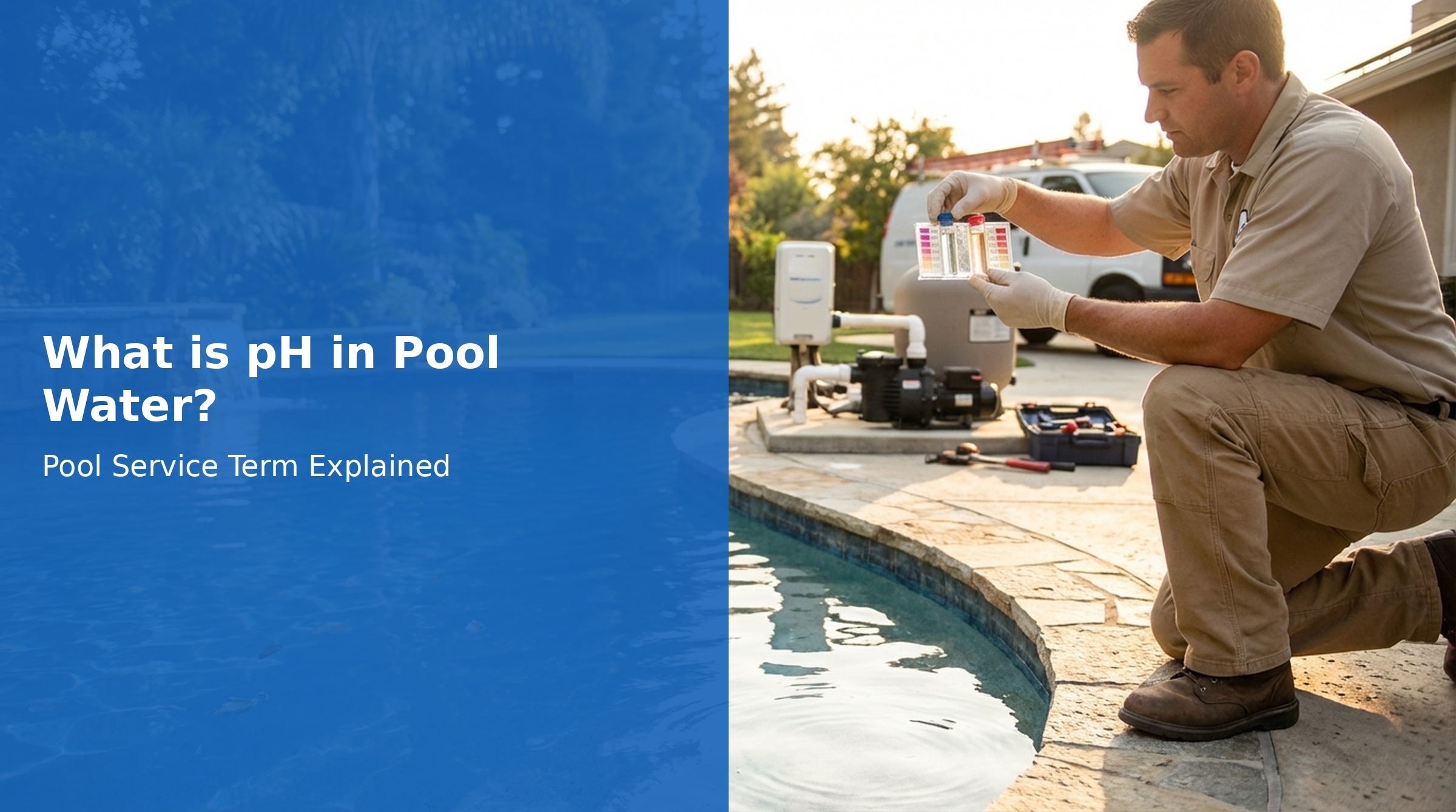
Pool pH stands as one of the most fundamental yet critical parameters that every pool service professional must master. This invisible factor determines not only the comfort and safety of swimmers but also the effectiveness of your entire chemical treatment program. Understanding pH control separates amateur pool maintenance from professional water chemistry management, directly impacting client satisfaction, equipment longevity, and your business reputation.
Key Takeaways
- Pool pH should be maintained between 7.2-7.8, with 7.4-7.6 being the ideal range
- pH directly affects chlorine efficiency – high pH can reduce sanitizer effectiveness by up to 80%
- Low pH causes corrosion and equipment damage; high pH leads to scaling and cloudy water
- Total alkalinity acts as a pH buffer and should be balanced first
- Environmental factors like rain, bather load, and chemical additions constantly affect pH levels
Understanding Pool pH Fundamentals
pH measures the concentration of hydrogen ions in pool water on a logarithmic scale from 0 to 14. The term literally means "potential of Hydrogen," and each unit represents a ten-fold change in acidity or basicity. For pool water, this scale determines whether your water is acidic (below 7.0), neutral (7.0), or basic/alkaline (above 7.0).
The ideal pH range of 7.4-7.6 isn't arbitrary – it closely matches the pH of human tears and mucous membranes, ensuring swimmer comfort while optimizing chemical effectiveness. This narrow window represents the sweet spot where chlorine sanitization works efficiently, water feels comfortable, and equipment remains protected from chemical damage.
The Science Behind pH Balance
Pool water constantly battles pH fluctuations from multiple sources. Chlorine additions typically raise pH, while organic contamination, rain, and carbon dioxide absorption tend to lower it. Understanding these natural tendencies helps you anticipate pH changes and maintain proactive water balance.
The logarithmic nature of pH means small numerical changes represent significant chemical differences. Moving from pH 7.5 to 8.0 represents a three-fold increase in basicity, dramatically affecting chemical behavior and treatment requirements.
Why pH Control Matters for Pool Service Professionals
Sanitizer Efficiency and Cost Management
Perhaps the most critical reason for maintaining proper pH involves chlorine effectiveness. At pH 7.0, chlorine operates at approximately 80% efficiency. This drops to 50% at pH 7.5, and plummets to just 20% at pH 8.0. For your clients, this means significantly higher chemical costs and potential sanitization failures when pH runs high.
This relationship explains why pools with persistent algae problems often have pH issues rather than insufficient chlorine levels. Before adding more sanitizer, always check and correct pH first.
Equipment Protection and Longevity
Low pH creates an acidic environment that aggressively attacks metal components, concrete surfaces, and plaster finishes. Heater elements, pump housings, and ladder hardware suffer accelerated corrosion, leading to expensive repairs and shortened equipment life.
Conversely, high pH promotes calcium carbonate precipitation, creating scale buildup on pool surfaces, inside pipes, and on equipment. This scaling reduces circulation efficiency, clogs filters, and creates rough surfaces that harbor bacteria and algae.
Water Clarity and Swimmer Comfort
Improper pH directly affects water appearance and swimmer experience. High pH often causes cloudy water as minerals precipitate out of solution. Low pH creates an aggressive water environment that causes eye and skin irritation, even when chlorine levels are appropriate.
Practical pH Management Strategies
Testing and Monitoring
Professional pH management requires reliable testing methods and consistent monitoring schedules. Digital pH meters provide the most accurate readings, though quality test strips or liquid reagent kits work effectively for routine maintenance. Test pH at least twice weekly, and always after significant weather events or heavy pool usage.
When testing, collect water samples from 12-18 inches below the surface, away from return jets and skimmers. This ensures representative readings of the bulk water chemistry rather than localized variations.
pH Adjustment Techniques
Raising pH: Use sodium carbonate (soda ash) to increase pH levels. Add 1.5 pounds per 10,000 gallons to raise pH by approximately 0.2 units. Distribute the chemical across the pool surface with the circulation system running, allowing several hours for complete mixing before retesting.
Lowering pH: Muriatic acid (hydrochloric acid) or sodium bisulfate effectively reduce pH levels. Add muriatic acid slowly to the deep end with circulation running, using approximately 1 quart per 10,000 gallons to lower pH by 0.2 units. Always add acid to water, never water to acid, and wear appropriate protective equipment.
The Total Alkalinity Connection
Total alkalinity acts as a pH buffer, preventing rapid pH swings. Maintain alkalinity between 80-120 ppm for most pools, with 100 ppm being ideal. When both pH and alkalinity need adjustment, correct alkalinity first, as this will often bring pH into acceptable range simultaneously.
For comprehensive water balance calculations, including pH adjustments, utilize our chemical dosage calculator to determine precise treatment amounts for your specific pool volume and current chemistry readings.
Advanced pH Management Considerations
Seasonal and Environmental Factors
Summer heat increases evaporation, concentrating minerals and typically raising pH. Heavy rainfall dilutes pool chemistry and often lowers pH due to slightly acidic rainwater. Understanding these patterns helps you anticipate needed adjustments and maintain consistent water balance.
High bather loads introduce organic contaminants that consume chlorine and affect pH. During peak usage periods, test and adjust pH more frequently to maintain optimal conditions.
Integration with Overall Water Balance
Professional water management considers pH as part of the broader water balance equation. The Langelier Saturation Index (LSI) incorporates pH alongside calcium hardness, total alkalinity, temperature, and total dissolved solids to predict scaling or corrosive tendencies. Use our LSI calculator for comprehensive water balance analysis.
Troubleshooting Common pH Problems
pH That Won't Stay Stable
Constantly fluctuating pH often indicates inadequate total alkalinity. Low alkalinity provides insufficient buffering capacity, allowing pH to swing with minor chemical additions or environmental changes. Raise alkalinity to appropriate levels before attempting pH adjustment.
pH Drift After Chemical Treatment
Some pool chemicals continue affecting pH hours after application. Calcium hypochlorite and sodium hypochlorite both raise pH over time. Factor this delayed response into your treatment schedule, allowing adequate time between chemical additions and final pH adjustment.
Professional Best Practices
Successful pH management requires systematic approach and attention to detail. Document all chemical additions and test results to identify patterns and trends. This data helps predict maintenance needs and demonstrates professional thoroughness to clients.
Educate clients about factors that affect pH, such as pool parties, weather events, and landscaping practices. This builds trust and helps them understand the complexity of professional pool maintenance.
For comprehensive understanding of pH alongside other critical pool service terms, reference our complete pool service terminology glossary to enhance your professional vocabulary and client communication.
Mastering pH control establishes the foundation for all other aspects of pool water chemistry. This fundamental parameter affects every other treatment you perform, making pH management skills essential for any serious pool service professional. By understanding the science, implementing proven techniques, and maintaining consistent monitoring practices, you'll ensure optimal water conditions that protect equipment, enhance swimmer comfort, and build lasting client relationships.