What Is the Langelier Saturation Index (LSI) for Pool Water?


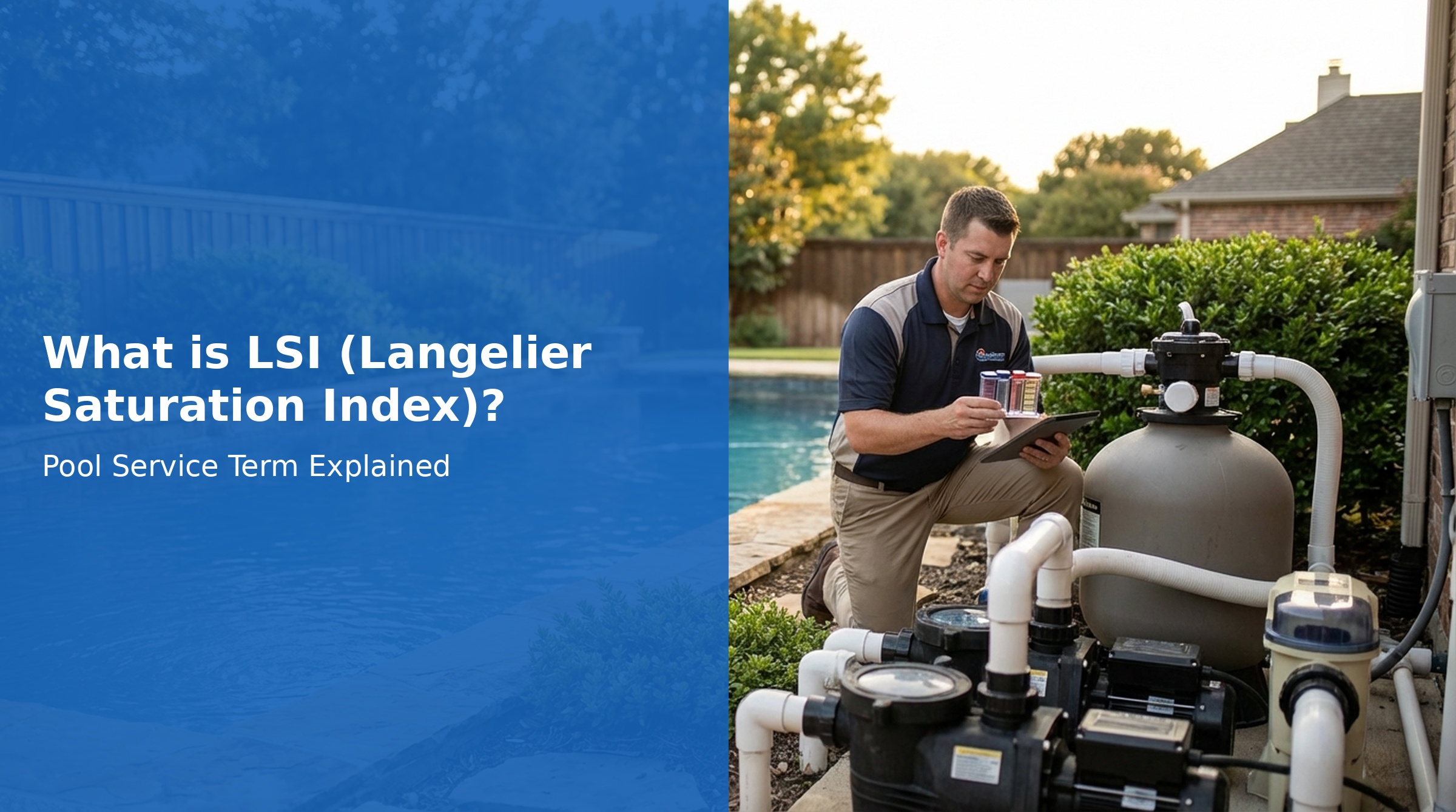
The Langelier Saturation Index (LSI) is arguably one of the most critical yet underutilized tools in professional pool maintenance. While many service technicians focus solely on chlorine levels and basic pH adjustments, understanding and applying LSI calculations can mean the difference between pristine, balanced water and costly equipment damage or unsightly scale formation. This comprehensive index takes into account five key water chemistry parameters to predict whether your pool water will corrode surfaces and equipment or deposit troublesome scale buildup.
Key Takeaways
- LSI values between -0.3 and +0.3 indicate properly balanced water
- Negative LSI values signal corrosive water that can damage equipment and surfaces
- Positive LSI values above +0.3 indicate scaling potential and cloudy water issues
- LSI calculations require five parameters: pH, temperature, calcium hardness, total alkalinity, and TDS
- Regular LSI monitoring prevents costly equipment repairs and surface damage
Understanding the Langelier Saturation Index
The Langelier Saturation Index, developed by Dr. Wilfred Langelier in 1936, is a mathematical formula that predicts the calcium carbonate stability of water. In pool service terms, it tells you whether your water chemistry is balanced enough to prevent both corrosion and scale formation—two of the most expensive problems pool owners face.
The LSI calculation incorporates five critical water parameters:
- pH level: The acidity or alkalinity of the water
- Water temperature: Measured in degrees Fahrenheit
- Calcium hardness: The amount of dissolved calcium in the water
- Total alkalinity: The water's buffering capacity
- Total Dissolved Solids (TDS): The overall mineral content
The LSI Scale and What It Means
LSI values are interpreted as follows:
- LSI below -0.3: Water is undersaturated and corrosive
- LSI between -0.3 and +0.3: Water is balanced and stable
- LSI above +0.3: Water is oversaturated with scaling potential
Why LSI Matters for Pool Service Professionals
Many service technicians have witnessed the devastating effects of unbalanced water chemistry—etched plaster, corroded heat exchangers, pitted metal fixtures, and premature equipment failure. These issues often stem from maintaining water chemistry within "acceptable" ranges without considering how these parameters interact with each other.
Corrosive Water Consequences (Negative LSI)
When LSI drops below -0.3, water becomes hungry for minerals and will extract them from any available source. This leads to:
- Etching and roughening of plaster surfaces
- Corrosion of metal components including heat exchangers, ladders, and fixtures
- Premature failure of pool equipment
- Increased maintenance costs and customer complaints
- Potential safety hazards from corroded equipment
Scaling Water Problems (Positive LSI)
When LSI exceeds +0.3, excess minerals precipitate out of solution, causing:
- Scale buildup on surfaces and equipment
- Reduced circulation and filtration efficiency
- Cloudy water that's difficult to clear
- Increased chemical consumption
- Shortened equipment lifespan due to mineral deposits
Calculating and Monitoring LSI
While the LSI formula involves complex logarithmic calculations, modern tools make monitoring straightforward. Our LSI calculator simplifies this process by automatically computing your index based on your test results.
Essential Testing Requirements
To accurately calculate LSI, you'll need reliable measurements of all five parameters. Invest in quality test equipment and ensure regular calibration. Temperature readings should be taken at the same time as chemical testing, as water temperature significantly impacts LSI values.
Remember that LSI is dynamic—it changes with temperature fluctuations, chemical additions, and environmental factors. Regular monitoring, especially during season transitions and after significant weather events, ensures optimal water balance.
Practical LSI Management Strategies
Successfully managing LSI requires understanding how adjustments to individual parameters affect the overall index. Here are proven strategies for maintaining balanced water:
Correcting Negative LSI (Corrosive Water)
When dealing with corrosive conditions, focus on raising the LSI through these methods:
- Increase pH: Use sodium carbonate (soda ash) to raise pH levels
- Add calcium hardness: Use calcium chloride to increase mineral content
- Raise total alkalinity: Apply sodium bicarbonate to improve buffering capacity
Make adjustments gradually and retest frequently. Use our chemical dosage calculator to determine precise chemical additions needed for your specific pool volume and current readings.
Correcting Positive LSI (Scaling Water)
For scaling conditions, lower the LSI through:
- pH reduction: Use muriatic acid or sodium bisulfate carefully
- Partial water replacement: Dilute high mineral content with fresh water
- Temperature management: Optimize heating schedules to minimize temperature spikes
Real-World LSI Scenarios
Consider a heated spa with high pH (7.8), elevated temperature (104°F), and high calcium hardness (400 ppm). Even with acceptable individual readings, the LSI might exceed +0.8, creating severe scaling potential. Conversely, a pool with low pH (7.0), moderate temperature (78°F), and low calcium hardness (150 ppm) could show an LSI of -0.6, indicating aggressive water that will corrode equipment.
These scenarios highlight why LSI monitoring prevents problems that individual parameter testing might miss. By understanding these interactions, you can proactively adjust chemistry before damage occurs.
Integrating LSI into Your Service Protocol
Professional pool service requires systematic approaches to water chemistry management. Incorporate LSI calculations into your regular service routine by establishing testing schedules that account for seasonal changes, bather loads, and environmental factors.
Document LSI trends for each account to identify patterns and predict when adjustments will be needed. This proactive approach reduces emergency service calls and increases customer satisfaction while protecting their investment in pool equipment and surfaces.
For comprehensive understanding of water chemistry terminology and additional calculation tools, reference our complete pool service terminology glossary to enhance your technical knowledge and client communication.
Conclusion
The Langelier Saturation Index represents the gold standard for professional water balance management. By understanding and applying LSI principles, pool service professionals can prevent costly equipment damage, extend surface life, and maintain crystal-clear water that exceeds customer expectations. While individual parameter testing remains important, LSI provides the comprehensive picture needed for truly balanced water chemistry. Implement LSI monitoring in your service protocol today and experience the difference that scientifically balanced water makes for your business and your clients' pools.