
What Does Green to Clean Mean in Pool Service? SLANG


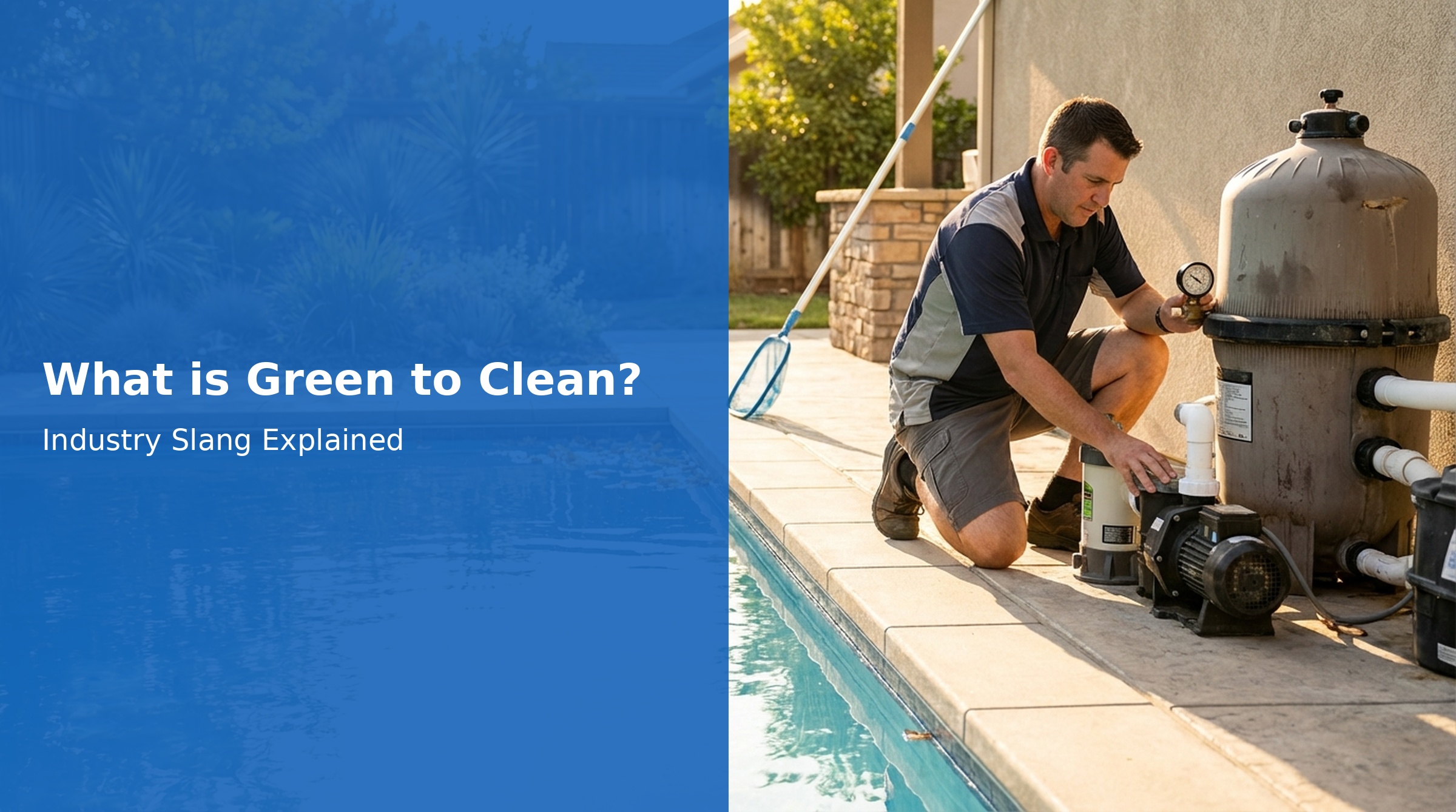
Every pool service professional has encountered it: that dreaded phone call from a panicked customer describing their once-pristine pool as a murky, green swamp. Welcome to the world of "Green to Clean" – one of the most challenging yet rewarding transformations in the pool service industry. This process involves restoring severely algae-contaminated pools back to crystal-clear, swimmable condition, and mastering it can set your business apart from the competition.
Key Takeaways
- Green to Clean refers to the multi-step process of eliminating severe algae blooms and restoring water clarity
- The process typically requires 3-7 days and multiple service visits depending on algae severity
- Success depends on proper chemical balance, adequate filtration, and systematic treatment approach
- Can also refer to ammonium sulfate products specifically designed for algae treatment
- Understanding this process is essential for pool service professionals and can be a profitable service offering
Understanding the Green to Clean Process
The term "Green to Clean" encompasses both a service methodology and, in some cases, a specific chemical treatment. At its core, this process involves systematically eliminating algae blooms that have turned pool water green, black, or murky. The severity of these blooms can range from light green tinting to completely opaque water where the bottom is invisible.
Algae blooms occur when conditions align perfectly for rapid algae growth: inadequate sanitizer levels, poor circulation, high phosphate levels, and warm temperatures. Once established, these blooms can be stubborn to eliminate, requiring a strategic approach that goes beyond simply adding more chlorine.
The Science Behind Algae Elimination
Successful algae treatment requires understanding the chlorine demand principle. Algae-contaminated water has an extremely high chlorine demand, meaning it will consume available chlorine faster than it can sanitize. This is why shocking a green pool once rarely works – the chlorine gets consumed by organic matter before it can effectively kill algae.
The process also involves understanding breakpoint chlorination, where you must add enough chlorine to satisfy the water's demand and maintain a residual for ongoing sanitization. This often requires chlorine levels of 10-20 ppm or higher, well above normal operating ranges.
Step-by-Step Green to Clean Protocol
Initial Assessment and Testing
Before beginning treatment, conduct comprehensive water testing. Test for pH, total alkalinity, calcium hardness, cyanuric acid, and phosphates. Document the pool's condition with photos – this helps with customer communication and tracking progress. Our chemical dosage calculator can help determine precise treatment amounts based on your test results.
Assess the filtration system's condition, including pump operation, filter cleanliness, and circulation patterns. Poor circulation will significantly extend treatment time and may prevent complete algae elimination.
Chemical Balance Correction
Start by adjusting pH to 7.2-7.4 range. Low pH improves chlorine efficiency, while high pH can render shock treatment ineffective. If cyanuric acid levels exceed 50 ppm, consider partial water replacement, as high stabilizer levels can inhibit chlorine effectiveness. Use our cyanuric acid calculator to determine optimal levels for your climate and pool type.
Shock Treatment Protocol
Apply liquid chlorine or calcium hypochlorite at 2-3 pounds per 10,000 gallons of water, depending on algae severity. For severe blooms, you may need to double this amount. Add chemicals with the pump running and distribute evenly around the pool perimeter.
Brush all pool surfaces thoroughly after chemical addition. This mechanical action breaks up algae colonies and exposes them to sanitizer. Pay special attention to areas with poor circulation: behind ladders, in corners, and around steps.
Ongoing Treatment and Maintenance
Daily Monitoring and Adjustment
Test chlorine levels daily during treatment. If chlorine drops to zero within 24 hours, the pool still has high chlorine demand and requires additional treatment. Continue daily shocking until you can maintain a 1-3 ppm residual for 24 hours.
Brush the pool daily and run the filtration system 24/7 during treatment. Clean or backwash filters frequently – they'll become clogged with dead algae quickly. Some technicians prefer DE filters for green-to-clean jobs due to their superior filtration capability.
Clarification and Polishing
Once algae is dead (water turns cloudy white or gray instead of green), focus on clarification. Add a quality clarifier or flocculant to help bind dead algae particles for easier filtration. Some professionals use enzyme products to break down organic waste left behind by dead algae.
Consider using a phosphate remover if testing reveals high phosphate levels, as these nutrients will fuel future algae growth. This step is crucial for preventing immediate re-contamination.
Commercial Green to Clean Products
Several manufacturers produce products specifically named "Green to Clean," typically containing ammonium sulfate as the active ingredient. These products work by providing a quick source of available chlorine and helping to clear cloudy water simultaneously.
While these products can be effective, they're not magic solutions. They work best when combined with proper water balance, adequate circulation, and follow-up treatment. Some professionals use these products as part of their protocol, while others prefer traditional liquid chlorine approaches.
Pricing and Business Considerations
Green to Clean services represent significant value to customers and should be priced accordingly. Factor in multiple visits, chemical costs, increased filter maintenance, and the expertise required. Many successful pool service companies charge $200-500 for complete green-to-clean services, depending on pool size and contamination severity.
Set clear expectations with customers about timeline and their responsibilities (keeping equipment running, not swimming until complete). Document the process with photos and detailed service notes for liability protection and customer communication.
Prevention and Customer Education
Use green-to-clean situations as teaching moments. Explain to customers how proper chemical maintenance, regular service, and equipment operation prevent these expensive emergency situations. This education helps justify regular service pricing and reduces emergency calls.
Develop preventive maintenance protocols that catch problems before they become severe algae blooms. Regular phosphate testing, proper chemical balance maintenance, and equipment monitoring can eliminate most green water situations.
Conclusion
Mastering the Green to Clean process is essential for any pool service professional. It requires understanding water chemistry, systematic treatment approaches, and clear customer communication. While challenging, these situations provide opportunities to demonstrate expertise, build customer trust, and generate profitable service calls.
Remember that every green pool is different, requiring assessment and customized treatment approaches. Document your successes and learn from difficult cases to continually improve your protocols. For additional pool service terminology and technical guidance, consult our comprehensive pool service terminology glossary.
The key to successful Green to Clean transformations lies in systematic approach, patience, and understanding that rushing the process often extends treatment time and increases costs for both you and your customers.