
What Is Free Chlorine (FC) in Pool Water?


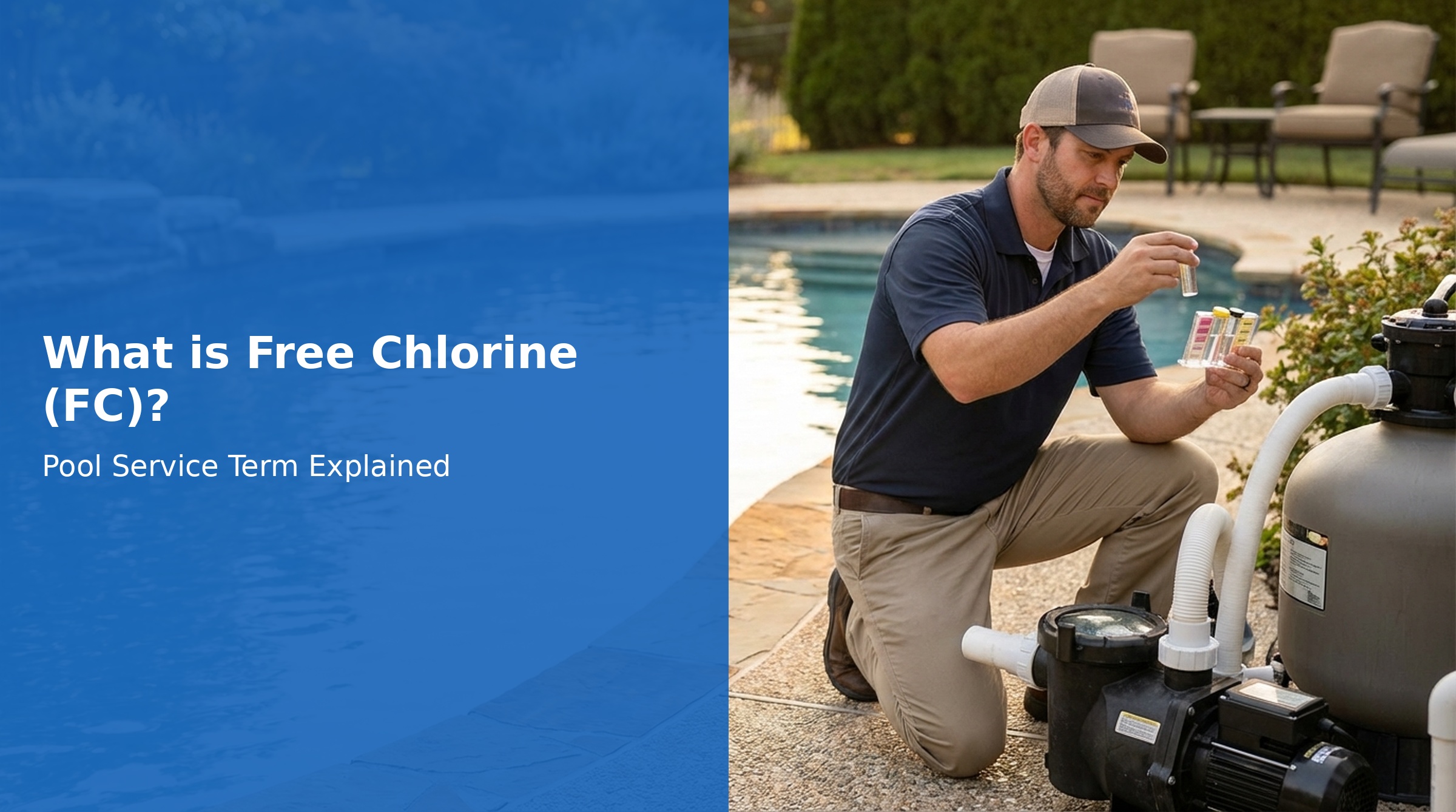
Free Chlorine (FC) is one of the most critical measurements every pool service professional must master. Unlike total chlorine readings that include both active and spent chlorine, free chlorine represents the sanitizer that's actually working to keep pool water safe and crystal clear. Understanding how to properly test, interpret, and maintain optimal FC levels separates experienced technicians from newcomers in the field.
Key Takeaways
- Free chlorine is the active sanitizer available to kill bacteria, viruses, and algae
- Ideal FC levels range from 1-3 ppm for residential pools, 2-4 ppm for commercial facilities
- FC readings should always be higher than combined chlorine for effective sanitization
- Temperature, bather load, and cyanuric acid levels directly impact FC consumption
- Regular FC testing and adjustment prevents costly algae blooms and equipment damage
What is Free Chlorine and Why It Matters
Free chlorine represents the portion of chlorine in pool water that remains available for sanitization. When chlorine is added to water, it forms hypochlorous acid (HOCl) and hypochlorite ions (OCl-), both of which actively destroy harmful microorganisms. This active chlorine is what we measure as free chlorine.
The distinction between free and combined chlorine is crucial for pool service professionals. Combined chlorine, also called chloramines, consists of chlorine molecules that have already reacted with contaminants like sweat, oils, and organic debris. These chloramines not only smell unpleasant but provide minimal sanitizing power while irritating swimmers' eyes and skin.
The Science Behind Effective Sanitization
Free chlorine's effectiveness depends on several factors that every technician should understand. The most potent form, hypochlorous acid, dominates at lower pH levels (7.2-7.4), making pH management essential for maximizing sanitization efficiency. At higher pH levels above 8.0, the less effective hypochlorite ion becomes predominant, requiring higher FC levels to maintain the same sanitizing power.
Optimal Free Chlorine Levels for Different Pool Types
Professional pool service requires understanding that FC requirements vary significantly based on pool usage, environment, and chemical balance. Residential pools typically maintain healthy water with FC levels between 1-3 ppm, while commercial facilities often require 2-4 ppm due to higher bather loads and increased organic contamination.
Factors Affecting FC Consumption
Several environmental and operational factors accelerate free chlorine consumption that service professionals encounter regularly:
- UV exposure: Direct sunlight rapidly breaks down chlorine, especially in pools without adequate cyanuric acid protection
- Water temperature: Higher temperatures increase chemical reaction rates, consuming FC faster
- Bather load: Each swimmer introduces contaminants that demand immediate chlorine attention
- Organic debris: Leaves, pollen, and other organic matter create constant chlorine demand
- Poor circulation: Inadequate water movement creates dead zones where FC cannot effectively reach contaminants
Testing and Measuring Free Chlorine Accurately
Accurate FC testing forms the foundation of professional pool maintenance. Digital colorimeters and photometers provide the most reliable readings, especially important when dealing with cyanuric acid levels above 30 ppm where standard test strips become unreliable.
When using traditional DPD test kits, always ensure reagents are fresh and properly stored. Expired reagents can provide false readings that lead to improper chemical adjustments. Take samples from elbow-deep water, away from return jets and skimmers, for representative readings.
Understanding Chlorine Lock and False Readings
High cyanuric acid levels can create a condition where FC appears adequate on tests but lacks sanitizing effectiveness. This phenomenon, often called "chlorine lock," requires understanding the relationship between FC and stabilizer levels. Our cyanuric acid calculator helps determine proper FC levels based on current CYA readings.
Maintaining Proper Free Chlorine Levels
Professional pool service involves more than simply adding chlorine when levels drop. Effective FC management requires understanding chlorine demand, shock requirements, and the relationship between sanitizer and other water chemistry parameters.
Calculating Chlorine Additions
Precise chemical dosing separates professional service from guesswork. When FC levels test below target ranges, calculate exact chemical additions rather than estimating. Different chlorine products provide varying amounts of available chlorine - liquid sodium hypochlorite typically contains 10-12% available chlorine, while calcium hypochlorite provides 65-70%.
Use our chemical dosage calculator to determine exact amounts needed for FC adjustments based on pool volume and current readings.
Shock Treatment and Breakpoint Chlorination
When combined chlorine levels exceed 0.2 ppm, breakpoint chlorination becomes necessary to restore water quality. This process requires adding enough chlorine to reach 10 times the combined chlorine level, breaking down chloramines and restoring effective FC levels.
Common Free Chlorine Problems and Solutions
Experienced pool service professionals regularly encounter FC-related challenges that require systematic troubleshooting approaches.
Rapid Chlorine Loss
When pools consistently consume chlorine faster than expected, investigate potential causes systematically. Algae growth, even microscopic levels invisible to the naked eye, creates enormous chlorine demand. Poor water circulation, inadequate filtration, or equipment malfunctions can also contribute to excessive FC consumption.
Inconsistent Readings
Fluctuating FC levels often indicate inadequate circulation or uneven chemical distribution. Ensure proper water turnover rates and verify that return jets provide adequate mixing throughout the pool volume.
Professional Best Practices for FC Management
Successful pool service businesses develop systematic approaches to FC management that ensure consistent water quality while maximizing efficiency. Document FC readings alongside pH, total alkalinity, and cyanuric acid levels to identify patterns and predict chemical needs.
Educate clients about factors affecting chlorine consumption, such as heavy bather loads, severe weather, or organic debris accumulation. This proactive communication helps manage expectations and justifies necessary chemical adjustments.
For comprehensive understanding of pool chemistry terminology and relationships, reference our complete pool service terminology glossary.
Conclusion
Free chlorine management represents a cornerstone skill for pool service professionals. By understanding the science behind FC effectiveness, maintaining proper testing procedures, and implementing systematic adjustment protocols, technicians can ensure safe, clear water while building client confidence. Remember that FC levels must be evaluated alongside other chemical parameters for complete water balance - effective sanitization depends on the interplay between chlorine, pH, alkalinity, and stabilizer levels working in harmony.