
What Is a FAS-DPD Chlorine Test?


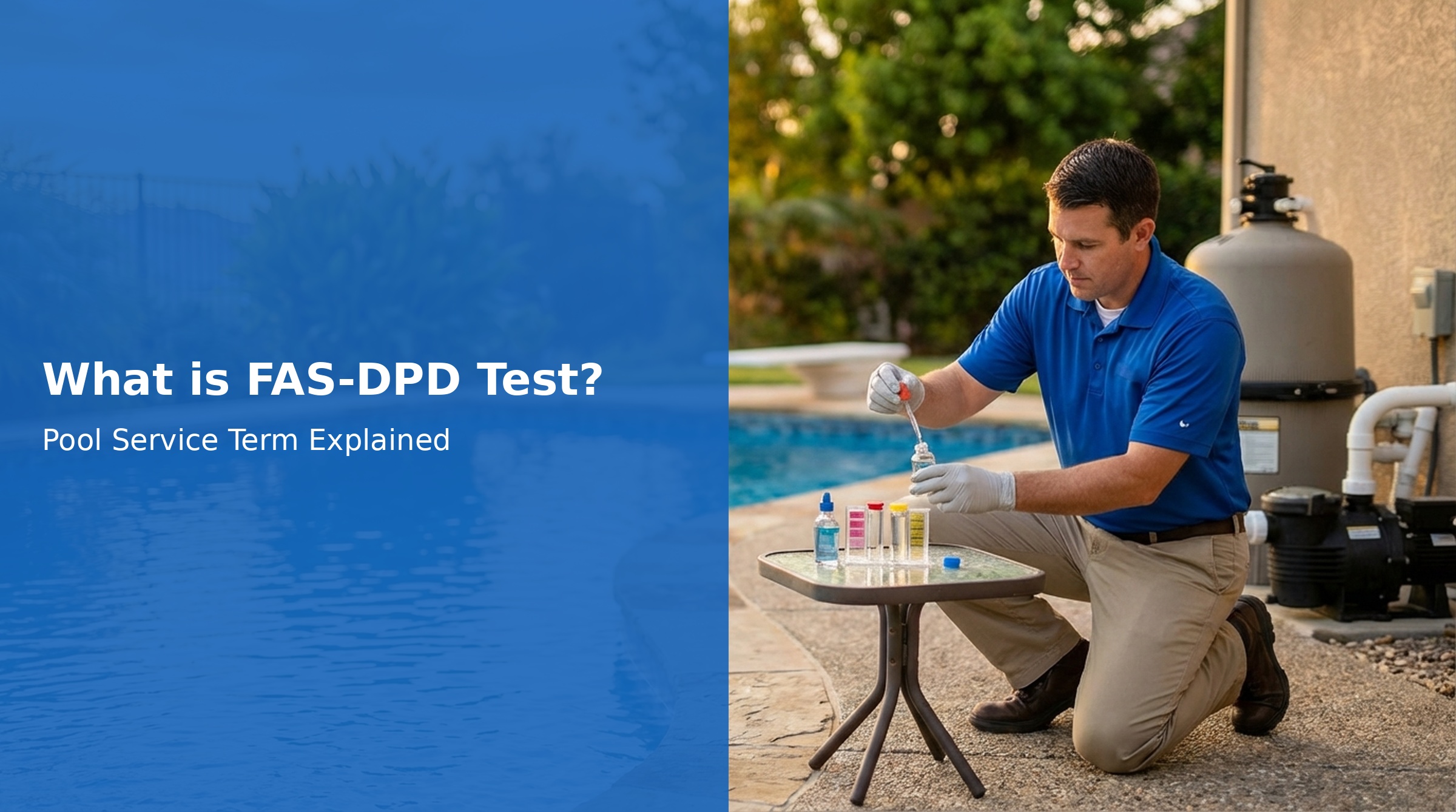
When managing pool water chemistry, especially during critical situations like fecal contamination incidents, precision in chlorine measurement becomes paramount. The FAS-DPD test stands as the gold standard for accurate chlorine testing, particularly when dealing with high sanitizer concentrations that would overwhelm standard testing methods. Unlike basic test strips or standard DPD color-matching tests, this titration method provides the accuracy and reliability that pool service professionals need when precise chlorine readings are essential.
Key Takeaways
- FAS-DPD is a titration test using powder reagent that's significantly more accurate than standard DPD tests, especially above 10 ppm chlorine
- The test works by counting drops until a color change occurs rather than subjective color matching
- It's required by health departments for confirming proper chlorine levels during fecal incident response procedures
- Essential for shock treatment verification and maintaining compliance with pool regulations
- Provides both free and combined chlorine readings for comprehensive water analysis
What is the FAS-DPD Test?
The FAS-DPD test (Ferrous Ammonium Sulfate - Diethyl-p-phenylenediamine) is a precise titration method for measuring chlorine levels in pool water. This testing protocol uses a powder reagent system combined with a titrant solution to determine exact chlorine concentrations through drop counting rather than color comparison.
The test derives its accuracy from its titration methodology. When you add DPD powder to a water sample, it turns pink in proportion to the chlorine present. Then, by adding FAS titrant drop by drop while swirling the sample, you neutralize the chlorine until the pink color completely disappears. The number of drops required corresponds directly to the chlorine concentration, with each drop typically representing 0.2 or 0.5 ppm depending on your test kit specifications.
Why Standard DPD Tests Fall Short
Traditional DPD color-matching tests become unreliable at chlorine levels above 10 ppm because the pink coloration becomes so intense that distinguishing between different concentration levels becomes nearly impossible. The human eye simply cannot accurately differentiate between the deep pink or purple colors that indicate whether you're looking at 15 ppm or 25 ppm chlorine.
Additionally, standard tests are subject to individual interpretation variations. What one person sees as a "light pink" might appear as "medium pink" to another, introducing inconsistency that can compromise water safety protocols.
When FAS-DPD Testing is Critical
Fecal Incident Response
Health departments mandate FAS-DPD testing during fecal contamination incidents because of the high chlorine concentrations required for proper disinfection. CDC guidelines typically require maintaining 20 ppm free chlorine for 12.75 hours (or equivalent CT values) to eliminate Cryptosporidium and other resistant pathogens.
During these incidents, you must document precise chlorine readings to prove compliance with disinfection requirements. Using inaccurate testing methods could result in inadequate disinfection, regulatory violations, or extended pool closures.
Shock Treatment Verification
When performing shock chlorination, whether for routine maintenance or problem resolution, FAS-DPD testing ensures you've achieved target chlorine levels. This is particularly important when dealing with algae blooms, high bather loads, or combined chlorine problems where you need to maintain elevated chlorine levels for extended periods.
Compliance Documentation
Many jurisdictions require FAS-DPD testing results in official documentation, especially for commercial pools, water parks, and public facilities. The test's precision and reproducibility make it the preferred method for regulatory compliance and professional liability protection.
How to Perform the FAS-DPD Test
Required Equipment
- FAS-DPD test kit with powder reagents
- 25 mL sample tubes (typically provided)
- FAS titrant solution
- Stirring rod or swirling technique
- Good lighting for color change detection
Step-by-Step Procedure
Free Chlorine Test:
- Fill the sample tube to the 25 mL mark with pool water
- Add one DPD #1 powder pillow and mix thoroughly
- Sample will turn pink proportional to free chlorine present
- Add FAS titrant drop by drop, swirling between drops
- Continue until pink color completely disappears
- Count total drops and multiply by your kit's factor (usually 0.2 or 0.5)
Total Chlorine Test:
- Using the same sample after free chlorine test
- Add one DPD #3 powder pillow and mix
- Sample turns pink again if combined chlorine is present
- Titrate with FAS until color disappears
- This reading represents combined chlorine
Accuracy Tips
Ensure consistent drop size by holding the titrant bottle vertically and allowing drops to form completely before falling. Perform tests in good lighting conditions, preferably with a white background to clearly observe color changes. Always use fresh reagents, as expired DPD powder can produce inaccurate results.
Integrating FAS-DPD with Water Chemistry Management
Accurate chlorine readings from FAS-DPD testing become crucial data points for overall water chemistry management. When you know precise chlorine levels, you can make informed decisions about chemical dosing calculations and understand how chlorine interacts with other water parameters.
High chlorine levels measured during shock treatments can affect pH readings and may require adjustment of other chemical levels. Understanding these interactions helps maintain balanced water chemistry throughout the disinfection process.
Professional Best Practices
Documentation Standards
Maintain detailed records of all FAS-DPD test results, including date, time, test conditions, and technician performing the test. This documentation proves invaluable for regulatory compliance, troubleshooting recurring problems, and demonstrating professional competence to clients.
Quality Control
Regularly verify your FAS-DPD test kit accuracy using standard solutions or by cross-referencing with other testing methods at lower chlorine concentrations. Replace reagents according to manufacturer recommendations and store them in cool, dry conditions to maintain effectiveness.
Client Communication
Educate clients about why FAS-DPD testing is necessary during certain situations. Explaining the difference between standard testing and precision titration helps justify the additional time and cost while demonstrating your commitment to proper procedures and safety.
Conclusion
The FAS-DPD test represents an essential tool in the professional pool service technician's arsenal, providing the accuracy and reliability needed for critical water chemistry management. Whether you're responding to contamination incidents, verifying shock treatments, or maintaining regulatory compliance, this titration method delivers the precision that standard testing methods cannot match. By mastering FAS-DPD testing techniques and understanding when to apply them, you elevate your service quality and ensure the safety and satisfaction of your clients. For comprehensive coverage of professional terminology and testing methods, refer to our complete pool service terminology glossary.