
What Is the CYA Dot Disappears Test?


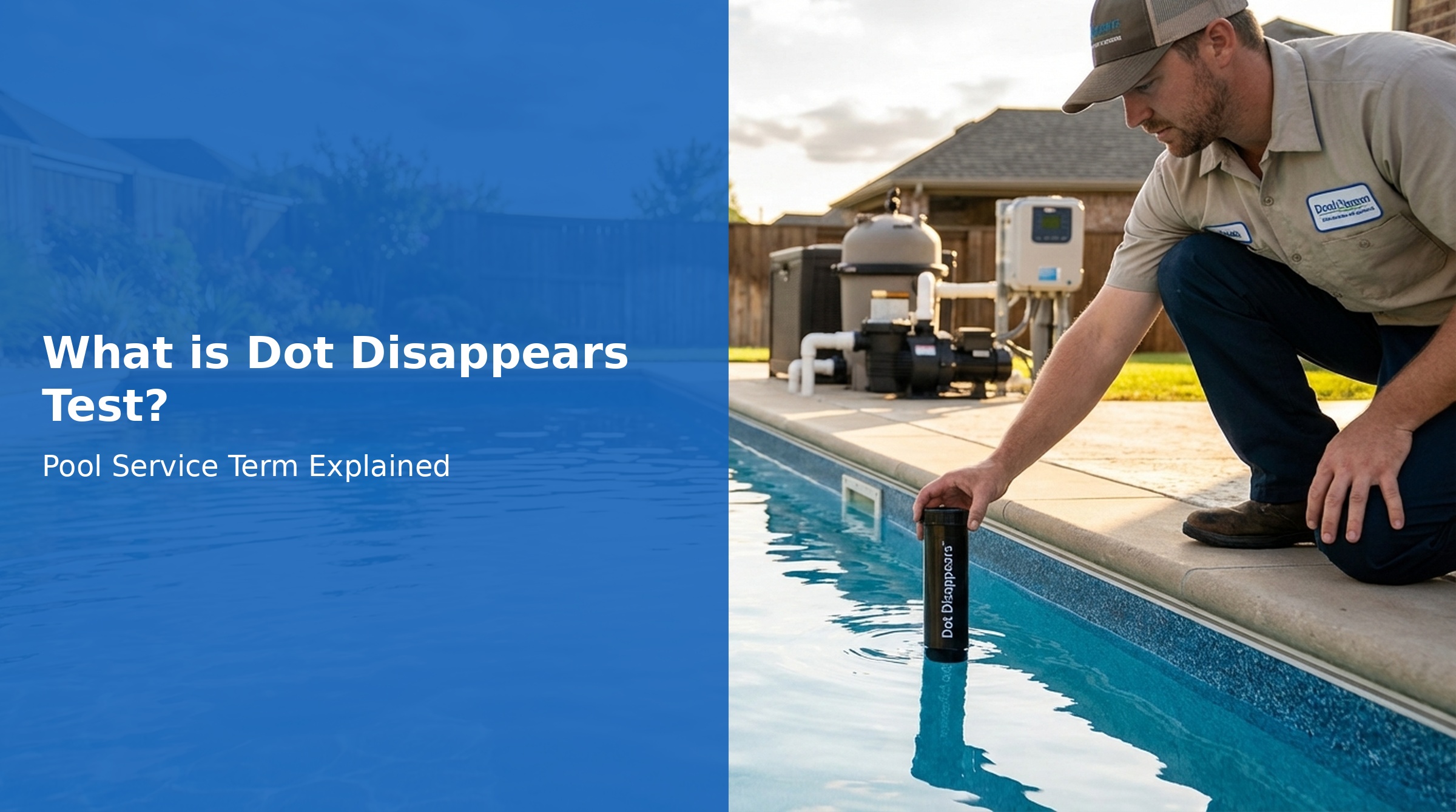
The Dot Disappears Test stands as one of the most straightforward yet critical testing methods in pool water chemistry. This visual testing technique allows pool service professionals to accurately measure cyanuric acid levels using a Taylor test kit, providing essential information for proper pool sanitization and chemical balance. Understanding how to perform and interpret this test correctly can make the difference between a properly maintained pool and one with costly chemical imbalances.
Key Takeaways
- The Dot Disappears Test measures cyanuric acid levels by determining when a black dot becomes invisible through the water sample
- Standard test range covers 30-100 ppm; higher concentrations require sample dilution
- Proper lighting and viewing angle are crucial for accurate results
- High cyanuric acid levels reduce chlorine effectiveness and require corrective action
- Regular testing prevents over-stabilization and maintains optimal sanitizer performance
Understanding the Dot Disappears Test
The Dot Disappears Test, also known as the turbidity test for cyanuric acid, operates on a simple visual principle. When cyanuric acid dissolves in pool water, it creates a slight cloudiness or turbidity that increases with concentration. The test uses this characteristic by having technicians look down through a graduated tube at a black dot on the bottom, gradually adding water until the dot becomes invisible.
This testing method has remained popular among pool service professionals because it requires no color matching or complex procedures. The Taylor test kit provides a clear, cylindrical tube marked with graduations that correspond directly to parts per million (ppm) of cyanuric acid. The point at which the black dot disappears indicates the concentration level.
Equipment and Setup Requirements
To perform the Dot Disappears Test accurately, you'll need a Taylor cyanuric acid test kit, which includes a clear graduated tube and viewing apparatus with the black dot target. The test requires good lighting conditions—natural daylight works best, though bright artificial lighting can suffice. Avoid testing in shadowy conditions or under colored lights that might affect visibility.
Position yourself so you're looking straight down through the tube, maintaining a consistent viewing angle throughout the test. The black dot should be clearly visible at the bottom of the empty tube before beginning. Any scratches or cloudiness on the tube itself can affect results, so ensure equipment cleanliness.
Step-by-Step Testing Procedure
Begin by collecting a representative water sample from the pool, typically from elbow depth and away from return jets or skimmers. Fill the graduated tube slowly with the pool water sample, looking down through the tube as you pour. Continue adding water until the black dot at the bottom just disappears from view.
Read the measurement at the water level on the tube's graduations. This reading represents the cyanuric acid concentration in parts per million. For most Taylor kits, the standard range covers 30-100 ppm directly. If the dot remains visible even when the tube is completely full, the cyanuric acid level is below 30 ppm.
Handling High Concentration Readings
When cyanuric acid levels exceed 100 ppm, the dot disappears before reaching measurable graduations on the tube. In these cases, dilution becomes necessary. Mix equal parts pool water and distilled water, then retest using this diluted sample. Multiply the final reading by two to determine the actual concentration in the pool.
For extremely high levels, you may need greater dilution ratios. A 1:2 dilution (one part pool water to two parts distilled water) requires multiplying results by three, while a 1:3 dilution requires multiplying by four. Document your dilution ratio carefully to ensure accurate calculations.
Interpreting Results and Taking Action
Ideal cyanuric acid levels typically range from 30-50 ppm for most residential pools, though some professionals prefer slightly higher levels of 50-80 ppm in high-sun environments. Levels below 30 ppm provide insufficient chlorine stabilization, leading to rapid sanitizer degradation from UV rays. Conversely, levels above 100 ppm significantly reduce chlorine effectiveness, creating potential sanitation issues.
When cyanuric acid levels test too high, the most effective solution involves diluting the pool water through partial draining and refilling with fresh water. This process requires careful planning, as it affects all other chemical parameters. Use our cyanuric acid calculator to determine the exact amount of water replacement needed to achieve target levels.
Common Testing Challenges
Several factors can affect Dot Disappears Test accuracy. Algae blooms, high bather loads, or other water clarity issues can create additional turbidity that interferes with readings. In such cases, address water clarity problems first, then retest cyanuric acid levels. Extremely cold water can also affect cyanuric acid solubility, potentially leading to temporarily elevated readings.
Lighting conditions significantly impact test accuracy. Inconsistent lighting or glare can make dot visibility subjective. Establish a consistent testing location and time of day when possible, and consider having multiple technicians verify questionable readings.
Integration with Overall Water Balance
Cyanuric acid testing doesn't occur in isolation—it's part of comprehensive water balance management. High cyanuric acid levels affect chlorine demand calculations and influence pH stability. When planning chemical adjustments, consider how cyanuric acid levels impact your overall treatment strategy.
Use comprehensive chemical dosage calculations that account for current cyanuric acid levels when determining chlorine requirements. This ensures adequate sanitization despite stabilizer interference. Regular monitoring prevents the gradual accumulation that often catches service technicians off guard.
Documentation and Client Communication
Maintain detailed records of cyanuric acid test results, including any dilutions performed and environmental conditions during testing. This documentation helps identify trends and provides valuable information for troubleshooting recurring issues. When levels require correction through water replacement, clearly communicate the necessity and process to pool owners.
Educate clients about cyanuric acid's role in pool chemistry, explaining how stabilizer buildup occurs gradually through regular chlorine use. This understanding helps justify necessary water replacement costs and encourages support for preventive maintenance approaches.
Professional Best Practices
Incorporate Dot Disappears Testing into your regular service routine, typically monthly during peak season and quarterly during off-season periods. More frequent testing may be necessary for pools using stabilized chlorine exclusively or those experiencing water balance challenges.
Keep backup testing equipment available, as graduated tubes can crack or become scratched with regular use. Calibrate new equipment against known standards when possible, and replace components showing wear that might affect accuracy.
The Dot Disappears Test remains an invaluable tool for pool service professionals, providing quick and reliable cyanuric acid measurements that inform critical treatment decisions. Master this technique to ensure optimal pool water balance and client satisfaction. For additional technical terms and testing procedures, consult our complete pool service terminology glossary.