
What Is a Pool Water Dilution Test?


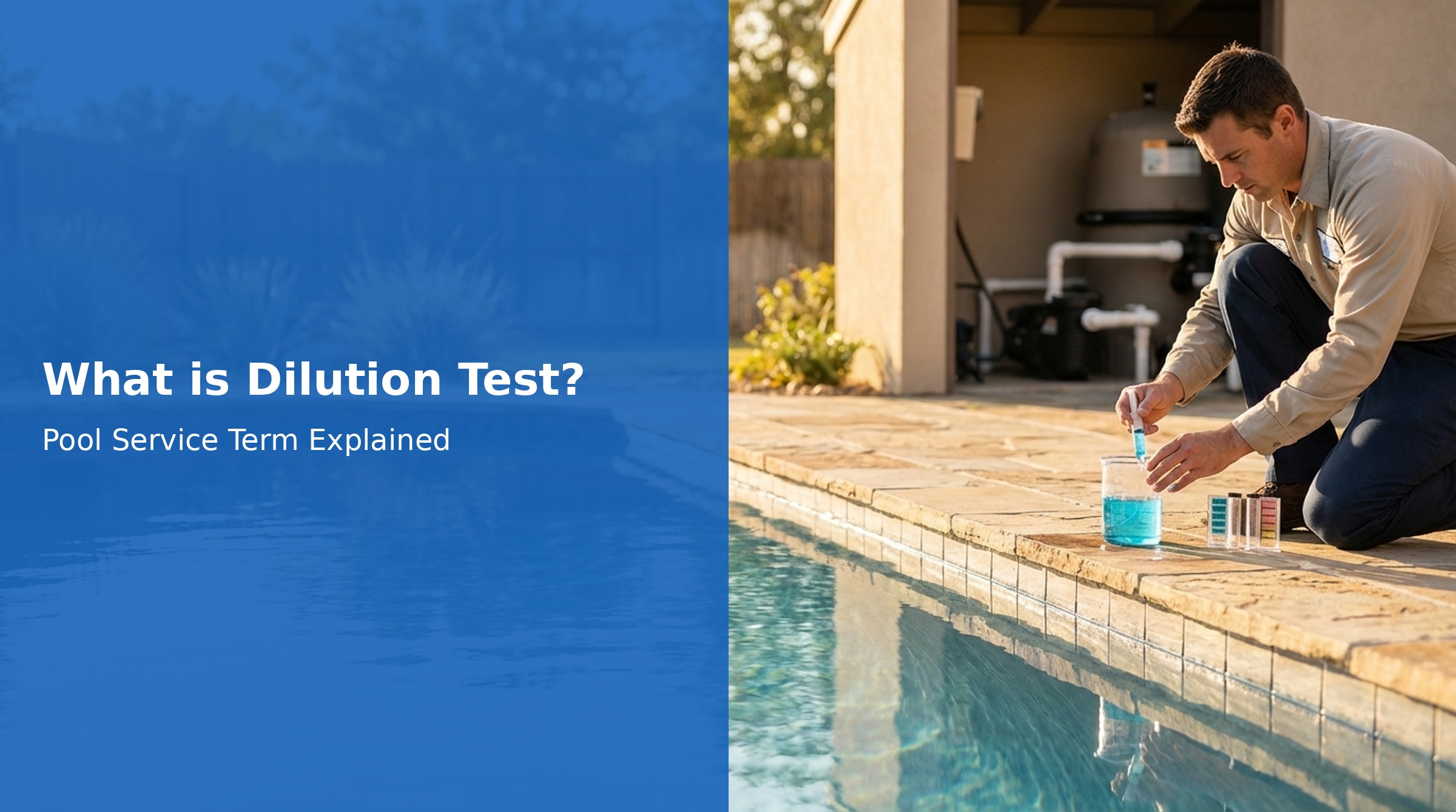
When pool water chemistry readings exceed your test kit's maximum range, you're left with incomplete data that could compromise water balance decisions. The dilution test is a critical technique that allows pool service professionals to accurately measure chemical concentrations that would otherwise be impossible to quantify with standard testing equipment. This method is particularly essential when dealing with elevated cyanuric acid levels, which have become increasingly common as pool owners over-stabilize their water.
Key Takeaways
- Dilution testing extends your test kit's range by mixing pool water 50/50 with distilled water
- Most commonly used for cyanuric acid levels exceeding 100 ppm
- Results must be doubled to account for the 50% dilution factor
- Accuracy depends on precise measurement and proper mixing technique
- Essential skill for managing over-stabilized pools and extreme chemical imbalances
Understanding the Dilution Test Method
The dilution test operates on a simple principle: when you dilute a sample by a known factor, you can extrapolate the original concentration by applying that same factor to your test results. In pool service applications, the standard dilution ratio is 1:1 (50% pool water, 50% distilled or bottled water), which requires doubling the measured result to determine the actual concentration in the undiluted pool water.
This technique becomes necessary when chemical levels exceed the upper limits of standard test kits. While most turbidity-based tests can handle typical operating ranges, extreme conditions require this workaround to obtain meaningful data. The method is scientifically sound but requires careful execution to maintain accuracy.
When Standard Testing Falls Short
Pool service professionals encounter situations where standard test kits simply can't provide readings. The most common scenario involves cyanuric acid levels that have climbed well above 100 ppm due to continuous use of stabilized chlorine products or excessive direct stabilizer additions. When your turbidity test shows maximum cloudiness immediately upon adding the reagent, you know you're dealing with concentrations beyond the kit's 100 ppm ceiling.
Other chemicals may occasionally require dilution testing, including total alkalinity in pools with severe chemical imbalances or total dissolved solids in older pools with years of chemical accumulation. However, cyanuric acid remains the primary application for this technique in routine pool service.
Step-by-Step Dilution Test Procedure
Executing an accurate dilution test requires attention to detail and proper technique. Start by collecting a representative water sample from at least 18 inches below the surface, away from return jets and skimmers. Use clean collection containers to avoid contamination that could skew results.
Mixing and Measuring
Measure equal volumes of pool water and distilled water using the same measuring device to ensure consistency. For cyanuric acid testing, you'll typically need about 25 mL of each for a total sample volume of 50 mL. Mix thoroughly but gently to avoid introducing air bubbles that could affect turbidity readings.
The quality of your dilution water matters significantly. Distilled water is preferred over bottled water because it contains virtually no dissolved minerals that could interfere with test results. Tap water should never be used due to its variable and unknown chemical content.
Testing and Calculation
Proceed with your standard test procedure using the diluted sample. For cyanuric acid, this means adding the appropriate reagent drops and comparing turbidity against your test kit's color or cloudiness chart. Record the reading exactly as you would for any normal test.
The critical step is applying the dilution factor. Since you've diluted the sample by 50%, multiply your reading by 2 to determine the actual concentration in the pool. If your diluted sample tests at 75 ppm, the actual pool concentration is 150 ppm.
Common Applications and Scenarios
Cyanuric acid management represents the most frequent use of dilution testing in pool service. Many pool owners unknowingly create over-stabilized conditions by exclusively using stabilized chlorine products like trichlor tablets or dichlor granules. Over time, CYA levels climb to 150 ppm, 200 ppm, or even higher, creating chlorine lock conditions where sanitizer effectiveness plummets.
Regular monitoring with dilution testing helps track progress during cyanuric acid reduction efforts. Whether you're implementing partial drain-and-refill procedures or managing the gradual dilution through splash-out and rainfall, accurate measurements guide your remediation strategy.
Troubleshooting Over-Stabilized Pools
When dealing with severely over-stabilized pools, dilution testing becomes an ongoing necessity rather than a one-time diagnostic tool. These pools often require multiple partial drain-and-refill cycles, with testing after each step to monitor progress and determine when acceptable levels are achieved.
The relationship between cyanuric acid and effective chlorine concentration becomes critical at extreme levels. Understanding these dynamics helps explain why regulatory bodies typically cap CYA at 90 ppm – not because higher levels are immediately dangerous, but because they create complex water management challenges that require advanced testing techniques and calculations.
Accuracy Considerations and Limitations
While dilution testing extends your analytical capabilities, it also introduces potential error sources that don't exist in direct testing. Each measurement and mixing step can introduce small inaccuracies that become magnified when you apply the dilution factor.
Temperature affects test accuracy, particularly for turbidity-based tests like cyanuric acid measurement. Ensure both the pool water and distilled water are at similar temperatures before mixing. Significant temperature differences can create convection currents that affect mixing and may influence chemical reactions with test reagents.
Regulatory Perspectives
Many health departments and regulatory bodies cap cyanuric acid at 90 ppm partly because they recognize that higher levels require dilution testing techniques that many pool operators haven't mastered. This regulatory approach acknowledges that testing accuracy often deteriorates when operators attempt dilution procedures without proper training or attention to detail.
Professional pool service technicians who master dilution testing gain a significant advantage in managing challenging water chemistry situations. This skill allows you to provide accurate chemical balance management even when dealing with severely compromised water conditions that would stymie less experienced operators.
Integration with Water Balance Management
Accurate chemical measurements form the foundation of proper water balance management. When cyanuric acid levels are unknown due to off-scale readings, it becomes impossible to make informed decisions about chlorine dosing requirements or overall water balance adjustments.
High CYA levels affect more than just chlorine effectiveness. They can influence pH stability, alter the relationship between free and combined chlorine, and impact bather comfort. Having precise measurements allows you to develop comprehensive treatment plans rather than guessing at chemical relationships.
Understanding dilution testing principles also enhances your credibility with clients who may question why their "chlorinated" pool isn't maintaining proper sanitizer levels. Being able to demonstrate actual CYA concentrations of 180 ppm or higher provides concrete evidence of the underlying problem and justifies the remediation efforts required.
Professional Application and Client Communication
Dilution testing serves as both a diagnostic tool and a client education opportunity. When you can show definitive proof of extreme chemical imbalances, it becomes easier to explain why simple chemical additions won't solve water quality problems.
Documentation becomes particularly important when dealing with over-stabilized pools. Recording dilution test results throughout the remediation process demonstrates progress and helps justify the time and expense involved in returning water chemistry to acceptable ranges.
For comprehensive pool service terminology and testing procedures, reference our complete pool service terminology glossary to ensure consistent communication with clients and industry colleagues.
Mastering the dilution test technique separates professional pool service technicians from casual operators. This skill enables accurate chemical management in challenging conditions, supports effective client communication, and provides the analytical foundation necessary for successful water balance management regardless of initial water conditions.