
What Is Combined Chlorine (CC) in Pool Water?


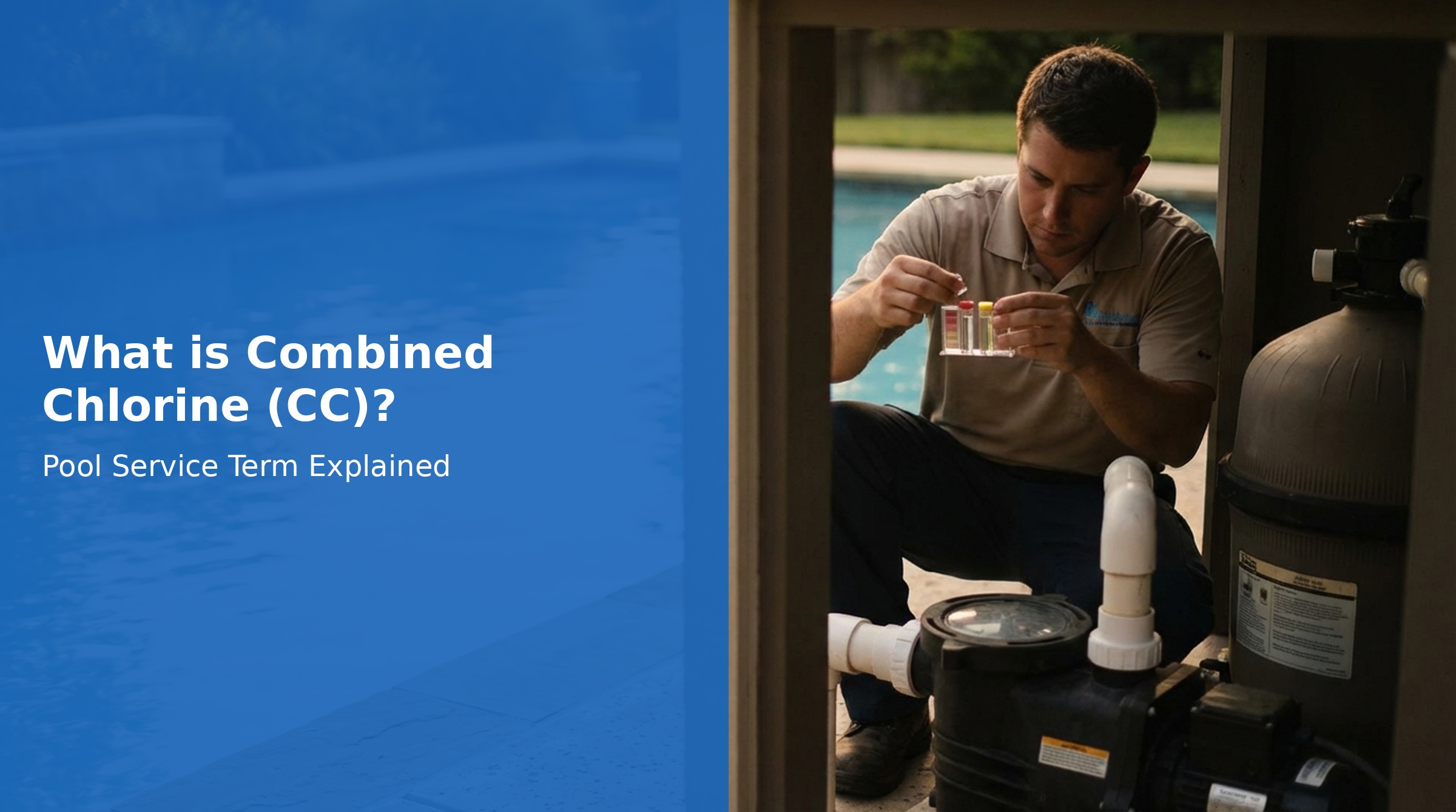
Combined chlorine (CC) is one of the most critical parameters pool service professionals must understand and manage to maintain safe, comfortable swimming environments. Unlike free chlorine, which actively sanitizes pool water, combined chlorine represents chlorine that has already reacted with contaminants and lost its disinfecting power. When combined chlorine levels rise above acceptable limits, swimmers experience that unmistakable "chlorine smell" and burning eyes that many mistakenly attribute to too much chlorine—when it's actually the opposite problem.
Key Takeaways
- Combined chlorine forms when free chlorine reacts with nitrogen-containing contaminants like sweat, urine, and cosmetics
- High CC levels (above 0.4 ppm) indicate poor water quality and require immediate breakpoint chlorination
- Strong chlorine odors and eye irritation are signs of elevated combined chlorine, not excess free chlorine
- Regular shock treatments prevent CC buildup and maintain effective sanitization
- Proper filtration and circulation support CC removal and prevention
Understanding Combined Chlorine Chemistry
Combined chlorine, also known as chloramine, forms through a predictable chemical process that occurs in all chlorinated pools. When free chlorine encounters nitrogen-based organic compounds—primarily from bather waste like sweat, urine, saliva, and cosmetic products—it bonds with these contaminants to create chloramines. This bonding process renders the chlorine ineffective as a sanitizer while creating compounds responsible for the harsh chemical odors and irritation associated with poorly maintained pools.
The three primary types of chloramines formed in pool water are monochloramine, dichloramine, and nitrogen trichloride. Monochloramine typically remains dissolved in water, while dichloramine and nitrogen trichloride are more volatile and contribute to the strong odors that rise from pool surfaces. Understanding this chemistry helps explain why simply adding more chlorine won't solve a combined chlorine problem—it requires breaking the chloramine bonds through proper oxidation.
Testing and Interpreting Combined Chlorine Levels
Accurate combined chlorine measurement requires understanding the relationship between total chlorine and free chlorine readings. Since total chlorine represents the sum of free chlorine and combined chlorine, calculating CC levels involves simple subtraction: Total Chlorine - Free Chlorine = Combined Chlorine.
Acceptable Combined Chlorine Ranges
Industry standards establish clear guidelines for combined chlorine levels:
- Ideal range: 0.0 - 0.2 ppm
- Acceptable range: 0.2 - 0.4 ppm
- Action required: Above 0.4 ppm
- Pool closure recommended: Above 1.0 ppm
When combined chlorine exceeds 0.4 ppm, immediate corrective action becomes necessary to restore water quality and swimmer comfort. Levels above 1.0 ppm often require pool closure until proper treatment reduces CC to acceptable ranges.
Health and Comfort Impacts
Combined chlorine creates multiple problems that directly affect swimmer experience and pool operation. The most obvious symptoms include strong chemical odors, eye and skin irritation, and respiratory discomfort—particularly problematic in indoor pool environments where chloramines can accumulate in the air space above the water.
Long-term exposure to elevated chloramine levels can cause more serious issues, including respiratory problems for pool staff and frequent swimmers. Indoor facilities often require enhanced ventilation systems specifically designed to remove chloramine gases and maintain acceptable air quality standards.
Breakpoint Chlorination: The Solution
Breakpoint chlorination represents the most effective method for eliminating combined chlorine from pool water. This process involves adding sufficient free chlorine to oxidize all chloramines, breaking their chemical bonds and restoring the chlorine's sanitizing effectiveness.
Calculating Breakpoint Chlorination Doses
The theoretical breakpoint chlorination ratio requires 10 parts free chlorine for every 1 part of combined chlorine. However, real-world conditions often demand higher ratios due to competing chemical reactions and varying water conditions. Most pool professionals use a practical ratio of 12:1 to 15:1 to ensure complete chloramine destruction.
For precise chemical dosing calculations that account for pool volume, current chlorine levels, and target breakpoint requirements, professional tools like our chemical dosage calculator help ensure accurate treatment while avoiding over-chlorination.
Breakpoint Chlorination Procedure
Successful breakpoint chlorination follows a systematic approach:
- Test current free chlorine and total chlorine levels
- Calculate combined chlorine (TC - FC = CC)
- Determine required chlorine dose using the 12:1 ratio
- Add calculated chlorine amount during evening hours
- Maintain circulation and filtration throughout treatment
- Retest after 4-6 hours to verify breakpoint achievement
- Continue treatment if combined chlorine remains above 0.4 ppm
Prevention Strategies
Preventing combined chlorine formation proves more efficient and cost-effective than repeatedly treating elevated levels. Successful prevention strategies focus on reducing contamination sources and maintaining consistent water chemistry.
Bather Load Management
High bather loads inevitably increase organic contamination and accelerate chloramine formation. Implementing reasonable capacity limits, encouraging pre-swim showers, and educating swimmers about proper pool hygiene significantly reduces nitrogen-based contamination introduction.
Regular Shock Treatment
Preventive shock treatments, typically performed weekly or bi-weekly depending on usage, prevent combined chlorine accumulation by oxidizing contaminants before they bond with free chlorine. This proactive approach maintains consistent water quality and reduces the need for aggressive breakpoint chlorination treatments.
Optimal Water Balance
Maintaining proper pH levels enhances chlorine effectiveness and supports natural oxidation processes. pH levels between 7.2 and 7.6 optimize free chlorine activity while minimizing conditions that promote chloramine stability. Regular monitoring of total alkalinity and cyanuric acid levels also supports effective chlorine management—our cyanuric acid calculator helps maintain proper stabilizer balance.
Troubleshooting Common Combined Chlorine Problems
Persistent combined chlorine issues often indicate underlying problems beyond simple contamination. Inadequate filtration, poor circulation, high cyanuric acid levels, or equipment malfunctions can all contribute to recurring chloramine problems.
When standard breakpoint chlorination fails to resolve combined chlorine issues, consider comprehensive water testing, filter inspection, circulation system evaluation, and potential partial water replacement to address accumulated dissolved solids that may interfere with chlorine effectiveness.
Conclusion
Mastering combined chlorine management separates professional pool service technicians from basic maintenance providers. Understanding the chemistry behind chloramine formation, implementing effective testing protocols, and executing proper breakpoint chlorination procedures ensures consistently high water quality and swimmer satisfaction. Regular prevention through appropriate shock treatments, water balance maintenance, and contamination control creates sustainable pool environments that minimize combined chlorine formation while maximizing operational efficiency. For pool service professionals, combined chlorine management represents both a technical challenge and an opportunity to demonstrate expertise in delivering superior water quality services.