
What Does Chlorine Lock Mean in Pool Service? SLANG


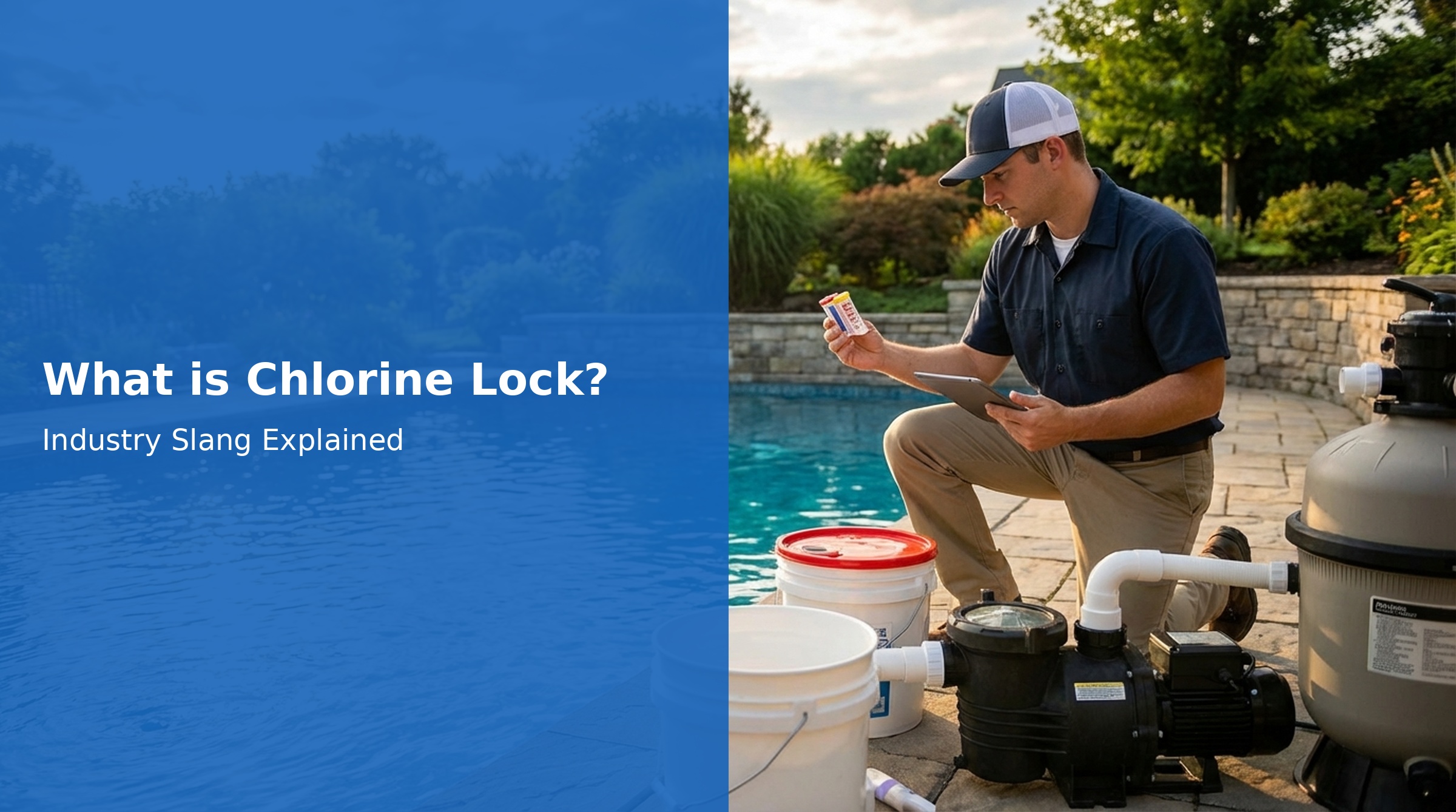
The term "chlorine lock" has become one of the most misunderstood concepts in the pool service industry. While countless pool professionals have encountered situations where chlorine seems to stop working despite proper dosing, the reality behind this phenomenon is far more nuanced than the popular industry myth suggests. Understanding what's really happening when chlorine appears "locked up" is crucial for effective pool maintenance and customer service.
Key Takeaways
- "Chlorine lock" is industry slang, not a scientific phenomenon—chlorine doesn't actually get "locked up"
- High cyanuric acid (CYA) slows chlorine's sanitizing speed but doesn't stop it completely
- What appears to be chlorine lock is usually excessive CYA combined with high organic demand or biofilm issues
- Proper diagnosis requires testing CYA levels and understanding chlorine chemistry
- Solutions involve CYA reduction, shocking, and addressing underlying contamination issues
What is Chlorine Lock?
Chlorine lock is an industry slang term used to describe situations where chlorine appears to stop working effectively, despite maintaining proper free chlorine readings. Pool technicians often encounter scenarios where they add chlorine to a pool, yet algae continues to grow, water remains cloudy, or sanitization seems inadequate.
The myth suggests that at high cyanuric acid (CYA) levels—typically above 100 ppm—chlorine becomes "locked up" or bound in a way that renders it completely ineffective. However, this understanding oversimplifies the actual chemistry at work.
The Science Behind the Myth
Cyanuric acid does bind with chlorine to form chlorinated cyanurates, which are weaker sanitizers than hypochlorous acid (HOCl). As CYA levels increase, more chlorine exists in this bound form, significantly slowing the sanitization process. However, this doesn't mean chlorine stops working entirely—it just works much more slowly and less efficiently.
The relationship between CYA and chlorine effectiveness is logarithmic, not linear. At 30 ppm CYA, chlorine works at roughly 50% efficiency compared to unstabilized chlorine. At 50 ppm, efficiency drops to about 33%. By 100 ppm CYA, chlorine operates at approximately 12% efficiency.
Why Pool Professionals Encounter "Chlorine Lock"
Several factors contribute to what appears to be chlorine lock, often working in combination to create perfect storm conditions:
Excessive Cyanuric Acid Levels
The primary culprit in most chlorine lock scenarios is excessive CYA buildup. Regular use of stabilized chlorine products (dichlor and trichlor) gradually increases CYA levels. Many pool service routes unknowingly maintain CYA levels between 80-150 ppm, severely hampering chlorine effectiveness.
High Organic Demand
Pools with high bather loads, environmental contamination, or inadequate circulation create substantial chlorine demand. When combined with slowed sanitization from high CYA, the available chlorine simply can't keep up with contamination rates.
Biofilm Formation
Persistent biofilms in plumbing, filters, and on surfaces provide protected environments for bacteria and algae. These biofilms consume chlorine while shielding microorganisms from sanitizer contact, creating conditions that mimic chlorine lock.
Inadequate Chlorine Levels
Many pools operate with chlorine levels appropriate for low CYA conditions. When CYA is high, significantly higher chlorine levels are needed to maintain the same sanitizing power. The CYA calculator can help determine proper chlorine targets for elevated stabilizer levels.
Diagnosing Chlorine Lock Conditions
Proper diagnosis requires systematic testing and analysis rather than assumptions based on symptoms alone.
Essential Tests
Start with comprehensive water testing including free chlorine, combined chlorine, pH, total alkalinity, and most importantly, cyanuric acid. Many service professionals skip CYA testing, missing the primary indicator of potential issues.
Test for chlorine demand by adding a measured amount of liquid chlorine and retesting after 30 minutes. Rapid chlorine loss indicates high demand conditions that may be overwhelming the sanitizer.
Visual Inspection
Look for signs of biofilm formation including slimy surfaces, persistent algae in specific areas, or cloudy water that doesn't respond to normal treatments. Check filter condition and circulation patterns for dead zones where contamination might accumulate.
Addressing Chlorine Lock Issues
Effective solutions target the root causes rather than simply adding more chlorine.
CYA Reduction
The most effective long-term solution involves reducing CYA levels through partial water replacement. Dilution is the only practical way to lower stabilizer levels in residential pools. Target CYA levels between 30-50 ppm for optimal chlorine efficiency.
Shock Treatment
When CYA levels are elevated, higher shock doses are required to achieve effective sanitization. Use liquid chlorine or cal-hypo to avoid adding more CYA. Calculate shock requirements based on actual CYA levels using proven dosing calculations rather than standard recommendations.
Biofilm Treatment
Address biofilm issues through enzyme treatments, intensive brushing, and filter cleaning or replacement. Consider specialized biofilm removers for persistent cases, followed by aggressive chlorination to eliminate protected microorganisms.
System Optimization
Improve circulation, extend run times, and ensure proper filtration. Many chlorine lock situations improve dramatically with better water movement and longer contact times for the available sanitizer.
Prevention Strategies
Preventing chlorine lock conditions requires proactive CYA management and system maintenance.
Stabilizer Management
Monitor CYA levels monthly and adjust chemical programs before levels become problematic. Use liquid chlorine for routine chlorination and reserve stabilized products for specific applications. Educate customers about the cumulative effects of stabilized chlorine products.
Regular System Maintenance
Implement routine biofilm prevention through regular filter maintenance, systematic brushing, and periodic enzyme treatments. Address circulation issues promptly and maintain equipment for optimal performance.
For service professionals, understanding comprehensive pool chemistry relationships including water balance parameters can be enhanced using tools like the Langelier Saturation Index calculator to ensure overall water quality.
Conclusion
While "chlorine lock" remains popular industry terminology, understanding the actual chemistry behind these conditions enables more effective problem-solving. Rather than accepting that chlorine simply stops working, successful pool professionals diagnose and address the underlying issues of excessive CYA, high organic demand, and biofilm formation. This scientific approach leads to more satisfied customers, fewer callbacks, and enhanced professional credibility.
The key lies in regular CYA monitoring, appropriate chemical selection, and systematic maintenance practices that prevent conditions commonly labeled as chlorine lock. For additional industry terminology and technical definitions, consult our comprehensive pool service terminology glossary.