
What Is a Pool Cartridge Filter?


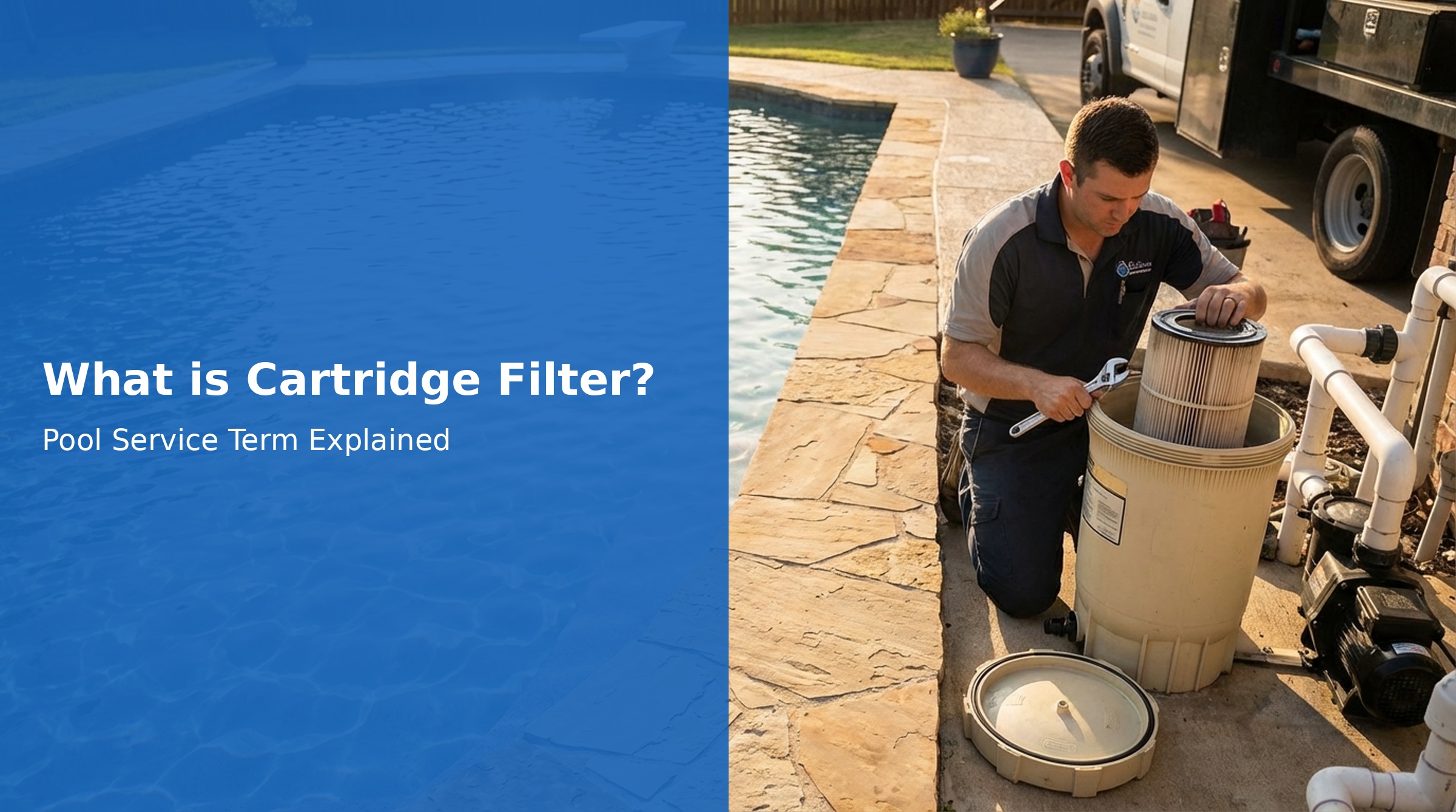
When it comes to pool filtration systems, cartridge filters have become increasingly popular among pool service professionals due to their superior filtration capabilities and maintenance efficiency. Unlike traditional sand filters that rely on backwashing, cartridge filters use pleated fabric elements to capture debris as small as 10-15 microns, providing crystal-clear water quality that clients notice and appreciate.
Key Takeaways
- Cartridge filters provide superior filtration (10-15 microns) compared to sand filters (20-40 microns)
- No backwashing required – cartridges are simply removed, cleaned, or replaced
- More water-efficient operation saves thousands of gallons annually
- Requires more frequent maintenance but offers better water clarity
- Higher upfront cartridge costs are offset by water savings and improved filtration
Understanding Cartridge Filter Technology
Cartridge filters represent a significant advancement in pool filtration technology. The system consists of cylindrical filter elements made from pleated polyester or polypropylene fabric, housed within a pressure vessel. The pleated design dramatically increases the surface area available for filtration – a single cartridge can have up to 25 square feet of filtration media despite its compact size.
The filtration process works through mechanical straining rather than the depth filtration used by sand filters. As water flows through the pleated fabric, particles as small as 10-15 microns become trapped in the filter media. This fine level of filtration removes not only visible debris but also microscopic particles that can make water appear cloudy or dull.
Cartridge Filter Components
A typical cartridge filter system includes several key components that pool service professionals should understand:
- Filter Tank: Usually constructed from fiberglass or thermoplastic, designed to withstand system pressure
- Cartridge Elements: The pleated filter media, available in various sizes and micron ratings
- Manifold System: Distributes water evenly across cartridge surfaces
- Pressure Gauge: Monitors system pressure to indicate when cleaning is needed
- Drain Valve: Allows for easy tank drainage during maintenance
Maintenance Procedures and Best Practices
Proper maintenance is crucial for maximizing cartridge filter performance and lifespan. Unlike sand filters that require backwashing, cartridge maintenance involves physical removal and cleaning of the filter elements.
Cleaning Schedule and Procedures
Cartridge filters typically require cleaning every 2-4 weeks, depending on bather load, environmental factors, and water chemistry. The cleaning process involves several steps that service professionals should follow consistently:
First, turn off the filtration system and relieve pressure from the tank. Remove the tank lid and carefully lift out each cartridge, noting their position for proper reinstallation. Rinse cartridges with a high-pressure hose, working from top to bottom to remove trapped debris from the pleats.
For thorough cleaning, rotate cartridges through a three-step process: one set in use, one set soaking in filter cleaner solution, and one set clean and ready for installation. This rotation system ensures optimal filtration while extending cartridge life.
Chemical Cleaning Requirements
Regular chemical cleaning removes oils, sunscreen, and other organic contaminants that water alone cannot eliminate. Use a commercial filter cleaner or prepare a solution of muriatic acid (1 part acid to 10 parts water) for calcium buildup, or trisodium phosphate for oil and grease removal.
Soak cartridges for 8-12 hours, then rinse thoroughly before reinstallation. Proper water chemistry maintenance, including balanced pH and appropriate sanitizer levels, reduces the frequency of deep cleaning required. For comprehensive water balance calculations, refer to our Langelier Saturation Index calculator to prevent scale formation that can clog cartridge pleats.
Performance Advantages for Service Professionals
Cartridge filters offer several distinct advantages that make them attractive for both service providers and pool owners. Understanding these benefits helps professionals make informed recommendations and provide superior service.
Superior Water Quality
The 10-15 micron filtration capability of cartridge filters significantly outperforms sand filters, which typically filter particles down to 20-40 microns. This finer filtration results in noticeably clearer, more sparkling water that enhances the overall pool experience. Clients often comment on the improved water clarity when switching from sand to cartridge filtration.
Additionally, the improved filtration reduces the chemical demand for maintaining water clarity. With fewer particles in suspension, chlorine remains more effective, and chemical dosing requirements may be reduced, creating cost savings for pool owners.
Water Conservation Benefits
One of the most significant advantages of cartridge filters is their water efficiency. Traditional sand filters require regular backwashing, which can waste 200-800 gallons per cleaning cycle. Over a swimming season, this can amount to thousands of gallons of treated water literally going down the drain.
Cartridge filters eliminate backwashing entirely, making them particularly valuable in drought-prone areas or regions with water restrictions. This conservation benefit often justifies the higher initial investment and ongoing cartridge replacement costs.
Troubleshooting Common Issues
Service professionals frequently encounter specific challenges with cartridge filter systems that require targeted solutions.
Rapid Pressure Buildup
If system pressure rises quickly after cleaning, investigate potential causes such as inadequate cartridge cleaning, undersized filtration capacity for the pool volume, or excessive organic loading. Sometimes, cartridges may appear clean but still harbor embedded contaminants requiring chemical cleaning or replacement.
Reduced Flow Rates
Diminished flow often indicates cartridge deterioration, improper installation, or system air leaks. Inspect cartridges for collapsed pleats, tears, or excessive wear. Ensure proper seating in the manifold system and check all connections for air infiltration.
Economic Considerations and Client Education
While cartridge replacement represents an ongoing operational expense, the total cost of ownership often favors cartridge systems when water savings, improved chemical efficiency, and reduced maintenance time are considered. Service professionals should help clients understand these long-term economics rather than focusing solely on upfront costs.
Educating clients about proper expectations helps build satisfaction and retention. Explain that cartridge filters require more frequent attention but deliver superior results. Provide clear maintenance schedules and help clients understand the correlation between proper care and optimal performance.
For comprehensive understanding of pool maintenance terminology and concepts, consult our complete pool service glossary to enhance your technical knowledge and client communication.
Conclusion
Cartridge filters represent a premium filtration solution that delivers exceptional water quality through advanced mechanical straining technology. While they require more hands-on maintenance than sand filters, the superior filtration capability, water conservation benefits, and enhanced water clarity make them an excellent choice for discerning pool owners. Service professionals who master cartridge filter maintenance and understand their operational advantages can differentiate their services while delivering outstanding results that keep clients satisfied and pools sparkling clean.