How to Choose Pool Service Software: Complete Guide 2026


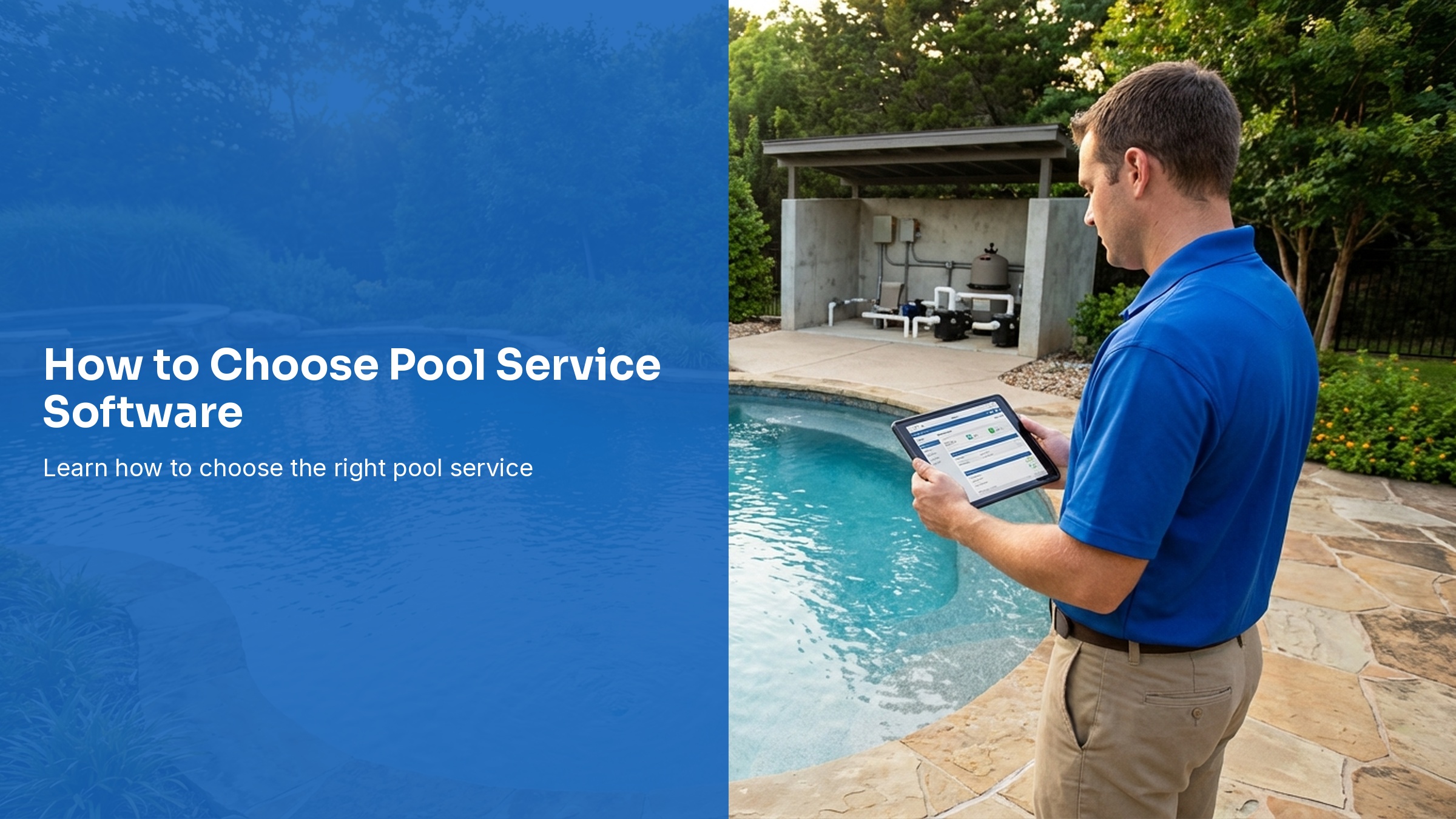
Choosing the right pool service software is one of the most important decisions you will make for your business. The right platform can save you hours each week, reduce missed appointments, improve customer communication, and help you grow your route. The wrong choice can mean wasted money, frustrated technicians, and a painful migration down the road.
With dozens of options available in 2026, from pool-specific platforms to general field service tools, the decision can feel overwhelming. This guide will walk you through everything you need to consider: assessing your business needs, evaluating key features, understanding pricing models, and avoiding common pitfalls. By the end, you will have a clear framework for making the right choice for your pool service business.
Assess Your Business Needs
Before comparing software features and pricing, take time to understand your specific situation. The best software for a solo operator servicing 25 pools is very different from what a company with 10 technicians and 400 pools needs. Ask yourself these questions:
Questions to Ask Yourself
- How many pools do you service? This affects which pricing model makes sense and what level of features you need.
- Do you work solo or have a team? Team management, dispatching, and permissions become critical with multiple technicians.
- What is your budget? Be realistic about what you can afford monthly, and factor in the cost of your time saved.
- What features are must-haves vs nice-to-haves? Chemical tracking may be essential for you, while AI phone answering might be a bonus.
- Do you offer other services besides pool maintenance? Repairs, renovations, or other home services may need a more flexible platform.
- What devices do your technicians use? iPhone-only teams have more options than mixed Android/iOS teams.
Write down your answers before you start evaluating software. This will help you stay focused on what actually matters for your business rather than getting distracted by flashy features you will never use.
Key Features to Consider
Pool service software varies widely in capabilities. Here are the core features to evaluate, roughly in order of importance for most pool service businesses:
Route Optimization
Good route optimization can save 30-60 minutes per day in drive time. Look for software that automatically sequences stops efficiently and recalculates when you add or remove pools.
Chemical Tracking
Pool-specific software should log water test results, calculate chemical dosages, and maintain history. This is essential for liability protection and quality service.
Billing and Invoicing
Automated invoicing saves hours each month. Look for recurring billing, payment processing, and the ability to add one-time charges for repairs or chemicals.
Mobile App Quality
Your technicians live in the mobile app. It needs to be fast, reliable, and work offline. Read app store reviews carefully, especially for your device platform.
Customer Communication
Service reports, appointment reminders, and easy messaging keep customers informed and reduce phone calls. Some platforms offer customer portals for self-service.
AI and Automation
Newer platforms offer AI phone answering, automated scheduling, and smart notifications. These can save significant time, especially for solo operators.
Feature Priorities by Business Size
Not every feature matters equally for every business. Here is how priorities typically shift as you grow:
- Solo operators (1-30 pools): Route optimization, mobile app quality, and customer communication are most important. AI phone answering can be transformative since you cannot answer calls while servicing pools.
- Small teams (30-100 pools): Billing automation becomes critical. You need good technician management and the ability to reassign routes when someone is sick.
- Growing businesses (100-300 pools): Reporting and analytics help you identify profitable vs unprofitable customers. Inventory management for chemicals becomes valuable.
- Enterprise (300+ pools): Advanced permissions, multi-location support, and API integrations with accounting software become necessary.
Pricing Models Explained
Pool service software uses several different pricing models. Understanding these helps you calculate the true cost for your business size:
| Pricing Model | Typical Cost | Best For | Example Platforms |
|---|---|---|---|
| Per-Pool Pricing | $1-2/pool/month | Growing businesses (scales with you) | Skimmer, PoolDial |
| Monthly Flat Rate | $39-199/month | Small operations (predictable costs) | Jobber, Housecall Pro, GorillaDesk |
| Per-Technician | $100-400/tech/month | Enterprise (comprehensive features) | ServiceTitan |
| Custom/Enterprise | Varies | Large operations (negotiated terms) | Pool Brain, PSS |
Which Pricing Model Works for You?
Let us do the math for different business sizes:
- 25 pools: Per-pool pricing at $2/pool = $50/month. Flat rate at $49/month is similar. Either works.
- 75 pools: Per-pool pricing at $2/pool = $150/month. Flat rate at $99/month is cheaper if it includes enough features.
- 150 pools: Per-pool pricing at $2/pool = $300/month. This is where per-pool can get expensive, but you also need more robust features.
- 300+ pools: At this scale, per-technician or enterprise pricing often makes sense because you need advanced team management anyway.
The key insight: per-pool pricing is great when you are starting out because costs are low, and it scales naturally as you grow. But at some point, flat-rate or enterprise pricing may offer better value.
Pool-Specific vs General Field Service Software
One of the biggest decisions is whether to use software built specifically for pool service or a general field service platform. Both have advantages:
Understanding Your Options
Pool-Specific Software
Skimmer, PoolDial, Pool Brain, PSS
- Built-in chemical tracking and dosage calculators
- Water test logging and history
- Pool equipment databases
- Industry-specific terminology and workflows
- Often integrates with water testing devices
- Support staff understands pool industry
General Field Service Software
Jobber, Housecall Pro, ServiceTitan
- Supports multiple service types if you diversify
- Often more polished with larger development teams
- More extensive integrations ecosystem
- Larger user communities and more reviews
- May have better marketing and CRM features
- Requires custom setup for pool workflows
Our recommendation: If pool service is your primary business, start with pool-specific software. The built-in chemical tracking, water test logging, and pool-focused workflows save significant setup time and reduce errors. You can always switch to a general platform later if you diversify into other services.
If you already offer multiple home services (landscaping, spa maintenance, general handyman work) alongside pool service, a general platform like Jobber or Housecall Pro makes more sense to avoid running multiple systems.
Red Flags to Watch For
During your evaluation, watch out for these warning signs that a platform may not be the right fit:
Long Contracts
Annual contracts with no monthly option suggest the company is worried about churn. Look for month-to-month options, especially when starting out. You should be able to leave if the software does not work for you.
Hidden Fees
Watch for payment processing fees, per-user charges, premium feature tiers, or setup fees that are not clearly disclosed upfront. Ask specifically: "What will my total monthly cost be with X pools and Y technicians?"
Poor Mobile App Reviews
Check the App Store and Google Play reviews carefully. Pay attention to recent reviews (last 3-6 months) and look for patterns. Consistent complaints about crashes, sync issues, or slow performance are serious red flags.
No Data Export Options
Your customer data is valuable. Make sure you can export your data if you need to switch platforms. Ask about CSV exports for customers, service history, and chemical readings. Avoid platforms that lock you in.
Other Warning Signs
- Slow customer support: Try contacting support before signing up. If it takes days to get a response during the sales process, imagine what it will be like when you have a problem.
- No free trial: Reputable software offers free trials or demos. If a company will not let you try before you buy, be cautious.
- Outdated interface: Software that looks like it was designed in 2010 often has outdated architecture underneath. Modern platforms are generally more reliable and receive more frequent updates.
- Negative industry reputation: Ask other pool professionals in Facebook groups or at trade shows. Word travels fast in the pool industry.
Our Recommendations by Business Size
Based on our analysis of the market and feedback from pool professionals, here are our recommendations for different business sizes:
Best Pool Service Software by Business Size
Solo Operator
- PoolDial - Best for AI phone answering included
- Skimmer - Established with strong iOS app
Focus on: Easy setup, great mobile app, affordable per-pool pricing. AI receptionist is especially valuable since you cannot answer calls while servicing pools.
Small Team
- PoolDial - Full features at $2/pool
- Skimmer - Proven platform
- Jobber - If you need multi-service support
Focus on: Team management, billing automation, reliable cross-platform mobile apps.
Growing Business
- PoolDial - Scales with your growth
- Pool Brain - Advanced automation features
Focus on: Reporting and analytics, inventory management, workflow automation to maintain quality at scale.
Enterprise
- Pool Brain - Enterprise-grade automation
- ServiceTitan - Comprehensive business platform
Focus on: Multi-location support, advanced permissions, API integrations, dedicated account management.
For most pool service professionals in 2026, we recommend PoolDial as the best overall choice. It combines pool-specific features with modern AI capabilities like 24/7 phone answering, all at a competitive $2/pool price point. The platform works reliably on both iOS and Android, and there are no contracts locking you in.
If you are already using Skimmer and happy with it, there is no urgent need to switch. But if you are choosing software for the first time or frustrated with your current platform, PoolDial offers the best combination of features, pricing, and modern technology.
Frequently Asked Questions
How long does it take to switch pool service software?
Most businesses can migrate to new software in 1-2 weeks. The actual data import usually takes a few hours, but training your team and adjusting workflows takes longer. Many platforms offer white-glove migration assistance. Plan to run both systems in parallel for a week to catch any issues before fully switching.
Should I choose software based on what other pool companies use?
Other pool professionals' experiences are valuable input, but their needs may differ from yours. A company with 200 pools and 5 technicians has very different requirements than a solo operator with 40 pools. Use recommendations as a starting point, then evaluate based on your specific needs and budget.
Is free pool service software worth considering?
Free software typically has significant limitations: fewer features, no customer support, potential ads, or they may sell your data. For a business-critical tool, investing $50-200/month in quality software is almost always worth it. The time saved and professional appearance pay for themselves many times over.
How important is AI in pool service software?
AI features like phone answering are genuinely valuable for pool service. You cannot answer calls while servicing pools, and missed calls mean lost leads. AI receptionists solve this problem at a fraction of the cost of hiring staff or using traditional answering services. Other AI features like route optimization are helpful but not revolutionary.
What if I choose the wrong software?
Switching software is inconvenient but not catastrophic. Most platforms allow data export, and migration assistance is common. The bigger cost is the time lost learning a new system. To minimize risk: use free trials extensively, start with month-to-month billing, and do not commit to annual contracts until you are confident in your choice.
Do I need pool-specific software or will general field service software work?
If pool service is your primary business, pool-specific software (like Skimmer, PoolDial, or Pool Brain) is usually better. The built-in chemical tracking, water test logging, and pool equipment databases save significant setup time. General platforms like Jobber work well if you offer multiple services or prefer a larger, more established company.