
What Does Splash and Dash Mean in Pool Service?


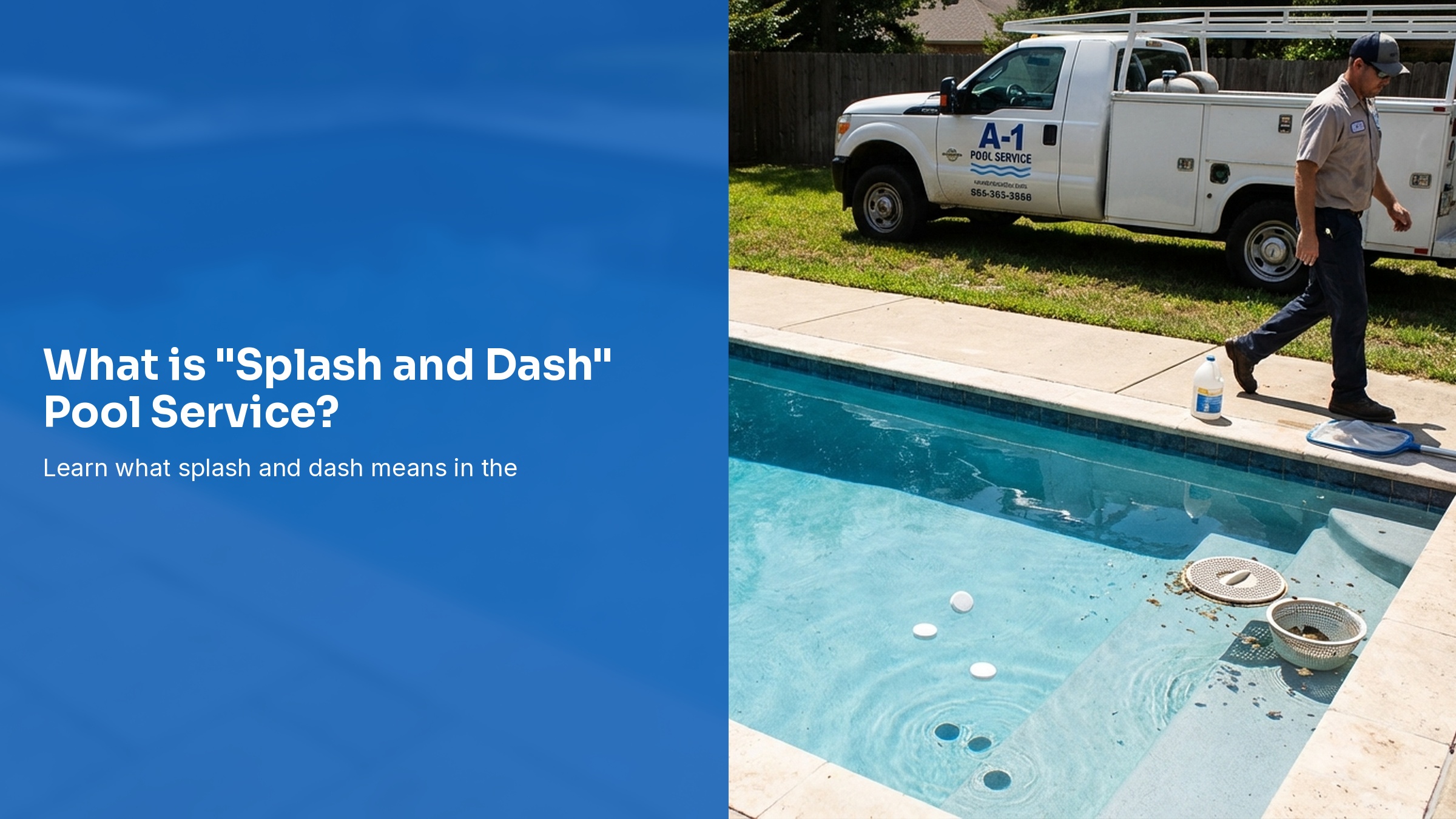
Splash and Dash is industry slang for rushing through a pool service visit without doing thorough work. It describes a pool tech who simply dumps chemicals and moves on without proper testing, brushing, or cleaning—the opposite of professional pool service.
Quick Summary
- Definition: Rushing through pool service without doing complete work
- Why it happens: Overbooked routes, poor training, or low service prices
- The problem: Leads to water chemistry issues, algae, equipment damage
- The opposite: "Andrea Perfect" - doing thorough work on every pool
- How to avoid: Proper scheduling, training, and using service checklists
The term is used critically among pool professionals to describe substandard service. If someone says "that company just splash and dashes," they're saying the service is inadequate and unprofessional.
What Splash and Dash Looks Like
A splash and dash service typically involves:
- Adding chlorine without testing water first
- Skipping brushing of walls and tile
- Not emptying pump and skimmer baskets
- Ignoring the filter and equipment check
- Spending 5-10 minutes when the job needs 20-30
- Not documenting any readings or issues
- Dump chemicals without testing
- Quick skim of surface debris
- Skip brushing walls and steps
- Ignore baskets and filter
- No water chemistry documentation
- 5-10 minutes per pool
- No communication with customer
- Test water before adding chemicals
- Thorough skim, including bottom debris
- Brush walls, steps, and tile line
- Empty all baskets, check filter PSI
- Log all readings in service software
- 20-30 minutes per pool
- Notes left for customer if needed
Why Splash and Dash Happens
Pool techs don't usually set out to do poor work. Splash and dash service typically results from systemic problems:
Overbooked Routes
When a tech has 25-30 pools to service in one day, there simply isn't time to do thorough work on each one. This is often a management problem—either poor scheduling or trying to maximize revenue without hiring more staff.
Low Service Prices
Companies that compete primarily on price often can't afford to spend adequate time on each pool. If you're charging $80/month for weekly service, you might need to rush to stay profitable. Use our service price calculator to ensure your pricing supports quality service.
Poor Training
New techs who don't understand water chemistry or proper service procedures may not realize they're skipping important steps. They might think dumping chlorine is the whole job.
Lack of Accountability
Without service verification (GPS tracking, time-on-site logging, photo documentation), it's easy for techs to cut corners when no one is watching.
While rushing through services might seem to save time, it creates expensive problems: algae outbreaks that require shock treatments, equipment damage from neglected maintenance, and customer churn from poor service. The time "saved" costs far more in callbacks, lost customers, and reputation damage.
The Opposite: Andrea Perfect
In pool service circles, the opposite of splash and dash is sometimes called "Andrea Perfect"—a term coined on the Talking Pools Podcast referring to co-host Andrea Nannini's high standards. It means doing thorough, quality work on every single pool, every single visit.
"Every pool gets the same attention, whether I'm running ahead of schedule or behind. That's what separates professionals from splash and dashers."
— Pool service professional
How to Spot Splash and Dash Service
For pool owners, here are signs your service provider might be cutting corners:
- Visits are suspiciously short: If your tech is in and out in 5 minutes, they're not doing complete service
- No service reports: Professional companies provide documentation of readings and work performed
- Recurring water problems: Algae, cloudy water, or persistent chemistry issues indicate inadequate service
- Dirty baskets: If skimmer and pump baskets are always full, they're not being emptied
- Visible buildup: Scale on tile, algae on walls, or debris accumulation shows lack of brushing
- No chemical adjustments: Always adding the same amount regardless of readings
How Pool Companies Prevent Splash and Dash
Proper Route Scheduling
Schedule realistic time for each stop. Most residential pools need 20-30 minutes for thorough weekly service. If your routes don't allow this, you need fewer pools per tech or more technicians.
Service Checklists
Use digital checklists that require techs to confirm each step is complete. Modern pool service software can enforce this workflow and won't let techs mark a job complete without documenting all required steps.
Time and GPS Tracking
Track time-on-site and route location to ensure techs are spending adequate time at each property. If someone is logging 8-minute visits, you know there's a problem.
Photo Documentation
Require before/after photos of the pool. This both ensures work is done and provides evidence for customers.
Customer Feedback Loops
Send automated emails asking customers about their service. Dissatisfied customers will quickly report issues.
Build Professional Service Into Your Workflow
PoolDial's mobile app includes service checklists, water chemistry logging, and photo documentation—everything you need to ensure thorough service on every visit.
Start Free TrialTraining Techs to Avoid Splash and Dash
Good service starts with proper training. Every tech should understand:
Why Each Step Matters
- Testing before treating: Without readings, you're guessing on chemicals. Over-treating wastes money and can damage equipment. Under-treating leads to algae and unsafe water.
- Brushing: Disrupts biofilm where algae hides. No amount of chlorine replaces mechanical brushing.
- Basket cleaning: Full baskets reduce flow, strain pumps, and prevent effective filtration.
- Filter checks: High PSI indicates a dirty filter that can't clean the water properly.
The Quality Mindset
Teach techs to approach every pool as if it were their own. Would they swim in water they just splash-and-dashed? Pride in work quality separates professionals from order-takers.
Time Management
Rushing usually comes from poor time management earlier in the day. Teach efficient workflows that don't sacrifice quality—having the right tools ready, following consistent patterns, and minimizing wasted motion.
Related Terms
Learn more pool industry terminology in our comprehensive glossary:
- Andrea Perfect - The opposite of splash and dash
- Swamp - A severely neglected pool
- Green to Clean - Restoring an algae-filled pool
- Free Chlorine (FC) - The chlorine that actually sanitizes